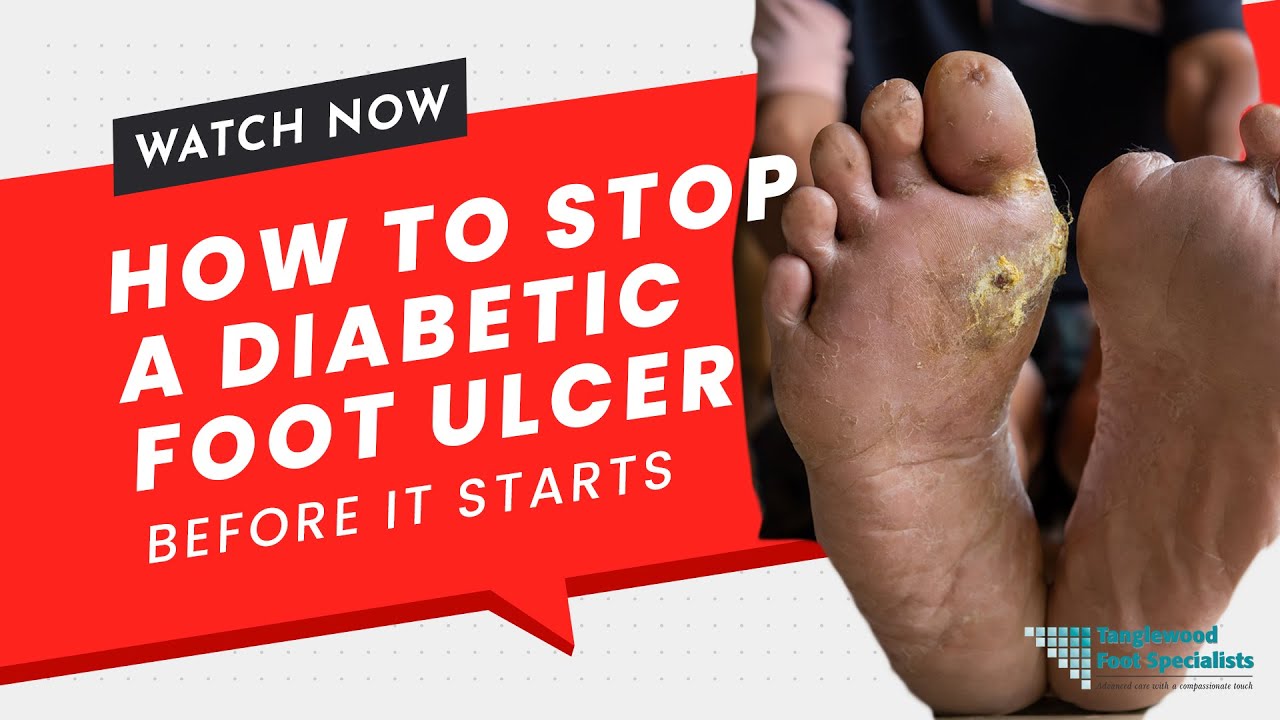
What Is a Diabetic Foot Ulcer?
A diabetic foot ulcer is an open wound or sore that develops on the foot of a person with diabetes — most commonly  on the bottom of the foot. It occurs when a combination of nerve damage, poor circulation, and undetected pressure causes the skin to break down, exposing the underlying tissue to infection and preventing normal healing. That definition is accurate. But it doesn't really capture what's going on inside.
Here's what most people don't realize: a diabetic foot ulcer isn't just a stubborn wound. It's your body's construction crew — the cells that are supposed to repair damaged tissue — completely stalled on the job. Think of it like a faulty thermostat. Normally, pain is the alarm that tells you something's wrong. With diabetes, peripheral neuropathy — the nerve damage caused by diabetes — disconnects that alarm entirely. You don't feel the pressure. You don't feel the shoe rubbing. You don't feel the wound getting deeper. By the time you notice something, significant damage has already been done.
According to the American Podiatric Medical Association, approximately 15% of people with diabetes will develop a foot ulcer at some point in their lives. Of those, 14–24% will face amputation without consistent, expert care. And here's the statistic that stopped me cold early in my career: having a diabetic foot ulcer carries a worse five-year survival rate than most cancers — except lung and pancreatic. That's not meant to frighten you. It's meant to help you understand why this wound deserves far more than a bandage and a week of watching.
Why Diabetic Foot Ulcers Don't Heal on Their Own
Diabetes creates a perfect storm of conditions that each slow healing — and together, they can stop it completely. Understanding why this happens makes everything else in this guide make more sense.
Start with blood sugar. Every point your A1C rises above normal doesn't decrease your healing ability by a small amount. It reduces it by 10 times. Not 10%. Ten times. The American Diabetes Association identifies glycemic control as the single most foundational factor in diabetic wound healing — high glucose levels impair the white blood cells your immune system sends to defend and repair the wound. Your body ends up fighting infection and rebuilding tissue with a badly depleted team. Then add peripheral arterial disease (PAD) — the narrowing of blood vessels that commonly develops with diabetes. Think of it like a garden hose that's been slowly pinched shut. The oxygen and nutrients your wound needs to heal simply can't get through.
Now layer nerve damage that's already affecting your sensation on top of that. Because you can't feel the ulcer, you keep walking on it. Every step reopens the fragile new tissue that was just starting to form overnight. It's like trying to build a sandcastle while someone keeps walking through it. And then there's infection — which turns the whole situation into a zero-sum battle. When your body has to fight an active infection, it diverts everything toward containment.
Healing essentially stops.
One misconception I hear constantly: "It doesn't hurt, so it can't be that serious." I understand the logic. But with diabetic neuropathy, the absence of pain is the danger signal — it means the warning system your body depends on isn't working. I've seen people come in with wounds that had been open for months because they genuinely didn't know they were there. Common triggers include poorly controlled blood sugar, tight shoes, a minor scrape you never felt, smoking, obesity, and high cholesterol. Any one of these can start the process. All of them together make healing almost impossible without professional intervention.
Three Things You Should Never Put on a Diabetic Foot Ulcer
Before we talk about what actually works, let's cover what makes things significantly worse — because I see these mistakes constantly, and they almost always come from people trying to do the right thing.
The most common one is hydrogen peroxide. I can't tell you how many people come in having used it on their ulcer because it's what their parents used on cuts growing up. I get it — the bubbling looks like it's doing something, and "kills bacteria" seems like exactly what a wound needs. But that bubbling isn't cleaning the wound. It's destroying the fibroblasts that are trying to build new tissue. Fibroblasts produce the collagen your body needs to close the wound. Hydrogen peroxide kills them on contact and disrupts the moist environment that healing requires. Throw it out.
Alcohol is the second one. It's far too harsh for damaged diabetic skin — it causes drying and tissue death, disrupts the immune response, and actually increases infection risk over time rather than reducing it. And diluted bleach, which I've seen recommended in some older home-care guides, is toxic to healing cells and can cause chemical burns on skin that's already compromised. The logic behind all three seems sound. The biology tells a different story.
What should you use? Saline solution is safe, inexpensive, and effective. A mild, unscented soap with gentle rinsing works well for daily cleaning. Your podiatrist may prescribe a wound cleanser specifically formulated for diabetic ulcers. Medical-grade manuka honey has some legitimate evidence behind it, but use it only under guidance — not every honey product qualifies, and application matters. When in doubt, saline and a prescribed dressing are almost always the right answer until you're seen in the office.
Warning Signs That Require Immediate Attention
Not every diabetic foot wound is an emergency — but some are, and knowing the difference can save your foot. In my  Houston podiatry practice, I ask every diabetic patient to watch for these signs and respond accordingly.
For everyday monitoring: a wound that isn't shrinking after two weeks, increased drainage, or a mild odor warrants a call to the office that week. Not a panic situation — but a signal that the wound isn't progressing the way it should. For more urgent concerns — redness spreading outward from the wound edges, increasing warmth, swelling climbing up your foot, or a low-grade fever — call the same day. These are signs of spreading infection that need to be addressed before they advance.
Some signs mean don't wait for an appointment at all. Black or darkening tissue anywhere in or around the wound is gangrene — go to the emergency room now. Red streaks running up your leg from the wound indicate the infection has entered your lymphatic system, which can become life-threatening within hours. High fever combined with confusion is a systemic emergency. Either way, I need to see you — whether your wound looks minor or you're genuinely worried it's gotten worse. There's no version of a diabetic foot ulcer where "watch and wait at home" is the right long-term strategy. If you're not sure whether your situation is urgent, call the office. We'd rather hear from you than not.
How a Houston Podiatrist Treats Diabetic Foot Ulcers — A Complete 5-Step Approach
After treating diabetic foot wounds for over 25 years in Houston, I've learned that there's no single treatment that works for every ulcer. What works is a systematic, escalating approach — starting with the least invasive interventions and advancing based on how your wound responds. Here's exactly how I think about it.
Step 1 — Getting the Biology Right
Nothing else in this guide will work if we skip this step. Your blood sugar is the foundation that every other treatment is built on. If your A1C stays elevated while we're trying to heal your wound, we're fighting the biology instead of working with it. Even a modest improvement in glucose control — within 2 to 4 weeks — measurably changes what's happening at the wound site.
Nutrition matters more than most people expect. Your body needs protein to rebuild tissue, and most of my diabetic patients are significantly under-eating it — aim for 1.2 to 1.5 grams per kilogram of body weight daily. Zinc, vitamin C, and vitamin D are frequently deficient in diabetics, and each plays a direct role in wound repair. And smoking — I won't judge you for it, but I need you to know that nicotine constricts the very blood vessels your wound depends on to heal. Even a temporary reduction helps. Even 5 to 10 pounds of weight loss meaningfully reduces the mechanical pressure on a plantar ulcer. Lifestyle alone will never close an open ulcer, but undermining it will guarantee treatment fails.
Step 2 — What You Do at Home Matters Enormously
Daily inspection is non-negotiable — a real inspection, not a glance. Between the toes, around the heels, along the soles. Look for anything that's changed since yesterday: new drainage, color shifts, swelling, odor. Use a mirror if you need to. If your vision or mobility makes this difficult, have someone help you.
Offloading is the home-care step that breaks down most often. Your prescribed boot, cast shoe, or offloading device needs to be on every time you take a step — including that 2 a.m. trip to the bathroom. No barefoot walking. Not to the kitchen, not for coffee, not ever until I've cleared you. I understand it's inconvenient. But every unprotected step reopens healing tissue. A Grade 2 or higher ulcer managed at home without consistent offloading almost universally gets worse, not better. Home care keeps a clean wound environment between your appointments. It can't substitute for what we do in the office — but done right, it makes everything we do work faster.
Step 3 — Professional Wound Care in the Office
This is where real treatment begins. At every visit, I perform professional debridement — the removal of dead tissue, callus buildup, and infected material from the wound bed. Debridement is the single most important professional intervention in wound care. No dressing product compensates for its absence. We match advanced wound dressings to what your specific wound needs: antimicrobial dressings for infected wounds, hydrogel for dry wounds, collagen-based dressings to stimulate cellular activity. These aren't drugstore bandages. They're therapeutic tools.
For ulcers on the bottom of the foot, total contact casting (TCC) is the gold standard for offloading. A 2023 review in the Journal of Diabetes Science and Technology confirmed approximately 90% closure rates in 6 to 8 weeks for uncomplicated neuropathic ulcers when TCC is used consistently. We also assess for infection at every visit — culturing the wound and targeting antibiotics precisely rather than guessing, and monitoring with X-ray when bone involvement is a concern. A vascular assessment using ankle-brachial index (ABI) testing tells us how well blood is reaching the wound. If circulation is too compromised, I'll coordinate with a vascular surgeon before advancing treatment. I also prescribe custom orthotics that redistribute pressure away from the wound site to protect healing tissue between visits.
A new patient visit runs $185; follow-up visits are $120. Standard professional wound care carries a 70–80% success rate with adequate vascular supply and compliance. Minor ulcers typically close in 4 to 8 weeks. Moderate ulcers take 8 to 16 weeks. Severe or complicated cases can run 3 to 6 months or longer.
Step 4 — Advanced Regenerative Wound Care: The Third Option
In most medical offices, the options are: keep doing standard wound care, or talk about surgery. But there's a regenerative medicine approach — The Third Option between standard wound care and surgery — that most doctors never mention. And it's changing outcomes for people whose ulcers weren't responding to conventional treatment.
Here's the benchmark I watch for: if your ulcer hasn't shrunk by at least 50% after four weeks of professional wound care, the odds of closing it with standard methods alone drop sharply. That's when I introduce bioengineered skin substitutes — laboratory-grown or donor-derived scaffolding that doesn't just cover a wound but actively delivers growth factors and recruits the cells your body stopped sending on its own. A 2024 study in Advances in Wound Care found success rates of 85–95% with bioengineered skin substitutes, compared to 70–80% with standard care alone. Medicare covers approved substitutes when specific criteria are met; most private insurance plans don't, so I'll give you a clear picture of costs before we start.
Alongside skin substitutes, I use PRP therapy — what I call liquid gold for healing. We draw a small amount of your blood, spin it in a centrifuge to concentrate the growth factors, and inject that concentration directly into the wound. PRP replenishes the healing signals that diabetes has depleted. The cost is $850. Think of it this way: skin substitutes prepare the soil; PRP plants the seeds. Together they outperform either alone.
I also use red light therapy to improve circulation at the wound site as an adjunct — it stimulates cellular energy production, reduces inflammation, and improves microcirculation in tissue that's been starved of blood flow. Sessions run $39 each or $180 for a package of six. For complex non-healing cases, advanced peptide therapy to support tissue repair from the inside — specifically BPC-157 — is an emerging tool I'm incorporating for patients who need additional biological support. Most people on this protocol see initial wound improvement within 2 to 4 weeks. Full closure for complex ulcers typically follows within 6 to 12 weeks from protocol start.
Step 5 — When Surgery Is the Right Answer
Look, I know surgery sounds terrifying when you're already managing diabetes and worried about healing. Let me be direct about something: the surgeries I perform for diabetic foot complications are almost always limb-saving procedures. The goal isn't to create more to recover from — it's to prevent the far more devastating outcome.
Surgery is considered when there's a deep infection that can't be cleared with antibiotics alone, when osteomyelitis (bone infection — the gateway to amputation) has taken hold, or when an underlying bony prominence creates unavoidable pressure that no offloading device can eliminate. In those cases, surgical debridement, targeted bone removal for osteomyelitis, or a pressure-relieving exostectomy gives the wound an environment it simply couldn't have otherwise. Recovery follows a structured path: the first week is non-weight bearing with wound dressing care; week two brings a wound check and transition planning; weeks three through six involve protected weight bearing in a boot; months two and three bring a return to custom footwear and normal activity. Foot surgery for diabetic complications carries higher risk in diabetic patients — which is exactly why we optimize blood sugar and vascular status before operating, and why surgery is always the last step in this progression, not the first conversation. The Third Option at Step 4 makes this step unnecessary for many people who would otherwise have had no good path forward.
If your ulcer hasn't been improving — or you're not sure what stage it's at — don't wait any longer. Call my Houston office at 713-785-7881 or request an appointment online. We'll assess your wound the same week.
Request Your Appointment →
What Houston Diabetic Patients Need to Know About Recurrence
Healing your ulcer is step one. Keeping it healed is step two — and this is where a lot of people get caught off guard.  According to MedlinePlus, up to 40% of healed diabetic foot ulcers return within one year. That statistic isn't meant to discourage you. It's meant to make sure you don't stop treating this problem the moment the wound closes.
Why does recurrence happen? Because the underlying conditions that caused the ulcer — neuropathy, impaired circulation, and foot structure issues — don't resolve when the wound does. Houston's heat and humidity create a uniquely challenging environment for diabetic foot wounds year-round. Warm, moist conditions accelerate bacterial growth and complicate wound management in ways that don't apply in cooler, drier climates. The daily inspection habits, offloading discipline, and blood sugar management you built during treatment need to continue permanently, not temporarily.
Custom orthotics fitted specifically for your foot shape are one of the most effective long-term defenses against recurrence. Think of them like eyeglasses — they don't cure the underlying issue, but they manage the mechanical forces that cause tissue breakdown. A1C management remains the single most powerful recurrence prevention tool available, and an annual comprehensive diabetic foot exam lets me catch warning signs before they become open wounds. I celebrate with every patient when their ulcer finally closes. And then I tell them the same thing every time: your job isn't done.
What to Expect When You Come In
When you come in, I'll start by listening — not just looking at the wound. I want to understand what's happened: what  you've tried, what another provider may have told you, how long the ulcer has been there, and what your goals are. Most of my patients are scared when they walk through the door. That's okay. I'd rather you come in scared than not come in at all.
From there, I'll examine the wound and stage it using the Wagner grading scale — a 0 to 5 classification system that tells me how deep the ulcer goes and whether underlying structures like tendons or bone are involved. I'll test your sensation with a monofilament, a simple tool that gives me a clear picture of how much neuropathy is affecting your foot. We'll also check your vascular status using an ankle-brachial index (ABI) test, which compares blood pressure at your ankle to blood pressure in your arm and tells me how well circulation is reaching the wound. If I have any concern about bone infection, I'll order an X-ray that same visit.
By the end of the exam, you'll know exactly where your wound stands.
Then we'll talk through the path forward — a realistic timeline based on your ulcer's grade and your current vascular and glucose status. I won't sugarcoat it, and I won't bury you in medical language either. Most patients begin active wound care treatment at that first visit — debridement, appropriate dressing, and offloading guidance — so you're not leaving empty-handed. Whatever your situation is, I've seen worse. I'm not here to make you feel bad about how long you waited. I'm here to help you move forward.
Schedule Your Diabetic Foot Evaluation →