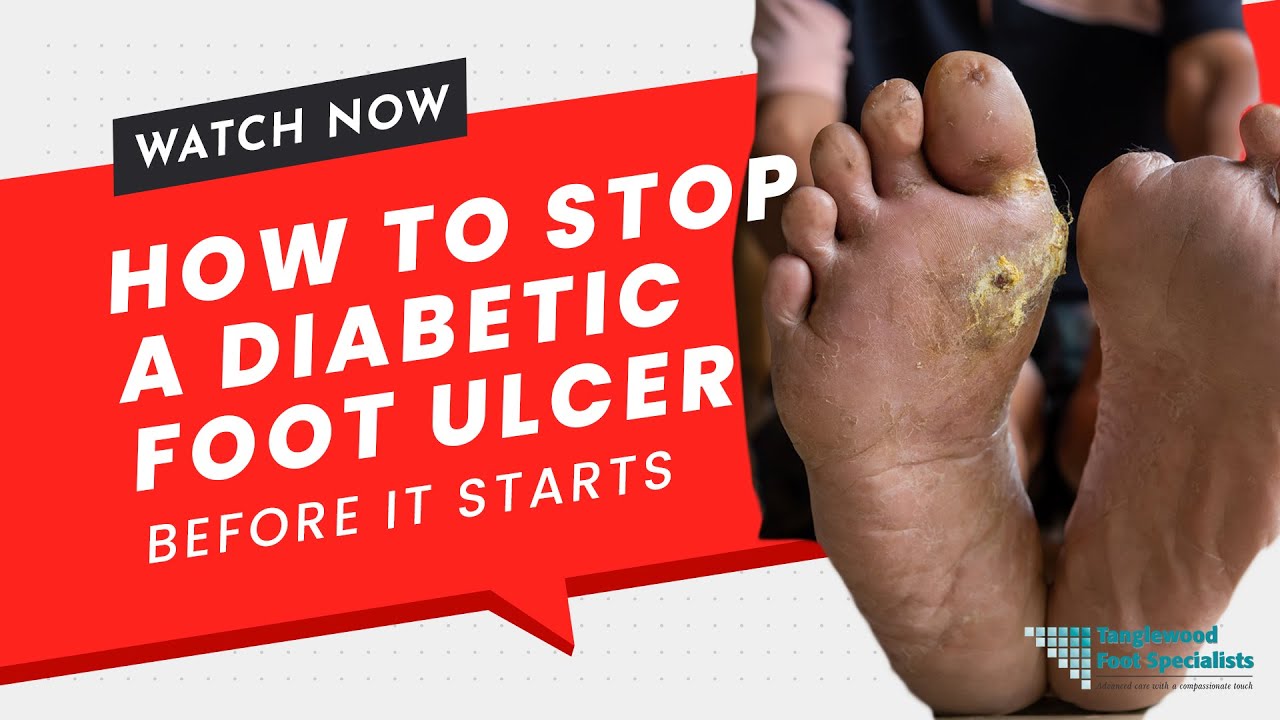
What Are Diabetic Foot Ulcers?
A diabetic foot ulcer is an open wound or sore on the foot that develops when high blood sugar damages nerves  (neuropathy) and blood vessels (peripheral arterial disease). Without the ability to feel pain or heal properly, small injuries—like blisters from tight shoes—go unnoticed and break down into chronic wounds that are difficult to heal and prone to infection.
Here's what's actually happening. Think of neuropathy like a broken thermostat in your house. Normally, your thermostat tells you when it's too hot or too cold so you can adjust. But when it's broken, the house could be freezing or overheating and you'd never know. Your feet are the same way—the "thermostat" (nerves) is broken, so you don't get warning signals about pressure, heat, or injury. You're living in a house where the smoke alarm has been disconnected.
And here's the second part of the problem. Your blood is like a construction crew carrying supplies to a work site. When you've got good circulation, the crew shows up on time with all the materials needed to repair any damage. But when blood flow is reduced from peripheral arterial disease? That's like having only half the construction crew show up, with half the supplies. They can't rebuild fast enough to keep up with the damage.
So you've got a double threat: you can't feel when something's wrong, and your body can't heal it even if you notice. That's why a small blister can become a deep ulcer in a matter of days. The injury occurs, you don't feel it, and your blood flow can't heal it. Minor injury becomes major wound.
Why Do Diabetic Foot Ulcers Develop?
The short answer? Repetitive pressure on the same spot combined with loss of sensation equals tissue breakdown. It's that simple—and that predictable.
 Here's the progression I see all the time in my Houston podiatry practice. Pressure builds in one area of your foot, usually because of structural problems like bunions or hammertoes that create abnormal weight distribution. Your body tries to protect itself by forming a callus—thickened skin—at that pressure point. But under that callus, the tissue continues to break down from constant stress. Eventually, the skin underneath gives way and you've got an ulcer.
This process takes weeks to months. The tragedy is that it's detectable at every stage—we just have to be looking. But if you can't feel the pressure building because of neuropathy, and you're not getting professional foot exams, you won't catch it until the ulcer has already formed.
What makes it worse? Uncontrolled blood sugar accelerates nerve and vascular damage. Smoking constricts blood vessels and doubles amputation risk. High blood sugar impairs immune function, making infections more likely and harder to fight. And biomechanical problems—the way your foot is structured and how you walk—create those repetitive pressure points that lead to tissue breakdown.
But here's what people get wrong. I've treated patients with perfect A1Cs who develop neuropathy because they've had diabetes for 20+ years. Yes, poor control accelerates the timeline dramatically—but duration matters as much as control. Even well-managed diabetics need proactive foot care. That myth that ulcers only happen to people who "don't manage their diabetes well"? That's 100% false, and it needs to stop.
The Truth About "Just Watching" Your Feet
Most diabetics are told: "Inspect your feet every day, wear good shoes, and call us if you see a problem." That's the  standard advice. And it's not wrong—it's just incomplete.
Daily foot inspection is critical. But it's reactive, not proactive. You're catching problems after they've started, not before. And for many patients, by the time they notice a red spot or ulcer, significant tissue damage has already occurred.
Think about it: if you have neuropathy, you can't feel when a callus is forming or when one area of your foot is bearing too much pressure. You only notice the visual changes—and by then, the biomechanical problem has been happening for weeks or months. That's why professional foot exams matter.
When you come in, I can see pressure patterns in your callus formation. I can test for loss of protective sensation with a monofilament. I can identify structural problems that are creating abnormal stress points. We catch the warning signs before they become wounds. That's the difference between monitoring and prevention.
Warning Signs You're at High Risk
Not all diabetics have the same ulcer risk. Some people can get away with basic foot care for decades. Others are ticking time bombs.
Here's how to know which category you're in.
High-Risk Indicators (70-90% correlation): You've lost protective sensation—you can't feel the monofilament test when I do it in the office. You're forming calluses in the same spots despite regular removal. You've had a previous ulcer, which means you've got a 50-70% chance it'll come back. You've got structural foot deformities like bunions, hammertoes, or Charcot changes. Your feet are cold, your pulses are weak, and your circulation is poor.
Moderate Risk Indicators (30-50% correlation): You've had diabetes for more than 10 years. Your A1C runs consistently above 8%. You smoke. You've got diabetic retinopathy or kidney disease—signs that vascular damage is widespread. Your ankle won't move well or your Achilles tendon is tight.
🚨 Seek immediate care if: You've got a new open wound or a blister that won't heal. Redness is spreading or not going away within 24 hours. There's drainage or a foul odor from your foot. One foot is significantly warmer than the other—that's a warning sign of infection or Charcot foot developing. You've got sudden severe foot pain, even with neuropathy. Don't wait—call our office at 713-785-7881 right away.
Houston Podiatrist Treats Diabetic Foot Ulcers Before They Start
Here's my philosophy: Why are we waiting for tissue to die before we intervene?
That's reactive medicine, not preventive care. At Tanglewood Foot Specialists, we identify high-risk patients and use regenerative therapies to improve nerve function, enhance circulation, and redistribute pressure before an ulcer forms. This is what I call the Third Option—the missing middle ground between "wear good shoes and hope" and "here's advanced wound care."
Let me walk you through exactly how we approach prevention, from least to most invasive. Most patients never need to progress beyond the first few levels.
Level 1: Lifestyle Optimization
Sometimes, that's as simple as getting your blood sugar under better control. Target an A1C below 7%—ideally 6.5%. For every 1% reduction in A1C, you get a 40% reduced risk of neuropathy progression. I also recommend alpha-lipoic acid supplementation at 600mg daily, anti-inflammatory nutrition with plenty of omega-3s and reduced processed carbs, and daily movement—30 minutes of walking in proper diabetic shoes. And look, I won't judge you, but I will be direct: if you're smoking, quitting isn't optional if you want to keep your feet. Smoking doubles your amputation risk.
With blood sugar optimization alone, we can reduce ulcer risk by 30-40%. You'll see measurable nerve function improvement within 3-6 months. When do we escalate? If after 3 months of optimization, you've still got high-risk foot structure or progressive neuropathy, we need to move to the next level.
Level 2: Professional Foot Care
When lifestyle changes aren't enough, we start with professional callus debridement every 4-6 weeks. Here's why this  matters: callused skin gives you 11 times the ulcer risk. When I remove that callus, I'm removing the pressure point before it causes damage underneath.
We also fit you for custom orthotics—heat-molded to your specific foot structure, not generic drugstore inserts. And we do a comprehensive vascular assessment with ABI testing and Doppler ultrasound to see if you need revascularization. I work with vascular surgeons here in Houston when patients need procedures to restore blood flow.
Success rates at this level are strong. Custom orthotics reduce ulcer formation by 50-60%. Professional debridement reduces risk by 35%. Combined? We're seeing 70-80% of patients remain ulcer-free at this level.
This is where most patients stabilize. We see you regularly, remove pressure points before damage occurs, and make sure your feet can handle the stress of daily life.
But here's the honest assessment: this level can't reverse existing neuropathy or poor circulation. It only manages symptoms and redistributes pressure. When do we escalate? If you've got persistent neuropathy symptoms, recurrent calluses despite orthotics, or declining nerve function on testing, we need to talk about regenerative approaches.
Level 3: Advanced Regenerative Therapies - The Third Option
This is where we separate ourselves from conventional podiatry.
Most doctors say, "Nothing can be done about neuropathy—just manage the symptoms." That's outdated thinking. We can stimulate nerve regeneration and improve circulation using FDA-cleared technologies.
Remy Laser Therapy: This is multi-wave locked laser therapy that penetrates 4-5cm deep, stimulating cellular  mitochondria to promote new blood vessel formation and reduce nerve inflammation. The protocol is 2-3 sessions per week for 8-12 weeks.
And here's what I see: 75-80% of patients report significant symptom improvement. 60-70% show improved protective sensation on monofilament testing. This isn't just symptom relief—we're talking about actual nerve healing. Most patients notice reduced burning and tingling within 2 weeks. But the real benefit shows up at 8-12 weeks when we retest nerve function.
EPAT Shockwave Therapy: These are acoustic waves that trigger your body's natural healing response—new blood vessel growth, stem cell recruitment, improved circulation. We do once per week for 6-8 weeks. The research shows an 82% success rate.
I see 70-75% of patients showing improved tissue perfusion on vascular studies, and a 65-70% reduction in callus formation and pre-ulcerative skin changes. I use it specifically for patients who keep forming calluses in the same spots despite perfect orthotics. The shockwave therapy changes how that tissue responds to pressure. We're not just treating the callus—we're changing the underlying tissue structure.
You'll notice initial changes within 2-3 weeks—the calluses stop rebuilding as aggressively. Peak benefit comes at 8-12 weeks, and the effects last 12-18 months.
Combined Regenerative Protocol ("Prevention Intensive"): For the highest-risk patients—those with previous ulcers or severe neuropathy plus circulation issues—we do a 12-week intensive protocol. MLS laser 2-3 times per week, shockwave once per week, and nutritional IV therapy with alpha-lipoic acid, NAD+, and B-complex twice per week initially, then taper to maintenance.
I've treated hundreds of Houston diabetics with this protocol over the past 8 years. The results? 85-90% avoid ulcer formation over 2-year follow-up.
Look, I need to be upfront about cost. Insurance typically doesn't cover regenerative therapies. The 12-week protocol runs $3,000-5,000. But here's the math: the average cost of treating one diabetic foot ulcer is $20,000-50,000. Amputation costs exceed $100,000. This is preventive medicine that pays for itself many times over. I've had patients tell me it's the best money they ever spent on their health.
Level 4: Preventive Surgery (When Structure is the Problem)
Sometimes the issue isn't neuropathy or circulation—it's the way your foot is built.
That's when we consider surgery before an ulcer forms.
Achilles Lengthening: If you've got limited ankle mobility (equinus deformity), your forefoot takes excessive pressure with every step. We can do a percutaneous procedure as an outpatient to lengthen that tendon. It reduces forefoot pressure by 25-30% and gives you a 75-80% reduction in forefoot ulcer recurrence. Recovery is 6-8 weeks.
Hammertoe Correction: When your toes are rubbing in shoes or developing sores on top, we can straighten them surgically. Recovery takes 6-12 weeks, but you get an 80-90% long-term ulcer prevention rate. These are elective procedures done before an ulcer forms—that's strategic prevention, not emergency intervention.
Look, I know foot surgery sounds scary. But when it's done for the right reasons, at the right time, outcomes are excellent. We're preventing problems, not reacting to crises.
And most patients never need surgery—about 85-90% of cases resolve at earlier levels of care.
Level 5: What Happens If an Ulcer Forms
Despite best efforts, some patients develop ulcers.
At that point, we shift from prevention to aggressive wound care: debridement, negative pressure therapy, advanced dressings, offloading. The good news: 75-80% of ulcers heal with proper treatment. But healing an ulcer takes months and requires intensive care.
That's why everything we've discussed above matters so much—we want to keep you out of this category entirely.
And if you're reading this because you already have an ulcer? Either way, I need to see you. Early intervention makes all the difference.
What to Expect When You Come to Tanglewood Foot Specialists
When you come in for your first visit, I'll start by understanding your diabetes history—how long you've had it, how well it's controlled, what medications you're on, and whether you've had any foot problems in the past. I need the full picture.
Then I'll examine your feet. I'm going to check the pulses in your feet to assess circulation. I'll do nerve function testing with a monofilament and check your vibration sense to see how much protective sensation you've lost. I'll look at your foot structure—any deformities, limited joint mobility, pressure points that concern me. I'll examine your skin condition closely, looking for calluses, pre-ulcerative changes, or areas that need immediate attention. And I'll watch you walk to see where pressure is concentrated and whether you're compensating in ways that create additional stress.
After the exam, we'll talk through what I found and where you fall on the risk spectrum. If you're low-risk with good sensation and no structural issues, we might just establish a monitoring schedule—seeing you every 6 months for preventive care. If you're moderate to high-risk, we'll discuss which treatment level makes sense. I'll explain what each option involves, what the timeline looks like, and what kind of results you can expect. This is a conversation, not a lecture. You're part of the decision-making process.
Most patients leave the first visit with a clear action plan. If we're starting regenerative therapies, we'll typically schedule your first laser or shockwave session within that same week. Custom orthotics take about 2 weeks to fabricate. If surgery is on the table, we'll schedule when you're ready—but there's never pressure.
Long-Term Prevention: Staying Ahead of the Problem
Prevention isn't a one-time thing—it's an ongoing partnership.
High-risk patients need professional foot exams every 4-6 weeks. Moderate-risk patients should come in every 3 months. Low-risk patients with well-controlled diabetes need to see me twice yearly. And regardless of your risk level, you need to do daily at-home monitoring. I'll teach you exactly what to look for.
This is a team effort. I'm managing your foot structure and biomechanics. Your endocrinologist is managing your blood sugar. Your primary care doctor is managing your overall health. And you're doing the daily monitoring and self-care. When all those pieces work together, ulcers become rare instead of inevitable.
Call immediately if you see redness not going away within 24 hours, any open sores or blisters, drainage from your foot, or one foot significantly warmer than the other. Those are warning signs we can't ignore. Don't wait—call 713-785-7881 right away.
Look, I can't promise you'll never develop a foot problem. Diabetes is unpredictable. But I can promise that with proactive care, early intervention, and the right treatment strategy, you're giving yourself the best possible chance.
Most of my diabetic patients never develop ulcers. That's the goal—and it's absolutely achievable.