What Is PRP Therapy for Foot Pain?
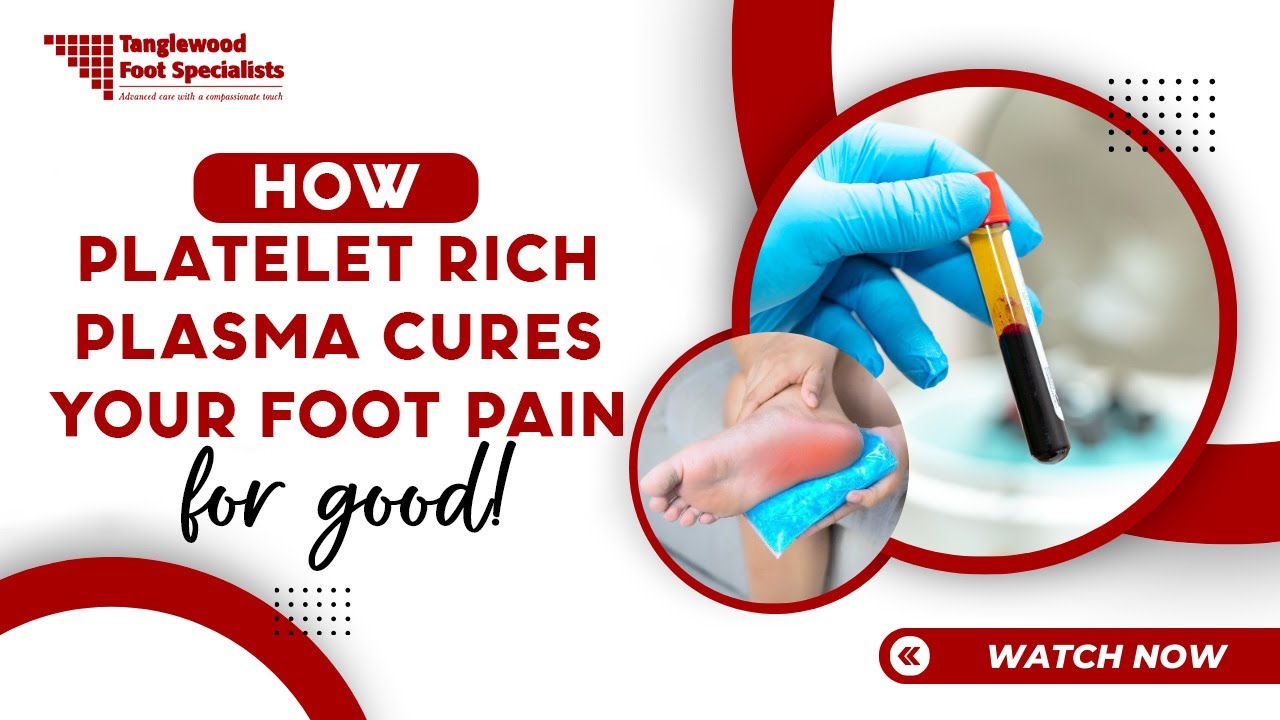
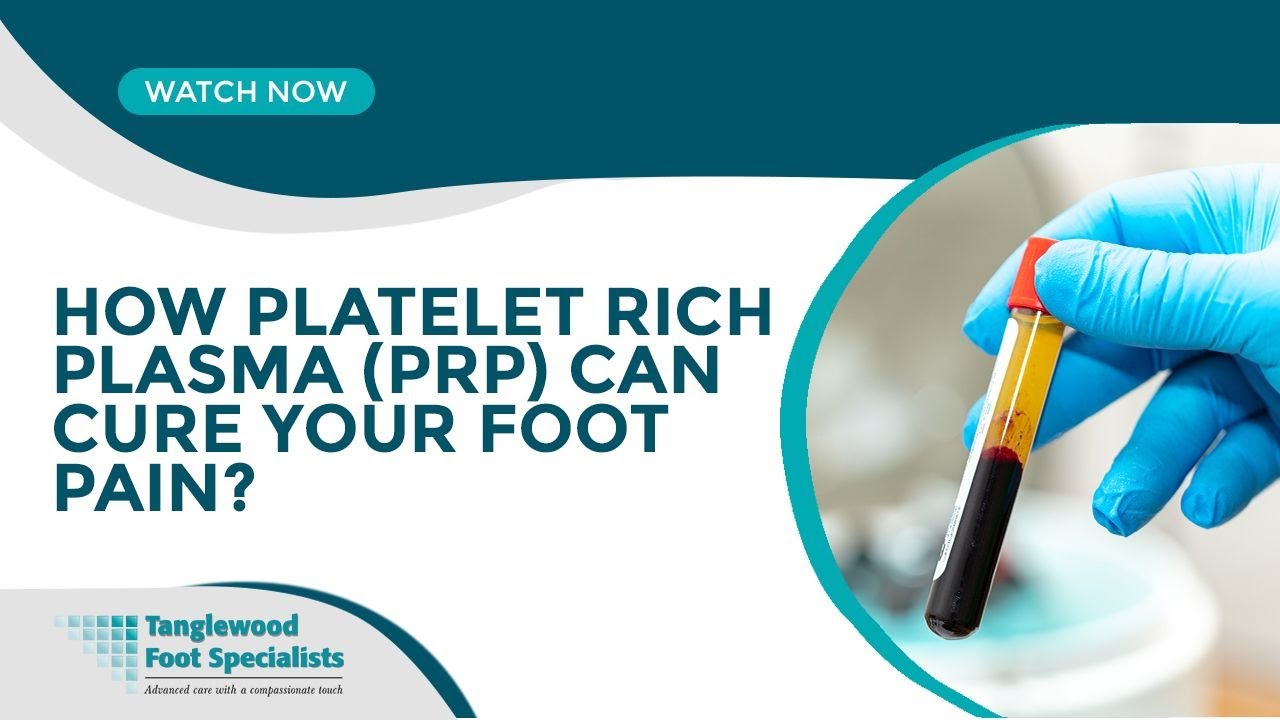
Platelet-Rich Plasma (PRP) therapy uses your body's own healing factors to treat chronic foot and ankle pain. We draw a  small amount of your blood—similar to a routine blood test—and place it in a centrifuge, which spins at high speed to separate the different components. What we're after is the plasma that's rich in platelets, concentrated about three to five times higher than what's normally in your blood.¹
Here's why that matters. Platelets contain growth factors—specialized proteins that signal your body to send healing cells to an injured area. Think of growth factors like construction foremen at a job site, telling workers where to go and what to build. By concentrating these platelets and injecting them precisely where they're needed, we deliver a powerful healing boost directly to damaged tendons, ligaments, and fascia.
Unlike cortisone injections that mask pain temporarily by reducing inflammation, PRP provides the biological materials your body needs to actually repair injured tissue. It's liquid gold for healing—giving your body's construction crew the materials and instructions they need to finish a job they started but couldn't complete on their own.
The injection is guided by ultrasound, which lets me see exactly where the needle is going in real-time. This precision matters because we want the PRP concentrated at the exact site of injury, not scattered throughout surrounding tissue. The entire procedure takes less than an hour from blood draw to injection.
Why Conservative Treatments Stop Working (And What PRP Does Differently)
When tissue is chronically injured, it often gets stuck in what we call a failed healing response. Your body started trying to heal the injury—maybe you rested, did physical therapy, iced religiously—but for various reasons, that healing process stalled out. The tissue remains in a state of chronic inflammation without progressing to true repair.
It's like having a construction crew that started a job but never finished it.
Here's what most people don't realize. Rest, ice, and stretching can manage symptoms and reduce pain temporarily, but they can't deliver the growth factors and signaling proteins needed for tissue regeneration. Cortisone shots reduce inflammation, which makes you feel better for a while, but cortisone doesn't provide any materials for actual healing. Even worse, repeated cortisone injections can actually weaken tendons and other soft tissue over time.² You're trading short-term relief for long-term problems.
The reason chronic conditions become chronic is often poor blood supply. Tendons, ligaments, and fascia don't have the same robust blood flow that muscles do. Without good circulation, your body struggles to deliver enough oxygen, nutrients, and healing factors to complete the repair process. That's why the same injury that would heal in weeks elsewhere in your body can linger for months or years in your foot.
So here's what PRP does differently. By concentrating the healing factors from your own blood and injecting them right into the damaged tissue, we bypass the blood supply problem entirely. We're delivering three to five times the normal concentration of growth factors exactly where they're needed most. This jumpstarts the stalled healing process and gives your body what it's been missing.
And here's the key difference: PRP doesn't just reduce symptoms—it provides the materials for your body to actually rebuild damaged tissue. That's why the results tend to last longer than cortisone. We're not masking the problem; we're giving your body what it needs to fix it.
Houston Podiatrist's Guide: Which Foot Conditions Respond Best to PRP
After treating thousands of patients in my Houston practice with regenerative medicine, I've found that PRP works  exceptionally well for specific types of chronic foot and ankle pain—particularly conditions involving soft tissue damage that hasn't responded to conservative care.
Plantar fasciitis is one of the most common conditions I treat with PRP. If you've been dealing with that stabbing heel pain for six months or longer, especially if cortisone gave you temporary relief that didn't last, PRP has a 75-85% success rate.³ When we combine it with shockwave therapy—which I often recommend—that success rate jumps even higher.
Achilles tendinopathy responds beautifully to PRP, with 70-80% of patients seeing significant improvement. This is particularly important because the Achilles tendon has notoriously poor blood supply, making it prone to chronic degeneration. Whether your pain is at the insertion point where the tendon attaches to your heel, or higher up in the tendon itself, PRP can deliver healing factors that simply can't get there through normal blood flow.
I also use PRP frequently for Morton's neuroma—that burning pain in the ball of your foot that feels like you're walking on a marble. For posterior tibial tendon dysfunction (pain on the inside of your ankle and arch), peroneal tendinopathy (pain along the outside of your ankle), and even early to moderate arthritis of the foot and ankle, PRP can reduce inflammation and promote tissue repair.
Here's who benefits most from PRP: you've been dealing with pain for at least three to six months, you've tried physical therapy and custom orthotics without adequate improvement, and you want to avoid surgery if possible. You need realistic expectations—PRP won't fix severe structural deformities or completely torn tendons—but for tissue that's stuck in a failed healing response, it can be a game-changer.
What to Expect When You Come to Our Houston Office
When you come in, I'll start by listening to your story—how long you've been in pain, what you've already tried, what activities you can't do anymore. This isn't just small talk. Understanding your goals drives my treatment recommendations. Are you trying to run a 5K? Play with your grandkids without limping? Stand at work without agony?
That's what matters to me—your goals, not just your symptoms.
Then I'll do a thorough physical examination to figure out where the pain is actually coming from. I'll check your range of motion, watch how you walk, and feel for areas of tenderness or swelling. In many cases, I'll use ultrasound imaging right there in the office to visualize the damaged tissue. It's quick, painless, and gives me far more information than an X-ray for soft tissue problems. I can actually see if your plantar fascia is thickened and torn, if your Achilles tendon is degenerating, or if there's fluid building up around an inflamed nerve.
Here's what happens next. We'll have an honest conversation about whether PRP is a good fit for your situation or if we should try something else first. Maybe you'd benefit from orthotics combined with targeted stretching before we consider an injection. Or possibly the damage is severe enough that we need to talk about foot surgery instead. I won't push you toward any treatment—my job is to give you the information you need to make the right decision for your life.
If PRP makes sense for your condition, we can often do the procedure the same day, or we can schedule it for a future visit. There's no pressure. I want you to feel confident in the treatment plan, not rushed into something you're not ready for.
Either way, I need to see you to figure out what's really going on and what will actually help.
Most patients tell me they wish they'd come in sooner. The longer you wait, the more chronic the problem becomes, and the harder it is to treat. But wherever you are in your journey—whether you've been dealing with this for three months or three years—there are options we haven't tried yet.