What Is Regenerative Medicine for Foot Pain?
Regenerative medicine for foot pain refers to treatments that help your body heal itself by restarting stalled repair processes. Instead of just masking pain (like cortisone) or removing damaged tissue (like surgery), regenerative therapies deliver concentrated healing factors directly to injured tendons, ligaments, and fascia—jumpstarting the natural healing your body tried to do but couldn't complete.
Here's what's actually happening when you have chronic foot pain. Your body started trying to heal the damaged tissue—whether it's your plantar fascia, Achilles tendon, or arthritic joint. But for various reasons (poor blood supply, continued stress on the area, or simply time), that healing process stalled out. The tissue remains in chronic inflammation without progressing to true repair.¹
Think of it like a construction crew that started a job but never finished it. The site is torn up, materials are scattered around, but nobody's actually building anything. That's your chronically inflamed tissue—stuck in a state of incomplete healing.
Regenerative medicine provides the tools and environment your construction crew needs to complete the job. Whether that's through shockwave therapy (which breaks up scar tissue and triggers blood flow), PRP (which delivers concentrated growth factors), or combined protocols (which do both), these treatments address the underlying failed healing response—not just the symptoms.
Most podiatrists offer two options: conservative care (rest, orthotics, cortisone) or surgery. Regenerative medicine sits between these two extremes—the Third Option. It's more effective than cortisone shots (which provide temporary relief) but less invasive than surgery (which requires months of recovery). For many patients, it's exactly what they need.
The Third Option: Between Medication and Surgery
Most doctors are trained to think in terms of "medicate or operate." If medication doesn't work, the next step is surgery. But what if there's a middle path that most patients never hear about?
In most medical offices, you'll try conservative care (stretching, orthotics, maybe cortisone injections) for several months. If that doesn't work, you're told surgery is your only option. But there's a critical gap between these two extremes—regenerative medicine.
Here's what frustrates me: I see patients every week who've been suffering for months or years because nobody told them about regenerative options. They assumed it was either "live with it" or "have surgery." But for 70-85% of patients with chronic foot pain, regenerative medicine provides relief without going under the knife.²
Let me break down the three options:
OPTION 1: Medication/Conservative Care
This includes rest, ice, NSAIDs, stretching, orthotics, and cortisone shots. It works for 60-70% of patients with mild to moderate issues. The limitation? It doesn't address underlying healing failure. You need 3-6 months to know if it's working.
OPTION 2: Surgery
Surgery becomes necessary when there's severe structural damage, complete tears, or failed conservative care. Success rates are 85-95% when appropriate. The limitation is recovery time (3-6 months), risks, and costs. The reality? Only 5-15% actually need this.
OPTION 3: Regenerative Medicine (THE MISSING MIDDLE)
This includes shockwave therapy, PRP, Remy Class IV laser, BPC-157 peptides, and combined protocols. It works for 70-85% of chronic cases that failed conservative care. Why? Because it restarts the stalled healing process. You'll see initial improvement in 2-4 weeks, with full benefit at 3-6 months.
Why don't most doctors mention it? Insurance doesn't typically cover regenerative treatments, so many doctors don't offer them. But when you compare the investment ($1,500-2,000 for combined protocols) to surgery costs ($5,000-15,000 plus 3 months recovery time), many patients find regenerative medicine worth considering—especially when it means potentially avoiding surgery altogether.
Are You a Candidate for Regenerative Medicine?
Not everyone is a good candidate for regenerative medicine—and I'll tell you that honestly up front. These treatments work best for specific situations.
✓ You're a GOOD Candidate If:
 You've had foot pain for 3-6 months or longer without adequate improvement
- Conservative care (orthotics, PT, stretching) hasn't provided lasting relief
- Cortisone injections worked temporarily but stopped helping
- You have chronic plantar fasciitis, Achilles tendinopathy, peroneal tendonitis, or foot/ankle arthritis
- You want to avoid surgery if possible
- You're willing to modify activities during healing (2-4 weeks)
- Your pain is from tissue damage, not structural problems (we'll determine this)
✗ You're a POOR Candidate If:
- Pain is brand new (less than 6 weeks)—try conservative care first
- You have active infection in the area
- You need immediate results (these treatments stimulate healing over weeks/months)
- You have unrealistic expectations (expecting 100% pain-free instantly)
- You have severe structural damage requiring surgical correction
- You're not willing to address contributing factors (wrong shoes, poor biomechanics)
Special Considerations for Diabetic Patients
If you have diabetes, regenerative medicine can still help—but success depends on blood sugar control. Every A1C point above normal reduces healing ability by 10 times.³ Not 10%. Ten times.
If your A1C is well-controlled (below 8), you're likely a good candidate. If not, we need to optimize glucose control first. Blood sugar management is critical for regenerative medicine success. Diabetic foot care requires special attention to healing factors.
Athletes and Active Individuals
Athletes often respond particularly well because they typically have better baseline circulation and are motivated to follow protocols. Most return to full activity within 3-6 months—much faster than surgical recovery.
The key is balancing treatment with maintaining fitness. We don't tell you to stop everything. We modify, not eliminate. You can maintain your fitness while allowing healing to happen.
If You've Already Had Surgery
If you've had foot surgery that didn't fully resolve your pain, regenerative medicine may still help. Results may be less dramatic than in non-surgical patients due to scar tissue, but improvement is possible.
Scar tissue from previous surgery can limit regenerative potential. But I've seen patients who had surgery years ago find relief with these protocols when nothing else worked.
Complete Treatment Spectrum - Houston Podiatrist Approach
When you come into my Houston office, I don't jump straight to regenerative medicine. I take a comprehensive approach that starts with the simplest solutions and progresses only as needed.
Here's the complete treatment spectrum and where regenerative medicine fits.
Level 1: Lifestyle Changes (The Foundation)
Sometimes, the solution is as simple as choosing the right shoes. I recommend shoes with a wide toe box that doesn't compress your toes, adequate arch support built into the shoe structure, and low heels—1 inch or less.
Those 3-inch heels increase forefoot pressure by 76%.
Houston's humidity means your feet swell more than in dry climates. Shoes that fit in the morning may be tight by afternoon. If you're one of the Memorial Park runners I see every week, you need to cut training volume by 50% temporarily and switch to softer surfaces.
For Texas Medical Center workers standing on hard floors all day, anti-fatigue mats make a real difference.
For mild symptoms with recent onset (less than 3 months), these changes work for about 20-30% of patients. Give it 4 weeks. If you've been dealing with this for months and lifestyle changes haven't helped, it's time to move to the next level.
Level 2: At-Home Care
I want you to try a 60-second morning stretch routine before you even get out of bed. Spend 20 seconds on your mid-back against the wall with a small ball or rolled towel behind your spine. Next, 20 seconds releasing your hip flexors in a lunge position. Finally, 20 seconds on calf stretches—stand with your affected leg behind you, keep your back straight, and gently lean forward while keeping your heel down.
Ice for 20 minutes on, 40 minutes off. Foam roll your calves and foot bottom for 2-3 minutes daily.
For insoles, look for medical-grade options like RediThotics, Powerstep, or Superfeet ($40-80). Skip Dr. Scholl's scanner machines and generic drugstore inserts under $20—they rarely provide adequate support.
If at-home care will work, you should feel 30-50% better within 4 weeks. But here's the limitation: these provide symptom relief without addressing the root cause. They can't restart your stalled healing response.
That's when we need to escalate.
Level 3: Conservative In-Office Treatment
Custom orthotics are like eyeglasses for your feet. While you're wearing them, they compensate for mechanical imbalances. When you take them off, the underlying issue remains. We do a complete biomechanical exam, watch you walk, take precise measurements, and create orthotics molded specifically to YOUR feet. They redistribute pressure away from damaged tissue and improve overall foot alignment.
About 70-80% of patients see significant improvement with properly fitted custom orthotics. You'll feel the full benefit in 4-8 weeks. In Houston, truly custom devices run $600-800.
For immediate relief, we can use corticosteroid injections. But I need to be honest with you—they reduce inflammation and provide 4-12 weeks of relief, but they don't heal tissue. I use them as a bridge treatment while pursuing long-term solutions, not the solution itself. I limit patients to maximum 3 cortisone shots per year per site because repeated injections can weaken tendons.
Physical therapy combines ultrasound, manual therapy, and progressive exercises—typically 6-12 sessions over 4-8 weeks. When combined with orthotics, 60-70% of patients improve. But if you've been faithful with orthotics and PT for 3 months without meaningful improvement (at least 50% better), you're likely a good candidate for regenerative medicine.
Level 4: Advanced Regenerative Therapy (THE THIRD OPTION)
This is what most doctors never mention.
In most medical offices, doctors are trained to think in terms of "medicate or operate." If medication doesn't work, the next step is surgery. But what if there's a middle path that most patients never hear about?
Shockwave Therapy
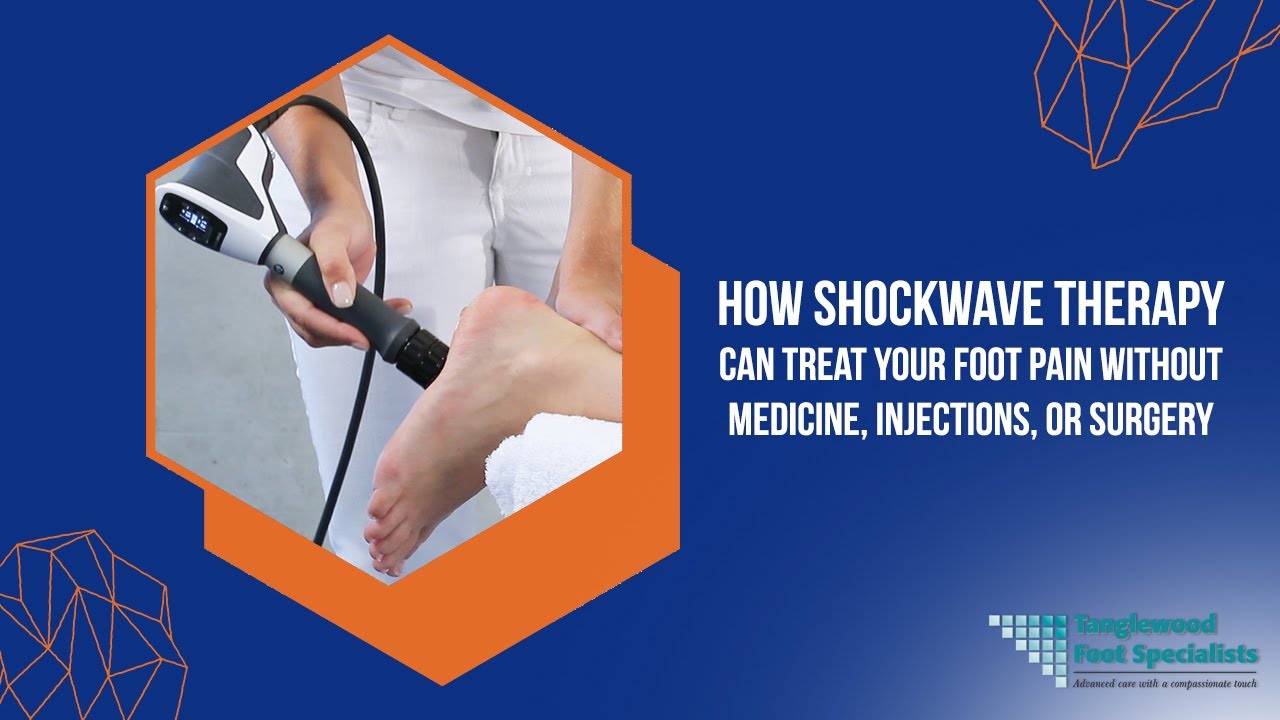
 Think of shockwave therapy like aerating a lawn. By creating channels in compacted soil, you allow water, air, and nutrients to penetrate more deeply. Similarly, shockwave uses acoustic pressure waves to break up scar tissue, trigger blood flow, and restart stalled healing.
The protocol is once a week for 3 sessions, each lasting 10-15 minutes. You'll feel a tapping sensation—we can adjust the intensity for comfort. Most patients describe discomfort at 4-5 out of 10 maximum.
What's exciting? 82% of patients find their pain resolved after the full treatment.⁴
Almost makes surgery obsolete for chronic plantar fasciitis and Achilles problems.
In Houston, shockwave costs $300-500 per session. It's not typically covered by insurance, but many patients feel improvement after the first treatment. Full benefit comes in 3-6 months.
PRP (Platelet-Rich Plasma) - "Liquid Gold for Healing"
 PRP therapy uses concentrated healing factors from your own blood. We draw blood from your arm (like a routine test), process it in a centrifuge, and inject the concentrated platelets precisely where healing is needed—often using ultrasound guidance for accuracy.
Those growth factors signal your body to send healing cells and restart repair. Research shows 70-80% of patients with chronic tendon problems see significant improvement.⁵ You'll have mild soreness for 1-2 days and should avoid high-impact activities for 3-5 days, but you can walk immediately.
Most patients begin noticing improvement around 2-4 weeks, with continued improvement over 3-6 months. In Houston, PRP costs $500-800 per injection.
Remy Class IV Laser and Red Light Therapy
Red light therapy uses specific wavelengths to promote cellular healing and reduce inflammation deep in tissues. It's completely painless and requires no downtime. The Remy laser works particularly well for plantar fasciitis, Achilles tendinitis, and neuropathy. We often combine it with other regenerative treatments for enhanced results.
BPC-157 Peptide Therapy
BPC-157 is an oral peptide that supports tissue repair from the inside out. While other treatments work locally at the injury site, BPC-157 enhances your body's overall healing capacity. It's particularly effective when combined with PRP or shockwave therapy.
Combined Protocols - Seeds and Soil
Here's where regenerative medicine gets really powerful.
PRP provides the seeds—the growth factors that tell your body to repair damaged tissue. Shockwave therapy prepares the soil—creating the optimal environment for those growth factors to work effectively. Together, they create a healing environment that succeeds where single treatments sometimes fall short.
We do the PRP injection first, then shockwave sessions (typically 1-3) within a few days. The enhanced success rate? 85-95% with combined protocols versus 70-82% for single modality.⁶
This works best for patients who haven't responded to conservative care for 6+ months.
The total investment is $1,500-2,000—compare that to $5,000-15,000 for surgery with 3 months recovery.
My Clinical Protocol
When conservative care fails after 3-6 months, I discuss regenerative options. My approach depends on the specific condition. For plantar fasciitis, I often start with shockwave alone (82% success). For chronic Achilles tendinopathy, I usually recommend PRP or the combined protocol. When you've had multiple failed treatments, I go straight to combined shockwave plus PRP. If you're dealing with arthritis or neuropathy, I include Remy laser therapy. For stubborn cases, I add BPC-157 peptides to the protocol.
I treated my own plantar fasciitis with this combined approach. After a corticosteroid injection to control initial inflammation, I continued with my custom orthotics (I was already wearing them), added shockwave therapy, and used Tosallin CBD/CBG transdermal cream. After applying three pumps three times daily for three days, my heel pain resolved for good. That personal experience taught me the power of combined protocols.
Timeline Expectations
Unlike cortisone which provides rapid but temporary relief, regenerative treatments work by stimulating your body's natural healing processes. Most patients begin noticing improvement within 2-4 weeks, with continued improvement over the following months. The full benefit might not be apparent until 3-6 months after treatment, but results tend to be more lasting.
Insurance Reality
Currently, most insurance plans including Medicare don't cover PRP, shockwave, or advanced regenerative therapies. These are cash-pay procedures, though some FSAs or HSAs may cover them. While out-of-pocket costs might seem significant initially, many patients find regenerative medicine more cost-effective long-term compared to continued co-pays for PT, repeated cortisone injections, or the much higher costs of surgery and post-surgical rehabilitation.
Level 5: Surgery (When Necessary - But Rare)
Look, I know that foot surgery sounds scary. But here's the reality: 95% of plantar fasciitis cases resolve without surgery. Only 5-15% of patients with chronic foot pain ultimately need surgical intervention. For those who do, modern techniques are less invasive, recovery is faster, and satisfaction rates exceed 90%.
Surgery makes sense when there's severe structural damage, complete tendon tears, or when both conservative care AND regenerative treatments have failed. It's also appropriate for severe arthritis requiring joint fusion or replacement, or when functional limitation is significantly affecting your quality of life.
Modern foot surgery isn't what it used to be. Minimally invasive techniques, improved fixation methods, and better post-op protocols mean faster recovery. Many patients are walking in a surgical boot immediately, back to regular shoes within 6-8 weeks, and back to full activity by 3 months. Most patients who ultimately need surgery wish they'd done it sooner.
The recovery timeline looks like this: immediate weight-bearing in a surgical boot (status varies by procedure), weeks 1-2 for dressing changes and suture removal, weeks 3-6 for progressive weight-bearing as PT begins, months 2-3 for return to normal daily activities, and full recovery including sports by 3-6 months.
I won't judge you if you choose periodic regenerative treatments over surgery—that's fine if it keeps you functioning. Others want to fix it once and for all—also fine. Both approaches are valid depending on your goals. Either way, I need to see you so we can figure out the best path forward.
If you've been dealing with chronic foot pain for 3-6 months or longer without improvement, let's talk about whether regenerative medicine is right for you. Contact us for an immediate appointment at 713-785-7881 or request your appointment online. Not sure which option makes sense? Come in for an evaluation and we'll figure it out together.
What to Expect: Timeline and Recovery
When you come in, I'll start by examining your foot and watching you walk. I want to understand exactly what's causing your pain—not just treat symptoms. We'll discuss what you've already tried, what worked and what didn't, and what your goals are. Want to run again? Need to stand all day at work? Just want to walk without limping? Your goals guide my recommendations.
Week 1-2: Diagnosis and Initial Treatment
Most patients start treatment at the first visit. If we determine custom orthotics are appropriate, those take 2-4 weeks to fabricate. If regenerative medicine makes sense, we can often do shockwave therapy or PRP the same week.
The evaluation typically takes 30-45 minutes. I'm going to ask you questions about your pain—when it's worst, what makes it better, what you've already tried. Then I'll examine your foot, check your range of motion, and watch how you walk. Sometimes I'll take X-rays to rule out structural problems or stress fractures.
Weeks 2-4: Initial Improvement Phase
This is when most patients begin noticing changes. With shockwave therapy, many feel improvement after the first session. With PRP, you'll start feeling different around week 3-4. It's not always dramatic—you might notice you're not limping as much, or the morning pain isn't as severe.
Some patients worry when improvement feels gradual. But that's actually a good sign. Your body is healing, not just masking pain. The tissue is repairing itself from the inside out.
Months 2-3: Significant Improvement
This is the "aha!" moment for most patients—when they realize they're doing activities they couldn't do before without thinking about it.
You might realize you walked your dog without pain, or made it through a full work shift without discomfort.
One patient told me she was halfway through her grocery shopping when she realized she'd forgotten to think about her feet. That's when she knew it was working.
Another patient, a Memorial Park runner, noticed he'd completed his usual 5-mile loop without the stabbing heel pain that had been plaguing him for months.
Months 3-6: Maximum Benefit
Regenerative medicine stimulates healing that continues for months. The full benefit typically becomes apparent around 6 months post-treatment. This is when we assess: Are you where you want to be? Do we need additional treatment? Or are you ready to transition to maintenance and prevention mode?
Success doesn't always mean 100% pain-free (though some patients achieve that). For most, success means significant pain reduction—typically 70-85% improvement—allowing return to desired activities without limiting discomfort. You can walk, work, exercise without constantly thinking about your feet.
If It's Not Working
By 8-12 weeks, we should see meaningful improvement. If we're not getting there, we reassess. Maybe we need combined protocols. Maybe there's a biomechanical issue we haven't addressed. Maybe surgery is actually necessary. I'm honest about when it's time to pivot to a different approach.
I won't keep trying the same thing if it's not working. If shockwave alone isn't providing adequate relief after 3 sessions, we discuss adding PRP. If the combined protocol isn't getting you to 70% improvement by 3 months, we talk about what's next—whether that's additional regenerative treatments or considering surgical options.
Cost Considerations and Insurance Reality
I'm going to be completely honest with you about costs because I wish more doctors were transparent about this. Currently, most insurance plans—including Medicare—don't cover regenerative therapies like PRP, shockwave, or advanced protocols. These are considered cash-pay procedures.
Here's what regenerative treatments typically cost in Houston:
- Shockwave therapy: $300-500 per session (typically 3 sessions)
- PRP injection: $800-1,200 per treatment (sometimes need 2)
- Remy Class IV laser: $150-300 per session (multiple sessions)
- Combined protocols: $1,500-2,000 total
- BPC-157 peptides: $200-400 for treatment course
Compare that to foot surgery, which typically costs $5,000-15,000 depending on complexity and insurance coverage. Plus you're looking at 3-6 months recovery time, lost work, physical therapy co-pays, and potential complications. When you frame it that way, many patients find regenerative medicine worth the investment—especially considering the 70-85% success rate and minimal downtime.
Some FSAs (Flexible Spending Accounts) and HSAs (Health Savings Accounts) do cover regenerative treatments. Check with your plan administrator—this can significantly reduce out-of-pocket costs.
We offer payment plans for regenerative protocols because I don't want cost to be the only reason someone continues suffering. We can discuss options that work for your situation.
Here's how I think about it: If regenerative medicine gives you 6-12 months (or longer) of relief, allowing you to work without pain, exercise again, and avoid surgery—what's that worth to you? Only you can answer that. I'm not here to pressure you. I'm here to give you information so you can make an informed decision.
When to Schedule Your Evaluation
Schedule an evaluation if you:
- Have had foot pain for 3+ months without adequate improvement
- Have tried conservative care (stretching, orthotics, PT) faithfully for 8-12 weeks with limited results
- Have had cortisone injections that stopped working
- Want to explore options beyond "live with it" or "have surgery"
- Are active and want to return to sports or activities without prolonged downtime
- Have questions about whether regenerative medicine is right for your specific situation
At your evaluation, we'll examine your foot and watch you walk (biomechanical assessment), review what you've already tried and why it hasn't worked, determine if you're a good candidate for regenerative medicine, discuss which specific treatment approach makes sense for your condition, provide honest timeline and cost expectations, and answer all your questions—no pressure, no sales pitch.
This isn't a commitment to treatment. It's an evaluation to give you information so you can make the best decision for your situation.
Houston patients dealing with chronic foot pain choose Tanglewood Foot Specialists because we offer the complete spectrum of options—from conservative care through advanced regenerative protocols to surgery when truly necessary. You're not locked into one approach. We'll find what works for you.