What Is Regenerative Medicine for Foot Pain?
Regenerative medicine for foot pain refers to a group of evidence-based treatments — including shockwave therapy,  platelet-rich plasma (PRP) injections, and Class IV laser therapy — that stimulate your body to complete its own healing process. Rather than removing or masking damaged tissue, these treatments restart the biological repair cycle that stalled. That distinction matters more than most people realize.
Here's what's actually happening in a chronic foot injury. When you first damage tissue — your plantar fascia, your Achilles tendon, a stressed bone — your body sends a repair crew to the site immediately. In most cases, that crew gets partway through the job and then stalls. The tissue stays stuck in a chronic low-grade inflammatory state, and that's what tendinopathy — the structural breakdown of tendon tissue, not just inflammation — actually is: not a body that gave up, but a repair process that got stuck.
That's exactly where regenerative medicine for foot pain comes in. Shockwave therapy creates acoustic pressure waves that break up scar tissue and trigger new blood vessel formation — essentially kicking the repair crew back into gear with new equipment. PRP delivers concentrated growth factors from your own blood directly into the damaged tissue, giving the crew the raw materials it ran out of. The body doesn't need a surgeon here — it needs a foreman and a fresh supply line.
Here's what most people don't realize: your body isn't failing to heal because it can't. It's failing because the process got stuck. That's a very different problem — and it has a very different solution.
Why Conservative Care Stops Working
Rest, ice, stretching, and cortisone shots aren't bad treatments. They're just the wrong tools for what most chronic foot pain actually is by the time someone ends up in my office. There's a ceiling on what they can do, and once you've hit it, repeating them won't change anything.
Cortisone is the clearest example. It works fast — often within 48 to 72 hours — and that speed feels like real treatment, but cortisone is a pain management tool, not a repair agent. It suppresses the inflammatory signal without delivering a single molecule of healing material to damaged tissue, and repeated injections can actually weaken tendon structure over time.<sup>3</sup> Most surgery referrals I see come after two, three, or four rounds of cortisone shots for foot pain that provided diminishing relief each time — the pain kept coming back because the tissue never actually healed.
Stretching and physical therapy have real value — both are part of almost every treatment plan here. But for tissue that's genuinely degenerated after six or more months of chronic injury, stretching manages symptoms rather than repairing the underlying structure. You can stretch a fraying rope every morning and it won't re-weave the fibers. Conservative care resolves the problem in 60–70% of early and moderate cases, but that number drops significantly once you're dealing with chronic, structurally degenerated tissue.
The core problem is a gap in the standard treatment menu. At most practices, you get conservative care — rest, physical therapy, orthotics, cortisone — and when that fails, surgery is the next conversation. What gets skipped entirely is the regenerative tier: shockwave, PRP, laser, and peptide therapy. These aren't experimental options — they're evidence-based treatments that most providers simply aren't trained in or equipped to offer.
And if a doctor can't prescribe something, they won't recommend it. That's not a criticism — it's just how medicine works in practice. But it means the failure of your conservative care plan isn't a verdict on your body. It's a signal that you need access to the next level of care.
The Truth About Foot Surgery — Honest, Not Scary
Look, I know foot surgery sounds scary. But I also want to be straight with you about when it's the right answer —  because it sometimes is. My job isn't to steer you away from surgery at all costs. It's to make sure you only get there if you actually need it, and those are very different things.
Surgery for foot and ankle conditions works best when the problem is structural — a deformity that's mechanically unsalvageable, a complete ligament rupture, or end-stage joint destruction from arthritis. In those cases, no amount of regenerative therapy changes the underlying anatomy, and surgery is the correct call. Modern foot surgery in Houston is dramatically better than it was ten years ago — less invasive approaches, faster recovery timelines, more predictable outcomes. When it's genuinely necessary, it works.
But here's the thing — surgery for soft tissue conditions like plantar fasciitis or Achilles tendinopathy doesn't address the mechanical forces that created the problem in the first place. Releasing or removing tissue changes the anatomy, but it doesn't fix the loading patterns, gait mechanics, or tissue quality in the surrounding area. That's why the same biomechanical forces that damaged the tissue originally can continue stressing the repair site after the procedure. Surgery applied before the regenerative tier has been tried isn't a definitive fix — it's an expensive last resort used too early.
The misconception I hear most often is this: "If conservative care failed, surgery must be the only option left." That's only true if conservative care and the regenerative tier are the same thing. They're not. Failing cortisone and stretching means you need the next level of care — not the final one.
How a Houston Podiatrist Evaluates Whether You Need Surgery
When someone comes in having been told surgery is their only option, the first question I ask is simple: "Has anyone offered you shockwave therapy or PRP?" Most of the time, the answer is no. That answer tells me we haven't actually reached the surgical threshold yet — because true surgical candidacy requires failing the regenerative tier, not just rest and cortisone.
The evaluation I do looks at five things. Is your condition structural — a deformity, rupture, or joint destruction — or biological, meaning degenerated tissue that still has repair capacity? Has a full course of regenerative treatment been completed, not just conservative care? Is the condition progressive despite everything non-surgical?
Are there systemic factors like diabetes or vascular disease that raise surgical risk? And what are your goals, your timeline, and your activity requirements? You can't make a sound treatment decision without working through all five of those questions honestly.
I'll also tell you this directly: a surgery referral from a provider who doesn't offer regenerative options isn't a second opinion. It's the only option they have available. Before you schedule an OR date, you deserve an evaluation from someone who can actually offer you non-surgical treatment options — and who can tell you honestly whether those options are likely to work for your specific condition.
How a Houston Podiatrist Approaches Regenerative Medicine vs. Surgery
After treating thousands of people with chronic foot pain over 25 years in Houston, I've seen regenerative medicine resolve conditions that were literally scheduled for the operating room. The way I approach treatment has always started the same way: with your goals, not your diagnosis. What do you want to be able to do that you can't do right now? That question drives everything that follows.
Most people who come to me see two choices — keep managing the pain or get surgery. There's a third option. It's evidence-based, it's less expensive than surgery, and for the right candidate, it works at rates that most people find genuinely surprising.
Lifestyle Changes
Sometimes, the right starting point is simpler than anyone expects — not because the injury is minor, but because removing the daily insult to the tissue is a prerequisite for anything else to work. That means an honest look at your footwear: flat shoes, worn-out soles, and unsupportive sandals are essentially re-injuring the same tissue every time you take a step. It means modifying high-impact activity during the acute phase — not permanently, but strategically. Houston's built environment makes this harder than it sounds.
If you're logging miles on the Memorial Park loop, working long shifts at the Texas Medical Center, or covering a retail floor in the Galleria, your feet are absorbing thousands of pounds of force on concrete every day. One of the most underestimated interventions I recommend is wearing a supportive shoe at home instead of going barefoot on hard floors — that single change can meaningfully reduce daily tissue loading. Expect symptom improvement within two to four weeks if these changes are genuinely implemented; if pain persists beyond four to six weeks, we escalate.
At-Home Care
Ice is effective — 20 minutes on, 40 minutes off — and it's one of the few things that reduces acute inflammation without the downsides of repeat cortisone use. Heat is the wrong call for most foot conditions; it increases blood flow to an already inflamed area. Gentle calf stretching helps, but only after the foot has warmed up — aggressive first-thing-in-the-morning stretching tears at tissue that's been in a shortened position all night. A night splint holds the plantar fascia in a slightly lengthened position overnight, which is exactly what you want if morning pain is your worst symptom.
Over-the-counter NSAIDs like ibuprofen reduce inflammatory pain acutely — they just don't repair anything. Now, for some of you, these swaps may be enough, particularly if you're in the early weeks of a new injury. But if your tissue is structurally degenerated after months of chronic pain, self-care is a ceiling, not a solution.
Conservative In-Office Care
 When that's not enough, we move to in-office care. Custom orthotics — fabricated from a mold or 3D scan of your foot — are my foundational tool for almost every chronic load-related condition. Think of them the way you'd think of prescription eyeglasses: they correct the mechanical problem while you're wearing them and make every other treatment more likely to hold. Without addressing the underlying load, you're repairing a leaky roof in the rain. Custom orthotics run $700 for the primary pair and $350 for an additional pair — they're also one of the few items that many insurance plans will cover at least partially.
A cortisone injection ($120) has a legitimate role as a bridge tool for acute flares — when pain is severe enough that you can't function while we build a longer-term treatment plan. But I'm careful about repeat injections: one is often appropriate, two or three becomes a liability given the documented effects on tendon tissue integrity over time. Physical therapy is a strong adjunct to everything else, targeting the muscle imbalances and movement patterns that created the problem — but it's not a standalone solution for structurally degenerated tissue, and I prescribe it in combination with regenerative care rather than in isolation.
The Third Option: Advanced Regenerative Medicine
What's exciting is that we now have treatments that make surgery genuinely unnecessary for the large majority of people who have been told it's their only option. Think of the combined regenerative protocol this way: PRP delivers the seeds — concentrated growth factors from your own blood that signal the tissue to repair — and shockwave therapy prepares the soil, creating pathways through compacted and scarred tissue so those healing factors can actually penetrate and do their work. That's the combination that changes outcomes.
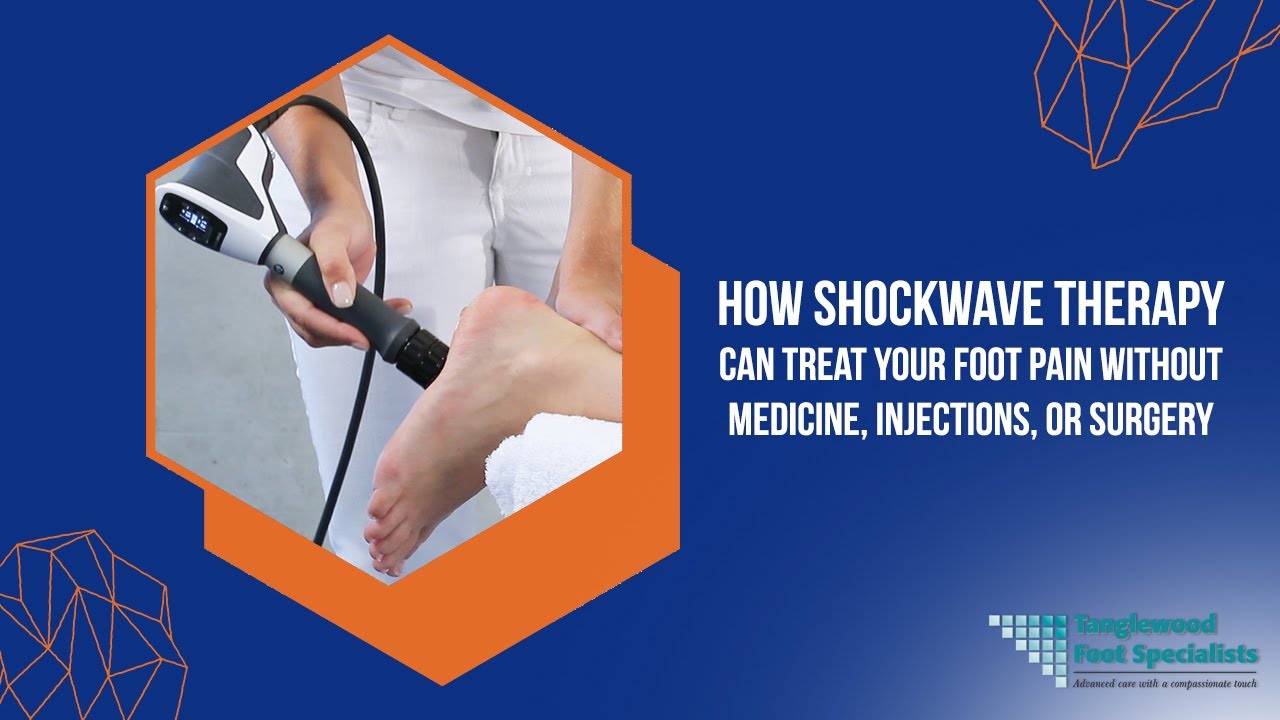
 Shockwave therapy ($300 per session, or $750 for the standard three-session package) uses acoustic pressure waves — not electrical current, not heat — delivered through a handheld device against the skin. Each session takes 10 to 15 minutes, and you'll feel a mild tapping sensation with possible soreness for about 24 hours afterward. What is happening underneath is that the waves are breaking up calcification and scar tissue, stimulating blood flow, and triggering the release of growth factors that restart the healing response — think of it like lawn aeration for compacted soil, creating pathways where there were none.
It carries FDA clearance for plantar fasciitis, and research shows about 82% of people find their pain resolved after completing the full protocol.<sup>1</sup> Shockwave therapy is also effective for Achilles tendinopathy, Morton's neuroma, peroneal tendonitis, and stress injuries — conditions that share the common thread of degenerated tissue with poor blood supply. For a deeper look at the outcomes data, shockwave therapy for heel pain covers the research in detail.
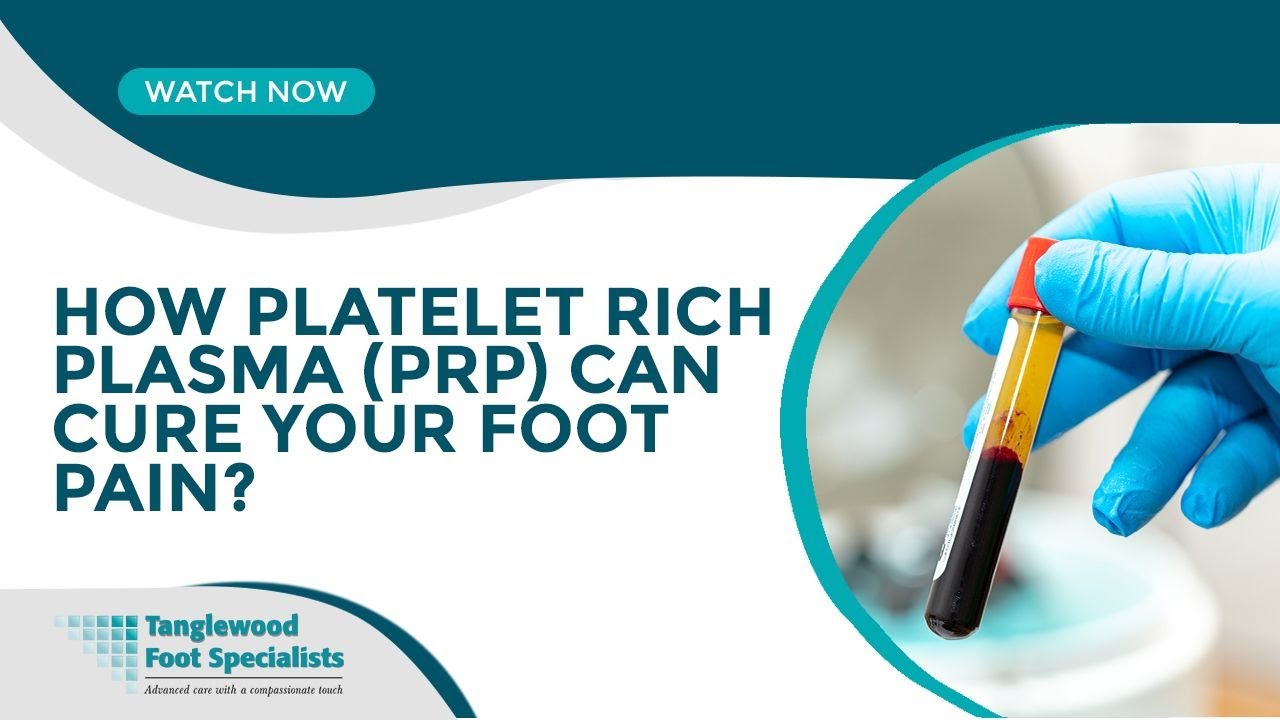
PRP — platelet-rich plasma injections ($850) — involves drawing a small amount of your blood, spinning it in a centrifuge to concentrate the growth factors, and injecting that concentrate under ultrasound guidance directly into the damaged tissue. Those growth factors deliver the biological instructions the failed healing response was missing — not a drug, not a foreign substance, but your own body's repair signals at a far higher concentration than your circulation can deliver on its own. Mild injection-site soreness for a day or two is typical, and most people notice meaningful improvement within two to four weeks.
Standalone platelet-rich plasma injections produce 70–80% improvement in chronic tendon problems.<sup>2</sup> When we combine PRP with shockwave — delivering the growth factors first, then stimulating the tissue repeatedly over three weekly sessions — the success rate rises to 85–95% for chronic, resistant conditions.<sup>5</sup> That's the combined protocol at approximately $1,600 total, with full tissue remodeling typically complete within three to six months. For a detailed breakdown of the plantar fasciitis outcomes, PRP for plantar fasciitis covers both the mechanism and the research.
Remy Class IV laser therapy ($97 per session, or $497 for a six-session package) uses deep photobiomodulation — light energy that penetrates to the tissue level — to reduce inflammation, accelerate cellular repair, and stimulate collagen production. No heat, no downtime. I use it alongside shockwave and PRP, or on its own for moderate conditions in people who aren't ready for injections. Remy Class IV laser also works well to accelerate healing after any procedure that involves tissue disruption.
Red light therapy ($39 per session, or $180 for a six-session package) reduces inflammatory signaling in the tissue without needles, without discomfort, and without downtime. It's a good starting point for early chronic conditions or as a maintenance option between other sessions. For people dealing with metabolic complications — particularly diabetes — I often add oral BPC-157 peptide therapy, a healing peptide that supports systemic tissue repair and can meaningfully speed up recovery in people whose healing is metabolically compromised.
A note on cost: most regenerative treatments are cash-pay, which surprises people until they do the math. The combined PRP and shockwave protocol at approximately $1,600 total compares to the cumulative cost of ongoing co-pays, repeat cortisone injections, surgical fees, anesthesia, and six to twelve weeks of post-surgical rehab. FSA and HSA funds can be used for all of these treatments. For most people, the regenerative route is both the more effective path and the less expensive one over a two-year horizon.
Surgery: When It's Actually Necessary
About 95% of plantar fasciitis cases — and a similarly high percentage of Achilles tendinopathy cases — resolve without surgery when a full course of treatment including the regenerative tier has been completed.<sup>4</sup> Hold that number. It means surgery for soft tissue foot conditions is genuinely rare when the right treatment ladder has been followed.
When surgery is the right answer — a progressive structural deformity, a complete rupture, end-stage joint destruction — I'll tell you that directly, and I'll walk you through what recovery actually looks like. Week one, you're non-weight-bearing or in a surgical boot. Weeks two through six, gradual return with range-of-motion work. Week six through twelve, transition to supportive shoes and return to daily activities, with most people back to full activity including higher-impact movement by months three to four.
Modern foot surgery, when it's genuinely indicated, produces good outcomes — I'm not anti-surgery. I'm pro-right-answer. And the right answer starts with making sure you've actually exhausted the options that carry a lower risk profile and a faster return to the things you want to do.
Not Sure If You're a Surgical Candidate?
I'll give you a straight answer based on your specific condition, your imaging, and what you've already tried.
Schedule Your Evaluation
What to Expect When You Come In
When you come in, I'll start by taking a full history — not just what hurts, but what you've already tried, what gave you temporary relief, what was recommended, and what your goals actually are. That last part matters more than most people expect. Knowing what you want to be able to do that you can't do right now shapes every treatment decision from that point forward. The examination that follows includes a biomechanical assessment, a gait evaluation watching how you actually walk, and a hands-on assessment of the affected tissue.
If structural assessment is warranted, I'll take weight-bearing digital X-rays in the office — that's $90, and it tells me things about your foot mechanics that a non-weight-bearing image simply can't show. For soft tissue conditions, I'll often use diagnostic ultrasound to look directly at the tendon or fascia in real time. That's where I can actually see whether the tissue shows early tendinopathy, significant degeneration, a partial tear, or calcification — not just infer it from your symptoms. By the end of that evaluation, you'll have a clear picture of what's actually going on and why it hasn't resolved on its own.
Then we'll talk through your options honestly — not hand you a plan and walk out of the room. If the imaging and exam show you're a strong regenerative candidate — chronic degeneration, intact tissue, no shockwave or PRP yet — I'll explain what the protocol looks like and give you realistic timelines for improvement. If surgery turns out to be genuinely the right call, I'll say that too and walk you through what recovery involves without glossing over it.
I won't judge you if you've waited longer than you should have, or if you've been managing this with cortisone and hope for two years — that conversation happens in my office every single week. My practice is in the Tanglewood neighborhood — easy access from the Galleria, River Oaks, and Memorial — and I set aside enough time at the first visit to actually have this conversation with you. Either way, I need to see you. You can request an appointment online or call us at 713-785-7881.