What Is a Bunion — and Why Does Surgery Fail So Often?
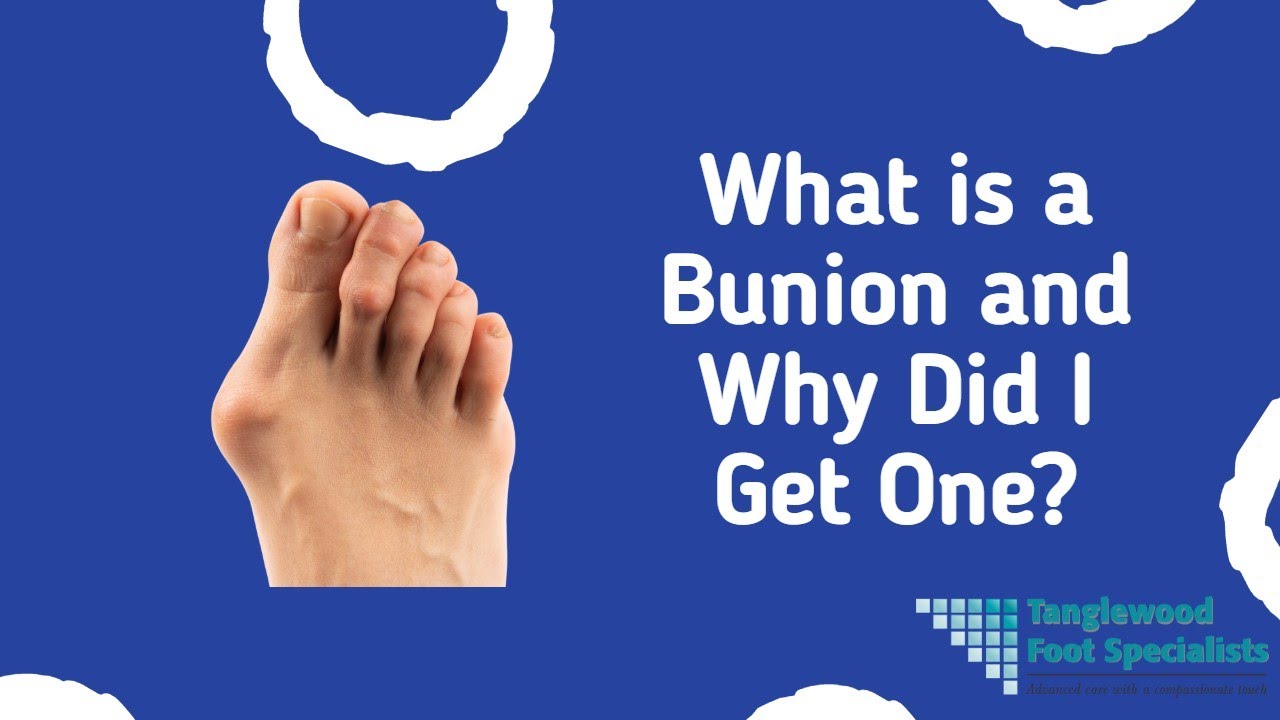
A bunion — the clinical term is hallux valgus — isn't just a bump of extra bone growing on the side of your foot. It's a  structural failure deep inside the foot that pushes the first metatarsal bone outward and rotates the big toe inward, creating the visible protrusion you see at the joint. Here's what most people don't realize: the bump itself is the symptom. The real problem is happening at the first tarsometatarsal (TMT) joint — a foundation joint located in the midfoot, not at the toe — and that's exactly where traditional surgery never goes.
Research confirms that hallux valgus is a complex three-dimensional deformity involving misalignment across the transverse, sagittal, and frontal planes simultaneously.<sup>1</sup> So when a surgeon performs a traditional osteotomy — a deliberate cut through the bone, shifted inward and held with hardware while it heals — they're correcting one plane out of three. The result looks better on the surface. But the unstable TMT joint underneath is still there, still shifting with every step you take.
Think of your first metatarsal as a tall building. Traditional bunion surgery shaves off the part that's sticking out and shifts the wall inward. It looks straighter. But the foundation's still unstable. Without fixing that foundation, the building starts leaning again — and that's exactly why traditional osteotomy carries a high recurrence rate. You can read more about what's actually happening with your bunion and how the deformity progresses over time.
The Truth About Bunion Surgery Recurrence
"My surgeon said it was corrected. Why is it back?" I hear this more than I'd like. The honest answer is that the bunion came back not because your surgeon made a technical error — but because the procedure was designed to address the symptom, not the cause. Research on surgical outcomes for hallux valgus has documented recurrence and patient dissatisfaction as consistent findings across procedure types, with overall dissatisfaction rates above 10% and recurrent deformity affecting a meaningful share of patients.<sup>2</sup> These aren't rare events. They're predictable ones.
Here's the thing about recurrence: you can straighten the wall all day long, but you can't straighten the building until you fix the foundation. The unstable TMT joint that allowed your metatarsal to drift is still mobile after a traditional osteotomy. The forces from walking, footwear, and gravity load that joint with every step. Over months and years, the bone drifts back — and the bump returns.
Lapiplasty 3D bunion correction was built to close that gap. Rather than cutting and shifting the metatarsal in one plane, Lapiplasty corrects all three dimensions of the deformity and locks the TMT joint with titanium plates. When the foundation's actually fixed, the recurrence rate drops dramatically — and the 90%+ patient satisfaction rate reflects that. It's not a minor refinement of the old surgery. It's a fundamentally different procedure solving a fundamentally different problem.
The Real Risk Factors for Bunion Surgery Complications
Most people assume complications mean their surgeon made a mistake. That's rarely the whole story. A surgeon can perform a technically sound osteotomy and still produce a predictable recurrence — because the procedure wasn't designed to address the actual source of the deformity. Knowing why complications happen is the first step to preventing them.
The biggest risk factor is surgical approach mismatch. A traditional 2D osteotomy on a 3D deformity is underpowered for the problem — undercorrection is nearly guaranteed when a two-dimensional cut meets a triplanar deformity. The second factor most practices miss entirely is equinus. Tight calf muscles act like puppet strings pulling from above, forcing excess forefoot load with every single step. If equinus isn't assessed and treated before or during surgery, the newly repaired joint faces the exact same mechanical forces that created the bunion. Bunion surgery in Houston should always include a full equinus assessment — and if your pre-surgical workup didn't include one, that's worth knowing.
Your own healing biology matters more than most people hear about. Blood sugar control, bone density, vitamin D levels, smoking status, and circulation all directly affect whether the surgical cut heals in the right position. Nonunion — where the cut bone never fully fuses — and malunion — where it fuses in the wrong position — are both preventable when these variables get addressed before the procedure, not after. Premature weight-bearing is another leading driver of hardware migration and soft tissue complications. The pain decreasing after surgery doesn't mean the bone has healed. I won't judge you for having had surgery before coming to see me. What I want to do is understand exactly what happened — so we don't repeat it.
Bunions also don't travel alone. Hammertoes that develop as the deformity progresses are common companions, and addressing the bunion without accounting for adjacent toe deformities can shift forefoot mechanics in ways that create new problems even after a technically successful correction.
Warning Signs After Bunion Surgery
Most people experience a predictable recovery arc. Swelling for 6–12 weeks, managed with elevation and compression. Stiffness in the big toe joint that responds to range-of-motion exercises. Sensitivity at the incision site for 4–6 weeks, and foot fatigue with extended walking through month three. These are expected. They don't mean something went wrong.
Some things are worth monitoring without panicking: persistent numbness or tingling in the toe (possible nerve irritation — mention it at your follow-up), incision drainage beyond two weeks (needs evaluation), hardware prominence felt beneath the skin (common, often resolves, occasionally requires a minor removal procedure), and pain that worsens after week three rather than continuing to improve.
Seek care immediately for any of these. Calf pain, redness, or significant swelling may be a DVT — deep vein thrombosis, a blood clot — and that's a medical emergency. Fever above 101°F with foot pain and redness signals possible surgical site infection. A sudden increase in pain after a period of improvement may mean hardware migration or nonunion. Shortness of breath combined with calf pain: call 911. That combination can indicate a pulmonary embolism.
Either way, I need to see you — whether you're pre-surgical and weighing your options, or post-surgical and something doesn't feel right. Hoping a symptom resolves on its own is not a plan. Hoping doesn't work. Schedule an evaluation before a manageable problem becomes a serious one.
How a Houston Podiatrist Treats Bunion Surgery Complications — and Prevents Them
My philosophy has always been that surgery is the right answer for some bunion patients — and absolutely the wrong answer for others. The difference isn't the size of the bunion. It's whether we've genuinely exhausted what comes before surgery. Most of the complications I see in this practice — recurrence, failed healing, persistent pain — trace back to one decision: operating before the full progression of conservative care was completed.
Lifestyle Modification
The first thing I ask every bunion patient is a simple question: what are you actually putting on your feet? A wide toe box and a heel below one inch aren't a style compromise — they're a clinical intervention. A 3-inch heel increases forefoot pressure by 76%. Even a 1-inch heel bumps it up 22%. Most of my patients in the Galleria area, the Medical Center, and the Tanglewood neighborhood are on hard floors — marble lobbies, concrete, tile — for hours every day. That surface-and-shoe combination accelerates bunion progression and can reload a freshly repaired joint before it's had a chance to stabilize. What you put on your feet isn't a minor detail. It's step one.
Daily calf stretching matters more than most people expect, too. Tight calf muscles — equinus — force excess load onto the forefoot with every step. Think of it like puppet strings pulling from above: the tension runs from your calf through your Achilles and into the front of your foot, and it's one of the most under-evaluated drivers of both bunion formation and recurrence. Every extra pound also adds roughly four pounds of forefoot pressure during walking, so weight management fits into this picture in a real and practical way. Meaningful pain reduction is possible within 2–4 weeks of consistent footwear change alone — for patients who follow through.
At-Home Care
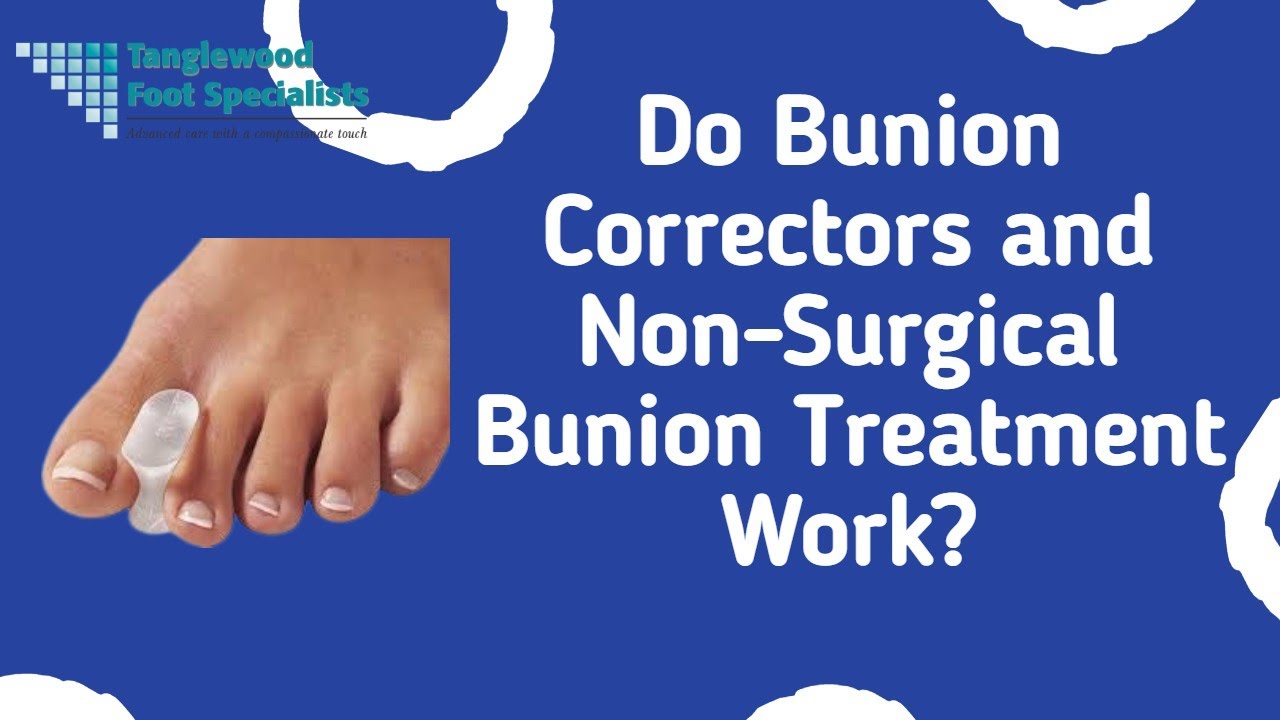
Bunion pads — gel or moleskin — reduce friction and take pressure off the bump during the hours you're on your feet. Night splints and toe-spacer devices provide gentle alignment support during rest; they won't reverse the structural deformity, but they can slow its progression and reduce morning stiffness. Ice for 15–20 minutes during acute flares, and over-the-counter NSAIDs like ibuprofen or naproxen can help break inflammation cycles when they're at their worst.
But I'll be honest with you about what at-home care does and doesn't do. It manages symptoms. It doesn't touch the mechanical forces driving the deformity forward. Drugstore arch inserts are better than nothing, but they're not built for your specific biomechanics — and moderate to severe bunions have progressed beyond what a generic insert can meaningfully influence.
Conservative In-Office Care
When that's not enough, the next step is precision. Custom orthotics that redistribute pressure away from the joint are molded to your specific foot mechanics — not a generic arch shape — and they slow progression by reducing the forces driving TMT joint instability. Think of them like eyeglasses for your feet: while you're wearing them, they're actively compensating for the structural imbalance. They don't cure the deformity, but they can meaningfully change its trajectory. Cash price: $700 ($350 for an additional pair). Most patients notice significant pain reduction within 3–6 weeks.
Weight-bearing X-rays ($90 cash) give me what I need — the intermetatarsal angle and hallux valgus angle measured under actual load, the only way to accurately assess where things stand and whether they're progressing. If the joint is acutely inflamed, a cortisone injection ($120 cash) can reset the pain cycle within 48–72 hours. That's not a structural fix — I'm clear about that — but it gets you functional enough to engage with the other conservative measures consistently. I limit these to two or three per year.
Physical therapy and gait training round out this tier. Six to eight weeks of structured PT addresses calf tightness, hip mechanics, and gait patterns that are loading your forefoot asymmetrically. When it's done properly, it produces real, measurable improvement.
Regenerative Medicine — The Third Option
What's exciting is that we now have treatments that almost make surgery obsolete for the right patient. Between conservative care and the operating room, there's a third space most people don't know exists — and for chronic joint pain and soft tissue inflammation around the bunion, it can be a genuine turning point.
PRP for chronic joint inflammation starts with your own blood. We draw it, concentrate the platelets, and inject them directly into the inflamed first MTP joint or surrounding soft tissue. I call it liquid gold for healing — research across multiple randomized controlled trials consistently shows PRP outperforms corticosteroids and hyaluronic acid for joint pain relief at longer follow-up intervals.<sup>3</sup> It's particularly valuable when your pain exceeds what the structural severity alone would explain. Cash price: $850.
Shockwave therapy for the soft tissue around the joint works differently. Think of it like aerating a lawn: it creates channels that allow healing factors to penetrate the tissue more deeply. It carries an 82% pain resolution rate for chronic soft tissue conditions, with no anesthesia and no recovery time. Cash price: $300 per session, or $750 for a package of three.
The most powerful non-surgical option I offer is the combined PRP plus shockwave protocol, with an 85–95% success rate. Shockwave prepares the tissue environment first — aerates the soil. PRP delivers the healing signals — plants the seeds. Together, they create conditions where the inflammatory cycle can actually break. These are regenerative options that fall between conservative care and surgery, and for the right patient, they change everything. Initial improvement typically appears within 2–4 weeks; full benefit develops over 3–6 months. I'll be straight with you: regenerative medicine addresses the inflammatory and soft tissue component of your pain — it doesn't reverse the structural bone deformity. But that soft tissue component is often responsible for a disproportionate share of what's actually hurting.
Surgery — When It's the Right Answer
Look, I know surgery sounds scary. But here's what I want you to understand: modern Lapiplasty is not the bunion surgery your grandmother had. The criteria are clear — conservative and regenerative care genuinely exhausted (not skipped), a bunion significantly limiting your ability to walk or perform daily activities, or a severe and rapidly progressive deformity. If those boxes are checked, bunion surgery at our Houston practice looks nothing like the recovery stories you've heard.
With Lapiplasty, most patients are walking in a surgical boot the same day. By week six, they're in regular supportive shoes. Normal daily activities return around week twelve, and full recovery including high-impact exercise typically comes by month four. Compare that to traditional osteotomy — non-weight-bearing for six to eight weeks, no regular shoes for three months or longer, and a high probability of recurrence because the foundation was never addressed. My surgical patients tell me they wish they'd done it sooner. What I won't do is recommend surgery before we've genuinely exhausted every other option. Surgery is the answer when it's the right answer. Not before.
Not Sure Where You Are in This Progression?
Whether you're just starting to feel bunion pain or dealing with complications from a previous surgery, the evaluation starts with an honest conversation.
Request Your Appointment
What to Expect at Your First Visit With Dr. Schneider
When you come in, I'll start by reviewing any prior X-rays or surgical records you can bring — that history matters, especially if you've had a previous bunion procedure. Then I'll take new weight-bearing X-rays ($90 cash) of my own. Weight-bearing is the critical part: films taken while you're sitting don't capture the deformity the way your foot actually loads it, and I need to measure the intermetatarsal and hallux valgus angles under real conditions to understand where things actually stand.
After imaging, I'll do a full biomechanical exam — including an equinus assessment, which most practices skip. Unaddressed equinus is one of the primary reasons bunions return after surgery and one of the primary reasons post-surgical pain persists. I'll ask about your shoe history, your daily activity demands, your prior treatments, and if you've had surgery before, we'll have a frank conversation about what was done, what the current films show, and what the realistic options are from here. I won't judge you for the shoes you've worn, the treatment you delayed, or the decisions you made before you had complete information.
Most people leave the first visit with a clear diagnosis and a staged treatment plan — not a vague referral to "try orthotics" or a premature push toward the operating room. If conservative care's the right starting point, I'll tell you what to expect and when we'll reassess. If we're talking revision surgery, I'll give you an honest picture of what that process looks like and what outcomes are realistic. Dr. Andrew Schneider has been having these conversations with Houston patients for over 25 years. The goal of that first visit is simple: you leave with clarity, not more confusion.
Preventing Bunion Surgery Complications Before They Start
The most consistent pattern I see in revision cases is this: surgery happened before conservative care was genuinely completed. Not before it was tried — before it was finished. There's a difference. If you came in having worn the right shoes for two weeks, done one round of physical therapy, and tried a drugstore insert, you haven't completed conservative care. And operating on that foot predictably produces the same forces, same instability, same outcome.
Pre-surgical optimization matters in ways most people don't hear about. Vitamin D levels, blood sugar control, and smoking cessation aren't minor details — they're primary drivers of whether the surgically cut bone fuses correctly. And post-surgical follow-through is non-negotiable. The bone hasn't healed just because the pain decreased. Following weight-bearing restrictions exactly as prescribed is the difference between a solid correction and hardware migration. Footwear after surgery matters as much as before — the mechanical load that created the deformity doesn't disappear after Lapiplasty if you go back to the wrong shoes.
For women navigating bunion decisions, footwear choices compound all of these variables. High heels, pointed toe boxes, and narrow dress shoes are among the primary accelerators of deformity — and returning to them post-surgically before structural healing is complete is one of the most predictable ways to undo a correction. After treating thousands of patients over 25 years, I can tell you that most of the complications I see were predictable — and preventable. Not by avoiding surgery. By making sure the decision to have it was the right one, at the right time, with a procedure that corrects all three dimensions of the actual deformity — not just the visible bump.