What Is a Bunion — And Why Does It Hurt?
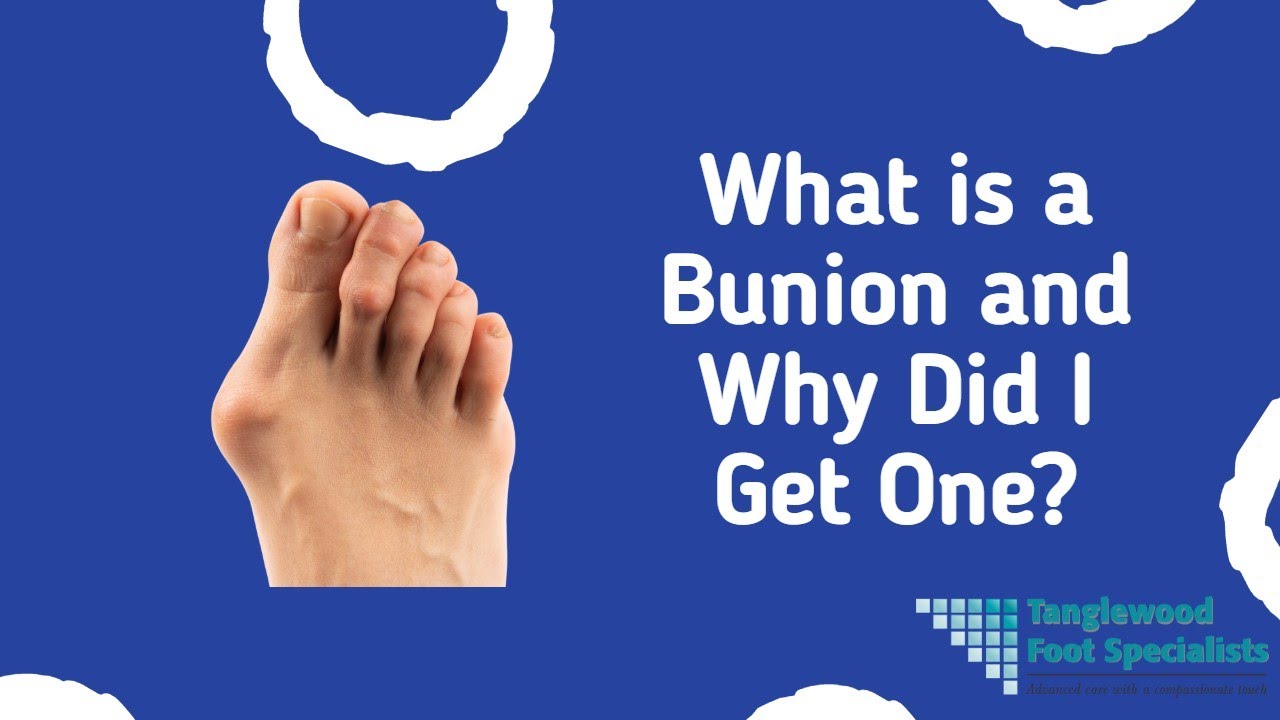
A bunion is a progressive deformity of the first metatarsophalangeal (MTP) joint — the large hinge joint at the base of  your big toe. It forms when the first metatarsal bone drifts outward and the big toe angles inward, creating the visible bump on the inside of your foot. The bump itself isn't extra bone — it's the displaced joint.
Here's what most people don't realize: a bunion isn't just a bump. It's a three-dimensional structural failure of your foot's foundational joint. In fact, 87% of bunions involve bone misalignment in all three planes simultaneously — the metatarsal drifts sideways, rotates, and elevates at the same time. You can think of it like a tall building that's not just leaning to one side like the Tower of Pisa, but also rotating and lifting off its foundation. That's why shaving down the bump doesn't fix the real problem. The building is still unstable.
The MTP joint takes enormous punishment with every step you take. As the misalignment worsens, the joint develops chronic inflammation and, over time, progressive arthritis — the cartilage wears unevenly, the surrounding soft tissue gets stretched and stressed, and the pain stops being just about shoe friction and starts being structural. You might also notice ball-of-foot pain developing as your gait shifts to compensate, a condition called metatarsalgia. That's your body trying to offload pressure from a joint that's no longer working the way it should.
And you can blame a parent or grandparent for this one. Research from the Framingham Foot Study confirmed that hallux valgus is highly heritable — and population data puts bunion prevalence at 23% in adults aged 18–65, rising to 35.7% in those over 65. The size of the bunion doesn't always match the level of pain, either. I see people with dramatic-looking deformities who are relatively comfortable, and people with modest bumps who can barely get through the day. Pain is driven by joint inflammation and shoe friction, not by how the bunion looks on an X-ray.
What Causes Bunion Pain to Get Worse?
The single biggest driver of bunion pain is footwear — specifically, anything that compresses the forefoot or shifts  weight forward. Heels above one inch multiply forefoot pressure by 3–4 times with every step. Pointed toe boxes force direct lateral compression onto the MTP joint. Wear the wrong shoes consistently enough and you're not just causing discomfort — you're actively accelerating the deformity. If you're still wearing pointed-toe shoes or anything with a significant heel, nothing else I do will be fully effective.
But footwear isn't the only problem. As the metatarsal drifts further out of alignment, the joint begins loading unevenly with every step — and that uneven loading wears the cartilage in a pattern it wasn't designed to handle. That's when the real arthritis starts. And unlike surface pain from shoe friction, arthritis-driven pain doesn't respond to a better shoe. It's coming from inside the joint, and it tends to be present even at rest. That's the signal that tells me we've moved past the point where lifestyle changes alone will get you where you want to be.
I want to address one thing directly: I don't recommend surgery because a bunion looks bad. I recommend it when it's taking something from you — your ability to walk comfortably, wear your shoes, or stay active. Appearance alone isn't a clinical indication. Bunions don't heal on their own and don't stay the same — they worsen at variable rates, and catching the progression early gives you the most options. If high heels and bunion development are part of your history, or if you're noticing heel and arch pain that often develops alongside bunions, those are signs the mechanics of your entire foot are being affected — not just the bump on the side.
What Houston Patients Need to Know About Bunion Surgery Pain
In my practice, surgery is never the starting point. It's the endpoint — reserved for people who've genuinely tried conservative care and still can't live the life they want. Let me walk you through exactly how I think about treating bunion pain, from the least invasive options all the way to the operating room. This matters especially for my patients in Houston — whether you're walking the trails at Memorial Park, spending long days on your feet at the Texas Medical Center, or chasing your kids around the backyard in the Galleria neighborhood, the wrong footwear is doing damage every single day.
Level 1: Lifestyle Changes
The foundation of bunion management is footwear correction, and it's non-negotiable. You need a wide toe box, heels under one inch, and soft materials that don't compress the bump. Brands like New Balance, Brooks, Asics, Clarks, and Ecco are consistently good starting points. This isn't optional — if you're still in pointy-toe shoes or anything with a significant heel, nothing else I do will be fully effective.
Beyond footwear, weight management matters more than you'd expect: every pound of body weight translates to 3–4 pounds of forefoot pressure per step, and that math adds up fast. Most people with mild-to-moderate bunion pain see noticeable improvement within 2–4 weeks of consistent footwear correction. If you've made that change and you're still not better after 4 weeks, it's time to move forward.
Level 2: At-Home Care
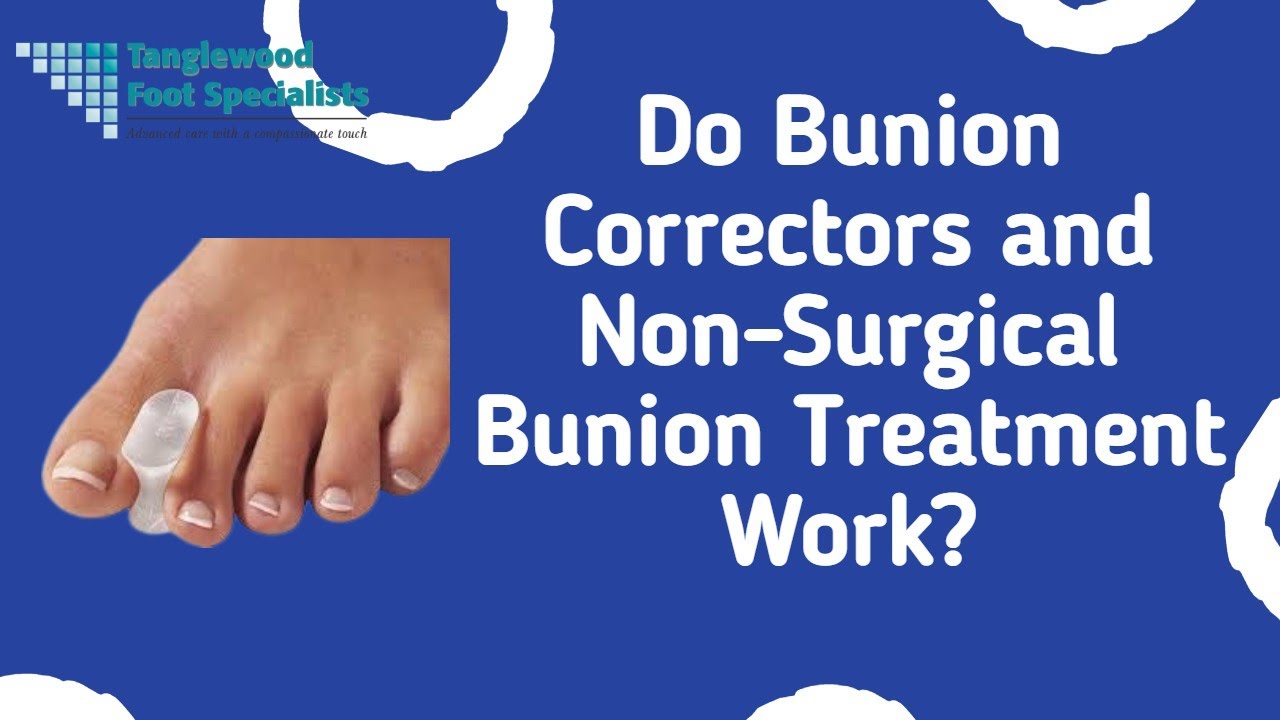
I won't judge you for trying everything at the drugstore first. Most people do. Bunion pads — gel or moleskin — can meaningfully reduce shoe friction during the day. Ice for 15–20 minutes during flare-ups helps with acute inflammation. OTC NSAIDs like ibuprofen or naproxen work better when taken on a schedule during flare periods rather than reactively. Toe spacers between the first and second toe can reduce MTP joint stress with daily activity.
But here's the honest assessment on what doesn't work: generic OTC arch inserts address the wrong anatomy for bunions, and they're not the same as custom orthotics. Daytime bunion splints have no clinical evidence of effectiveness during weight-bearing activity — they're fine for alignment during sleep, but wearing one in your shoe won't change how the joint loads when you walk. None of these at-home measures address the underlying biomechanical forces driving the deformity. They manage symptoms, and that's a legitimate goal — but if they've stopped being enough, there's more we can do.
Level 3: Conservative In-Office Care
When lifestyle changes and at-home care aren't getting you where you need to be, custom orthotics that redistribute forefoot pressure are typically the next step. Think of them like eyeglasses for your feet — while you're wearing them, the mechanics are compensated and the MTP joint is under significantly less stress. Take them off, and you're back to the underlying problem. But consistently wearing them slows mechanical progression, reduces daily pain, and in many cases gives you years of comfortable function without needing to go further. Custom orthotics run $700, and most people notice significant pain reduction within 4–6 weeks of consistent use.
For acute flare-ups — the kind where the joint is hot, swollen, and making it hard to get through the day — a cortisone injection is often the right call. It's typically effective within 3–5 days and costs $120. But cortisone treats the fire, not what's causing it. It's not a long-term strategy, and repeated injections can weaken the surrounding soft tissue over time. I use it when you need relief fast, not as a substitute for addressing the root problem. Physical therapy can also help: maintaining MTP joint range of motion, strengthening intrinsic foot muscles, and cleaning up compensatory gait patterns that are creating pain elsewhere in the foot.
Level 4: Advanced Regenerative Care — The Third Option
Most doctors offer two choices: more cortisone or the operating room. But there are regenerative medicine options that sit between cortisone and surgery that most people have never been told about. This is where a lot of my patients find the answer they were looking for — without ever scheduling surgery.
Shockwave therapy for chronic joint pain uses high-energy acoustic waves to stimulate blood flow, break up scar tissue, and restart the healing process in chronically inflamed tissue. Think of it like aerating a lawn — the treatment creates pathways for healing factors to penetrate deeper into stuck tissue that's been trying and failing to repair itself. It carries an 82% success rate for pain resolution in chronic foot and ankle conditions. The protocol is three sessions at weekly intervals; each session runs $300, or $750 for the full package of three. Most people begin noticing meaningful improvement 2–4 weeks after the final session.
Platelet-rich plasma (PRP) injection takes this further. I draw blood from your arm, process it in a centrifuge to concentrate the growth factors, and inject that concentrated solution — what I call liquid gold for healing — directly into the MTP joint under ultrasound guidance. Unlike cortisone, which suppresses inflammation, PRP actively recruits repair cells to rebuild damaged tissue. A 2023 meta-analysis in Frontiers in Medicine found PRP can safely and effectively improve functional activity and reduce pain in people with osteoarthritis of the ankle and other joints. It costs $850, and the full benefit builds progressively over 3–6 months.
For more stubborn chronic pain, the most powerful option is combining both. PRP first, to deliver the growth factors. Then shockwave therapy beginning within a few days, to stimulate and amplify them. PRP provides the seeds — the growth factors and signaling proteins. Shockwave prepares the soil and creates optimal growth conditions. Together, they carry an 85–95% success rate for chronic conditions that haven't responded to conservative care alone. That's where a lot of people who came in assuming they needed surgery find out they don't.
Level 5: Surgery — When It's the Right Answer
Look, I know foot surgery sounds scary. And I get why. But what most people are afraid of is the old version of this procedure — not what I'd offer you today.
The traditional bunion correction — called an osteotomy — cuts the metatarsal bone and shifts it sideways. One dimension. The unstable first tarsometatarsal (TMT) foundation joint, which is the root cause of nearly every bunion, gets left completely untouched. That's why the procedure carries a significant recurrence burden — a 2024 PubMed meta-analysis of shaft osteotomies found recurrence rates of 40% at long-term follow-up. It wasn't a failure of surgery — it was a failure of the wrong surgery.
The procedure I perform is Lapiplasty 3D bunion correction, which corrects all three planes of deformity and permanently stabilizes that unstable foundation joint with titanium plates. The recurrence picture is completely different — 90%+ patient satisfaction, because we're fixing the foundation instead of just straightening the part of the building that's sticking out.
Here's what recovery actually looks like with the Lapiplasty procedure: most people are walking in a surgical boot within Week 1. No crutches for the majority. Pain at rest averages 3/10 during those first three days, and most stop prescription pain medication by Day 3–5. Stitches come out at Week 2. By Week 6, you're in regular supportive shoes. By Week 12, you're back to normal daily activities — and by Month 4, full recovery including high-impact exercise. That is nothing like what your neighbor described.
Surgery makes sense when conservative care has been genuinely tried for 3–6 months and you're still not able to live the way you want to. When the deformity is moderate-to-severe or progressing rapidly. When your life goals require a structural solution. You can explore all foot and ankle surgery options at our Houston practice if you want the full picture. Most of my surgical patients tell me the same thing afterward — they wish they hadn't spent so long being afraid of it.
If this sounds like where you are right now — you've tried the conservative options and you're still in pain — schedule an appointment and let's figure out exactly what your bunion needs, and what it doesn't. Either way, I need to see you. Call us at 713-785-7881.
What to Expect at Your First Appointment in Houston
When you come in to our Houston podiatry practice, I'll start with weight-bearing X-rays of both feet. That's the only way to accurately measure what's happening with your joint alignment — and it's a step a lot of people tell me nobody took with them before. Standing X-rays let me see the full three-dimensional picture: exactly how far the metatarsal has drifted, whether the foundation joint is unstable, how much arthritis has developed, and where you fall on the severity spectrum. That information shapes everything I recommend.
After the X-rays, I'll examine your MTP joint directly — checking range of motion, flexibility, and how the joint responds to movement and pressure. I'm also going to watch you walk. Gait analysis tells me whether you've developed compensatory patterns that are creating secondary pain in the ball of your foot, your arch, or even your knee. I'll look at your shoes, too — wear patterns reveal a lot about how your foot is actually loading with each step.
Here's where I do things a little differently: I start by asking what your goals are, not just what hurts. Do you want to get back to running? Stay on your feet through a full work shift? Walk without a limp at your daughter's wedding? That answer shapes everything I recommend. Some people come in having already decided they want surgery. Others are terrified of it. I won't judge you either way — my job is to give you accurate information and the right options, not to steer you toward any particular outcome. Reach out to Dr. Andrew Schneider or request an appointment online and we'll take it from there.