What Is a Bunion — and Why Does It Keep Coming Back?
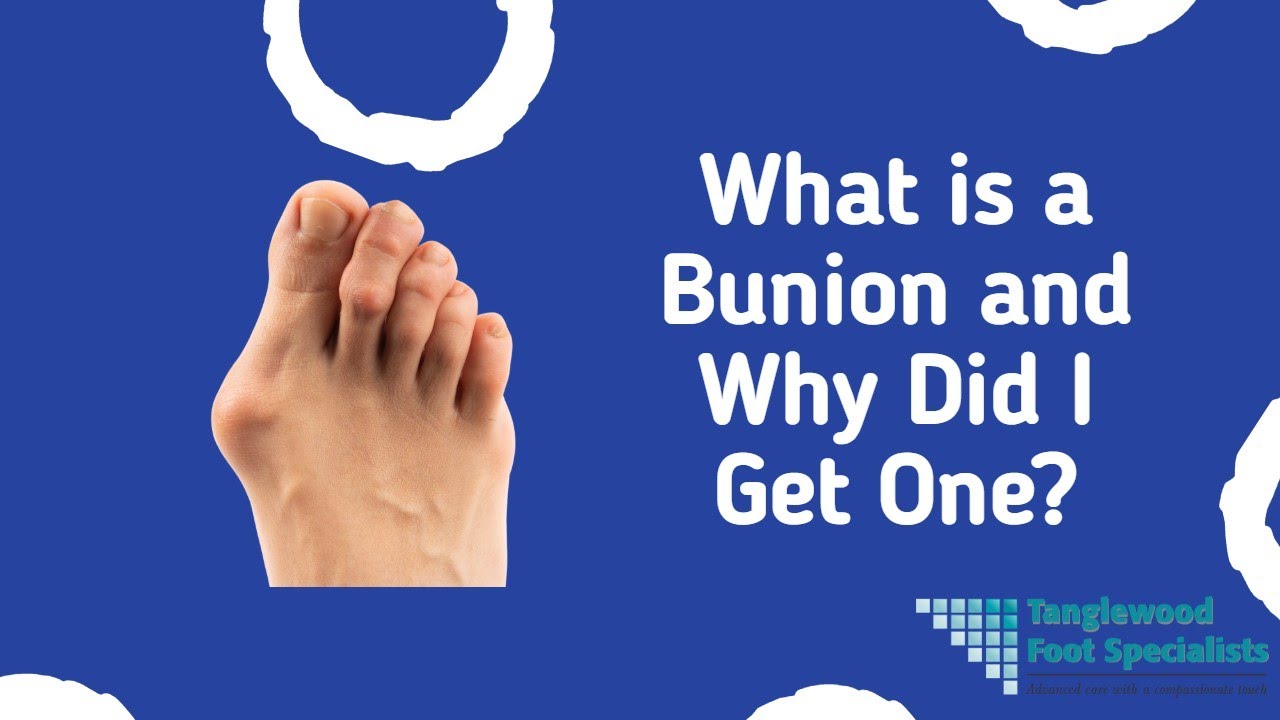
A bunion (hallux valgus) is a progressive foot deformity caused by an unstable joint in the middle of the foot that allows the first metatarsal bone — the long structural bone behind your big toe — to drift outward, creating a visible bump at the base of the big toe. In 87% of cases, the misalignment occurs in all three planes simultaneously, not just sideways.
 Here's what's actually happening underneath that bump. It's not a bony growth, and you can't shave it off and be done with it. The real source of the problem is an unstable joint in the middle of your foot called the first tarsometatarsal (TMT) joint — think of it as the foundation of your foot's architecture. When that foundation becomes loose, the metatarsal bone it's supposed to anchor starts to drift outward.
That's what creates the bump. The bump is the symptom. The unstable TMT joint is the cause.
And here's what makes this more complex than most people realize: the drift doesn't happen in just one direction. Your metatarsal is shifting sideways — that's the lean you can see when you look down at your foot. But it's also elevating slightly and rotating inward, which changes how your big toe contacts the ground with every step. That's what we mean when we say bunions are a three-dimensional (tri-plane) deformity — all three planes (transverse, sagittal, and frontal) are involved in 87% of cases.
Think of your metatarsal bone as a tall building. Traditional bunion surgery shaves off the part that's sticking out, or pushes the bone sideways. But the building is still leaning — and the foundation is still cracked.
That's the exact reason bunion progression from manageable to surgical matters so much to understand. You can blame a parent or grandparent for this one — bunions are largely hereditary — but how fast yours progresses depends heavily on what you do next.
Are You a Candidate for Bunion Surgery?
A lot of people assume that if they have a bunion, surgery is inevitable. That's not how I approach it. My first instinct  with every bunion patient isn't surgery — it's how do we manage this without surgery for as long as possible, and can we manage it forever?
Candidacy isn't just about how big the bump looks. It comes down to four things I assess together: pain that's limiting your ability to walk or do daily activities, conservative care that's been tried consistently for three to six months without adequate relief, a deformity that's progressing rapidly or starting to affect your other toes, and you being ready — logistically and mentally — for the recovery process. All four matter. You could have a significant-looking bunion that doesn't meet the threshold, and a less dramatic one that clearly does.
I also want to address something directly: bunion surgery isn't cosmetic. I won't operate on a bunion that isn't causing functional pain. Operating without a clear functional reason actually increases your risk of developing new discomfort where there wasn't any — and that's not a trade I'm willing to make on your behalf.
If your bunion bothers you aesthetically but doesn't hurt, we're talking about conservative management, not the operating room. And I won't judge you for not coming in sooner — a lot of people delay because they assume they'll walk in and get sent straight to bunion surgery candidacy criteria. That's not how this works.
For athletes, the calculus can shift earlier. A bunion that's tolerable day-to-day can genuinely compromise foot deformities that affect training — but the same four-factor framework still applies.
The Truth About Traditional Bunion Surgery
Traditional bunion surgery — specifically the osteotomy procedure, which involves cutting and repositioning the bone  — is presented in most medical literature as a permanent fix. It isn't. The documented recurrence rate for traditional osteotomy is 70%. That's not a fringe statistic — it's consistent across the research, and there's a specific mechanical reason for it.
Here's the thing: osteotomy corrects the sideways lean. That's one of three planes. The procedure pushes the metatarsal back toward midline and often shaves the bony prominence — what's called an exostectomy, or simply shaving off the bony bump.
What it doesn't do is stabilize the unstable TMT foundation joint that caused the drift in the first place. So the building gets pushed upright, but the cracked foundation is still there. Over time, the bone drifts again. The bunion comes back.
Why does this myth persist? Because recurrence is slow. People are told they're "corrected," they recover, and life goes on. It might be three years before the bunion is visibly reforming — and by then, most people don't connect it back to the original surgery.
I'm not against osteotomy across the board. It has a role in specific cases, and some people do well with it long-term. But for the majority of patients, where 87% of bunions involve all three planes of misalignment, a correction that only addresses one of those planes is treating the wrong problem. That's the exact issue Lapiplasty was engineered to solve.
A Houston Podiatrist's Guide to the Bunion Surgery Procedure
After treating thousands of patients in my Houston podiatry practice, I've developed a clear framework for how I approach bunion surgery — and it starts with everything I do before I ever consider the operating room. The decision to operate is never the starting point. It's the last resort after we've been honest with each other about what conservative care can and can't accomplish for your specific situation.
Step 1 — Lifestyle Changes: The Foundation Everything Else Builds On
Sometimes, the most meaningful relief comes from the simplest change you can make. The single most impactful thing you can do for a painful bunion is fix what's on your feet. Wide toe box shoes with low heels and soft uppers reduce the friction and compression that inflame the bunion joint every single day. If you're spending long hours on your feet — and in Houston, that means a lot of you working in the Texas Medical Center, in hospitality, or in retail — taking deliberate breaks from prolonged standing makes a real difference too.
I want to be honest with you: these changes don't reverse the deformity. But for early-to-moderate bunions, they can meaningfully reduce pain and slow progression. Give them four to six weeks of genuine effort before concluding they're not working.
Step 2 — At-Home Care: Managing Symptoms Between Visits
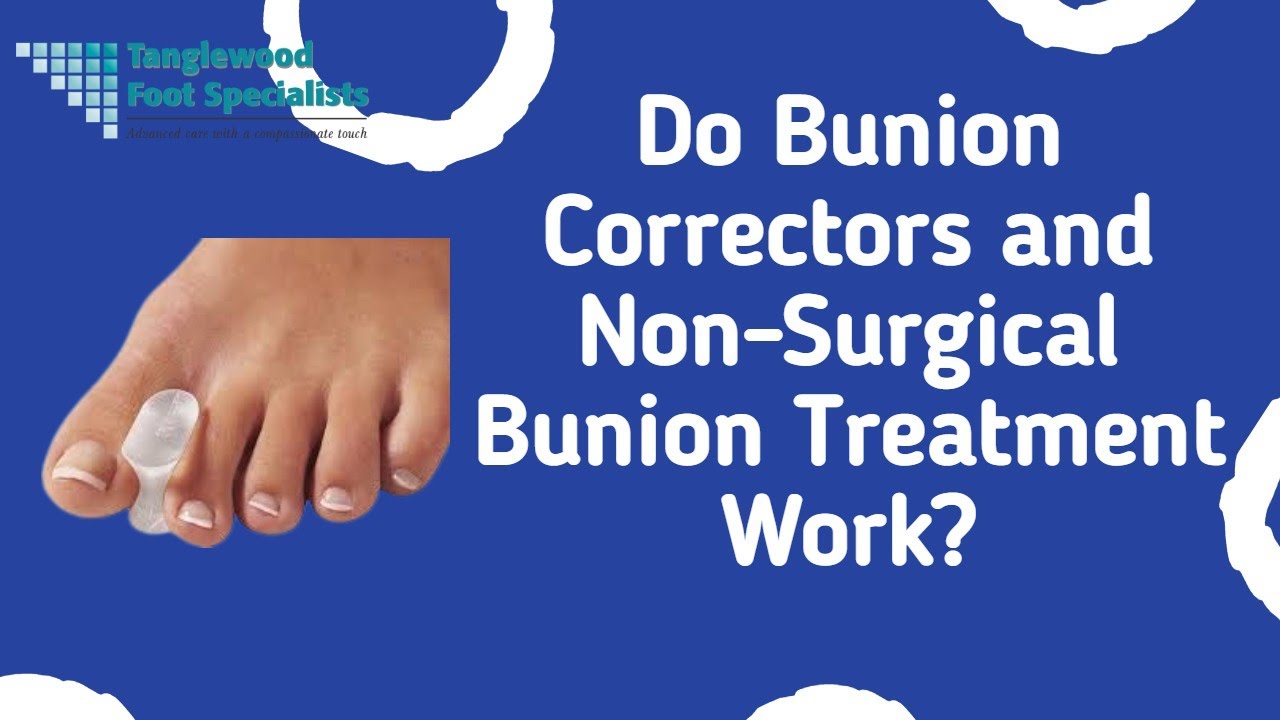
Gel or moleskin bunion pads cushion the joint and reduce shoe friction — they're inexpensive and worth trying. Toe spacers worn at rest can provide some comfort and passive pressure relief. Bunion splints at night are popular, and while the structural evidence for them is limited, a lot of people find they reduce joint tension enough to sleep better. For active inflammation, ice the area for 15–20 minutes and take an OTC anti-inflammatory like ibuprofen or naproxen to take the edge off a flare-up.
But here's my honest take on at-home care: these options manage symptoms. They don't correct or halt the deformity. They're worth doing — consistently — but don't mistake symptom management for treatment. If you've been diligent for six to eight weeks and you're still in pain, it's time to come in.
Step 3 — Conservative In-Office Care: Where Real Management Happens
When at-home measures aren't enough, custom orthotics that redistribute pressure away from the bunion joint are the most clinically meaningful non-surgical tool I have. Think of orthotics the way you think of eyeglasses: they don't cure the underlying problem, but they compensate for it so effectively that you feel the difference with every step. Custom orthotics shift load away from the unstable TMT joint and slow the progression of the deformity significantly when worn consistently. They're $700, and for the right patient, they're the reason surgery gets pushed back years — sometimes indefinitely.
Cortisone injections are another option when the joint is acutely inflamed. A targeted injection at $120 can quiet significant inflammation and buy you real functional relief. The honest caveat: cortisone is symptom management, not treatment. Repeat use over time can weaken the soft tissue around the joint — so I use it selectively, not as a default or a standing solution.
I'll also assess your gait and, where relevant, address upstream contributors through physical therapy. Tight calves, hip mechanics, and weakness in the small muscles of the foot all affect how much stress your bunion joint absorbs with each step.
Step 4 — Regenerative Medicine: The Third Option Between Cortisone and Surgery
We now have treatments that sit genuinely between cortisone and the operating room — and for the right patient, they almost make surgery obsolete. Platelet-rich plasma, or PRP, is what I think of as liquid gold. We draw a small amount of your blood, process it in a centrifuge to concentrate the growth factors your body uses for tissue repair, and inject that concentrate directly into the joint capsule. At $850, PRP injected into the joint signals repair rather than just suppressing inflammation.
Unlike cortisone, which depletes tissue over time, PRP builds it. About 70–80% of people with chronic joint conditions see significant improvement.
Red light therapy reduces joint inflammation and supports tissue recovery — $39 per session or $180 for a package of six. When I combine PRP with red light therapy, I think of it as seeds and soil: the PRP delivers the healing ingredients, and the red light creates the environment those ingredients need to work. Combined regenerative medicine protocols show 85–95% success for managing chronic joint conditions. Most people notice initial improvement within two to four weeks, with full benefit at three to six months.
Step 5 — The Lapiplasty Procedure: When Surgery Is the Right Call
Look, I know that foot surgery sounds scary. But here's what I tell every patient before a Lapiplasty 3D Bunion Correction: you'll be walking in a boot within days — not weeks. That's not a marketing claim. That's the outcome data.
 Lapiplasty is an outpatient procedure — you go home the same day. We use an ankle block so your foot is numb; you're comfortable but awake, with light sedation. The procedure takes about an hour.
What makes it fundamentally different from traditional osteotomy is that Lapiplasty instrumentation rotates the entire metatarsal bone back to its normal anatomical position in all three planes simultaneously — not just sideways. Then specialized titanium plates permanently secure the TMT foundation joint. The cracked foundation finally gets fixed, not left behind.
Here's what recovery actually looks like. Most patients are walking in a surgical boot within three to ten days. By week six, you're transitioning into supportive shoes.
By week twelve, you're back to normal daily activities — work, driving, light exercise. Full recovery, including running and high-impact sports, comes at about month four.
Put that next to traditional osteotomy — six to eight weeks non-weight-bearing, regular shoes not until three-plus months, and a 70% chance of recurrence — and the Lapiplasty recovery timeline isn't even close. Lapiplasty maintains full 3D correction in 97–99% of patients at follow-up, with 90%-plus patient satisfaction. For patients where significant arthritis has also developed at the big toe knuckle joint — the metatarsophalangeal (MTP) joint — or where prior surgery has failed, arthrodesis (permanently fusing two bones to eliminate painful joint motion) is sometimes the more reliable path. It involves a tradeoff in joint mobility, but for the right patient, it's the most predictable route to a pain-free outcome.
Not sure where your bunion falls on the spectrum? Request your appointment with Dr. Schneider and we'll look at the whole picture together.
What to Expect at Your First Bunion Consultation in Houston
When you come in, I'll start by looking at the whole picture — not just the bump. A lot of doctors will glance at the bunion, maybe order an X-ray, and hand you a brochure. That's not how I do this. I want to understand where your bunion is in its progression, what's driving it, and what it's affecting beyond the obvious.
The first thing I'll do is get weight-bearing X-rays. That distinction matters — you're standing on your foot when we take them, because that's how the deformity actually presents. I'm assessing the misalignment in all three planes, measuring the angles that tell me whether we're dealing with a mild, moderate, or severe deformity, and checking whether any arthritis has developed at the big toe knuckle joint — the metatarsophalangeal (MTP) joint, which is the epicenter of bunion pain.
Then I'll watch you walk. Gait evaluation tells me things X-rays can't — how your calf and hip mechanics are loading the forefoot, whether your other toes are starting to compensate, and whether there's a crossover toe, hammertoe, neuroma, or metatarsalgia situation developing alongside the bunion. These secondary problems are common. Treating the bunion while ignoring them doesn't get you back to full function.
After that, I'll tell you honestly where you are on the spectrum and what that means for your path forward. There's no pressure toward surgery. My goal is the same as yours: managing this with as little intervention as possible for as long as possible.
If surgery is the right call, I'll walk you through exactly what to expect from bunion surgery at our practice — scheduling, what to arrange at home, and your full week-by-week timeline. No vague answers.
I won't judge you for waiting, either. A lot of people put off coming in because they assumed they'd get pushed straight toward the operating room.
That's not how Dr. Andrew Schneider practices. Either way, I need to see you — because a bunion I can't examine is a bunion I can't help.
Managing Your Bunion Before It Reaches the Surgical Threshold
Bunions move along a spectrum, and the goal of early management is staying on the slow end for as long as possible. The habits that make the biggest difference are consistent, not occasional. That means appropriate footwear every day, not just on workout days. It means wearing your custom orthotics regularly — and periodic X-ray check-ins so we can monitor progression before it quietly crosses a threshold.
In Houston, our patients tend to be on their feet in ways that quietly accelerate bunion progression — long days on hard floors in the Texas Medical Center, restaurant and hospitality work, or weekend activities in ill-fitting casual shoes. The footwear decisions you make every day matter more than most people realize. Upstream contributors like tight calves, hip imbalances, and altered gait patterns also load stress onto the bunion joint through the kinetic chain — addressing those through physical therapy can make a real difference in how fast things progress.
A small bunion today doesn't have to become a surgical bunion in five years. But hoping doesn't work. What works is a plan. You can learn more about how high heels accelerate bunion progression and what to do about it if that's part of your picture.