 If you’ve been following our blog at all, you already know that the shoes you wear can really impact the health of your feet. We talk a lot about how the wrong shoes can cause or aggravate any number of problems, from hammertoes to bunions and more. Today, we want to tell you a little bit about another problem that your shoes can cause—Haglund’s Deformity—and how we can help you treat heel pain from Haglund's Deformity.
Key Takeaways
- Haglund's Deformity is the term used to describe a bump of excess bone growth that forms at the back of your heel, due to excess pressure in the area
- That bump can lead to heel pain, blisters and more concerns
- Often, we can treat the heel pain from Haglund's Deformity with non-invasive interventions such as custom orthotics.
Table of Contents
First: What is a Haglund’s Deformity?
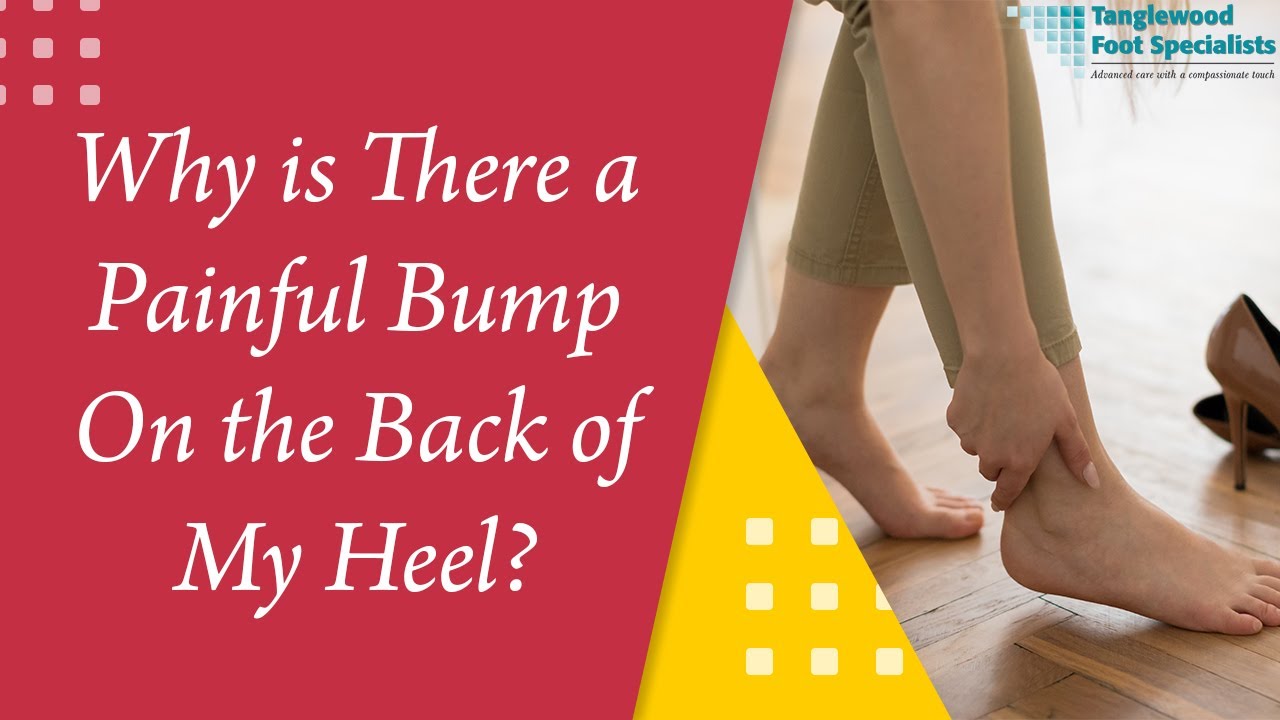
Haglund’s Deformity is a bump that forms at the back of the heel. That bump forms when your body forms extra bone in the area. But why would your body create extra bone growth where you don't really want it?
Here's the deal: that bone is your body's way of protecting the heel. It forms when your foot is repeatedly exposed to friction and/or mechanical stress in the area. (Those forces could be a result of your genetic makeup, anatomy, or your choice of footwear.)
Regardless of the cause of its formation, this excess bone growth can lead to heel pain. It can also cause blisters to develop as the bump rubs against your shoes. Wearing high heels is often to blame for this problem, but any rigid-backed shoe can cause extra bone to develop. People with high arches and those who walk on the outside of their feet are also at risk of developing this problem.
Can I Keep Myself from Developing Excess Heel Bone?
First and foremost, choosing sensible shoes with soft backs and low heels can stop your foot from developing excess bone at the heel. If your foot’s anatomy naturally puts you at risk of developing this Haglund’s bump, we can create custom orthotic shoe inserts to give your arches and heel extra padding and support.
How Can I Treat Heel Pain from Haglund’s Deformity?
When Haglund’s Deformity is causing you pain, your Houston podiatrist can help. For many patients, you can manage heel pain from Haglund's deformity by consistently wearing your orthotics. But If custom orthotics don’t offer enough pain relief, we have other treatment options, including anti-inflammatory medication and braces. If necessary, we can also perform foot surgery to remove the excess bone and reshape the heel.
Surgical Treatment Options
If you choose surgery to treat the bony bump at the back of your heel (also known as a pump bump), there are several possible approaches we can take. If we select an open surgery, the traditional approach, we make an incision at your heel, and temporarily detach some or all of your Achilles tendon. Then, we remove your excess bone before reattaching your tendon with surgical implants.
Alternatively, we may be able to correct the deformity with minimally invasive foot surgery. There are several advantages to this treatment option. First, we operate using specialized tools, allowing us to make a smaller incision. In turn, you have a smaller wound to deal with during your recovery, along with a reduced risk for infection.
Next, this approach allows us to preserve a greater portion of your Achilles tendon's natural attachment. Many patients find that this allows for a faster recovery period, as well as sooner and safer weight bearing on your affected foot. Finally, because the incisions are smaller, and the operating time tends to be shorter, many patients who might not be candidates for open surgery could benefit from this approach.
Optimal Ways to Treat Heel Pain from Haglund's Deformity
Despite the scary name, this bump of excess bone is not actually a threat to your foot health. As such, we try to avoid operating on you to treat heel pain from Haglund's deformity. Instead, we will always try to help you find relief with less invasive treatment options. And, for most of our patients, custom orthotics can provide that relief, especially when combined with smarter shoe choices.
Of course, we know that heel pain can be debilitating, whether it’s caused by a Haglund’s Deformity, plantar fasciitis or any other condition. That's why we strongly believe: there’s no reason for you to live with this discomfort. If you’re experiencing heel pain, request an appointment at Tanglewood Foot Specialists. When you come into the office, we'll help resolve your problem so you can walk with ease once again.