Here's what most people don't realize. Your body isn't ignoring your heel pain while you sleep—it's actually trying to fix it. During those hours of rest, your plantar fascia (that thick band of tissue running from your heel to your toes) starts its repair process. As part of healing, the tissue contracts and shortens. It's doing exactly what it's supposed to do.
But here's where the problem starts. When you take that first step in the morning, you're forcing that contracted, partially-healed tissue to stretch suddenly. You're literally pulling apart the repair work your body did overnight.
That's why the pain is so sharp—you're creating micro-tears in tissue that was just starting to knit back together.
This phenomenon has a medical name: post-static dyskinesia. The "post-static" part means "after being still," and "dyskinesia" refers to abnormal movement or function. But don't let the technical term fool you—this isn't just about muscle tightness. Your plantar fascia is stuck in a cycle where it tries to heal at night, gets torn again in the morning, and never progresses beyond that incomplete repair stage. Over time, scar tissue forms, making the tissue even less flexible and more prone to that morning tear cycle.
The Failed Healing Response: Why This Becomes Chronic
When tissue is chronically injured, it often gets stuck in what we call a failed healing response. Your body started trying to heal the injury, but for various reasons—poor blood supply, scar tissue formation, or simply time—that healing process stalled out. The tissue remains in a state of chronic inflammation without progressing to true repair.
Think of it like having a construction crew that started a job but never finished it. The materials are there, the foundation is partially laid, but the crew's on permanent break. That's what's happening with chronic plantar fasciitis. Your plantar fascia has limited blood supply compared to other tissues, making healing particularly challenging. Without good blood flow, your body can't deliver enough oxygen and healing factors to complete the repair.
This is why rest alone usually doesn't fix chronic plantar fasciitis. Sure, rest reduces the inflammation temporarily—you might even have a few better days. But you're not addressing that stalled construction crew. The moment you return to normal activity, the cycle starts again because the underlying tissue is still damaged. You need something that actively restarts the repair process, which is where regenerative medicine comes in—but I'm getting ahead of myself.
The Chain Reaction: Why Your Heel Pain Might Start Somewhere Else
When you come in, I don't just look at your heel. I examine your entire lower extremity—your foot, your ankle, your calf, your hip, even your back. Why? Because your plantar fascia isn't working in isolation.
Think of your body like a puppet on strings. When one string gets tighter or twisted, it affects everything below it. When your mid-back is stiff, it changes how your hips move. When your hips don't move properly, it puts extra stress on your calf muscles. And when your calf muscles get tight, they pull on your plantar fascia, creating that intense heel pain. In our Houston podiatry practice, I see this chain reaction constantly.
This is why stretching just your foot often isn't enough. If your tight calves and Achilles tendon are pulling on the fascia, or your hip stiffness is changing your gait mechanics, we need to address the entire chain. Sometimes that means custom orthotics to improve foot mechanics, calf stretching to reduce tension, and occasionally working with physical therapy to address hip or back stiffness. It's all connected.
Why Your Home Remedies Aren't Working (And What to Try Instead)
I won't judge you if you've been dealing with this for months. Most of my patients have tried ice, stretching, new shoes, rest, ibuprofen—sometimes all of the above. You've done what any reasonable person would do.
 The problem isn't that you didn't try hard enough. The problem is that these approaches treat symptoms rather than the underlying failed healing response.
Here's the truth about ice and rest. They reduce inflammation temporarily, which is why you might feel better for a few hours or even a few days. But neither one restarts the healing process in tissue with poor blood supply. You're getting temporary relief without addressing why the tissue is stuck in that chronic inflammatory state. It's like turning down the volume on a fire alarm without putting out the fire.
And those drugstore inserts? They're better than nothing for mild, early cases. But they're made for an "average foot" that doesn't exist in real life. If you're experiencing severe morning pain that's been going on for weeks or months, generic inserts aren't addressing your specific biomechanics. You need something that's actually molded to YOUR foot and YOUR mechanical issues.
Here's a mistake I see constantly: aggressive stretching the moment you wake up. Your plantar fascia is already in a shortened position. Forcing it to stretch immediately can cause more micro-tears. Instead, start with gentle movements before standing—point and flex your toes 10 times, do ankle circles, then ease into gentle stretching after you've been up for a few minutes.
So what actually helps? We need to address your biomechanics with proper support, restart that stalled healing process, and sometimes address the kinetic chain issues I mentioned earlier. Let's talk about what that looks like.
Treatment Options for Houston Patients with Morning Heel Pain
In our Houston podiatry practice, I take a systematic approach—starting with the least invasive options and only escalating when needed. But here's what makes my approach different: I'm not just focused on eliminating your pain. I want to know what your goals are. What activities do you want to get back to? Running trails at Memorial Park? Walking without that morning limp? Playing with your grandchildren without thinking about your feet? That's what drives my treatment recommendations.
Starting with the Foundation: Custom Orthotics
These aren't just fancy inserts you can buy at the drugstore. Custom orthotics are medical devices molded to your exact  foot structure and designed to address YOUR specific biomechanical issues. We take a cast or 3D scan of your feet, analyze your gait, and create orthotics that compensate for the mechanical forces causing your problem.
Think of them like eyeglasses for your feet. While I'm wearing my glasses, I can see. When I take them off, I can't. In the same way, custom orthotics compensate for your lower extremity mechanics while you're wearing them. They don't cure the underlying issue, but they prevent the daily damage that keeps the cycle going.
Most patients start noticing improvement within 4-6 weeks, with full benefit by 8-12 weeks. The key is consistency—you need to wear them in every pair of shoes you use regularly. They typically last 3-5 years, and most insurance covers a portion of the $400-600 cost.
Cortisone Injections: The Strategic Tool
A corticosteroid injection can provide dramatic relief within 24-48 hours by reducing inflammation. I use it strategically when pain is so severe it's preventing you from functioning or when we need to control acute inflammation so other treatments can work.
But here's the truth: cortisone provides temporary relief. It doesn't repair the damaged tissue, and repeated cortisone injections can actually weaken tendons over time. If you need a second injection within 3-4 months, that tells me we need to escalate to treatments that actually restart healing rather than just reducing inflammation.
The Third Option: Regenerative Medicine
This is where things get exciting. In most medical offices, doctors think in terms of "medicate or operate." If medication doesn't work, the next step is surgery. But what if there's a third option that most doctors never mention?
Shockwave Therapy (EPAT) uses acoustic pressure waves to stimulate healing. Think of it like aerating a lawn. By  creating small channels in compacted soil, you allow water, air, and nutrients to penetrate more deeply, resulting in healthier growth. Similarly, shockwave therapy breaks up scar tissue, stimulates blood flow, and triggers your body to release growth factors and stem cells.
The protocol is simple: once a week for three weeks, each session lasting about 10-15 minutes. You'll feel a tapping sensation—I can adjust the intensity based on your comfort level. Some mild discomfort actually indicates we're treating the right spot. After treating thousands of patients with shockwave therapy over the years, I can tell you that more than 80% find their pain resolved{:target="_blank"} after the full treatment. It almost makes surgery obsolete.
PRP (Platelet-Rich Plasma) Therapy takes healing to another level. We draw a small amount of your blood, spin it in a centrifuge to concentrate the platelets, and inject those concentrated healing factors directly into the damaged tissue. Platelets contain growth factors—specialized proteins that signal your body to send healing cells to the injured area. It's like liquid gold for healing.
PRP therapy typically requires one treatment, sometimes two. Most patients begin noticing improvement within 2-4 weeks, with continued improvement over the following months. Research shows 70-80% of patients{:target="_blank"} with chronic tendon problems see significant improvement.
My Personal Protocol: When I had plantar fasciitis myself, here's exactly what I did. First, I got a corticosteroid injection to control the acute inflammation. I was already wearing custom orthotics, so I continued with those. Then I used shockwave therapy—three sessions over three weeks. I also applied Tosallin CBD/CBG transdermal cream: three pumps, three times daily, for three days. After applying three pumps of cream on my heel and rubbing it in well, I found pain relief in less than five minutes. Doing this three times a day for three days essentially took my heel pain away for good.
The Combined Approach: For patients with chronic plantar fasciitis who've failed conservative treatments, I often recommend combining PRP with shockwave therapy. Think of it like planting seeds in a garden. PRP provides the seeds—the growth factors that tell your body to repair damaged tissue. Shockwave therapy prepares the soil and creates optimal growth conditions. Together, they create a powerful healing environment that can succeed where other treatments have failed. The success rate for this combined approach is 85-95% for chronic cases.
When Surgery Becomes Necessary
Only about 5% of my plantar fasciitis patients end up needing surgery. That means 95% get better without it. Surgery is appropriate when you've failed 6+ months of appropriate conservative treatment, tried regenerative medicine without success, and you have severe pain that's significantly affecting your quality of life.
Look, I know that foot surgery sounds scary. But for those 5% who truly need it, plantar fascia release works well. The procedure involves releasing about one-third of the tight fascia to reduce tension. You'll wear a surgical boot for about 2 weeks, transition to regular shoes by 6-8 weeks, and most patients achieve full recovery within 3-6 months. Success rates are 85-90% when surgery is done for the right reasons after we've tried everything else.
If you've been dealing with morning heel pain for more than a few weeks without improvement, it's time to get it evaluated. The sooner we identify what's driving your pain, the faster we can fix it. Give us a call at 713-785-7881 or request an appointment online.
What to Expect When You Come In
When you come in, I'll start by listening. I want to know your timeline—when did this start, what were you doing when it began, has it gotten worse or stayed the same? I'm going to ask what you've already tried, what's helped even a little, and what hasn't worked at all. But most importantly, I want to know what you want to get back to doing. That's what drives everything else.
Then I'll examine not just your heel, but your entire lower extremity. I'm checking your foot structure, watching how you walk, testing your range of motion. I'll check for tight calf muscles, any leg length differences, how your foot hits the ground when you take a step. Sometimes I'll find that the real problem is coming from above your foot—tight calves pulling on the fascia, hip stiffness changing your gait mechanics, even mid-back stiffness affecting the whole chain.
From there, we'll create a plan that makes sense for you. If you've only been dealing with this for a few weeks and you haven't tried proper support yet, we might start with custom orthotics and some specific stretching techniques. But if you've been suffering for months and you've already tried the basics, we'll talk about regenerative options like shockwave therapy or PRP. Either way, I need to see you to figure out what's actually driving your pain.
Most patients start noticing improvement within 2-4 weeks of starting treatment, with full recovery typically taking 3-6 months depending on how long you've had the condition and which treatments we're using. I know that sounds like a long time, but we're talking about true healing—not just masking symptoms with temporary relief. And remember, 95% of the time, we achieve this without surgery.
Don't Let Morning Heel Pain Control Your Life
I know how demoralizing it is to dread that first step out of bed every morning. To wonder if this is just your new reality, if you'll have to live with this pain forever. But here's what I want you to remember: plantar fasciitis is treatable. That morning pain doesn't have to be your reality.
Whether you're dealing with early-stage heel pain or you've been suffering for months, I'd like to help. I won't judge you for waiting, for trying home remedies, or for being worried about what treatment might involve. My job is to meet you where you are and create a plan that gets you back to pain-free mornings—without surgery if we can avoid it, with surgery if that's what you truly need.
Contact Tanglewood Foot Specialists at 713-785-7881 or schedule an appointment online. As your Houston podiatrist, my goal is to get you back to pain-free mornings as quickly as possible. The sooner we identify what's driving your pain, the faster we can fix it—and get you back to running those trails, playing with your grandchildren, or simply walking to the kitchen without wincing.
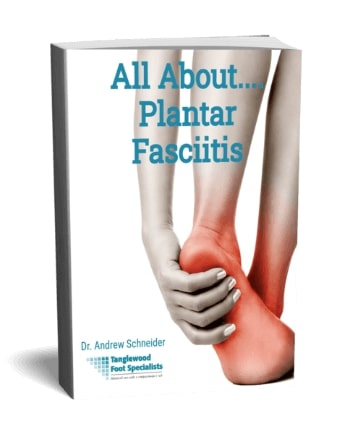
I've also written a comprehensive guide on heel pain that you can download for free at heelpainbook.com. It goes into even more detail about treatment options, self-care techniques, and what to expect from various therapies.
References
This article is supported by peer-reviewed medical research and authoritative clinical sources:
- Post-Static Dyskinesia in Plantar Fasciitis: Schwartz EN, Su J. Plantar fasciitis: a concise review. The Permanente Journal. 2014;18(1):e105-e107. Available at PubMed
- Plantar Fascia Vascularity and Healing: Wearing SC, Smeathers JE, Yates B, Sullivan PM, Urry SR, Dubois P. Plantar fasciitis: are pain and fascial thickness associated with arch shape and loading? Physical Therapy. 2007;87(8):1002-1008. Available at NIH
- Extracorporeal Shockwave Therapy Efficacy: Lou J, Wang S, Liu S, Xing G. Effectiveness of Extracorporeal Shock Wave Therapy Without Local Anesthesia in Patients With Recalcitrant Plantar Fasciitis: A Meta-Analysis of Randomized Controlled Trials. American Journal of Physical Medicine & Rehabilitation. 2017;96(8):529-534. Available at NIH
- Platelet-Rich Plasma for Tendinopathy: Dhillon MS, Patel S, Bansal T. The Role of Platelet-Rich Plasma in Musculoskeletal Conditions: An Evidence-Based Approach. Journal of Orthopaedic & Sports Physical Therapy. 2024;54(1):1-15. Available at JOSPT
- Conservative Treatment Success Rates: American College of Foot and Ankle Surgeons (ACFAS). Clinical Practice Guideline: Plantar Fasciitis. Journal of Foot and Ankle Surgery. 2023. ACFAS Guidelines
Medical Disclaimer: This content is for informational and educational purposes only and does not constitute medical advice. Always consult with a qualified healthcare provider before making any medical decisions or starting any treatment. Individual results may vary. Never delay or disregard professional medical advice based on information from this article.
About the Author: Dr. Andrew Schneider is a Houston-based podiatrist with over 25 years of experience treating foot and ankle conditions. He specializes in regenerative medicine approaches for chronic heel pain and has successfully treated thousands of patients with plantar fasciitis using both conservative and advanced treatment protocols.
Last Updated: January 15, 2025
Houston Foot & Ankle Specialist Dr. Andrew Schneider offers sports podiatry, diabetic foot care, and treatment and surgery of all foot and ankle problems to residents of Houston Texas and surrounding areas. Contact us today for an immediate appointment.