Not All Heel Pain Is the Same
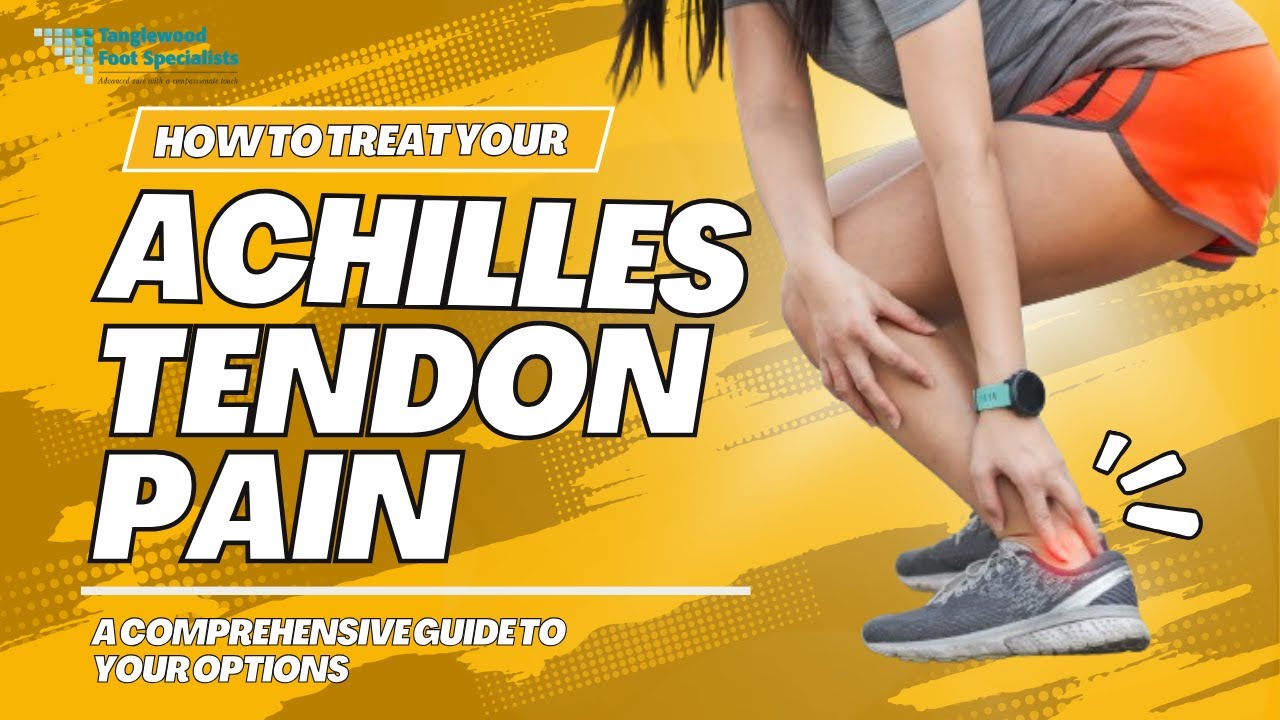
Pain in the back of the heel — called posterior heel pain — is most commonly caused by one of three conditions:  insertional Achilles tendinopathy (tendon breakdown at the heel attachment point), retrocalcaneal bursitis (inflammation of the fluid sac between the tendon and heel bone), or Haglund's deformity (a bony prominence on the upper-back corner of the heel). These three often occur together. And none of them are plantar fasciitis.
Here's the thing: the location of your pain tells me almost everything I need to know before I've even examined you. Plantar fasciitis lives on the bottom of your heel, where the fascia pulls on the calcaneus — your heel bone. What you're dealing with is at the back, where the Achilles tendon inserts onto that same bone. Different structures, different pathology, different treatment.
All three conditions share a common upstream driver: tightness in the calf-Achilles chain pulling on the heel with every step you take. I'll go deeper on that in a moment, because it's the piece almost no one talks about — and it's often the reason people stay stuck. First, let me walk you through what's actually happening with each condition.
The Three Conditions Behind Back-of-Heel Pain
Insertional Achilles Tendinopathy
Your Achilles tendon is the strongest tendon in the body, capable of handling forces two to four times your body weight with every stride. But where it attaches to the back of your heel bone — the insertion point — it has relatively poor blood supply. When repetitive stress damages the tendon there, your body tries to repair it but the construction crew that shows up to do the job gets stuck.
Instead of healthy tendon fiber, you end up with disorganized scar tissue and calcium deposits — and the pain cycle continues.
What makes insertional tendinopathy different from mid-tendon Achilles tendon pain is how it responds to treatment. The stretching protocols for standard Achilles tendinitis — particularly aggressive downhill eccentric heel drops — can actually make insertional tendinopathy worse by compressing the already-stressed tissue against the heel bone. You might notice your pain is worst after rest, loosens up once you're moving, then flares again after longer activity. That pattern is the stalled healing response making itself known.
Retrocalcaneal Bursitis
Between your Achilles tendon and the back of your heel bone sits a small fluid-filled sac called the retrocalcaneal bursa. Its job is to cushion the tendon as it slides over the bone. When it's overloaded or irritated, it fills with fluid, becomes inflamed, and adds its own layer of pain to whatever else is going on back there. "Retro" means behind, "calcaneal" means heel bone — so this is literally the bursa behind your heel bone.
Bursitis often co-exists with insertional tendinopathy, feeding the same pain cycle from a slightly different angle. You might notice soft, fluid-like swelling at the back of the heel — different from the firm, bony bump of Haglund's deformity. The ache tends to be deep and worsens when your foot is flexed upward or pointed downward, because both positions shift pressure onto the bursa.
Haglund's Deformity ("Pump Bump")
 Haglund's deformity is a structural bony enlargement on the upper-back corner of your heel bone. It's more common in people with higher arches, and rigid-backed shoes — dress shoes, certain athletic shoes, stiff boots — press directly on it with every step. You may be able to see or feel the bump. Symptoms are often noticeably better in sandals or backless footwear, because there's nothing compressing that prominence.
I want to be honest with you about this one: the bump isn't going away with stretching or rest. Haglund's is structural bone, not a calcium deposit that'll dissolve with treatment. But that doesn't mean you're stuck with the pain — what we can do very effectively is reduce the inflammation around it and take the mechanical pressure off so it stops being constantly aggravated.
The heel spur people often confuse Haglund's with is actually a different formation entirely — worth knowing if you've been Googling.
Why Your Calf Is Probably Part of the Problem
This is the section you won't find on any competing website.
Think of your calf, Achilles tendon, and heel bone as a connected chain. When the upper link — your calf — is shortened and tight, every movement transmits amplified tension straight to the insertion point at the back of your heel. Doctors call this equinus: restricted upward motion of the foot due to tightness in the calf-Achilles complex. You probably don't feel "tight calves" in any obvious way — but even modest restriction meaningfully increases the load hitting the Achilles insertion with every step, and if you're taking 8,000 steps a day, modest adds up fast.
After treating thousands of patients with this exact pain pattern, I can tell you: tight calves are involved almost every single time. Flat feet or overpronation compound the problem by adding rotational stress — the Achilles insertion doesn't just get pulled vertically, it gets twisted. That combination is what turns an acute flare into a chronic condition that keeps coming back despite treatment.
I see this constantly with Houston patients who train year-round — runners logging miles on the Memorial Park trail, cyclists, pickleball players at local courts. There's no cold off-season here to force rest. That's one of the best things about Houston. It also means your Achilles never gets the unplanned recovery window that actually prevents cumulative overload injuries.
Treating the heel without addressing what the calf is doing is managing symptoms without solving the problem. Addressing sports injuries to the foot and ankle means looking upstream, not just at where it hurts — and custom orthotics that raise the heel and control pronation are often part of that correction.
Symptoms That Tell Me Which Condition You Have
Most people with posterior heel pain share the same core experience: pain and stiffness at the back of the heel that's worst after rest, tenderness when you press directly on the back of the heel, and a pattern of loosening up during activity only to flare again afterward. Those are the universal markers. The details, though, help me distinguish which condition is doing the most damage — and that distinction shapes everything about treatment.
Insertional Achilles tendinopathy tends to produce morning stiffness that takes 10–15 minutes before the heel settles. You may feel a thickening in the tendon just above where it meets the heel bone, and standing on your tiptoes is often painful. Retrocalcaneal bursitis produces swelling that feels soft and fluid-like — not bony — and the deep ache worsens when your foot is flexed upward or pointed downward. Haglund's shows up as a visible or palpable bony prominence on the upper-back corner of the heel, often with redness or callus from shoe friction.
One symptom warrants a different kind of urgency. Sudden severe pain at the back of the heel during or after activity — especially with a pop, significant weakness, or inability to push off on your toes — can indicate an Achilles tendon rupture. That's a very different injury from the chronic conditions I've described, and it doesn't wait. If that's what you're experiencing, contact us right away.
How Houston Podiatrist Dr. Andrew Schneider Treats Pain in the Back of the Heel
My approach follows a simple rule: start with the least invasive option that addresses the root cause, not just the symptoms. I'm not going to recommend surgery to someone who hasn't tried conservative care. And I'm not going to leave someone stuck at cortisone injections when there are better options available.
Level 1 — Lifestyle Changes
Sometimes, the most effective first step is simply changing what's on your feet. Eliminating rigid-backed shoes as your daily driver immediately reduces pressure on the Achilles insertion — and adding an 8–12mm heel lift to your existing shoes can unload the tendon enough to give it a fighting chance at calming down. I'm not telling you to stop moving. Swap high-impact running for swimming or cycling during a flare and you keep your fitness while we fix the underlying problem.
Most people see meaningful symptom reduction within 2–4 weeks of consistent shoe modification. If you're still dealing with significant morning stiffness after 3–4 weeks, it's time to move on.
Level 2 — At-Home Care
 Ice applied directly to the back of the heel — not the arch — for 15–20 minutes after activity helps manage inflammation between visits. Gentle wall calf stretching, both the straight-leg gastrocnemius stretch and the bent-knee soleus variant, starts addressing the equinus component loading the insertion. These are worth doing consistently.
What doesn't work — and what I want you to stop if you've been doing it — is aggressive eccentric heel drops off a step. That protocol is designed for mid-tendon Achilles problems and actively worsens insertional tendinopathy — barefoot walking on hard floors has the same effect. And ibuprofen, while fine for short-term acute pain, isn't a treatment plan. Home care buys you time and reduces symptoms, but it has a real ceiling.
Level 3 — Conservative In-Office Care
When home measures aren't enough, I have several tools that can make a significant difference. Custom orthotics that raise the heel and control pronation ($700) are precision-engineered for your specific foot mechanics — think of them like eyeglasses for your feet. While you're wearing them, they compensate for the mechanical problem with every step and reduce the load on the Achilles insertion every time you walk. If you have significant pronation contributing to your pain, orthotics often become a long-term tool even after symptoms resolve.
For acute retrocalcaneal bursitis, a cortisone injection ($120) targeted directly into the bursa can break the inflammation cycle effectively. I'm deliberate about placement here — I don't inject cortisone directly into the Achilles tendon itself, because repeated tendon injections carry a real risk of weakening the tissue. The bursa is the target, not the tendon. In more severe or acute flares, 2–4 weeks in a CAM boot gives the tendon genuine rest and restarts the healing response.
Physical therapy focused on insertion-specific loading protocols — not the standard mid-tendon eccentric drop program — rounds out conservative care. Followed completely, conservative treatment resolves symptoms in roughly 75–80% of cases within 6–12 weeks.
Level 4 — The Third Option: Advanced Regenerative Medicine
Here's what most people don't realize about chronic back-of-heel pain: there's a powerful middle ground between "keep trying the same conservative treatments" and surgery. I call it The Third Option — and it's where I see the most dramatic turnarounds with people who've been dealing with this for months or years. You can read more about regenerative medicine approaches on our site, but let me walk you through what this actually looks like in practice.
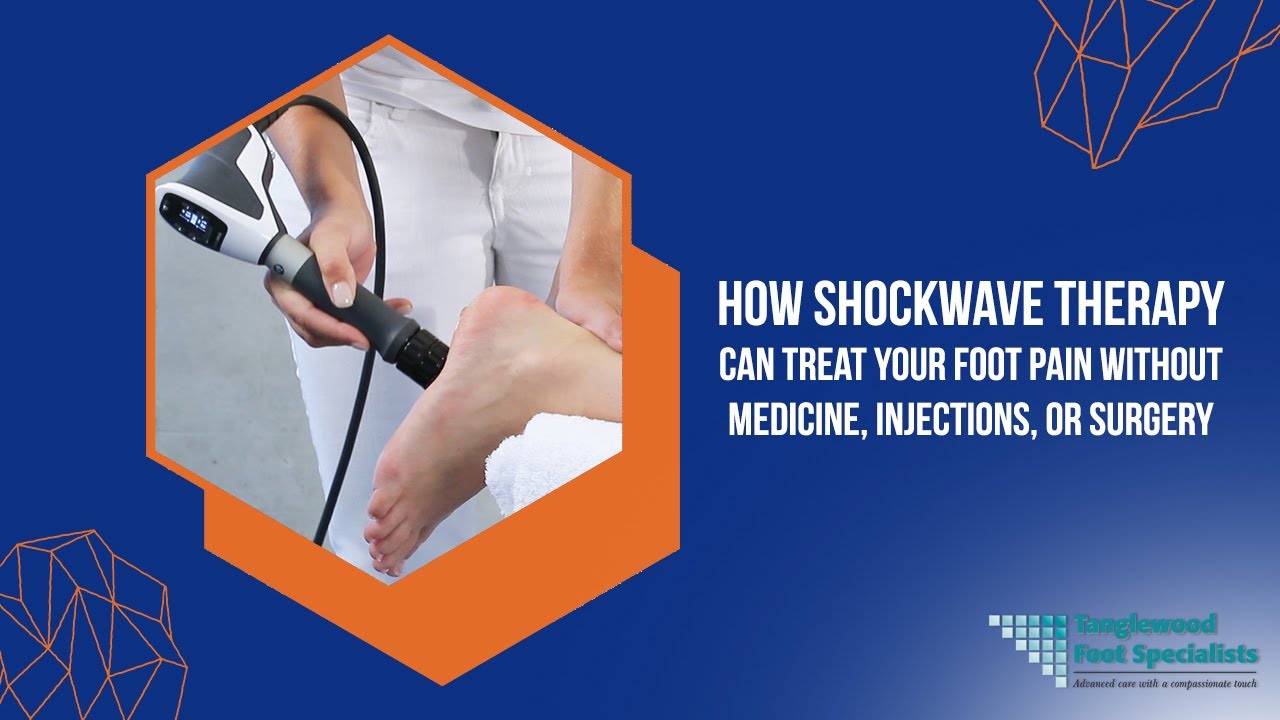
Shockwave therapy ($300 per session; $750 for a package of three) uses acoustic pressure waves to break up calcifications, disrupt stalled scar tissue, and restart the healing response. Think of it like aerating a lawn — the pressure waves create pathways for healing factors to reach tissue that your body's blood supply can't reach on its own. Each session takes 10–15 minutes, and you walk out after every one with no downtime. The success rate for insertional Achilles tendinopathy is 82%, supported by clinical research — which is why I've called it a treatment that almost makes surgery obsolete for the right person.
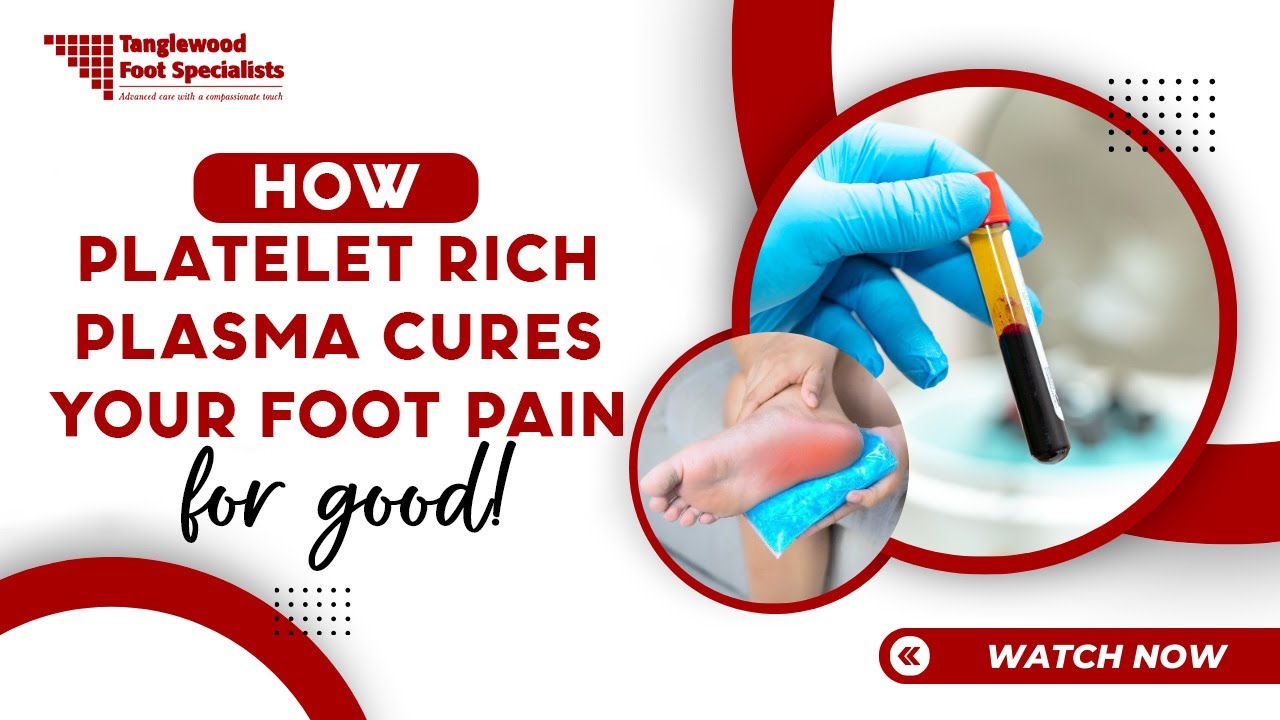
PRP — platelet-rich plasma — injections ($850) take a different approach: I draw a small amount of blood from your arm, concentrate it in a centrifuge, and inject it under ultrasound guidance directly into the damaged tissue. I call this liquid gold for healing — because it delivers the precise biological signals your tendon needs to rebuild, right where the poor blood supply can't. Initial improvement typically appears within 2–4 weeks, with full benefit at 3–6 months. A 2023 systematic review found 70–80% of people with chronic tendon problems see significant improvement with PRP.
For the most stubborn cases — chronic tendon degeneration confirmed on ultrasound — I use PRP and shockwave together. PRP goes in first, seeding the tissue with growth factors. Shockwave follows within days, preparing the environment for those factors to work. I think of it as Seeds and Soil: PRP plants what your body needs to heal, shockwave prepares the ground so it can take root.
The combined success rate runs 85–95%. Most insurance plans don't cover PRP or shockwave, but many HSA and FSA accounts do — and the out-of-pocket cost is often less than the accumulated cost of repeated co-pays and treatments that weren't working.
Level 5 — Surgery (When Truly Necessary)
Look, I know foot surgery sounds scary. But here's what I want you to understand: people who reach this point are genuinely rare. The vast majority — somewhere around 80–85% — get better with conservative care or regenerative treatment. Surgery is reserved for cases where we've been thorough and the pain is still significantly limiting your life.
When it's needed, the procedures are well-refined and effective. A bursectomy removes the chronically inflamed bursa — outpatient, excellent outcomes. For Haglund's deformity that hasn't responded to conservative management, a calcaneal resection removes the bony prominence, sometimes combined with Achilles debridement and reattachment using suture anchors.
Recovery follows a clear progression: splint and minimal weight-bearing for two weeks, a CAM boot through weeks three to six, normal daily activity by months two to three, and return to sport by months four to six. About 85–90% of people report significant long-term pain relief. You can learn more about what foot surgery looks like at our practice before your visit.
If this sounds like what you're experiencing, contact us for an appointment right away. The sooner we identify which condition is driving your pain — and how far along the healing timeline you are — the faster we can match you with the right treatment and get you moving again.
What to Expect at Your First Visit
When you come in, I'll start by asking you two questions before I've touched your foot: exactly where the pain is, and when it's worst. Location and timing give me most of the diagnostic picture right there. Pain at the very back of the heel that's worst first thing in the morning points toward insertional tendinopathy; soft swelling with a deep ache suggests bursitis; a firm bony bump worse in closed-back shoes is Haglund's — and often all three are present at once.
From there, I'll move into a hands-on exam: palpating the posterior heel structures, assessing any bony prominence, and using a squeeze test to distinguish bursitis from tendinopathy. If there's any concern about an Achilles rupture — sudden severe pain, a pop, inability to push off — I'll do a Thompson test to rule that out immediately. I'll also measure your ankle range of motion, because that number directly quantifies the equinus component and shapes the treatment plan.
Then we'll look at imaging: weight-bearing X-rays for the calcaneal pitch angle and insertional calcification, and diagnostic ultrasound to assess tendon fibers in real time — ultrasound shows me the tendon moving, which MRI can't do. Based on what I find, we'll map out a plan together — starting conservative and escalating only if we need to. I won't recommend a treatment that doesn't match what I'm seeing. Request an appointment online and we'll get started.
Keeping Back-of-Heel Pain From Coming Back
Most recurrences trace back to the same upstream culprit: calf tightness returning as training volume increases after recovery. Once you're feeling better, it's easy to ramp back up too fast — and the Achilles insertion pays for it.
A simple daily habit goes a long way. Sixty seconds of wall calf stretching — straight-leg for the gastrocnemius, bent-knee for the soleus — keeps the equinus component from quietly rebuilding. It takes less time than tying your shoes.
Shoe selection matters for the long term too. Running shoes with an 8–10mm heel drop reduce load at the insertion compared to minimalist or zero-drop footwear, and rigid heel counters in everyday dress shoes are worth avoiding — they're the primary mechanical trigger for Haglund's flare-ups. If you've been fitted for custom orthotics as part of your treatment, think of them the way you think about glasses: not a cure, but a consistent compensation for the foot mechanics that created this problem. Wearing them regularly is what keeps it from coming back.
Houston's year-round climate is a genuine asset for staying active. But it also means a little proactive maintenance goes further than it would for someone who gets a natural off-season every winter. Staying ahead of calf tightness is the difference between a one-time episode and a recurring problem. For runners, our page on running-related foot injuries covers more on how to train around Achilles issues without losing your fitness.