What Is a Plantar Wart?
A plantar wart — or verruca plantaris, if you want the clinical name — is a growth on the sole of your foot caused by the  human papillomavirus (HPV). The strains responsible for plantar warts are extremely common and have nothing to do with the HPV strains associated with cancer. The virus enters through tiny breaks in your skin, often picked up in warm, wet public spaces like locker room floors, pool decks, and shared shower areas, and triggers rapid skin cell growth at the site of infection.
Here's what most people don't realize: a plantar wart isn't really a skin problem. It's a viral infection that your immune system has failed to detect. HPV is exceptionally good at hiding — it doesn't trigger the normal inflammatory response your body uses to identify threats, so your immune system essentially gets dispatched to the wrong address and never shows up at the site.
Think of it like a construction crew sent to fix a problem at the wrong building. The work order exists, but nothing gets done because no one's at the right location. That's the fundamental reason plantar warts can persist for months, or even years, without resolving on their own.
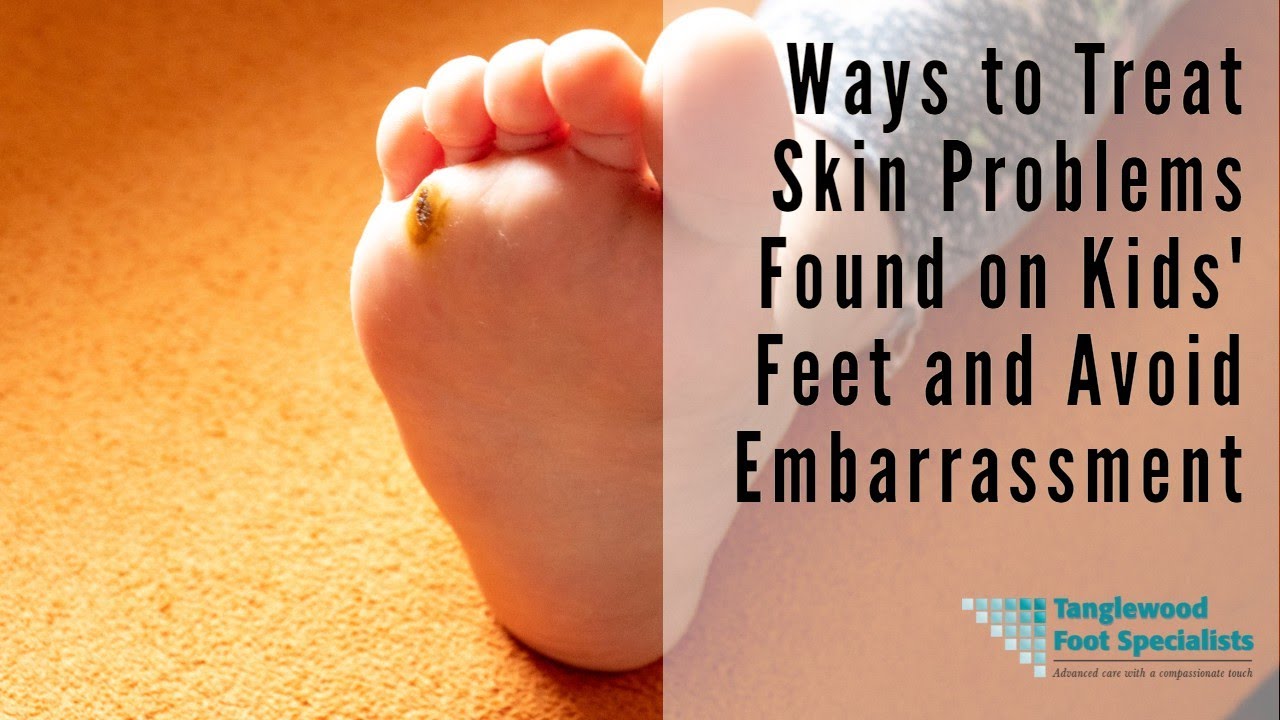
Because of weight-bearing pressure, the wart grows inward rather than outward — a pattern called endophytic growth. That's why they're often described as feeling like a pebble in your shoe. You might also notice small dark specks inside the lesion when you look closely; those aren't seeds or roots, despite what people call them. They're clotted blood vessels that grew into the wart to supply it.
A single wart can develop into a mosaic cluster — multiple lesions that have grown together into one large, flat patch — if it goes untreated long enough. And because warts spread through direct contact with contaminated surfaces, or through autoinoculation (touching the wart and then another area of skin), the longer you wait, the more ground plantar wart removal has to cover.
What Is a Callus?
A callus is an area of thickened, hardened skin that builds up where your foot experiences repeated friction or pressure.  It's not a virus, it's not contagious, and it's not random. Your body is doing exactly what it's designed to do — layering extra dead skin cells over a spot that keeps getting hammered to protect the tissue underneath. The problem is that those protective layers can become painful in their own right, especially when they compress nerves or build up over a bony prominence.
Think of your foot like a tripod. Your weight is supposed to distribute across three points: your heel, the ball of your big toe, and the ball of your little toe. When everything's working right, the load stays balanced and no single spot takes a disproportionate beating.
But tip that tripod — through gait mechanics, footwear choices, or structural changes in the foot — and one point starts absorbing far more than its share of force with every step. That's where your callus forms. The natural fingerprint-like ridge patterns of your skin, called dermatoglyphics, run through a callus uninterrupted, which becomes one of the key visual tests for telling it apart from a wart.
The most common locations are the heel, the second and third metatarsal heads in the ball of the foot, and the outer border of the forefoot. For most people, a callus is uncomfortable but manageable. But for anyone with diabetic foot complications or peripheral neuropathy, that concentrated pressure is a serious warning sign — a callus can mask a wound forming underneath, one you can't feel until it's already become a problem. That's a different conversation entirely, and one we take very seriously.
How to Tell the Difference: The Tests I Use
After treating thousands of people with foot problems in Houston, the question I get most often is: how do I know  which one I have? Most people arrive at my office having already tried to figure this out themselves — squinting at the bottom of their foot, pressing on it, looking something up online. I'll walk you through the same four tests I use in the exam room. You can run most of these at home right now, though I'll tell you where home assessment hits its limits.
The skin line test is the most reliable visual check. Look closely at the surface of the lesion — a callus follows the natural ridge pattern of your skin, those fingerprint-like lines running right through it uninterrupted. A wart disrupts them entirely; the skin pattern stops abruptly at the lesion's border.
If the ridges disappear where the growth begins, you're almost certainly looking at a wart.
The pinch test adds another layer. Press directly down on the lesion, then squeeze it from the sides. Calluses hurt most with direct downward pressure — that's how you load them every single step. Warts are most tender when pinched from the sides, because the lesion extends laterally into surrounding tissue in a way a callus doesn't.
The black dot check works best after soaking your foot for five to ten minutes. Look inside the lesion for tiny dark specks — those are clotted capillaries feeding the wart, and calluses don't have them. Black dots equal wart until proven otherwise.
Location and exposure history round out the picture. Calluses are predictable, forming at the same pressure points every time. Warts can appear anywhere on the plantar surface, including areas that don't bear weight at all. If you've recently walked barefoot in a gym, public pool, or locker room, that history matters.
The case that fools everyone — including experienced practitioners — is when a callus forms directly over a wart, hiding it completely. This is the most common reason a "stubborn callus" won't respond to any treatment. When I debride a persistent callus in the office, I'm always looking for a wart underneath.
Dr. Andrew Schneider has seen this combination more times than I can count. It's the single biggest source of misdiagnosis in this corner of podiatry — and the single best argument for getting an in-office diagnosis rather than relying on what you can see at home.
The Myth About Treating These at Home
A lot of people spend months — sometimes over a year — cycling through salicylic acid pads, pumice stones, and drugstore freeze kits. The thinking is reasonable: if I'm consistent enough, it'll eventually work. I won't judge you for trying everything at the drugstore first. That's what most people do.
But if something hasn't changed in six to eight weeks, hoping it'll eventually work isn't a strategy.
Here's the problem with each approach. For calluses, you're cutting the top off the weed without touching the root. The mechanical pressure driving your skin to thicken is still there every single step, so the callus rebuilds almost as fast as you file it down.
For warts, salicylic acid destroys surface tissue — but it doesn't reach the HPV hiding in the deeper skin layers, and it does nothing to help your immune system recognize and eliminate the virus. That roughly 50% success rate you'll read about for traditional wart treatments? That's under clinical supervision, with proper technique, over a full six to twelve week protocol. Real-world outcomes run considerably lower when people self-treat or misidentify the condition.
There's one specific risk worth calling out directly: if you've been aggressively filing what you think is a callus and it's actually a wart, you may have been spreading HPV to surrounding skin without knowing it. That process is called autoinoculation, and it's how a single small wart becomes a cluster. And for anyone with diabetes, OTC medicated pads with salicylic acid carry a separate danger — the acid can't distinguish healthy skin from the target tissue, and it can burn through to deeper layers that you may not be able to feel until real damage is done.
Houston Podiatrist Treats Plantar Warts and Calluses
My approach to both conditions starts in the same place: an accurate diagnosis. You can't treat what you haven't correctly identified. Once I know what I'm looking at, I build a plan starting with the least invasive option that makes sense for your situation — and I tell you exactly what to expect at each step.
Callus Treatment
Footwear and lifestyle first. Every callus conversation starts here. A wider toe box, adequate cushioning, and no aggressive seams or paper-thin soles will reduce focal pressure immediately. Cut your barefoot time on hard floors, and switch to moisture-wicking socks to reduce friction.
Sometimes that's genuinely all it takes — meaningful callus reduction within three to six weeks when footwear is the primary driver. If the callus is back within four to eight weeks of making those changes, we know footwear alone isn't the answer.
At-home care between visits. After soaking your foot for ten minutes, a pumice stone safely removes the outermost dead layers without damaging underlying tissue. Urea-based moisturizers — look for 20-40% concentration — actively soften hyperkeratotic (thickened) skin and work significantly better than standard lotion.
Silicone metatarsal pads can reduce forefoot pressure between office visits. What doesn't work: OTC acid pads. They destroy tissue indiscriminately, and for anyone with diabetes or neuropathy, they're genuinely dangerous.
In-office debridement. Professional removal with a scalpel is immediate, painless (the thickened tissue is already dead), and diagnostic. I can establish the true pressure pattern, confirm whether there's a wart underneath, and add targeted padding or offloading to protect the area while the skin normalizes. An established patient visit runs $120 — and for anyone interested in treating calluses long-term, it's often the fastest way to get real relief while we address the underlying cause.
Custom orthotics — the inflection point for recurrent calluses. Think of custom orthotics the way you'd think of eyeglasses. Glasses don't fix your vision — they compensate for it, every moment you're wearing them. Custom orthotics work the same way: they redistribute the focal pressure load with every step of every day, removing the mechanical force driving callus formation continuously rather than just during office visits.
If your callus returns every four to six weeks regardless of footwear changes, that's a mechanics problem — and custom orthotics are the only durable solution. Cash pricing is $700, and most people with recurrent calluses find them controlled completely with consistent wear.
When the callus is driven by bone. Some calluses don't come from how you walk — they come from what's underneath. A prominent metatarsal head, a bone spur, or a hammertoe deformity pushing a toe against the shoe creates internal pressure that no amount of debridement or orthotics will permanently resolve.
Look, I know foot surgery sounds scary. But when a callus keeps returning despite everything we've tried, that's your foot telling you there's a structural problem underneath — and fixing it is a small, targeted outpatient procedure, not a major surgery. You'll be in a surgical shoe and bearing full weight from day one, sutures come out around two weeks, and most people are back in regular shoes within three to six weeks.
Bone spur removal and outpatient foot surgery are options I only recommend when conservative measures have been fully tried — but when they're the right call, they solve the problem permanently. Most people are genuinely surprised by how manageable the recovery is.
Wart Treatment
Containment first. Before anything else: shower shoes in any public wet area, keep your feet dry, don't share towels or nail files, and if you're living with children, keep the wart covered. This isn't treatment — it's damage control while we figure out the right plan.
OTC salicylic acid — an honest assessment. It can work on small, early, superficial warts with six to twelve weeks of completely consistent application, under ideal conditions. Success rate hovers around 50%. If nothing has changed at the six-to-eight week mark, stop — and absolutely don't file aggressively, because of the autoinoculation risk.
In-office cryotherapy and cantharidin. Liquid nitrogen and cantharidin (sometimes called "beetle juice" in the office, which gets a reaction every time) are applied in-office and aren't available over the counter. They require multiple sessions every two to three weeks and work better than OTC options. But their success rate is still roughly 50%, because they address the tissue — not the virus living inside it. An established patient visit is $120.
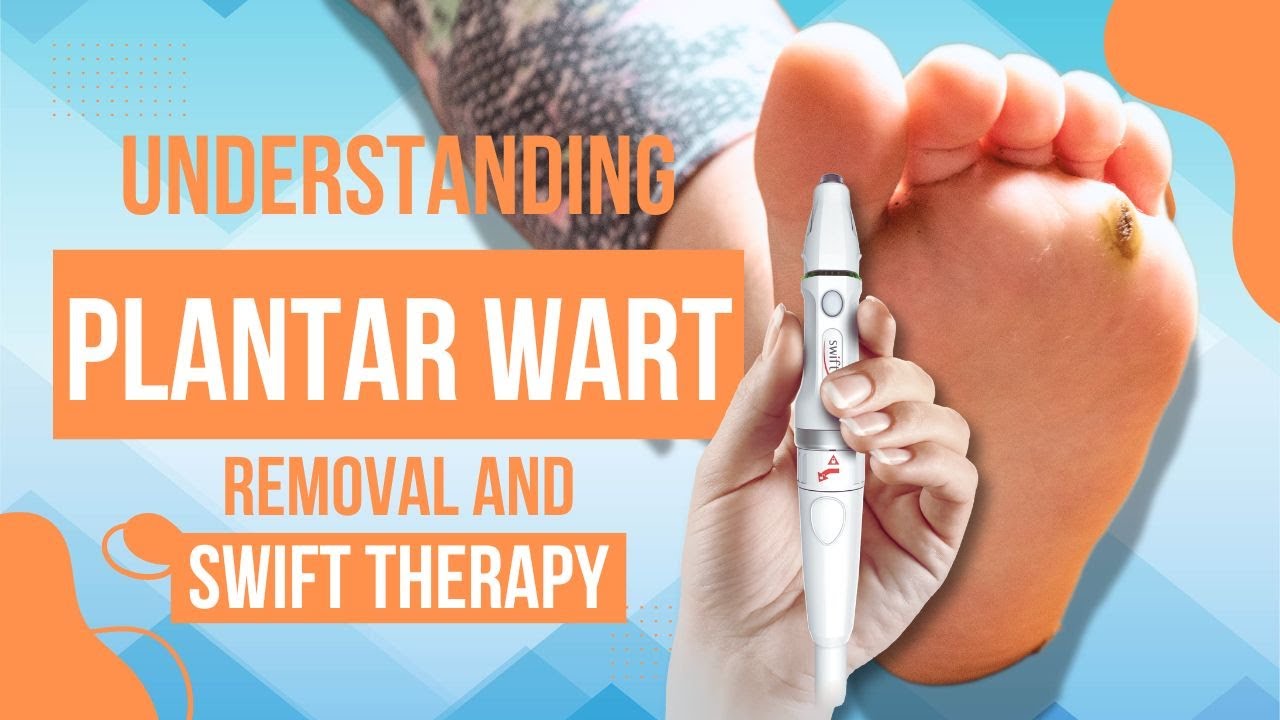
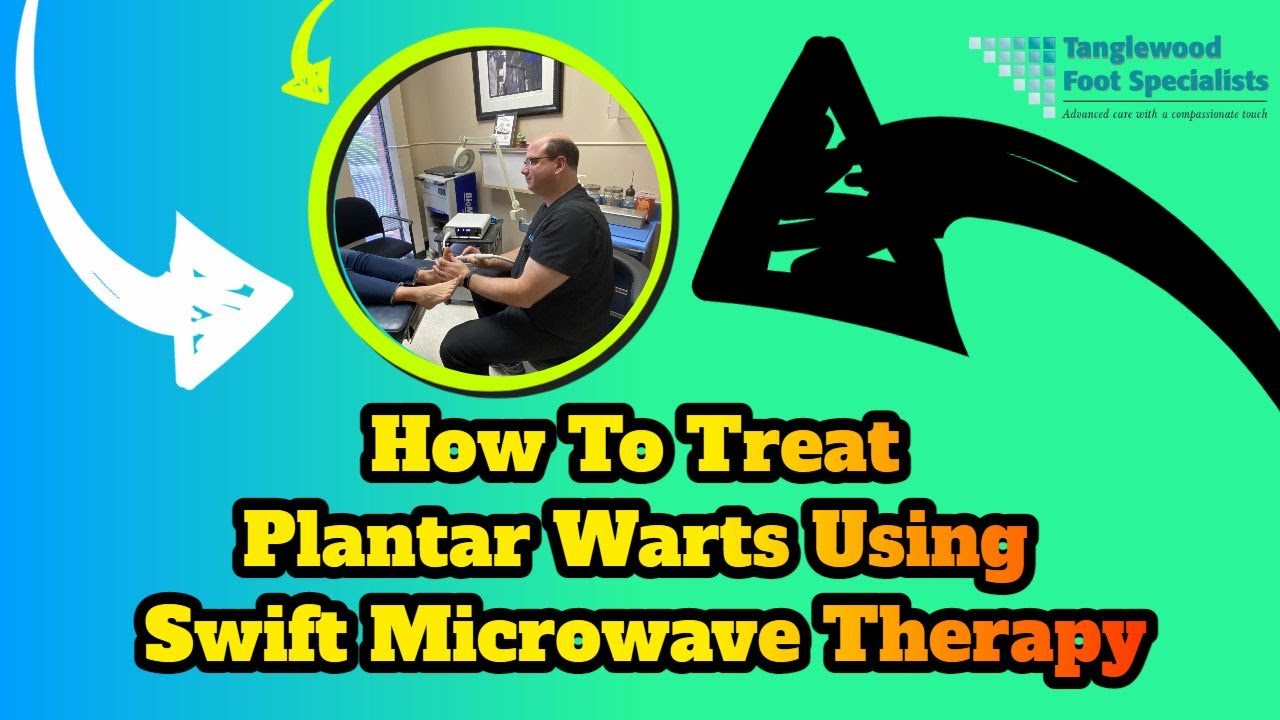
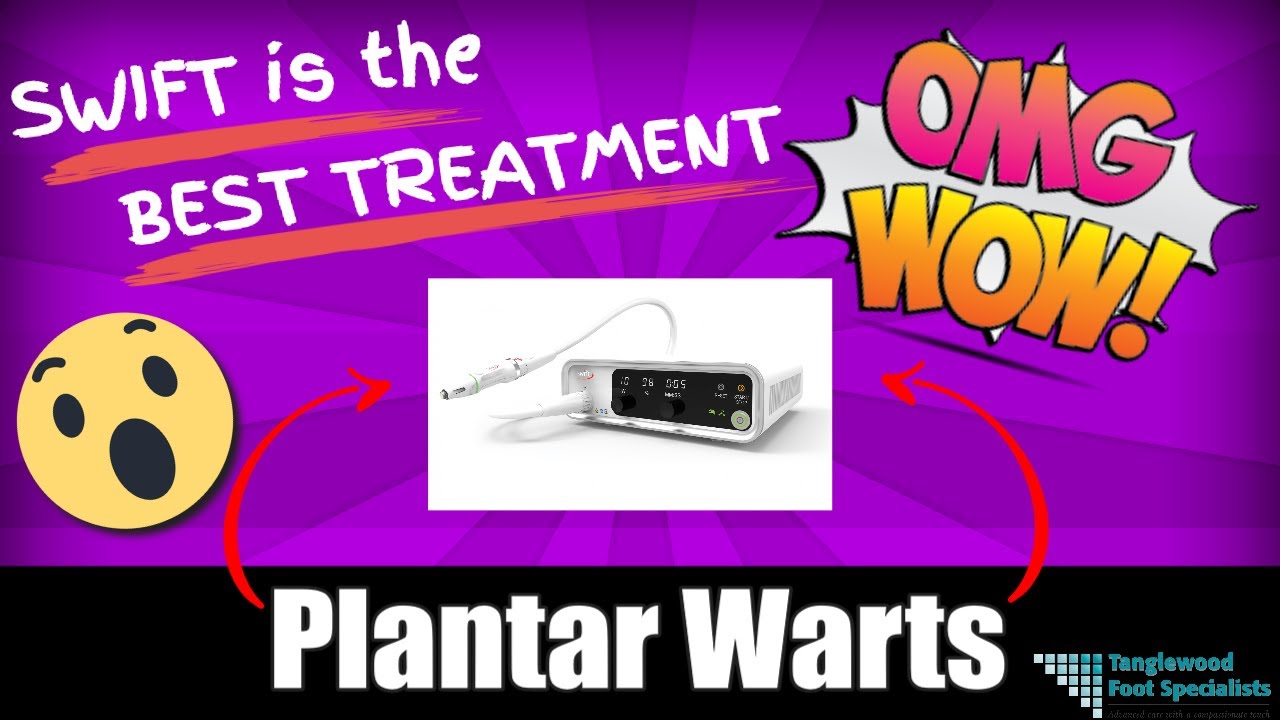
Swift microwave therapy — the immune-system approach. This is the treatment that's changed outcomes for  stubborn plantar warts, and I want to explain why it works differently from everything else. Swift delivers precisely calibrated microwave energy to the infected tissue, heating the cells enough to disrupt them — which forces HPV viral proteins to the cell surface.
Your immune system, which had been completely blind to the infection, now sees those proteins and mounts a real response. Not just at the treated site. Systemically. That's why Swift microwave therapy can clear multiple warts at once, including ones that weren't directly treated.
The clinical data is striking compared to traditional approaches. Swift carries an 84% success rate for eliminating plantar warts, with a recurrence rate under 1% after treatment — versus roughly 50% for conventional methods. The protocol is three to four sessions spaced four weeks apart, each under ten minutes.
No anesthesia, no wound, no bandage, no downtime. Most people rate the discomfort around a four or five out of ten — and it lasts only seconds per treatment point. Cash pricing is $265 per session, or approximately $795 for a full three-session protocol. If you've been treating a wart for months without resolution, this is the regenerative medicine approach that actually goes after the virus — not just the tissue it's hiding in.
Surgical excision — genuine last resort. For mosaic warts, very deep lesions, or cases where every other treatment has failed, surgical excision under local anesthesia is an option. It's outpatient, same-day discharge, with a recovery of six to eight weeks. I want to be honest about the limitations, though: excision carries its own recurrence risk if HPV remains in the tissue margins, and it's the only wart treatment that leaves a scar. I reserve it for genuine failures — and those are increasingly rare since Swift became available.
Not Sure Which One You Have? I can tell you in one visit — and we'll start treatment the same day. Request Your Appointment →
What to Expect When You Come In
When you come in, I'll start by examining the lesion visually — looking at the skin line pattern, checking for those black dots, noting its location and what the pressure distribution across your foot is showing me. Most diagnoses are clinical and immediate. I can usually identify what I'm looking at within the first minute. But if the picture is ambiguous, I'll pare the surface with a scalpel: pinpoint bleeding from tiny capillaries means wart; smooth, uniform thickening means callus — or a callus sitting over a wart, which changes everything about the treatment plan.
I'm also going to watch you walk. Gait observation and a structural assessment of your foot tell me what a visual inspection of the lesion can't — specifically, where your mechanics are concentrating load and whether that's the driver behind a recurrent callus. I'll ask you how long this has been going on, what you've already tried, and what your day looks like in terms of activity and footwear.
None of that is small talk. It's the information that determines whether we start with a footwear change, a Swift session, a digital gait analysis for custom orthotics, or something else entirely.
There's no script for the treatment plan. What I recommend is based on what I find, how long the problem has been present, what you've already done, and what your goals are. If we're starting Swift therapy, the first session can happen the same visit. If we're making custom orthotics, the digital gait analysis happens the same day and the devices are delivered within two to three weeks.
Either way, I need to see you to figure out what's actually going on. A diagnosis you make at home based on how the skin looks is a starting point — and a starting point isn't a treatment plan.
Plan for your initial visit to run 30 to 45 minutes. If we're pursuing Swift, expect three to four sessions over twelve to sixteen weeks. Schedule your appointment and we'll take it from there.
Preventing Calluses and Plantar Warts in Houston
Houston's year-round warmth and humidity make plantar wart prevention a twelve-month concern, not a seasonal one. The gym culture, public pools, and indoor fitness centers — from the Galleria area to the facilities around Memorial Park — keep HPV exposure opportunities constant. I see new wart cases every single month of the year.
For wart prevention: shower shoes in any public wet area are non-negotiable. Keep your feet dry — HPV thrives in moisture — and don't share nail files, towels, or socks. If your child has a wart, keep it covered and avoid sharing towels at school or swim practice.
If children's foot health is on your radar, early intervention on warts is always easier than treating a mosaic cluster that's had months to spread.
For callus prevention, rotate your shoes so each pair has time to recover between wearings — they compress and lose cushioning faster than most people realize, and worn-out shoes concentrate pressure exactly where you don't want it. Moisture-wicking, padded forefoot socks reduce friction significantly. If calluses keep returning despite those changes, an annual gait assessment is the only way to know whether your mechanics are the real driver.
For anyone with diabetes: a callus isn't just a nuisance. It's a warning sign that warrants prompt evaluation, because the pressure underneath it can create a wound you won't feel until it's already serious. The same applies to any athlete's foot and other skin infections that compromise skin integrity — broken skin is an open door for HPV.