Here at Tanglewood Foot Specialists, we’re devoted to providing patients with treatments that draw on regenerative medicine—helping you tap into your body’s own healing abilities. For that reason, we’re excited to introduce red light therapy for foot pain to our treatment options! This is a cutting-edge treatment that shows remarkable results for many of the foot and ankle conditions we see in our Houston podiatry practice. Here’s what you need to know if you’re considering this treatment option.
What is Red Light Therapy? ![red light therapy]()

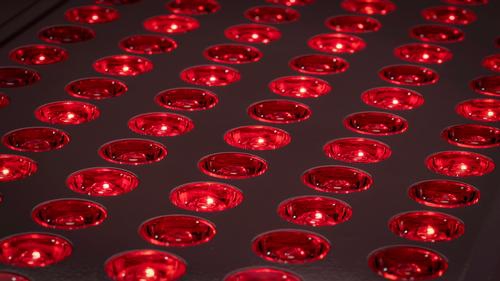
Red light therapy is a treatment that targets specific areas of your skin with continuous red and near-infrared light, typically at a wavelength that is between 630 and 700 nanometers. It feels like sitting in warm rays of sunshine. But, at this level, the light waves can penetrate your skin's surface to stimulate your body’s mitochondria production. And, since mitochondria are one of the main sources of energy for cells, stimulating production will help your body produce adenosine triphosphate, ATP (food for cells) to grow healthy new cells, while improving the function of existing ones. (Cellular regeneration and repair.)
It also improves blood circulation by encouraging your blood cells to dilate. It decreases inflammation in a variety of ways, reducing pain and swelling while speeding. Red light therapy can even stimulate the production of collagen, a protein that is essential for tissue repair, along with maintaining your skin's elasticity and strength. In combination, these factors help speed up your body’s natural healing processes, so you can come back faster from injuries, or finally put chronic pain in your rearview mirror. Choosing this treatment option is like giving your body's repair system an all-natural boost.
Also known as photobiomodulation, low-level laser light therapy, low-power laser therapy, non-thermal LED light, soft laser therapy, cold laser therapy, phototherapy, biostimulation or cold laser therapy, this treatment has been trending in skincare spaces in recent years. But, with more research, we’re starting to see its application in therapeutic areas, making red light therapy for foot pain a promising new treatment option.
How Did we Discover the Therapeutic Benefits?
Red light therapy first gained attention with NASA scientists used it for experiments surrounding astronaut wound healing. Seeing its potential benefits, other researchers began studying other healthcare applications for red light treatments. In each case, the method of action stays the same. Basically, red light therapy seems to boost your body’s ability to produce mitochondria, resulting in increased cellular energy levels in your body. Thanks to this power boost, those cells can act with greater efficiency. As a result, they are in a better position to repair injuries, fight inflammation and create new cells. Research also links red light therapy to increased collagen and fibroblast production, resulting in stronger connective tissue in your body. It can also increase blood flow to targeted treatment areas, in turn resulting in faster injury healing and improved inflammation fighting.
Why Some Treatments Fail
Red light therapy has become one of the most popular at-home treatments for foot and joint pain — and for good reason. As noted above, when it's used correctly, it can genuinely support healing, reduce inflammation, and ease chronic pain, especially when it comes to conditions like neuropathy.
But here's what most people don't realize: most red light devices on the market are set up in a way that makes them far less effective than they could be. If you've tried red light therapy and felt like "it just didn't do much," it may not be the treatment that failed — it may be the device, the distance, or how long you used it.
Let's break down what actually matters.
1. The Right Wavelength
To be effective, your therapy must use wavelengths that can penetrate the skin, reaching the tissue and nerves underneath — generally in the range of 660nm (visible red) paired with near-infrared wavelengths around 810–850nm. This combination allows the light to actually reach cellular structures and support the biological processes involved in healing, rather than just warming your skin's surface. But many inexpensive panels use wavelengths that aren't matched to what the tissue actually needs.
2. The Right Distance
If you're sitting across the room from your red light panel while you watch TV, you're getting almost none of the benefit. For effective dosing, your skin should be about 6 to 8 inches from the light source. Any farther and the intensity drops off dramatically — you could be "using" red light therapy for months and getting very little out of it simply because of where you're sitting.
3. The Right Amount of Time
More is not better here. Red light therapy works through a dosing response, and there's a point of diminishing — and even counterproductive — returns. For best results, we recommend no more than 30 minutes per day. Overdoing your exposure time doesn't accelerate healing; it can actually work against the response you're trying to create. Consistency matters far more than duration.
In our Houston podiatry practice, we meet these three conditions for effective red light therapy, allowing us to deliver noticeable results for very specific conditions.
Red Light Therapy for Foot Pain: Specific Conditions We Can Treat
As we learn more about this form of regenerative medicine, we expect to see it used for even more foot care applications. Already, we’ve seen this treatment help with common foot conditions, including:
The Heel Pain of Plantar Fasciitis: The light penetrates deep into the tissue, reducing inflammation in the plantar fascia while promoting faster healing. Many patients experience significant pain reduction after just a few sessions.
Achilles Tendonitis: Red light therapy helps repair your damaged tendon fibers. It can also reduces the chronic inflammation that often keeps this condition lingering, leaving you in pain for months on end. It's a particularly effective treatment for stubborn cases of Achilles tendon pain, especially ones that haven't responded well to other treatments.
Peripheral Neuropathy: This type of nerve pain is notoriously hard to treat, and that’s why we’re so excited about adding red light therapy to our practice. In the context of neuropathy, the improved cellular energy and circulation can help damaged nerves function better, and even promote and stimulate nerve regeneration. It can also help reduce the burning, tingling, and numbness that makes life so uncomfortable for patients living with this condition, while improving circulation to the affected area. Still, it's important to remember that red light therapy for neuropathy is not a stand-alone cure; it works best as part of a complete treatment plan. But it can be a great option for addressing symptoms and promoting healing, especially for patients who have plateaued with traditional treatment plans.
What to Expect During a Session
If you come in for red light therapy to ease your foot pain, expect each session to last between 10 and 20 minutes, depending on the area that's being treated and the condition we're addressing. During that time, you'll sit comfortably near a panel of LED lights that emit therapeutic wavelengths. The light has a warm reddish glow and you'll feel gentle, soothing warmth on your skin. There's no discomfort whatsoever and no downtime afterward. Many patients find it's a peaceful break in their day. And, after two to three sessions, you’ll likely enjoy reduced pain levels, even for chronic conditions. And what's truly remarkable is that the benefits continue long after the treatment session ends; improved cellular function can last for hours or even days, resulting in a cumulative effect after several sessions are complete.
Is Red Light Therapy Safe?
This treatment is generally considered safe. There are no known side effects associated with the therapy, as long as you receive treatment from a skilled provider over a short time period, following all physician instructions. Unlike the UV light rays that come from the son, the light waves from red light therapy are not associated with an increased cancer risk. Still, this treatment may not be right for everyone. If you have photosensitivity, have cancer, have an open wound or infection, or if you are pregnant or breastfeeding, it may be best to avoid treatment. People with darker skin tones may also wish to avoid red light therapy for foot pain, since they may develop hyperpigmentation following treatment.
Request Your Consultation
If you've been dealing with chronic foot pain that hasn't responded well to other treatments, red light therapy might be the breakthrough you've been looking for. We encourage you to call the office at 713-785-7881 or follow this link to request an appointment. When you meet with Houston podiatrist Dr. Andrew Schneider, he’ll review your candidacy for red light therapy or other regenerative medicine treatment options. Together, you’ll come up with a plan to finally resolve your pain so you can walk out of the office comfortably!