Why Chronic Heel Pain Keeps Coming Back
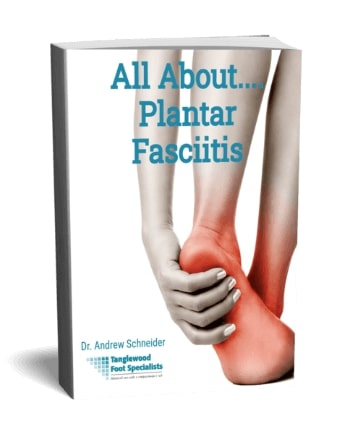
Chronic heel pain — most often plantar fasciitis — occurs when the plantar fascia, the thick band of tissue running  along the bottom of your foot from heel to toes, becomes damaged and gets stuck in a failed healing response. The tissue has poor blood supply, so repair stalls. The result is ongoing pain that doesn't respond to anti-inflammatories because active inflammation is often no longer the problem.¹
Here's what most people don't realize: by the time heel pain has been going on for several months, it's often not truly inflamed anymore. The tissue has shifted into a degenerative state called fasciosis — breakdown without active inflammation. Cortisone reduces inflammation. But if inflammation isn't the primary driver anymore, you're solving for the wrong thing. That's why the first injection works so well and the third one barely moves the needle.
The morning pain has a specific name — post-static dyskinesia — and a specific mechanism. During rest, your plantar fascia contracts and begins to knit itself together. When you stand up, that partial repair tears apart. That's the stabbing first-step pain. It's not random. It's your body's stalled repair cycle being interrupted the moment you load the foot again.
Think of it like a construction crew. Your body started repairs, laid down scar tissue, sent in initial healing factors — then stalled. The crew's on site, but nothing's getting finished. That's what a failed healing response looks like from the inside. And that's exactly what regenerative medicine is designed to restart.
The Myth That's Keeping You in Pain
The two biggest myths about plantar fasciitis that won't resolve aren't just wrong — they're actively keeping people in pain longer than they need to be. The first is that cortisone is the best injection option for heel pain. It's the default recommendation, and I understand why: that first injection often works brilliantly. You assume the next one will too. Most providers don't explain the ceiling.
Here's the thing about cortisone: it delivers zero healing materials. It suppresses inflammation temporarily. And repeated injections over time weaken the surrounding tissue — you're trading short-term relief for long-term damage.² By the chronic stage, when the underlying problem is tissue degeneration rather than acute inflammation, you're not treating the condition. You're masking it until the masking stops working.
The second myth does even more damage: that if injections don't work, surgery is next. This is the pathway most people get handed at this stage. I've had patients come in who'd already scheduled their surgery — not because conservative treatment genuinely failed, but because nobody had told them there was anything between a cortisone shot and a scalpel. That gap is an entire treatment level. It has a name: regenerative medicine. And 95% of plantar fasciitis cases resolve without ever reaching the operating room.
Most general practices simply don't offer regenerative treatments. If the only tools you have are cortisone and scalpels, that's the choice you present. It doesn't mean those are your only options. It means you haven't seen a practice that offers the full progression.
Your Heel Pain Isn't a Mystery. Here's What's Actually Happening.
So here's what's actually going on. The pain starts with micro-tears at the point where the plantar fascia attaches to  your heel bone — compounded by poor blood supply, an incomplete repair cycle, and scar tissue that builds up with every re-injury. Structural contributors include flat feet, high arches, overpronation, and leg-length discrepancy. But the most common factor, present in nearly every chronic case I see, is a tight calf and Achilles complex.
After treating thousands of patients with chronic heel pain, I can tell you: most of them have extremely tight calves. You can stretch your heel all day and never address the real tension source. Your plantar fascia isn't working in isolation — it's part of a kinetic chain that runs from your mid-back all the way to your toes. Think of your body like a puppet on strings. When your mid-back is stiff, it changes how your hips move. When your hips are restricted, your calf muscles compensate. When your calves are tight, they pull on your plantar fascia on every step. The heel is where the pain lives; it's often not where the problem starts.
One mistake I see constantly: aggressive morning stretching before the foot warms up. I understand the instinct. Your heel hurts, you want to stretch it. But when you first wake up, the plantar fascia is already in a shortened, contracted position. Forcing it to stretch immediately causes microtears in already-compromised tissue. The timing makes it worse, not better.
Houston's environment doesn't help either. If you're spending long days on the hard floors of a Galleria-area office, moving through the Texas Medical Center, or training on the paved trails around Memorial Park, your fascia is absorbing significantly more ground-reactive force than it would on softer surfaces. Add Houston's heat driving sandal and flip-flop season for eight-plus months of the year — some of the worst footwear choices for an already-compromised heel — and you've got a re-injury cycle that keeps running even when you think you're resting. Runners and active patients pushing through pain tend to accumulate this damage faster, but I see the same pattern in people whose only "sport" is a long commute and a standing desk. Repetitive stress and sports-related heel conditions follow the same biology regardless of how you got there.
How a Houston Podiatrist Treats Chronic Heel Pain — From First Steps to Regenerative Medicine
I don't treat heel pain. I treat the person who has heel pain — which means understanding your activity goals, your lifestyle, and where you are in the treatment timeline before I recommend anything. That framing changes everything about what comes next.
Lifestyle and footwear first. Sometimes the most important change you can make costs nothing. Supportive shoes on hard floors — including inside your own house — are non-negotiable when the fascia is already compromised. Those comfortable, worn-down slippers you love? They're often making things worse. Eliminate barefoot walking on hard surfaces entirely while you're healing, replace athletic shoes at the 6–12 month mark regardless of how they look, and apply the same support standards to work shoes as you do to running shoes. In Houston's climate, sandal season runs nearly year-round — which means re-injury season does too, unless you're deliberate about footwear even on casual days.
At-home care that actually works. Ice — not heat. Twenty minutes on, forty minutes off. Heat feels soothing but it actually increases inflammation in already-irritated tissue. And get a night splint: worn while you sleep, it holds the foot in a gently dorsiflexed position so the fascia doesn't fully contract overnight and tear apart on that first step.
Do the morning stretch sequence before your feet hit the floor: 20 seconds of mid-back mobilization, 20 seconds of hip flexor release, then 20 seconds of calf stretch. The sequence matters — you're releasing the full kinetic chain before you load the fascia, not just yanking on the end of it.
These measures are necessary, but I'll be honest: they reduce re-injury. They don't repair damaged tissue. If you've had consistent symptoms for more than 4–6 weeks, hoping they'll resolve on their own isn't a strategy. Hoping doesn't work.
Conservative in-office care. When you come in, I'll assess your gait, foot structure, and the full chain from your calf up  through your hip before I recommend anything. For most people at this stage, custom orthotics that match your specific biomechanics are part of the plan. Think of them like eyeglasses for your feet — they compensate for your specific mechanics on every step while the underlying tissue heals. They won't repair the damaged fascia, but they prevent re-injury while everything else does the repairing.
Cast or scanned at the first visit, custom orthotics run $700 for a pair ($350 for an additional pair) — the structural foundation of recovery. A cortisone injection ($120) has a place in early, acute-stage cases where active inflammation needs to be controlled so other treatments can take hold — used once or twice, strategically. What I won't do is keep repeating them and calling that a treatment plan.
Physical therapy rounds out this level: guided strengthening of the intrinsic foot muscles, myofascial release for the calf and hip, and supervised gait correction — especially valuable when the kinetic chain above the foot is the primary driver. Conservative in-office care resolves roughly 70–80% of plantar fasciitis cases when started early and followed consistently. The timeline is 6–12 weeks to meaningful improvement. If you've been dealing with this for more than six months, or you've had repeated cortisone, it responds significantly less reliably to conservative care alone.
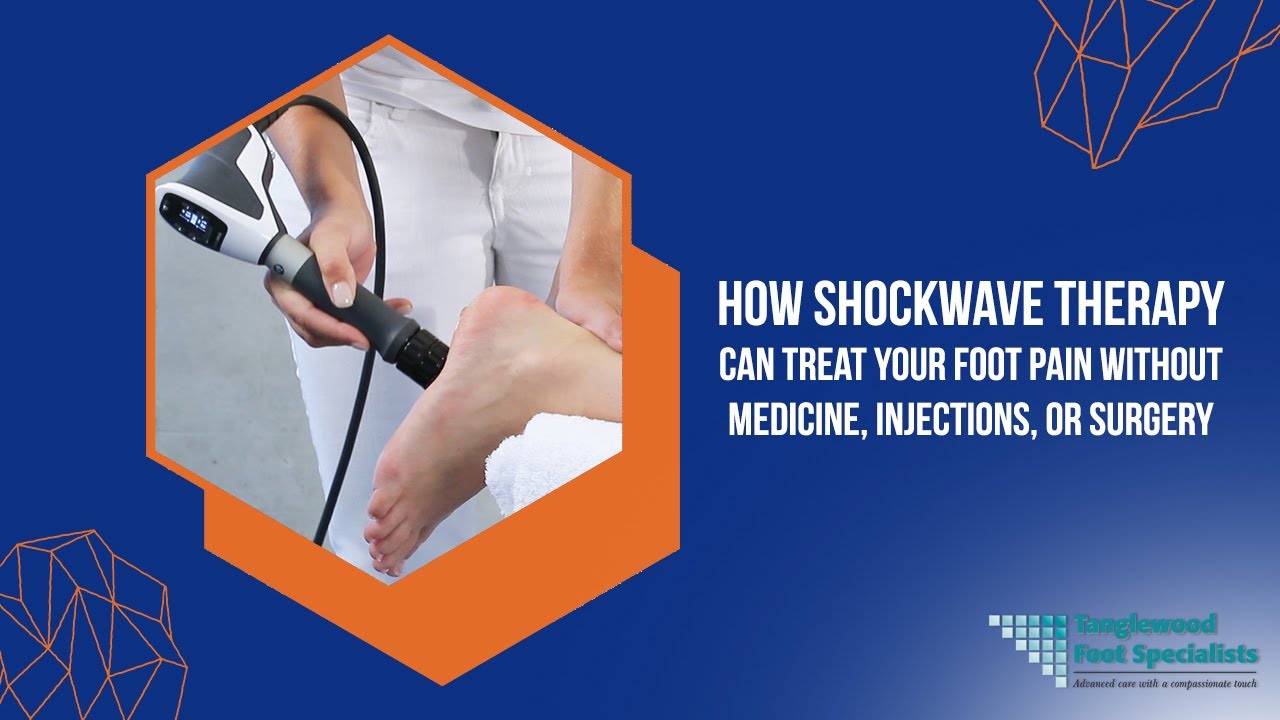
Regenerative medicine — the third option. Here's where I want to spend some time, because this is the level most people reading this article have never been offered. Shockwave therapy for heel pain — formally called extracorporeal shockwave therapy, or ESWT — uses focused acoustic pressure waves delivered through a handheld device pressed against the heel. No electricity, no shocks — despite the name.
Think of it like aerating a lawn: the waves create microchannels in scar-laden, compacted tissue, flood the area with blood flow, break up calcifications, and trigger the release of the body's own growth factors and stem cells. It restarts the stalled construction crew. Sessions run 10–15 minutes, once a week for three weeks, at $300 per session ($750 for the package of three). The success rate is 82%.³ I've treated my own heel pain with shockwave. I wouldn't recommend something I haven't used myself.
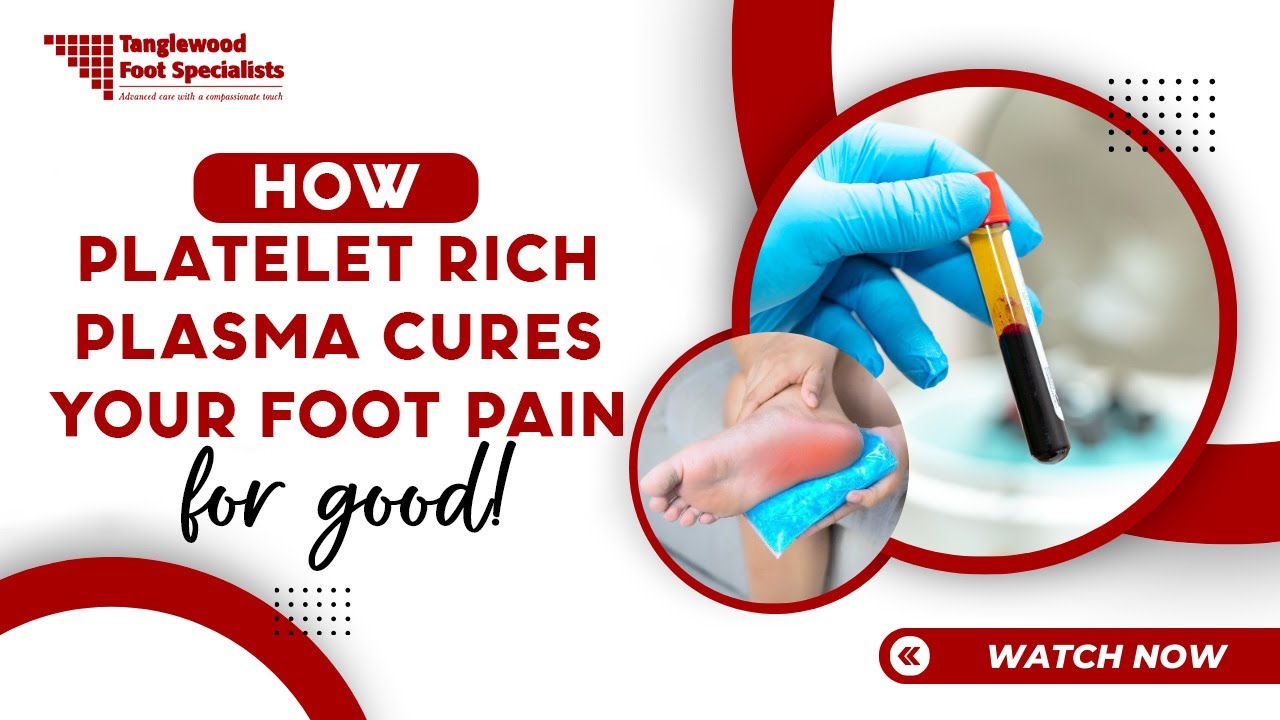
A platelet-rich plasma injection, or PRP/DPMx ($850), works differently. We draw a small amount of blood from your arm, process it in a centrifuge to concentrate the healing growth factors, then inject that concentrate under ultrasound guidance directly into the damaged plantar fascia. PRP is like liquid gold for healing — unlike cortisone, it doesn't suppress the healing response, it supercharges it, delivering the actual biological materials the fascia needs to repair. Seventy to eighty percent of patients with chronic tendon and fascia conditions see meaningful improvement.⁴ You'll have mild soreness for a day or two, and then normal daily activity throughout recovery.
The combination I reach for in the most stubborn chronic cases — the ones who've had cortisone four times and been told surgery is next — is what I call the Seeds and Soil protocol: PRP followed by shockwave therapy. PRP plants the healing growth factors directly into the tissue (the seeds); shockwave therapy prepares the biological environment and repeatedly stimulates those factors into action (the soil). Together they create conditions where healing can finally complete.
The sequence matters: PRP injection first, then three weekly shockwave sessions beginning within a few days. Combined success rate: 85–95%.⁵ The cash investment is approximately $1,600 — a fraction of surgery and the recovery it requires. Regenerative medicine for heel pain at this level is the closest thing I've seen to making surgery obsolete for chronic plantar fasciitis. Between regenerative sessions, red light therapy between sessions ($39/session, $180 for a package of six) provides cellular-level support that reduces pain load and supports tissue recovery.
Surgery — when it's genuinely necessary. Look, I know foot surgery sounds scary. But here's what I want you to hold onto: 95% of my patients with plantar fasciitis never get here. For those who do, modern techniques mean faster recovery and better outcomes than most people expect.
The Tenex procedure is minimally invasive — an ultrasound-guided micro-tip breaks up and removes degenerated tissue at the fascia insertion point through a small puncture, no large incision. Plantar fascia release, performed endoscopically or open, releases a portion of the fascia at the insertion point to relieve chronic tension. Week one is a surgical boot with protected weight-bearing; week two brings suture removal and the start of gentle movement. By months two to three, most people are back to daily activities and low-impact exercise — with full return to running by month three or four. More than 90% of people who reach surgical options for heel pain see significant, lasting pain relief.
If this sounds like where you are — cortisone that's stopped working, and a surgery consult you're not sure about — I'd like to talk with you. There may be more options on the table than you've been shown.
Schedule Your Evaluation | 713-785-7881
What to Expect When You Come In
When you come in, I'll start by asking you something most doctors don't: what do you want to get back to doing? The answer shapes everything. Treating heel pain in someone who wants to run half marathons looks different from treating it in someone who just wants to walk to the car without wincing. Your goals set the direction before I've even looked at your foot.
From there, I'll do a thorough gait analysis and structural assessment — watching how you walk, evaluating your arch, measuring your calf flexibility, and tracing the kinetic chain up through your hip. Most of the time, I can identify the primary mechanical drivers in that first exam. If I need imaging, I'll take X-rays in-office ($90) to rule out a stress fracture or assess heel spur involvement, and I can perform an ultrasound to evaluate fascia thickness and tissue quality in real time. I want to know exactly what we're dealing with before I recommend anything.
Then we'll talk honestly about where you are in the treatment progression. I'll tell you what's been tried, what I think is actually going on, and what I'd recommend based on your timeline and your goals — not a generic protocol. I won't judge you on how long you waited, how many cortisone shots you've had, or what home remedies you tried first. I just need to know your starting point so we can figure out the best path forward. Dr. Andrew Schneider has been doing this for over 25 years — you're not going to surprise me, and you're not going to be talked into anything before you understand why.
Most cash-pay services are available the same day, so if we decide to move forward with an injection, imaging, or even shockwave therapy at that first visit, we don't need to schedule a second appointment just to get started. If cortisone is appropriate, you'll feel relief within days. If we're starting a regenerative protocol, I'll set realistic expectations: initial improvement in 2–4 weeks, with the full trajectory of healing continuing over 3–6 months as the tissue genuinely rebuilds. Either way, I need to see you. Whether you've had this for three months or three years — your starting point doesn't determine your outcome. What you do next does.
Keeping Your Heel Pain from Coming Back
Getting out of pain is step one. Staying out of it is step two — and it's one most practices skip entirely. Plantar fasciitis has a real recurrence rate, and the people who end up back in my office are usually the ones who stopped doing the things that got them better in the first place.
Well-fitted custom orthotics are the most reliable long-term protection. Not a crutch — a compensation for the mechanical reality of your specific foot structure. Continue the morning stretch sequence as maintenance, not just acute care. Replace shoes every 6–12 months regardless of how they look. And in Houston, where sandal season runs most of the year, apply the same support standards to casual footwear that you do to athletic shoes. That's the most common re-injury driver I see post-treatment, and it's entirely preventable.
If you want additional recovery reinforcement, systemic tissue repair support can extend the regenerative work between sessions. And an annual foot evaluation lets us catch early mechanical changes before they cycle back into the chronic pain pattern you've already worked hard to break. The goal isn't just to get you out of pain. It's to keep you out of it.