What Exactly Is a Plantar Wart?
A plantar wart is a skin infection on the sole of the foot caused by specific strains of the human papillomavirus (HPV).  The virus enters through a small cut or break in the skin and causes a rough, thick growth — often with tiny black specks at its center. Plantar warts are contagious, pressure-sensitive, and often painful during walking.
Here's what most people get wrong about those black specks: they're not seeds, and they're not roots. They're thrombosed capillaries — tiny clotted blood vessels that formed to feed the wart as it grew. The "seeds" explanation is everywhere on the internet, and it's wrong. It matters because people sometimes think they need to "dig out the root," which can cause real damage to the healthy tissue around the wart.
Plantar warts also grow inward, not outward. Because the sole of your foot bears your full body weight, the wart gets pressed into the skin rather than forming a raised bump — which is why you might feel like you're walking on a pebble. When multiple warts merge into a cluster, that's called a mosaic wart (verruca plantaris is just the Latin name — nothing more alarming than "plantar wart"). Mosaic warts are more resistant to treatment and more urgent to address.
But here's the part most of the internet leaves out. Your immune system almost certainly knows you have HPV — it just can't find it. Think of it like a faulty thermostat: the room is cold, but the thermostat never registers it, so the heat never kicks on.
The virus has made itself invisible to your body's defenses, hiding in the skin cells while your immune system passes right by. That's not a flaw in your immune system. It's a specific evasion strategy the virus uses — and it's why so many treatments fail.
For more on what we do about it at our office, see our full page on plantar wart removal in Houston.
How Do You Get Plantar Warts?
HPV enters through micro-breaks in the skin — cuts, abrasions, or skin softened by moisture. You don't need a visible wound. Any compromise in the skin's surface barrier is enough, which is why wet communal areas are where most people pick this up. Pool decks, locker room floors, and gym showers are the most common culprits.
One thing that catches people off guard is the incubation period. It's typically 2 to 6 months between exposure and the appearance of a wart — so when you notice something on the bottom of your foot, you usually can't trace exactly where you got it. That's not unusual, and it doesn't mean you were careless.
Children and teenagers have a 10–20% prevalence rate partly because they spend more time barefoot in communal spaces. People with a reduced immune response — from medication, stress, or underlying health conditions — are more susceptible too.
I want to address something directly, because I see people brace for judgment when this comes up. The HPV strains that cause plantar warts — types 1, 2, 4, 27, and 29 — have absolutely nothing to do with the strains associated with genital warts or cervical cancer. This is not a sexually transmitted condition.
There's nothing to feel embarrassed about, and nothing about having a plantar wart reflects on your hygiene or your choices. I see this in everyone — athletes, kids, teachers, nurses, people who are meticulous about foot care. The virus is opportunistic. All it needs is a moment.
If your child is dealing with a wart, our page on pediatric foot care in Houston covers what's different about treating warts in younger feet. And if you're also dealing with skin or nail changes that might point to athlete's foot and toenail fungus, those conditions compromise the skin barrier in ways that make HPV entry easier — worth addressing together.
Symptoms and Warning Signs
Most people describe the sensation as walking on a small pebble — even when there's nothing in their shoe. That's the  inward pressure of the wart against a weight-bearing surface, and it's one of the most consistent signs that what you're dealing with isn't a callus. You might also notice a rough, thickened patch that feels different from surrounding skin, tenderness when you press directly on the spot, or those characteristic black specks within the tissue.
Here's a quick self-test. Squeeze the suspicious area firmly from both sides — not pressing down from above, but pinching laterally. If that triggers sharp pain, it's almost certainly a wart.
Calluses have no blood vessels and don't respond that way. If pressing from above produces a duller, more diffuse sensation, you're probably dealing with a callus. The distinction matters — I'd never want you treating a callus with salicylic acid for weeks when a two-minute exam would tell us exactly what we're dealing with. For more on treating corns and calluses, we cover those conditions separately.
Plantar warts can also change how you walk without you realizing it. When a spot hurts, your body offloads it — shifting your gait and putting strain on your ankle, knee, and hip over time. If you've developed heel pain or arch discomfort around the same time as a foot growth, gait compensation may be a factor.
And if you're diabetic or immunocompromised and notice any new growth on your foot, please don't wait. Compromised circulation and reduced sensation mean that what looks minor can escalate quickly. Our diabetic foot care specialist team handles these situations with a faster-than-usual timeline.
The Truth About "Just Wait It Out"
Every major health website — Mayo Clinic, Cleveland Clinic, Harvard Health — tells you plantar warts often go away on their own. That's technically true. What they don't tell you is the timeline: 1–2 years in children, and potentially 5 or more years in adults — with no guarantee of resolution even then.
While you're waiting, the wart can spread to other areas of your foot, grow deeper under pressure, multiply into a mosaic cluster, and cause you to shift your gait in ways that create secondary knee, hip, and back problems. That's a lot of downstream consequences attached to advice that sounds like reassurance.
Here's the thing — this guidance made more sense before better treatments existed. When the main alternatives were painful, scarring, or unreliable, "wait and see" was a reasonable answer. It's not reasonable anymore, not when there's a treatment available with an 84% elimination rate and almost no downtime.
If your wart is painful, spreading, or hasn't changed meaningfully in 2–3 months, waiting isn't a treatment plan. Hoping doesn't work.
How a Houston Podiatrist Treats Plantar Warts
My approach is the same as everything else I do: start with the least invasive option that gives you a real chance of resolution, and only escalate when that option genuinely isn't working. What that means in practice has changed significantly over the last several years, because we now have a treatment that most practices — primary care offices, dermatologists, even many podiatry offices — simply don't offer. Let me walk you through every level.
Lifestyle Changes
Sometimes containment comes first. While you're treating an existing wart, the goal at this level is stopping it from spreading — to other parts of your foot or to others in your household. Wear water shoes or flip-flops in all communal wet areas, every time.
Change socks daily, keep your feet dry, and cover any existing wart with a bandage during barefoot activities. These steps won't eliminate what's already there, but they stop the problem from getting bigger while treatment gets underway.
At-Home Care
I won't judge you for trying the drugstore route first — most people do, and it's a reasonable starting point. Salicylic acid products (Compound W, Dr. Scholl's pads) work through chemical exfoliation, breaking down wart tissue over 8–12 weeks of consistent daily application. Home freeze kits are available too, but they reach only about –57°C versus the –196°C liquid nitrogen we use in-office.
That temperature gap matters more than it sounds. Duct tape occlusion shows some evidence in children; the data in adults is minimal.
The honest combined success rate for OTC approaches is roughly 50% — and that's with correct, consistent application. Here's the fundamental problem: these treatments destroy wart tissue. They don't touch the HPV virus underneath.
Think of it like a construction crew that tears out the walls but never finishes the job — the wart keeps rebuilding because the virus is still there. If you've been at it for more than two months without clear improvement, trying harder isn't the answer.
Conservative In-Office Treatments
When at-home care hasn't worked, we have several in-office options that hit harder. Professional-strength salicylic acid goes up to 70% concentration versus the 17–40% in OTC products. Cantharidin — sometimes called "beetle juice" — is a blistering agent applied directly to the wart that cuts off its blood supply; it's painless at application, no needles required, and typically needs multiple sessions. Cryotherapy with liquid nitrogen (–196°C) freezes and destroys wart tissue layer by layer, usually requiring 6–10 visits every 2–4 weeks.
For warts that resist the above, candida antigen immunotherapy is an injectable that triggers a local immune response — and it can affect warts it never directly contacts, which is useful for mosaic clusters. Success rates at this tier range from roughly 50–60% for cryotherapy combined with salicylic acid, up to 60–80% for candida antigen in resistant cases. I want you going in knowing those numbers: cryotherapy often requires 6–10 office visits, can be uncomfortable, and still fails in roughly half of cases. If you're also dealing with gait issues from wart pain, custom orthotics for foot pain relief can help address secondary strain while treatment runs its course.
Swift Microwave Therapy — The Option That Changes the Math
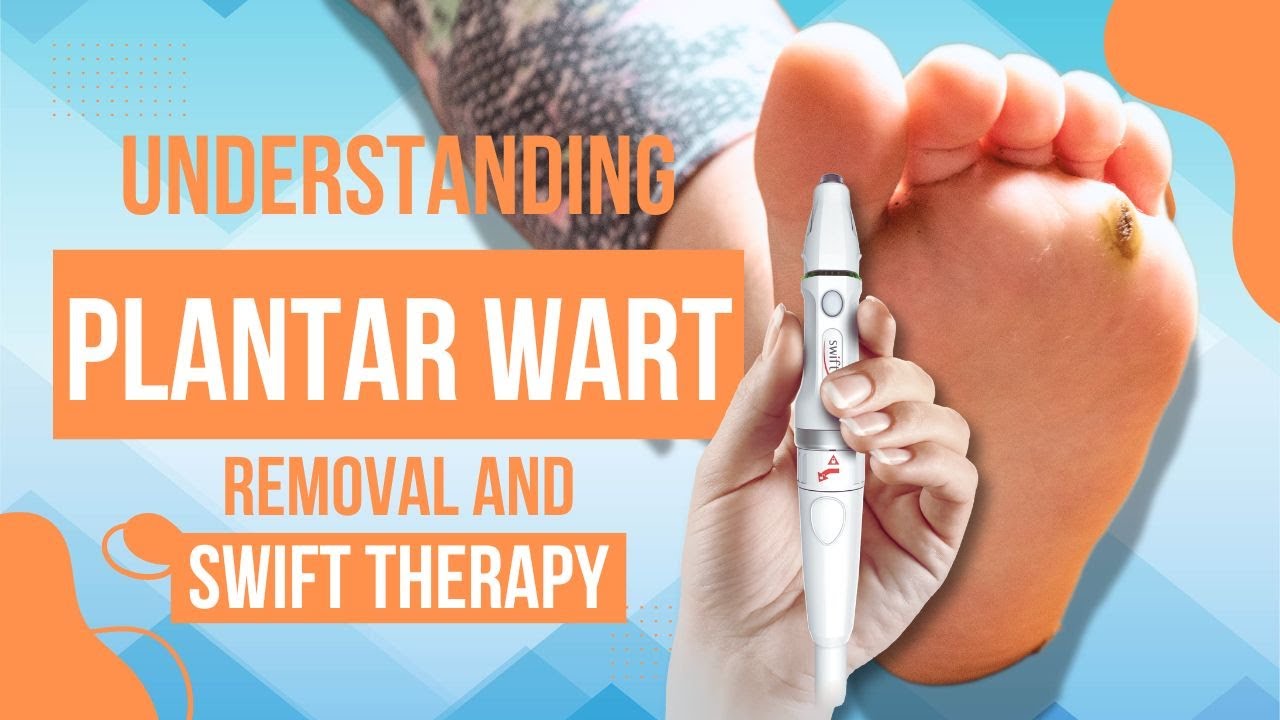
Here's what most people don't realize: Swift therapy doesn't destroy the wart — it teaches your immune system to do  that for you. That's a fundamentally different approach from everything above.
Here's what's actually happening. A small probe is applied to the wart for 2–3 seconds per lesion. Low-intensity microwaves heat water molecules in the infected skin cells to approximately 42–45°C — precise enough to create localized cellular stress without burning the surface.
That heating exposes HPV viral proteins that your immune system previously couldn't detect. Remember the faulty thermostat? Swift delivers the signal the thermostat was missing.
Once your immune system recognizes those proteins, it mounts a full response — not just at the treated site, but systemically. That's why Swift can clear warts it never directly contacts. Each session takes under 10 minutes. You'll feel a 4–5 out of 10 discomfort during the 2–3 second application, and it resolves immediately after.
No anesthesia. No bandage. No downtime. Zero scarring risk.
Most people need 3–4 sessions spaced about 4 weeks apart. The result: an 84% elimination rate with less than 1% recurrence — compared to roughly 50% for cryotherapy and salicylic acid, with significantly higher recurrence even after apparent clearance. After treating thousands of plantar warts in Houston, Swift is what I reach for when someone wants the problem actually solved — not managed month to month.
Swift is $265 per session at Tanglewood Foot Specialists. A full course of 3–4 sessions runs $795–$1,060 total — comparable to, or less than, the cumulative cost of multiple cryotherapy visits, co-pays, and months of OTC products that didn't work. See our full page on Swift microwave therapy for plantar warts, or learn more about our broader regenerative medicine options in Houston for people dealing with multiple foot health issues at once.
Surgery — Rarely Needed, But Available
Look, I know surgery sounds scary — especially on your foot, where every step matters during recovery. Here's what I want you to understand: in 25 years of treating plantar warts in Houston, I almost never get to a surgical conversation anymore. Swift has changed that entirely.
But surgery does exist for the rare cases where everything else has failed. The procedure involves excision under local anesthetic using a scalpel and curette, or electrodesiccation followed by curettage. Tissue is sent to pathology. Recovery runs about 1–2 weeks of wound care with limited weight-bearing, sutures out around week 2, and a progressive return to full activity through weeks 3–6.
The honest limitation: surgical removal doesn't eliminate HPV from surrounding skin, so recurrence remains possible. That's exactly why surgery is the last resort — by the time we're discussing it, every other option has been exhausted, and you'll know exactly what to expect. For more on what foot surgery involves at our practice, see foot surgery at Tanglewood Foot Specialists.
If you've been dealing with a plantar wart that won't respond to treatment — or you want to skip straight to the option with the best numbers — I'd love to see you in the office. We'll confirm exactly what you're dealing with and build a plan together.
Schedule Your Visit Online → | 713-785-7881
What to Expect at Your First Visit
When you come in, I'll start by looking at the growth on your foot. Usually I can confirm within 60 seconds whether it's a wart, a callus, a corn, or something else — and that distinction matters, because the treatment is completely different for each one. If there's any uncertainty, I'll do a quick paring of the surface tissue.
Warts show characteristic pinpoint bleeding from the small capillaries feeding them. Calluses won't bleed at all.
After we've confirmed what we're dealing with, I'll ask you a few questions: how long it's been there, what you've already tried, whether it's spreading, and whether you have any conditions like diabetes that would change how quickly we want to move. Then we'll talk through your options with real numbers attached. Most adults with a wart that's been present for two months or more, or who have multiple warts, I'll recommend Swift directly. If you have a single wart that appeared recently and you want to try a conservative approach first, we'll go through informed consent together — success rates, timeline, number of visits — and then the choice is yours.
You won't leave the first visit confused about what's going on or what we're doing about it. That's not how I run an appointment.
A Swift course typically runs 3–4 months total, with the first signs of response usually visible after session 2. Conservative in-office treatment runs 6–12 weeks with visits every 2–4 weeks.
Either way, I'm with you at each step. To learn more about my approach, visit my bio page for Dr. Andrew Schneider, Houston podiatrist.