What Exactly Is an Ingrown Toenail?
An ingrown toenail — clinically known as onychocryptosis — occurs when the edge or corner of the toenail grows  downward into the nail fold, the groove of soft tissue running alongside the nail. The result is pain, redness, and swelling at the nail border. If left untreated, a bacterial infection called paronychia can develop, turning what started as a sore toe into something that needs urgent care.
Here's what's actually happening inside your toe: the nail is not growing sideways into the skin like a drill bit. It's growing downward at an angle, pressing into the skin channel beside it. Your skin responds by swelling — that swelling pushes back against the nail — the nail presses harder — and more swelling follows. Once you understand that cycle, you understand why soaking alone can only do so much.
The warm, moist environment inside a shoe makes everything worse. Think of your footwear like a greenhouse for bacteria: once that nail creates even a small break in the skin, the conditions are already perfect for an infection to take hold. About 2 out of every 10 people who see a podiatrist for a foot problem come in specifically for this. It's one of the most common things I treat — and one of the most fixable.
Ingrown toenail treatment in Houston doesn't have to mean surgery. But understanding what you're dealing with is the first step to knowing which option is right for you.
Why Does This Keep Happening?
Here's what most people don't realize: the shape of your nail is mostly determined at birth. I've had people tell me they've been carefully cutting their nails straight for 20 years and they still get ingrown toenails. That's not failure — that's just the nail they were born with.
Some people inherit a nail plate that naturally curves downward at the edges. No trimming technique on earth changes the shape of the nail as it grows. It will press into the skin fold regardless.
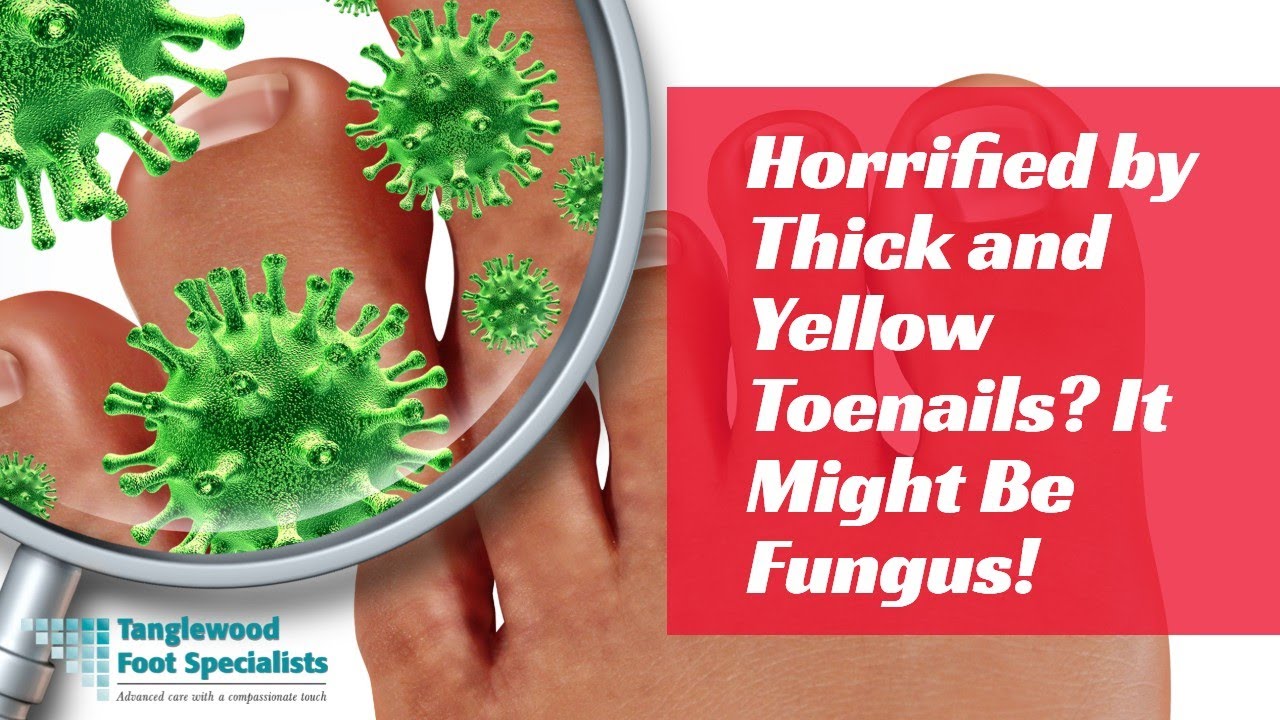
But genetics is not the only factor. Cutting nails too short, or rounding the corners, leaves a sharp edge that shoe pressure gradually pushes skin tissue over as the nail grows forward. Tight or pointed footwear does the same thing from a different direction. And toenail fungus that thickens and curves the nail plate is a cause almost nobody mentions — a thickened, distorted nail is far more likely to grow into surrounding tissue.
Trauma matters too. Repetitive impact from running, soccer, or even a single bad stubbing can warp a nail's growth angle permanently.
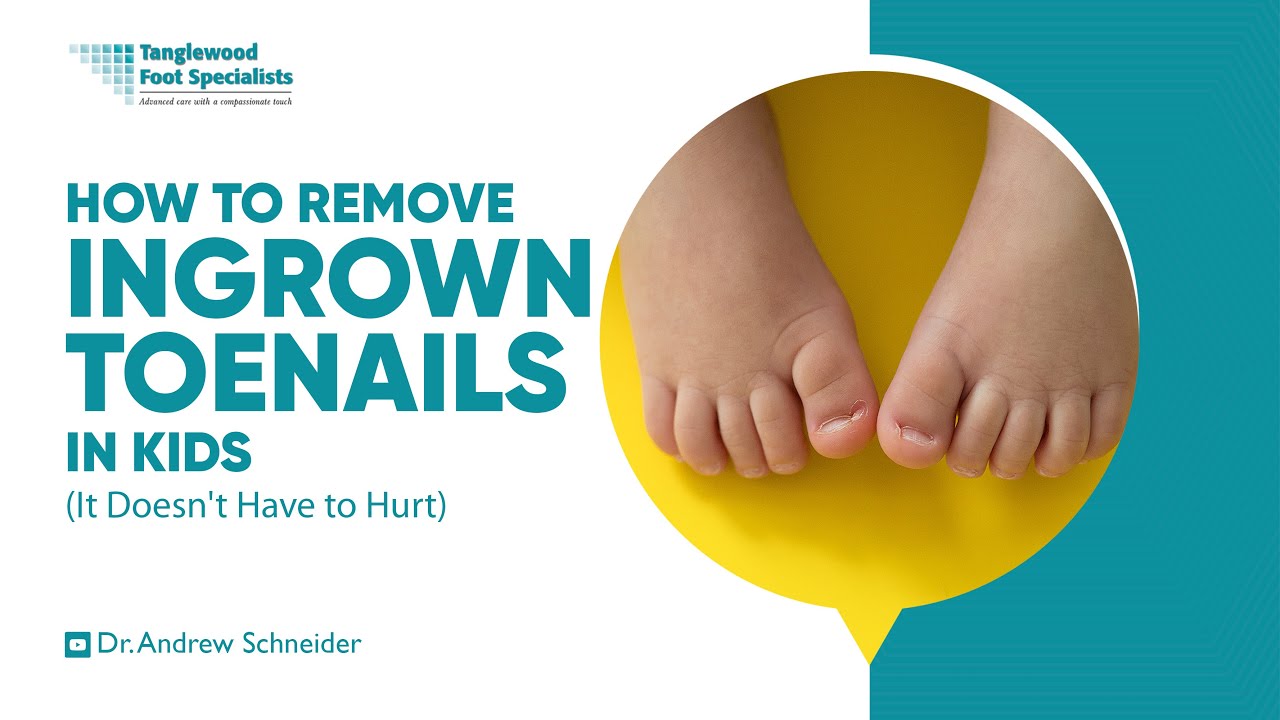
One more myth worth clearing up: cutting a V-notch in the center of your nail does nothing. I understand why people try it — there's a folk logic to it — but nails grow from the matrix at the base of the toe, not from the free edge you're trimming. Nothing done to the tip changes the angle at which new nail grows in. The same is true for ingrown toenails in children and teens, where curved nail plates are often simply an inherited trait showing up early in life.
The real question is not just what caused it — it's whether the cause is something you can fix with better habits, or something structural that needs a different kind of solution.
The Truth About Home Remedies
I won't judge you for trying the home remedies first. Almost everyone does. But after treating thousands of ingrown  toenails, I can tell you exactly which ones are worth your time and which ones are making things worse.
Warm water soaks two to three times a day do help — they temporarily reduce inflammation and soften the tissue, which takes pressure off the nail border. Keeping the toe dry between soaks matters too, because constant moisture softens the nail fold and makes it easier to penetrate. A thin layer of antibiotic ointment at the nail border is protective. Open-toed shoes eliminate pressure entirely and are genuinely useful for mild early cases.
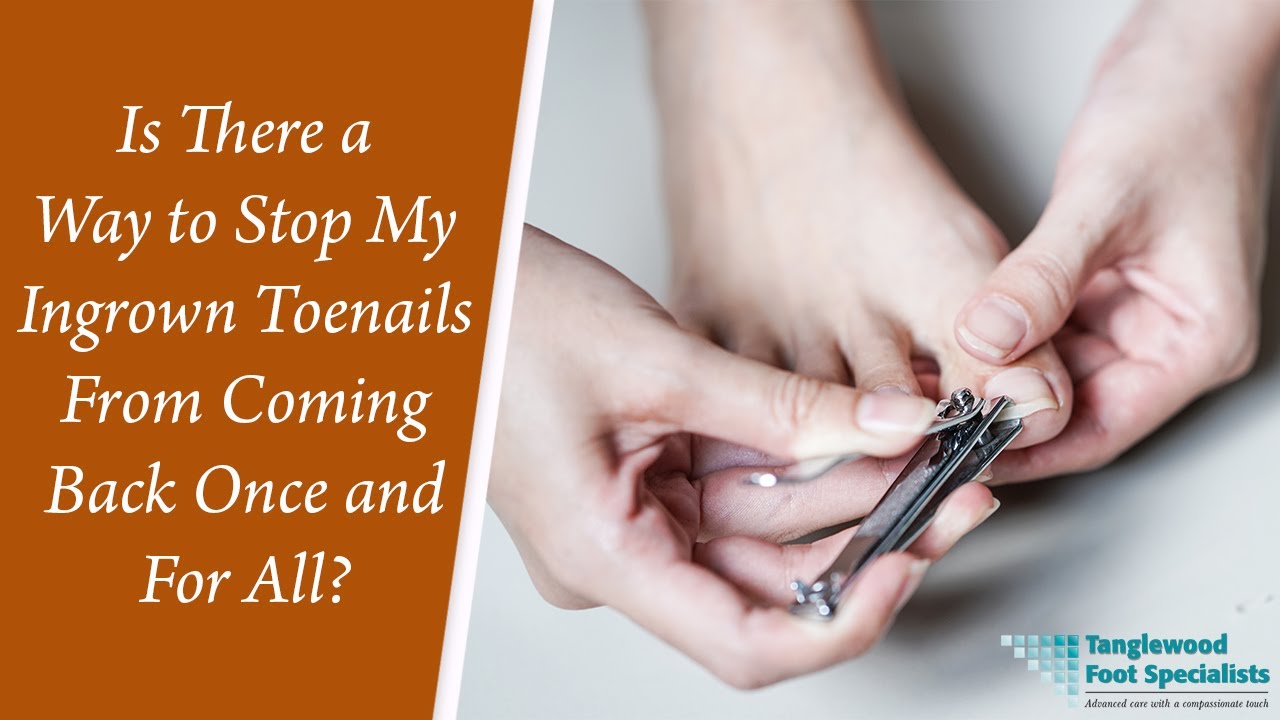
What doesn't help: digging under the corner with a nail file or clippers traumatizes the nail fold and invites infection. Tucking cotton under the nail edge is something the American College of Foot and Ankle Surgeons now actively discourages — cotton harbors bacteria and raises infection risk. OTC ingrown nail liquids mask pain without changing the growth path.
The people I dread seeing most are those who've been working on the toe at home for two or three weeks. By then the nail fold is traumatized and the infection is already established. Home care can manage a mild, early, non-infected case. It cannot reshape a curved nail, resolve an infection, or prevent recurrence if nail curvature is the root issue.
Symptoms and When to Seek Care
Most ingrown toenails start the same way: tenderness along one side of the nail, pain that gets sharper in closed shoes, and redness and firmness at the nail border. You might notice the skin beside the nail looks puffier than usual, or that direct pressure on the tip of the toe reproduces the pain even without shoes on.
Some people also develop what's called granulation tissue — overgrown, inflamed skin at the nail border that can look like the skin is creeping over the nail edge. It's not an invasion; it's your body's inflammatory response working overtime. Swelling of the entire toe and warmth at the nail fold signal that the infection cycle is active.
Seek same-day care if you see pus or discharge from the nail fold, red streaking extending up the toe or foot, or if the toe feels significantly warmer than the toes beside it. Those are signs of spreading infection that home care won't resolve.
And if you have diabetic foot complications or peripheral neuropathy that affects foot sensation — stop here. Call the office. Diabetic feet don't always hurt the way they should, which means an infection can go deeper than it appears within 24 to 48 hours. Either way, I need to see you.
How a Houston Podiatrist Treats Ingrown Toenails
My philosophy is always least invasive first. But I'm also honest about what conservative measures can and can't do — because sending you home with advice that won't help isn't kindness, it's just a delay. Here's how I think through the full range of options.
Lifestyle Changes
Sometimes, that's as simple as changing your shoes. A wide, deep toe box takes pressure off the nail borders immediately. During Houston's long sandal season, open-toed footwear is genuinely protective — your nail gets air, space, and zero friction from a toe box. Trimming technique matters too: straight across, level with the tip of the toe, corners left visible.
Never shorter than the end of the toe.
Houston's heat and humidity make this more complicated than it sounds. Feet sweat more in our climate, which softens the nail fold tissue and makes it easier for the nail edge to penetrate. Houston runners logging miles through Memorial Park in summer should size up a half-size in their training shoes — a toe box that fits fine in January can put real pressure on the nail borders by July.
At-Home Care
For a mild, first-occurrence ingrown nail with no sign of infection, there's a short list of things that actually help. Warm water soaks two to three times a day reduce inflammation temporarily. Keeping the toe dry between soaks prevents the nail fold from staying softened. A thin layer of antibiotic ointment at the nail border is protective — not curative, but it lowers infection risk while you're managing things conservatively.
What doesn't help — and what I ask people to stop doing — is digging under the corner with a nail file or clippers, cutting a V-notch in the nail, or tucking cotton underneath the nail edge. OTC ingrown nail liquids mask pain without changing the growth path. If you're not seeing clear improvement within three to five days, or if there's any redness spreading beyond the nail border, it's time to come in.
The Onyfix Nail Bracing System — The Third Option
 This is where Tanglewood's approach separates from nearly every other practice in Houston. The Onyfix nail bracing system is a non-surgical, non-injection option that most people with ingrown toenails have never been told exists. A clear composite resin strip bonds to the surface of the nail and gently counteracts the nail's inward curve as it grows forward. No needles, no cutting, no anesthesia, no downtime.
Think of it like scaffolding for your nail: external support that guides the structure back to where it belongs. Over four to eight weeks, the ingrown edge resolves as the nail grows forward in its corrected direction. Once the nail has fully grown out straight, the scaffolding comes off and the structure holds on its own. For early-to-moderate curved nails without active deep infection, this is the permanent solution most people were hoping existed.
Partial Nail Avulsion — The In-Office Fix
For an actively ingrown nail — with or without early infection — a partial nail avulsion is the most straightforward in-office option. Your toe is completely numb before anything happens. We inject a local anesthetic at the base of the toe, wait a few minutes for it to take full effect, and you won't feel a thing after that.
The actual removal of the ingrown nail edge takes about 10 minutes. A narrow vertical strip of nail, roughly the width of a pencil tip, is freed from the nail fold and removed from root to tip. The nail fold heals in one to two weeks. The nail itself regrows over two to four months.
The success rate without recurrence is around 80% — excellent for a single-occurrence case. Cash price is visit plus $350. The honest caveat: if your nail curvature is genetic, the nail can regrow ingrown over time. For people who've been through this before, there's a better answer.
Matrixectomy with Phenol — The Permanent Fix
After treating thousands of ingrown toenails, this is the procedure I recommend for anyone who's had more than one episode. A matrixectomy adds one step to the avulsion: after the ingrown border is removed, phenol — a mild acid — is applied to the nail matrix, the cluster of cells at the base of the nail responsible for producing that specific strip of nail. It permanently turns off those factory cells.
The difference between an avulsion and a matrixectomy is about 60 seconds and permanent peace of mind. The success rate for chemical matrixectomy with phenol exceeds 95%, which is why it's the gold standard cited in podiatric literature.
Soreness lasts three to five days; the nail fold heals in two to three weeks; that border never grows back. Cash price is visit plus $450. For anyone who wants to add red light therapy to accelerate nail fold healing after the procedure, that's a straightforward option that reduces post-procedure soreness and speeds recovery.
Complete Nail Removal — Rare Cases Only
In a small minority of cases — severe deformity, bone involvement, total nail failure from repeated infections — complete nail removal becomes the right answer. Look, I know the idea of losing a toenail sounds dramatic. But you don't feel it, it doesn't affect how you walk, and nobody notices unless you point it out.
If the matrix is preserved, a new nail grows over nine to twelve months. If total matrixectomy is chosen, that nail doesn't regrow — a decision some people make deliberately, and one that's entirely reasonable given the right circumstances. For anything in this category, I'll walk you through exactly what recovery looks like before we decide anything. If foot surgery is necessary, the path forward is always clear and always explained.
Not sure which option fits your situation? Come in for an evaluation and we'll figure it out together. Call 713-785-7881 or request your appointment here.
What to Expect When You Come In
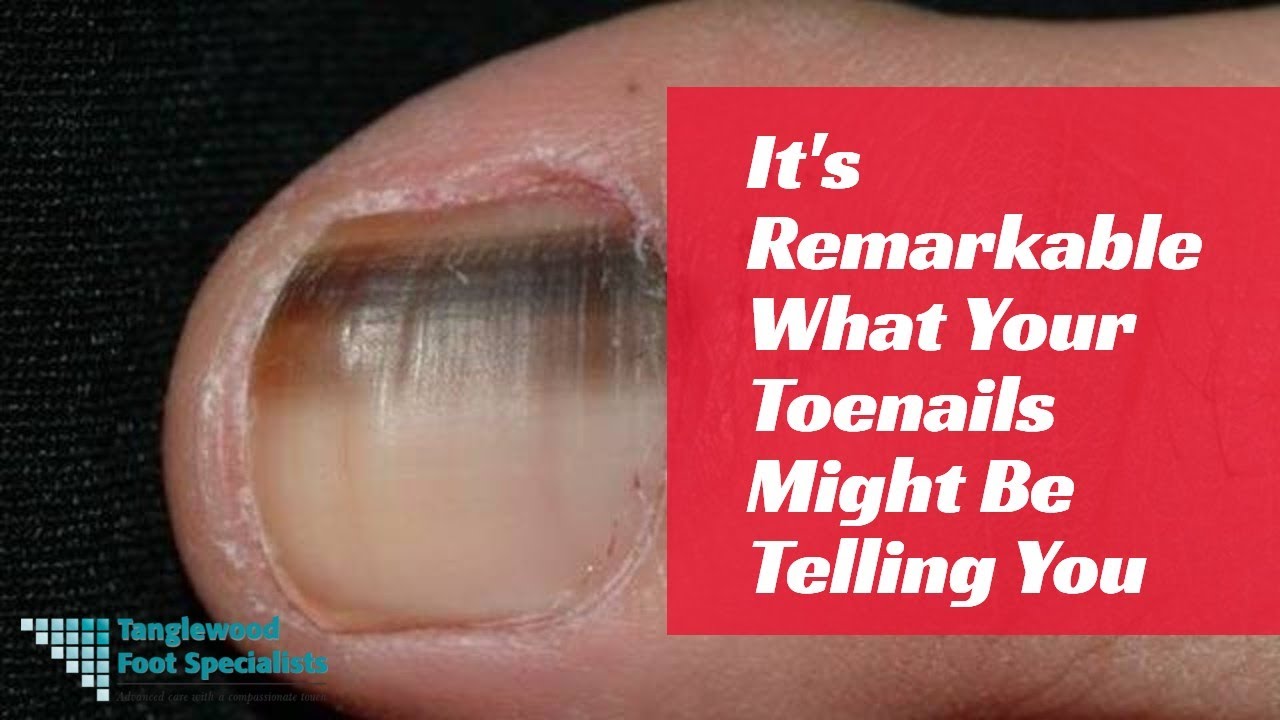
When you come in, I'll start by looking at the nail and the skin around it before we talk about anything else. I want to see how far the edge has grown into the tissue, whether there's active infection, and what the nail plate itself looks like — thickness, curvature, any signs of fungal involvement. For people with diabetes or circulation concerns, I'll also do a quick circulatory check, because that changes the urgency of what we do next. The whole exam takes about 10 minutes.
Then we'll talk through your options in plain language — no pressure, no jargon. I'll tell you what I'm seeing, what I think is driving it, and which treatment makes the most sense for your situation. If you want the simplest fix, we can do that. If you want the permanent fix done that same day, we can do that too.
Most avulsions and matrixectomies are same-day procedures — no return visit required, no rearranging your week. Bring open-toed sandals or loose-fitting shoes. The full appointment runs 30 to 45 minutes from evaluation through procedure.
After the anesthetic takes effect — usually within a few minutes of the injection — you won't feel the procedure at all. You'll walk out the same day. Soreness sets in once the numbness wears off, but the worst is already behind you at that point.
I'll send you home with clear wound care instructions and a straightforward follow-up plan. For most people, that's the end of the story. Come see Dr. Andrew Schneider, Houston podiatrist, and we take care of it — start to finish, in one visit.
How to Prevent Ingrown Toenails from Coming Back
 Trimming technique is the one rule almost everyone gets wrong: straight across, level with the tip of the toe, corners left visible. Never shorter than the end of the toe. Rounding the corners leaves the edge angled directly toward the nail fold, and every step in a closed shoe pushes it closer.
Footwear matters more than most people expect. A wide, deep toe box gives the nail room to grow forward without friction. Houston runners logging miles through Memorial Park should size up a half-size for summer training — feet swell in the heat, and a toe box that's fine in January can press hard on nail borders by July. Moisture-wicking socks help too, because Houston's humidity softens nail fold tissue and makes penetration easier.
Treat toenail fungus promptly. A thickened, distorted nail from delayed toenail fungus treatment is far more likely to curve and grow ingrown — it's an ingrown nail waiting to happen. And if your nail curvature is genetic, better trimming habits will only take you so far. That's where Onyfix nail correction for recurring ingrown nails or a matrixectomy becomes the real long-term answer — not a technique adjustment.
Hoping doesn't work. But the right combination of habits and the right in-office solution can make recurrence genuinely rare.