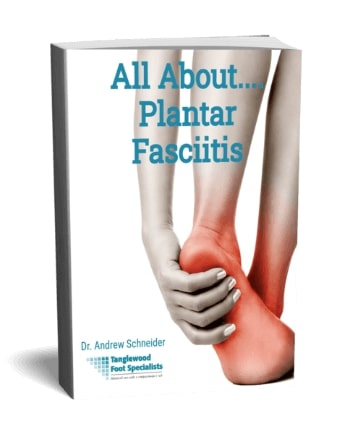
What Is Plantar Fasciitis?
 The plantar fascia is that thick band of tissue running along the bottom of your foot from your heel to your toes. When it becomes damaged and inflamed, it causes excruciating pain in your heel—that's plantar fasciitis. It's the most common cause of heel pain I treat, affecting about 2 million Americans every year.
Here's what's actually happening. Your plantar fascia acts like a shock-absorbing bowstring, supporting the arch of your foot. But when the stress on that bowstring becomes too great, small tears develop in the tissue. Your body tries to heal these tears, but here's the problem: the plantar fascia has relatively poor blood supply. Without good blood flow, healing's slow and incomplete.
Think of it like having a construction crew that started a job but never finished it. The site's still a mess, still painful, but no actual progress is being made. That's your plantar fascia—stuck in repair mode without completing the repair. This is called a failed healing response, and it's why plantar fasciitis becomes so stubborn and chronic.
Most people develop hundreds of these micro-tears over time. Each tear triggers inflammation. Each step you take can create new tears while your body's still trying to fix the old ones.
It's a cycle that's really hard to break without proper treatment.
Why Your Heel Hurts Worst in the Morning
Let me explain the most frustrating symptom—that ice-pick pain when you first get out of bed. There's actually a medical term for it: post-static dyskinesia. But you don't need fancy terminology to understand what's happening.
During the night while you're sleeping, your body tries to heal those tears in your plantar fascia. As part of that healing process, the tissue contracts and tightens. So when you swing your legs out of bed and put weight on your foot for those first few steps, you're essentially tearing apart all the repair work your body did overnight.
That's the stabbing pain you feel.
This same thing happens after you've been sitting for a while—at your desk, in the car, watching TV. The plantar fascia tightens up during rest, and then you re-injure it when you stand. After you've been walking for a few minutes, the pain often improves because the tissue warms up and stretches out.
But the damage is done.
What Causes Plantar Fasciitis?
After treating thousands of patients with plantar fasciitis in my Houston practice, I can tell you this: there's rarely just one cause. It's usually a combination of factors that overload your plantar fascia beyond what it can handle.
The most common culprit is biomechanical issues—basically, the way your foot moves when you walk. If you overpronate (your foot rolls inward too much), or if you have high arches, or if your Achilles tendon is tight, you're putting extra stress on your plantar fascia with every single step. Multiply that by the 10,000 steps most people take daily, and you can see how the damage accumulates.
Activity changes are huge. Did you recently start a new exercise program? Increase your running mileage? Take up pickleball? Many of my Houston runners develop plantar fasciitis when they ramp up training on Memorial Park's concrete trails without gradually increasing mileage. Your plantar fascia wasn't ready for that sudden increase in stress.
Footwear matters more than most people realize. Those cute flats with zero arch support? That's like driving on bald tires—you're asking for trouble. Worn-out running shoes that've lost their cushioning? Same problem. And if you're walking around barefoot on hard floors at home, you're giving your plantar fascia no help at all.
I need to mention weight because it's medically relevant—every extra pound you carry puts about four pounds of pressure on your feet. I'm not judging; I'm explaining. If you've gained weight recently, that's additional stress your plantar fascia has to absorb.
Age is a factor too. Plantar fasciitis is most common in people between 40 and 60. As we age, the plantar fascia loses some of its elasticity, and the fat pad in your heel thins out, providing less cushioning. If you're standing on hard floors all day in Houston—teaching, nursing at the Medical Center, working retail—you can't exactly stop standing.
But that constant pressure takes its toll.
Houston Podiatrist Treats Plantar Fasciitis: From Conservative to Advanced
Look, I know you probably came here wondering if you need surgery. Let me put your mind at ease right away: about 95% of my plantar fasciitis treatment patients never need surgery. We have options. Lots of them. And we always start with the simplest, least invasive approaches first.
Getting the Basics Right: Footwear and Activity
Sometimes, that's as simple as changing your shoes. I can't tell you how many patients come in wearing shoes that are working against them—worn-out running shoes, flat ballet flats with zero support, or those trendy minimalist shoes that look great but provide no cushioning.
For my Houston runners, I recommend New Balance (the 990 series if you have wide feet), Brooks Ghost, or Hoka One One for maximum cushioning. And those Memorial Park concrete trails? Switch to the dirt paths at Terry Hershey Park while you're healing. Your plantar fascia will thank you.
If you're standing all day—teaching, nursing at the Medical Center, retail work—I can't tell you to stop standing. But you can use anti-fatigue mats at your workstation. Take sitting breaks every 90 minutes if possible. And absolutely no walking around barefoot on hard floors at home, not even to get your morning coffee.
What You Can Do at Home
 Here's what I want you to try before you even come see me. First thing every morning, before you get out of bed, do these three stretches for 20 seconds each: ankle pumps (point and flex your foot), gentle toe pulls (use your hand to pull your toes toward your shin), and self-massage on your arch. This 60-second routine can make a huge difference in that stabbing morning pain.
Ice is your friend. After any activity that aggravates your heel, ice for 15 minutes on, then 40 minutes off. I like to tell patients to keep a frozen water bottle under their desk and roll their foot on it while they work.
Kills two birds with one stone.
Calf stretching is probably the single most important thing you can do at home. Stand facing a wall, put your affected leg behind you, keep your heel down, and lean forward until you feel a stretch in your calf. Hold for 30 seconds, three times a day. Tight calf muscles pull on your plantar fascia, making everything worse.
Now, about those generic insoles you can buy at the drugstore—they're better than nothing. But here's the honest truth: they're designed for an average foot, and nobody's foot is average. They might provide some cushioning, but they're not addressing your specific biomechanical issues.
Conservative In-Office Treatment
When at-home care isn't enough—or if you've been dealing with this for more than a few weeks—it's time to bring in the bigger guns. Custom orthotics are often my first recommendation for patients with plantar fasciitis.
Think of custom orthotics like eyeglasses for your feet. While I'm wearing my glasses, I can see. When I take them off, I can't. Similarly, custom orthotics compensate for your foot mechanics while you're wearing them—but they don't cure the underlying issue. They're molded to your specific feet, addressing your overpronation, high arches, or whatever biomechanical problem is contributing to your plantar fascia stress. Most patients notice improvement within 2-3 weeks, with full benefit taking 6-8 weeks. In our Houston practice, custom orthotics run $700.
Cortisone injections can provide significant relief when inflammation is severe. Here's what you need to understand about cortisone: it reduces inflammation, which makes you feel better temporarily—sometimes for weeks or months. But it doesn't heal the tissue. It's buying you time to do the other things that actually promote healing. I don't like to do more than 2-3 cortisone injections per year in the same spot because repeated injections can weaken tendons.
Physical therapy can be incredibly helpful, especially when combined with orthotics. A good physical therapist will work on your calf flexibility, foot strength, and gait mechanics. Typically we're talking about 6-8 weeks of therapy, once or twice weekly. Success rates for physical therapy combined with orthotics run around 70-80% for acute cases.
The "Third Option": Advanced Regenerative Treatment
 Here's where things get exciting. In most medical offices, doctors think in terms of medicate or operate. Conservative care or surgery. But what if there's a third option most doctors never mention?
Shockwave therapy uses acoustic pressure waves to stimulate your body's healing response. Think of it like aerating a lawn—you're creating pathways for healing factors to reach damaged tissue that's been stuck in that failed healing response we talked about earlier. Each treatment takes 10-15 minutes. You'll feel some discomfort during the treatment—maybe a 3 or 4 out of 10 on the pain scale—but it's tolerable. Most patients need three sessions, usually one week apart. Success rates are impressive: more than 80% of patients find significant pain relief after completing the full treatment. In Houston, shockwave therapy runs $750 for a 3 session treatment protocol.
PRP therapy—platelet-rich plasma—is like liquid gold for healing. We draw a small amount of your blood, spin it down to concentrate the platelets and growth factors, then inject that concentrated healing power directly into your damaged plantar fascia. The platelets release growth factors that tell your body to send healing cells to the injured area and restart that stalled repair process. Improvement typically starts around 4-6 weeks, with full benefit at 3-4 months. About 70-80% of patients with chronic plantar fasciitis see significant improvement with PRP. Cost in Houston is typically $800-1200 per injection.
And here's what's really powerful: combining PRP with shockwave therapy. PRP provides the seeds—the growth factors and healing proteins your tissue needs. Shockwave therapy prepares the soil and creates ideal conditions for those growth factors to work. Together, they create a healing environment that can succeed where other treatments have failed. Success rates for this combined approach run 85-95% for chronic plantar fasciitis. Total cost in Houston is typically $1800-2500. Compare that to surgery ($5000-10,000), months of recovery, and the fact that 5-10% of surgeries don't succeed.
When Surgery Becomes Necessary
Look, I know that foot surgery sounds scary. But let me be very clear: I only recommend surgery when we've tried everything else—proper footwear, stretching, orthotics, physical therapy, injections, and regenerative treatments. That's about 5% of my patients. If you're in that small percentage, surgery can be life-changing.
Plantar fascia release is the traditional surgery. I make a small incision and partially cut the plantar fascia to relieve tension. You'll wear a boot for 2-3 weeks, but you can put weight on it—no crutches needed. Most patients are back in normal shoes within 4-6 weeks and return to full activity in 3-4 months. Success rate is around 75-80%.
The Tenex procedure is a minimally invasive option using ultrasound guidance to remove damaged tissue through a tiny incision. Recovery is faster—boot for 1-2 weeks, normal shoes in 2-3 weeks. It's a good option for patients who haven't responded to conservative treatment but want a less invasive approach than traditional surgery.
I'll be honest with you: surgery comes with risks. There's a small chance of nerve damage, incomplete pain relief, or other complications. That's exactly why we exhaust every other option first. But when it's truly necessary, modern plantar fascia surgery has excellent outcomes for most patients.
Ready to explore your treatment options? Call our Houston office at 713-785-7881 or request an appointment online. We'll create a treatment plan tailored to your specific situation—whether that's conservative care, advanced regenerative treatment, or something in between.
What to Expect When You Come In
When you come in, I'll start with your history—how long you've had this heel pain, what makes it better or worse, what you've already tried. I want to know about your daily routine: Are you a runner? Do you stand all day at work? What kind of shoes do you typically wear? Your answers tell me a lot about what's contributing to your plantar fasciitis.
Then I'll examine your foot. I'm going to press on specific spots to find exactly where it hurts most—usually it's right at the front of your heel bone where the plantar fascia attaches. I'll check your ankle flexibility, because tight calves almost always contribute to plantar fascia stress. I'll watch you walk, because your gait tells me about your foot mechanics. Do you overpronate? Do you have high arches? Is one leg slightly longer than the other? All of this matters.
Most of the time, I can diagnose plantar fasciitis from the examination alone. The pattern is usually pretty clear: that specific heel tenderness, the morning pain, the history you're describing. If I'm concerned about a stress fracture or other condition, I might order an X-ray. But for most plantar fasciitis patients, imaging isn't necessary for diagnosis.
Here's what makes our approach different: we'll discuss treatment options that match your goals. If you're a runner trying to get back to marathon training, that's a different conversation than if you're just trying to make it through your teaching day without limping. I listen to learn what your goals are—this way I better understand your needs and how to help you get there.
You'll leave with a clear plan. Maybe that's starting with new shoes and a stretching routine. Maybe it's custom orthotics and physical therapy. Maybe we're talking about shockwave therapy or PRP because you've already tried conservative care without success. Either way, you'll know what we're doing, why we're doing it, and what timeline to expect. No guessing. And we'll schedule follow-up so I can track your progress and adjust the plan if needed.
Plantar Fasciitis: Final Thoughts
After treating thousands of patients with plantar fasciitis in my Houston practice, I can tell you this: the vast majority get better without surgery when they get the right treatment approach. The combination of proper footwear, stretching protocols, custom orthotics, and—when needed—advanced treatments like shockwave therapy or PRP consistently produces excellent results.
This isn't a condition you have to live with forever.
You don't have to live with heel pain. I know you've probably been dealing with this for weeks or months, trying everything you can think of, wondering if it'll ever get better. Here's what I want you to understand: plantar fasciitis is stubborn, but it's treatable. That 95% success rate without surgery? It's real. But you need the right approach for your specific situation.
If you've been dealing with heel pain for more than a few weeks—especially that stabbing morning pain—it's time to get it checked out. I find that people are reluctant to come into the office because they fear they'll need surgery.
Let me put your mind at ease: 95% of my patients don't. We have options. Let's figure out which one's right for you.
Ready to get your life back? Contact Houston podiatrist Dr. Andrew Schneider at Tanglewood Foot Specialists. Call us at 713-785-7881 or request an appointment online. Either way, I need to see you to figure out exactly what's going on with your foot. The sooner we identify the cause of your heel pain, the quicker we can get you back to walking, running, and living without that stabbing pain every morning.