What Chronic Ankle Pain Is Really Telling You
 Chronic ankle pain is persistent discomfort in the ankle joint, tendons, or ligaments lasting longer than three months — or pain that returns repeatedly after appearing to resolve. It most commonly involves the Achilles tendon, peroneal tendons, lateral ligaments, or ankle joint cartilage, and nearly always signals underlying tissue damage that didn't fully heal.
Here's what most people don't realize: tendons and ligaments have notoriously poor blood supply — that's not a flaw, it's just anatomy. Muscles heal relatively quickly because they're richly vascularized, but tendons sit in a low-blood-flow environment where the healing process starts slower, stalls more easily, and gets derailed by normal daily loading before it can finish. When that happens, you end up with what I call a failed healing response — the body launched a repair effort, laid down some scar tissue, and then the construction crew packed up and left before the renovation was anywhere close to done.
Think of it this way: your body started repairing the injury, but that construction crew showed up, laid down some scar tissue, and walked off the job before the work was done. The ankle aches because the renovation was never finished. That chronic low-grade inflammation you're living with isn't weakness — it's your tissue stuck in a loop, trying to signal for resources that aren't arriving.
The four presentations I see most often in my practice are Achilles tendon pain (which splits into two distinct injury zones — at the heel bone vs. 2–6 cm above it, and treatment differs significantly between them), peroneal tendinopathy along the outer ankle (chronically misdiagnosed as a recurring sprain), chronic lateral instability from repeated sprains that permanently stretched the ligaments, and ankle osteoarthritis — which, contrary to what most people assume, is overwhelmingly injury-driven, not age-driven. If you've had an ankle sprain that never healed quite right, you're not imagining it. The structural evidence is usually right there on imaging.
Why Ankle Pain Keeps Coming Back
The single most important thing I can tell you about chronic ankle problems is this: pain resolution is not the same thing as structural healing. Ligament laxity produces no resting pain — your ankle can feel completely fine on the couch, and then the next wrong step off a curb puts you right back to square one. This is why the cycle repeats. The symptom quieted down, but the damage didn't go anywhere.
A lot of people reach for cortisone in that cycle, and I won't judge you for it — it works fast, reliably, impressively. But cortisone is a painkiller, not a healer, and every time you use it to silence the ankle, the structural problem causing that pain stays exactly where it was. In the specific case of the Achilles tendon, repeated cortisone injection carries documented rupture risk — which is precisely why I don't inject there, and why that distinction matters when you're weighing your options.
There's also a mechanical piece that doesn't get enough attention. Think of the ankle as one link in a chain — if your calf is tight (and most people with chronic Achilles problems have significant equinus, meaning limited upward ankle bend), that tightness transfers excessive load directly to the Achilles insertion with every single step. Treating only the symptomatic ankle without evaluating the full kinetic chain is like replacing the weakest link while leaving the tension that broke it in the first place, which is why a thorough biomechanical evaluation matters as much as the imaging does.
Houston's year-round warmth is genuinely great for staying active — but it also means your ankle never gets a forced off-season the way it might somewhere colder. The Memorial Park loop and Buffalo Bayou trail are flat concrete and asphalt: repetitive, identical loading patterns with no variation and no seasonal break, and if there's an underlying structural problem, that environment will find it. People dealing with running-related injuries here tend to accumulate damage gradually rather than through a single dramatic event — any sports injury to the ankle that wasn't fully addressed has a way of compounding. Research shows up to 40% of lateral ankle sprains lead to chronic instability when the structural damage isn't properly treated [4], which also explains why so many people end up managing heel pain that accompanies ankle problems as the altered mechanics spread up the chain.
How a Houston Podiatrist Treats Ankle Pain — From First Steps to Full Recovery
My approach to ankle pain is goals-first, not symptoms-first. That means treatment starts at whatever level matches your specific diagnosis, your history, and how long this has been going on — and we work from least invasive to most. Nobody in my practice gets handed a surgical referral without moving through every appropriate option first. Here's everything I use, in the order I use it.
Lifestyle Modifications
Sometimes the most powerful first step is the simplest one: changing what you're asking your ankle to do and what you're asking it to stand on. Reducing high-impact loading — running, jumping, prolonged stair climbing — doesn't mean stopping activity entirely; complete rest actually weakens tendons further, which is the opposite of what you need. What it means is swapping concrete runs for pool sessions or cycling temporarily, switching out flat-soled shoes and flip-flops for footwear with genuine heel-to-toe drop and lateral support, and recognizing that every extra pound you're carrying translates to four to six times that force across the ankle joint during normal walking. For mild, short-duration pain — less than four to six weeks, no structural diagnosis on imaging — these changes alone can produce meaningful improvement within two to four weeks.
At-Home Care
The home exercise with the strongest evidence behind it for Achilles tendinopathy is eccentric calf loading — heel drops off a step, slowly lowering below step level under full bodyweight. Here's the catch: it takes twelve weeks of daily reps to drive actual structural tissue remodeling. Most people do two weeks, feel slightly better, and stop — which is exactly why so many Achilles problems become chronic. For peroneal and posterior tibial tendon issues, towel stretching and ankle alphabet exercises help maintain range of motion, and a lace-up ankle brace during activity meaningfully reduces re-sprain risk for people with lateral instability, though it won't repair the underlying laxity.
I want to be honest with you about what home care can't do. It cannot restore structural integrity to a damaged tendon, repair ligament laxity, or address cartilage damage. Topical NSAID gels and passive stretching alone don't stimulate the collagen remodeling that chronic tendon problems actually require. If you've been self-treating for more than six to eight weeks without meaningful improvement, continuing on that path isn't conservative — it's losing time in the healing window.
Conservative In-Office Care
 When at-home management isn't enough, I turn to in-office conservative options, and the one that makes the most consistent difference in ankle mechanics is custom orthotics for ankle stability — around $700. Think of them like eyeglasses for your feet: they compensate for the biomechanical issue driving your ankle problem, whether that means arch support and medial posting for posterior tibial tendon dysfunction, a heel lift to reduce pull at the Achilles insertion, or varus posting to reduce the inward tipping force that keeps re-stressing stretched lateral ligaments. These aren't arch supports from the pharmacy — they're devices cast specifically to your foot mechanics, and that specificity is what makes them effective.
Cortisone injection at around $120 is still a useful tool in the right situation — specifically for ankle joint arthritis flares and acute tendinitis that's too inflamed to respond to rehab. I frame it as a bridge, not a destination: it creates a pain window that lets rehabilitation proceed, but it doesn't repair the underlying problem. I won't inject cortisone into or near the Achilles tendon — the documented rupture risk in the literature is real [3] — and for chronic tendon problems that haven't responded to conservative care, the conversation moves to types of regenerative medicine, not repeated cortisone.
Physical therapy — typically six to eight weeks at two sessions per week — adds eccentric loading protocols, proprioceptive training (critical for lateral instability), and manual therapy to what the orthotics and cortisone have set up. Conservative management resolves roughly 70–75% of ankle tendinopathy within three to four months when it's applied consistently. The limitation is that it manages symptoms and builds function, but it rarely reverses structural damage in instability or osteoarthritis. That's where regenerative medicine changes things.
Advanced Regenerative Medicine — The Third Option
This is where my practice looks different from most podiatry offices, and where I've watched outcomes change for people who came in convinced surgery was their only remaining path.
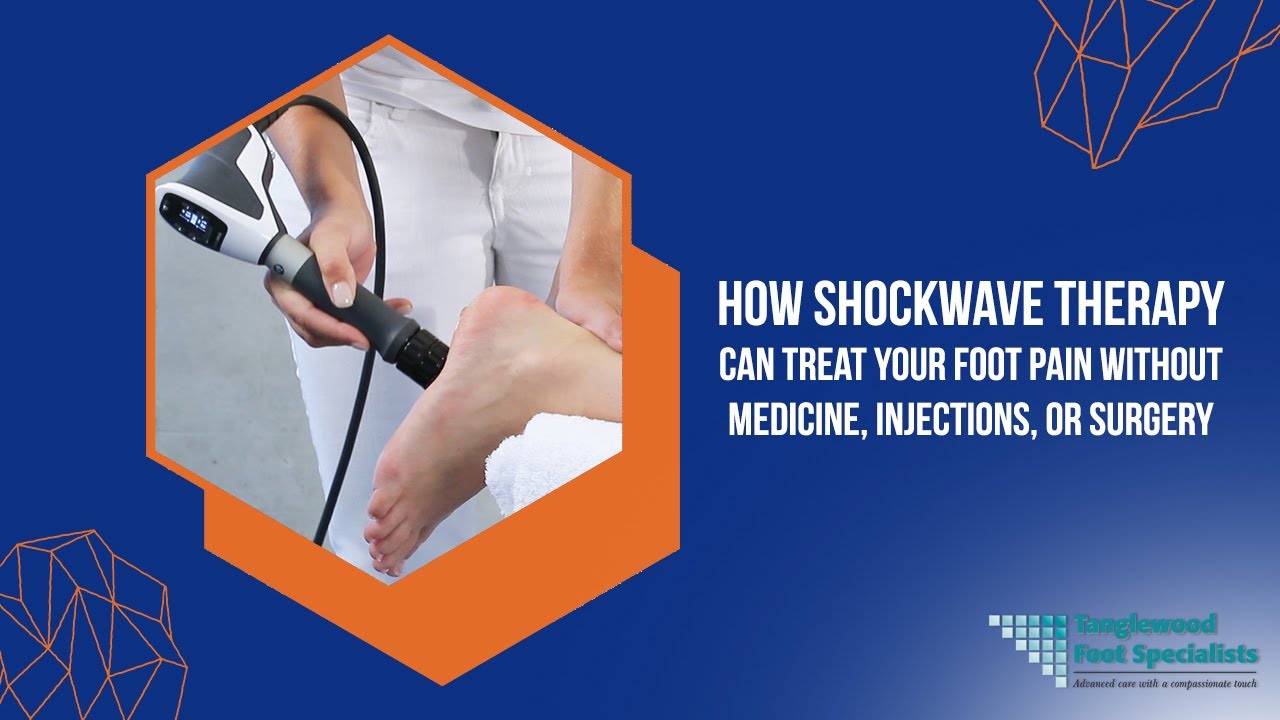
Shockwave therapy — $300 per session, or $750 for a three-session package — is the treatment I reach for first with chronic Achilles and peroneal tendinopathy. The acoustic pressure waves create controlled microtrauma in the target tissue — think of it like aerating compacted soil, opening pathways for healing factors to penetrate — while simultaneously stimulating blood flow, breaking up calcifications and scar tissue, and triggering the growth factor release that restarts that stalled construction crew. Sessions run ten to fifteen minutes once weekly for three weeks, with some post-session soreness that's a sign the tissue is responding. Clinical studies show more than 82% of people with chronic ankle tendinopathy experience significant pain resolution after a full protocol — a number that's hard to argue with after years of cycling through conservative care [1].
 PRP injections for tendon healing — $850 — work at the tissue level in a way that cortisone never could. I draw a small amount of your blood, centrifuge it to concentrate the platelets five to seven times above baseline, and inject that solution under ultrasound guidance precisely into the damaged structure — where those platelets release growth factors (PDGF, VEGF, TGF-β) that signal new collagen production, vascular ingrowth, and in the case of ankle OA, stimulation of cartilage-protective proteins. You'll typically notice initial improvement at two to four weeks, with full benefit developing over three to six months, and success rates for chronic tendon problems running seventy to eighty percent [2]. For a deeper look at the Achilles-specific application, I've written more about PRP for chronic Achilles pain if you want to go further on the mechanism.
For the most stubborn cases — chronic Achilles tendinopathy, peroneal tendinitis, chronic ankle instability with tendon involvement — I use what I call the Seeds and Soil protocol: PRP first, then shockwave beginning three to five days later, weekly for three sessions. PRP delivers the growth factors, the seeds; shockwave then stimulates tissue receptivity, breaks up scar tissue, and drives blood flow — preparing the soil so those growth factors actually take root. Together they create a healing environment that neither treatment alone can match, with combined success rates of 85–95%, and that's the closest thing I have to making surgery obsolete for these conditions.
Remy Class IV laser therapy — $97 per session, or $497 for a six-session package — uses photobiomodulation at therapeutic wavelengths to accelerate cellular energy production, reduce inflammation, and drive circulation into the blood-poor tissue tendons naturally are. I reach for it most often as an adjunct: between-session healing support during a shockwave or PRP protocol, or as ongoing management for ankle OA. Red light therapy between sessions — $39 per session or $180 for six — serves a similar role at a lower intensity, particularly good for maintaining progress between visits. And when multiple ankle structures are involved at once — a combined tendon and ligament injury, or someone who needs systemic healing support layered on top of local treatment — BPC-157 peptide therapy accelerates tendon and ligament healing throughout the body, complementing everything else I'm doing at the ankle directly.
Who's a good fit for regenerative care? Someone who's had ankle pain for at least three to six months, hasn't gotten where they need to be with conservative treatment, wants to avoid or delay surgery, and is realistic about the timeline — biology doesn't rush, and full results develop over two to six months. The full regenerative medicine options I offer across all foot and ankle conditions are laid out on a dedicated page. I'll also be straight with you: if you have end-stage ankle arthritis with bone-on-bone contact, or a complete Achilles rupture, regenerative medicine isn't the right answer — and I'll tell you that at your first appointment.
Surgery — When It's Genuinely the Right Answer
Look, I know ankle surgery sounds scary. But for the cases where it's the right answer, modern procedures are far more targeted and predictable than they were even a decade ago — and fewer than ten percent of ankle tendinopathy cases ultimately require it when the full progressive treatment approach has been applied.
For chronic lateral ankle instability that hasn't responded to rehabilitation and bracing, a Broström reconstruction tightens and reattaches the stretched lateral ligaments through a small incision, with roughly 90% success and a recovery of about two weeks in a splint, four weeks in a boot, then six to eight weeks of physical therapy before returning to sport. Ankle arthroscopy addresses impingement, loose bodies, and early osteoarthritis changes with a minimally invasive approach — weight-bearing typically resumes within a week, and most people are back to activities by month two or three. Severe insertional Achilles tendinosis that's failed everything else may require debridement with an FHL tendon transfer (three to six months of recovery), and end-stage ankle OA warrants a conversation about fusion versus total ankle replacement — both serious decisions I'd walk through carefully with you, with full information, before anything was scheduled. Foot and ankle surgery is never my first recommendation, but when it's the right answer, I'd rather have that honest conversation than watch you spend another year in pain avoiding it.
If you've been living with ankle pain and you're ready to find out what's actually causing it, call my office at 713-785-7881 or request an appointment online. I've helped people across the Houston area get back to the activities they love — without surgery, in most cases — and I'd like to do the same for you.
The Truth About Regenerative Medicine for Ankle Pain
Every competitor page I've seen on this topic conflates regenerative medicine with stem cells. That's one modality out of a toolkit that includes PRP, shockwave, Class IV laser, red light therapy, and BPC-157 peptides. Most podiatry practices offer one of those at most. I offer all of them — and I apply them specifically to what's happening in your ankle, not generically to "tendon pain."
The second myth worth addressing: that regenerative medicine is experimental. PRP for Achilles tendinopathy has been studied in peer-reviewed trials for over two decades, and shockwave therapy for chronic tendinopathy has a comparable evidence base with wide use in sports medicine internationally. These aren't fringe treatments. They're evidence-based options that happen to be cash-pay — which leads to the third myth.
Insurance not covering something doesn't mean it doesn't work. Coverage decisions lag clinical evidence by ten to fifteen years — reimbursement policy reflects billing politics, not biological efficacy. FSA and HSA accounts are typically eligible, and the out-of-pocket cost of a full regenerative protocol is often less than a year of physical therapy copays, repeated cortisone injections, and an eventual surgical consultation. After treating thousands of people who came in convinced surgery was their only remaining path, I can tell you — the number who actually needed it is much smaller than most people assume.
Who Gets Chronic Ankle Pain — And When to Seek Care Now
In my Houston practice, I see ankle problems across the full spectrum of active life — runners logging miles on the concrete loop at Memorial Park, nurses and techs who spend twelve-hour shifts on their feet at the Texas Medical Center, and people in the Galleria and Tanglewood area who just want to walk their neighborhood without bracing for pain with every step. The conditions driving that pain vary, but the five I see most often are Achilles tendinopathy, peroneal tendinopathy, chronic lateral instability, posterior tibial tendon dysfunction (PTTD — the leading cause of adult-acquired flatfoot), and post-traumatic ankle osteoarthritis.
Most of those are appropriate for the progressive treatment approach I've outlined. But some symptoms need to be seen immediately, not after a few more weeks of hoping things improve on their own.
Call or come in urgently if you notice: a sudden "pop" followed by severe swelling and inability to push off — that's a possible Achilles rupture and waiting makes it worse. Rapid arch collapse with inner ankle pain suggests PTTD progressing past the window where conservative care works well. An ankle that locks, catches, or repeatedly gives way points to ligament failure or a loose body, and ankle pain combined with redness, warmth, or fever needs an urgent workup to rule out infection or gout. Either way, I need to see you — whether you've had ankle trouble for six months or six years, whether you're a weekend runner or someone who stepped off a curb wrong getting out of the car.
What to Expect at Your First Ankle Appointment
When you come in, I'll start with a biomechanical evaluation — not just the ankle in isolation, but how your foot, arch, calf, and gait mechanics all contribute to what's happening at that joint. I look at your posture under weight, how your arch sits, and whether your dorsiflexion range is limited (a tight calf is one of the most common hidden drivers of Achilles and peroneal problems that nobody has addressed). I test ligament stability manually with an anterior drawer test and talar tilt, check circulation and nerve function, and watch you walk.
Then we get imaging. In-office X-rays ($90) show joint space, bone quality, heel spurs, and Haglund's deformity. Diagnostic ultrasound gives me dynamic tendon and ligament evaluation — I can see partial tears, tendinosis, and bursitis in real time, which is often more useful than a static MRI for tendon pathology. If the extent of soft tissue damage needs confirmation, I'll refer you for MRI.
What I won't do is give you a vague "let's try some stretching and come back in six weeks." I'll tell you exactly what I find, in plain language, with specific treatment recommendations. If regenerative medicine is appropriate for your ankle, I'll walk you through the protocol, the timeline, and the cost — upfront, before you commit to anything. I won't judge you for how long you waited, how much you've already tried, or how many providers you've already seen. I just need to know where things stand today.
Can Ankle Pain Come Back After Treatment?
Ankle problems have a real recurrence tendency, especially lateral instability — the re-sprain rate without proper proprioceptive rehabilitation is significant. The goal isn't just eliminating pain; it's building the strength, stability, and movement patterns that keep it from returning. Here's what that looks like practically.
Keep eccentric calf work as a permanent habit, not a temporary rehab exercise. Single-leg balance training on a wobble board or Bosu ball rebuilds the neuromuscular control that ligament damage disrupts. Rotate your footwear — avoid prolonged time in flat-soled shoes, and don't ditch your orthotics the moment your ankle feels better.
Think of orthotics the way you'd think of eyeglasses: you don't stop wearing them when your vision improves. The same biomechanical logic applies to your ankle. And if you start feeling that familiar ache building back — don't wait for it to reach the same level of pain that brought you in the first time. That's the moment to call, not six weeks later.