What Is Plantar Fasciitis?
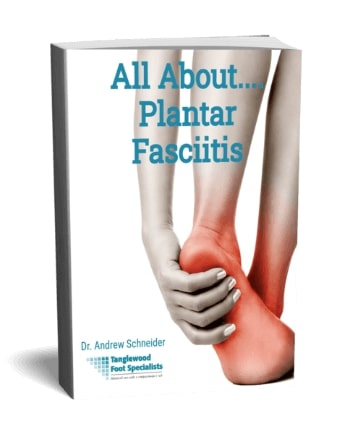
Plantar fasciitis is inflammation and microtears in the plantar fascia—the thick band of tissue running along the bottom  of your foot from heel to toes. This tissue acts like a shock absorber for your foot's arch. When it's overstressed from repetitive impact, it develops painful inflammation at the heel attachment point.
Here's what's actually happening. Think of your plantar fascia as being caught in a sandwich. On top, you've got your body weight pressing down. On the bottom, you've got the ground pushing back up with equal force—that's called ground reactive force. Your plantar fascia's stuck in the middle getting compressed with every step, absorbing forces of 1.5 to 3 times your body weight thousands of times daily.
The right shoes reduce that bottom force by 30-40% through shock absorption. But here's what most people don't realize: shoes can reduce that compressive load, but they can't restart your body's healing response if it's already stalled out.
One thing I need to clear up: if you've had an X-ray showing a "heel spur," you've probably been told that's what's causing your pain. That's not accurate. The heel spur is just calcification where your plantar fascia attaches—it's been there for years. The pain comes from the inflamed tissue, not the bone.
Why Your Shoes Matter (and Why They're Not Enough)
Every time your heel hits the ground, the ground pushes back. That's ground reactive force, and it's unavoidable physics. Flat shoes, flip-flops, and worn-out sneakers offer zero protection—your plantar fascia absorbs maximum impact with every step.
Proper shoes with cushioning, arch support, and heel drop reduce that stress by 30-40%. For early-stage cases caught in the first few weeks, this reduction may enable natural healing. Your body gets the break it needs to repair the tissue.
But here's the hard truth I give every patient: if shoes alone were going to cure your plantar fasciitis, they would've worked in the first six to eight weeks. Still hurting after months of wearing "good shoes"? That tells me your body's healing response has failed. Think of it like a construction crew that's given up and gone home. The shoes prevent things from getting worse, but they can't restart the repair process that's stalled out.
At that point, you need professional treatment to restart healing. Think of shoes like prescription eyeglasses—they correct the problem while you're wearing them, but they don't cure the underlying issue. Either way, I need to see you for an evaluation to figure out why your plantar fasciitis isn't responding.
What to Look for in Plantar Fasciitis Shoes
When patients ask me what shoes to buy, I focus on five key features. These aren't marketing buzzwords—they're biomechanical necessities that reduce stress on your plantar fascia.
Feature #1: Heel Drop (10-12mm minimum)
 This is the height difference between the heel and forefoot. A higher heel drop means less plantar fascia strain because it shifts pressure forward. I recommend 10-12mm for active plantar fasciitis.
Why this matters: when your heel's elevated, your Achilles tendon and calf don't have to work as hard. That means less pulling force on the heel attachment point where your plantar fascia connects. A tight Achilles tendon increases plantar fascia strain, so reducing that tension helps.
Feature #2: Substantial Heel Cushioning
You need foam to absorb impact at that first heel strike. But here's where people get confused—more cushioning isn't always better. Too-soft means your foot sinks in, collapses inward, and worsens pronation. Look for "structured cushioning" or "responsive foam" rather than pillowy softness.
Feature #3: Arch Support That Matches YOUR Foot
This is where generic recommendations fall short. Flat feet paired with high-arch shoes create worse problems. The support must match your foot structure—whether you have flat arches, high arches, or normal arches.
When you come in, I can assess your foot type. But generally: flat feet need motion control shoes, high arches need neutral cushioned shoes. And if you overpronate, your arch collapses inward and stretches the plantar fascia excessively. That's why proper arch support's critical. For many people, custom orthotics designed specifically for your foot structure provide the best support.
Feature #4: Firm Heel Counter
Squeeze the back of the shoe at the heel—it shouldn't collapse easily. A firm heel counter keeps your heel stable and prevents side-to-side motion that increases plantar fascia strain.
Feature #5: Rocker Sole (helpful but not essential)
A curved bottom helps roll your foot forward, reducing how much your foot has to bend. Less bending means less plantar fascia stress. Brands like Hoka are known for this design.
Remember that sandwich I mentioned? These five features all work together to reduce the "bottom force" of that sandwich—creating less crushing pressure on your inflamed plantar fascia.
Dr. Schneider's Shoe Recommendations by Category
After 25 years of treating plantar fasciitis in Houston, here are the specific shoes I recommend most often. I'm not sponsored by any of these brands—these are just the shoes I've seen work consistently for my patients.
Athletic and Walking Shoes
Brooks Adrenaline GTS or Ghost: The Adrenaline GTS works for overpronators with its 12mm drop and GuideRails support system. The Ghost offers the same cushioning with a wider toe box for neutral gait. Price runs $140-160. Best for daily walking, standing at work, or light exercise.
ASICS Gel-Kayano: This is maximum motion control for flat feet and heavy overpronators. The gel cushioning in the heel provides structured stability. It's heavier, so not ideal for running, but excellent for standing jobs. Price is $160-180. Best for nurses, teachers, and retail workers on hard floors all day.
Hoka Bondi: Maximum cushioning with a rocker sole. The thick midsole absorbs tremendous impact, though it doesn't provide overpronation control. Price is $165-185. Best for normal arches wanting maximum shock absorption.
New Balance 990 or 1080: These come in multiple width options—2E wide, 4E extra wide—which is huge for hard-to-fit feet. The 990 is more structured while the 1080 is softer. Both have excellent arch support. Price runs $150-185.
Work Shoes
Dansko Professional Clogs: Excellent for healthcare workers, teachers, and anyone on hard floors. The rocker sole and rigid construction controls motion. They're heavy and require a break-in period. Price is $130-160.
Skechers Work Arch Fit: I'll be honest—I used to dismiss Skechers as low-quality. But their Arch Fit Work line has legitimately good support. They're slip-resistant with a lower price point at $80-100. Best for budget-conscious patients in standing jobs.
Casual and Everyday Wear
Vionic or OluKai: These have podiatrist-designed arch support built into casual shoes and sandals. Vionic has APMA acceptance. Price runs $120-160. Best for social situations and summer wear.
What NOT to Wear
Don't wear flip-flops—they offer zero support and force your toes to grip with every step. Flat ballet flats and minimalist shoes provide no cushioning or arch support. Worn-out athletic shoes lose cushioning after 300-500 miles. High heels overstretch your Achilles. And Crocs are too flexible, allowing excessive foot motion.
Houston-Specific Note: If you're working at Texas Medical Center standing on concrete and tile all day in Houston's heat, I strongly recommend rotating between two pairs of shoes. Giving each pair 24 hours to decompress and dry out extends their life and maintains cushioning effectiveness. Our nurses, medical assistants, and healthcare workers deal with some of the most punishing surfaces for plantar fasciitis—12-hour shifts on hospital concrete with zero give.
When to Replace: Every 400-500 miles or 6-8 months of daily standing wear. Press the midsole—if it stays compressed, the cushioning is shot.
How a Houston Podiatrist Treats Plantar Fasciitis
Here's where I need to level with you. If you've been wearing proper plantar fasciitis shoes for two to three months and you're still dealing with significant pain, the shoes aren't going to magically start working. Your body's healing response has stalled out, and you need professional intervention to restart it.
I approach every plantar fasciitis case the same way: start with the most conservative options and escalate only when necessary. But I also don't let people suffer for years trying the same ineffective treatments over and over. After three to four months of proper footwear and home care, if you're not significantly better, it's time to talk about more advanced options. Either way, I need to see you for an evaluation to figure out why your plantar fasciitis isn't responding.
Level 1: Lifestyle Changes & Footwear
Sometimes, that's as simple as switching to proper shoes with 10-12mm heel drop, substantial cushioning, and real arch support. We also look at activity modification—reducing high-impact activities temporarily—and surface modification, like avoiding prolonged standing on concrete.
Weight management makes a difference too. Every pound you lose takes 3-4 pounds of pressure off your plantar fascia. For mild cases caught early, these changes alone work about 20-30% of the time. You should notice improvement within 2-4 weeks. If your morning pain hasn't changed after 3-4 weeks, or if pain is interfering with work and daily activities, we need to escalate.
Level 2: At-Home Care
 For some of you, adding a consistent stretching protocol is enough to tip the scales toward healing. I recommend towel stretches, wall calf stretches, and plantar fascia stretches three times daily. Ice therapy helps too—roll your foot on a frozen water bottle for 10-15 minutes, two to three times daily.
Over-the-counter orthotics like Superfeet or Powerstep ($30-60) can provide additional arch support. What works: consistent daily stretching, proper footwear, and ice after activity. What doesn't: night splints have poor compliance—nobody wants to sleep in them. Golf ball rolling provides temporary relief only. And topical creams can't penetrate deep enough to make a difference.
Here's the thing: if these home remedies were going to cure your plantar fasciitis, they would have worked in the first 6-8 weeks. The fact that you're still hurting after months tells me your body's natural healing response has failed. Success rate for Level 2 alone is about 20-30% for mild cases. When to escalate: pain unchanged after 6-8 weeks of compliant home care.
Level 3: Conservative In-Office Treatment
When home care isn't enough, we can bring you in for custom orthotics or injections. I do a 3D scan right here in the office, and we manufacture prescription orthotics for your exact foot mechanics. It takes 2-3 weeks for fabrication, then 6-8 weeks of wearing them to assess effectiveness.
Combined with proper shoes, prescription orthotics custom-molded to your exact foot show 60-65% improvement rates. Cost is typically $400-600, and insurance often covers part of it.
Cortisone injections are another option. I inject directly into the plantar fascia insertion point, and most patients get pain relief within 24-72 hours. But here's my honest take: I use cortisone injections sparingly—maybe 2-3 times per year maximum. They provide dramatic short-term relief but don't fix the underlying problem. Relief lasts 4-12 weeks, varies by patient.
I see cortisone as a bridge treatment. Success rate is 70-80% for temporary relief, but 60% have pain return within 3-6 months. It's not a cure—it's a bandaid.
Level 4: Advanced Regenerative Medicine (THE THIRD OPTION)
This is where Tanglewood's expertise really shines. Most podiatrists stop at orthotics and cortisone. We offer advanced regenerative treatments that actually restart your body's healing process.
Extracorporeal Shockwave Therapy (ESWT)
 Think of it like hitting the reset button on your body's construction crew. Shockwave therapy uses high-energy acoustic waves to create controlled microtrauma, which restarts your healing response. The procedure takes 5-7 minutes per session and feels like firm tapping—no anesthesia needed.
Protocol is 3-5 treatments spaced one week apart. You'll start noticing improvement around weeks 4-6, with maximum benefit at 8-12 weeks. Shockwave treatment has an 82% success rate for significant improvement—that's over 70% pain reduction. Cost runs $1,500-2,500 for the complete series.
PRP (Platelet-Rich Plasma) Therapy
Your platelets contain powerful growth factors that signal tissue repair. PRP therapy uses your body's own healing platelets—we draw your blood, concentrate the platelets, then inject this "liquid gold" into your damaged fascia. It's regenerative medicine, not just masking pain like cortisone does.
The whole procedure takes 30-40 minutes: blood draw, 15 minutes processing, then ultrasound-guided injection. You'll have increased pain for 3-5 days initially, then gradual improvement over 6-12 weeks. Maximum benefit comes at 3-4 months. Success rate for PRP injections for plantar fasciitis is 75-80% for significant improvement. Cost is $800-1,200 per injection.
One important note: no NSAIDs for 2 weeks before and 6 weeks after PRP. Anti-inflammatories interfere with the healing process we're trying to trigger.
Combined Protocol for Stubborn Cases
For chronic, recalcitrant cases that haven't responded to anything else, I use a "seeds and soil" approach. We do shockwave first to create the healing environment, then PRP 2-3 weeks later to deliver growth factors into that prepped tissue. This combined protocol shows 85-90% success rates.
What's exciting is that we now have treatments that almost make surgery obsolete. The regenerative medicine options we offer at Tanglewood weren't available even ten years ago. Most patients who would've needed surgery in the past can now avoid it entirely.
Level 5: Surgery (When Necessary)
Here's a statistic that should reassure you: only 5% of plantar fasciitis cases ultimately require surgery. Most people get better with the treatments we've already discussed.
But when do you need surgery? After 12+ months of comprehensive treatment with no improvement. When severe pain prevents you from working or doing daily activities. When regenerative medicine hasn't worked.
The procedure is called Plantar Fascia Release, or fasciotomy. I make a small incision and partially cut the plantar fascia to reduce tension. It's outpatient surgery with a local nerve block plus sedation. Takes about 20-30 minutes. I use endoscopic technique whenever possible because it means a smaller incision.
Here's the recovery timeline:
Week 1, you're in a surgical boot, non-weight bearing with crutches. Week 2, partial weight bearing with gentle range-of-motion exercises. Weeks 3-6, full weight bearing in the boot, transitioning to an athletic shoe around week 4-5, and physical therapy begins.
Months 2-3, gradual return to activities—low-impact at week 6-7, impact activities at week 8-10. By months 3-6, you'll see continued improvement, with maximum benefit by month 6.
Success rate for plantar fascia release surgery is 85-90% for significant improvement—over 70% pain reduction. About 75-80% of patients are pain-free by 6 months.
Look, I know foot surgery sounds scary. But if we've tried everything—proper shoes, orthotics, stretching, injections, shockwave, PRP—and you're still suffering after a year or more, we're not talking about "elective" surgery. We're talking about quality-of-life surgery. The success rate is high, and most patients wish they'd done it sooner. You're not giving up. You've earned the right to consider surgery after everything you've been through.
What to Expect When You Come In
When you come in with plantar fasciitis, I'll start by listening to your story. How long have you been dealing with this? What have you already tried? What shoes are you currently wearing? Where exactly does it hurt? I need this information to understand what stage you're at and what hasn't worked.
Then I'll examine your foot mechanics—how you walk, how your arch moves, whether you're overpronating. I'll palpate the plantar fascia to locate the exact inflammation point. If needed, we can do in-office diagnostic ultrasound to assess tissue quality and rule out any tears. X-rays can rule out stress fractures or arthritis, though I'll remind you again: heel spurs aren't the pain source.
After the exam, we'll discuss your treatment options based on how long you've been dealing with this and what you've already tried. If you're just a few weeks in with mild symptoms, we might start conservative with better shoes and a stretching protocol. If you've been suffering for six months and already tried orthotics, I'll talk to you about regenerative options like shockwave or PRP.
Most patients start with a 6-8 week conservative treatment plan. If we're not seeing 40-50% improvement by then, we escalate to the next level. I don't make you wait months doing things that aren't working. And I won't judge you if you've been walking around in flip-flops for the past year or if you ignored this for months hoping it would go away. I just need accurate information so I can create the right treatment plan for you.
Can You Prevent Plantar Fasciitis?
Once you've healed from plantar fasciitis, the question becomes: will it come back? For some people, it's a one-time injury that resolves and never returns. For others—especially if you have flat feet, stand all day for work, or are overweight—it can be a recurring problem.
Here are the prevention strategies that work. Wear supportive shoes consistently, not just when your feet hurt. Replace shoes every 400-500 miles or 6-8 months of daily wear. Don't go barefoot on hard surfaces.
Maintain calf and Achilles flexibility with regular stretching. Address weight management—remember, every pound lost takes 3-4 pounds of stress off your plantar fascia. Use custom orthotics if your foot mechanics require them.
Warning signs to catch early: if you start noticing that first-step morning pain returning, don't wait months to address it. Come in right away. Treating plantar fasciitis in the first few weeks is much easier than treating chronic cases that have been going on for months or years.