What Is Plantar Fasciitis?
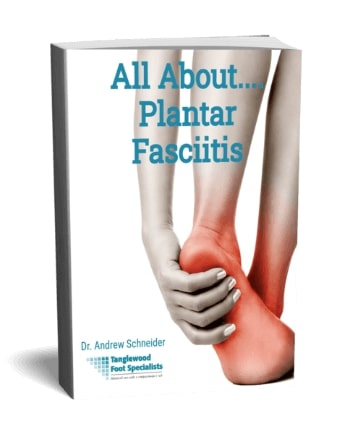
Plantar fasciitis is a painful condition caused by damage and inflammation to the plantar fascia — the thick band of  connective tissue running along the bottom of your foot from your heel bone to your toes. It's your arch's primary shock absorber and support cable. When it breaks down, it becomes the most common cause of heel pain I treat in my Houston podiatry practice — affecting roughly two million people in the United States each year.<sup>[1]</sup>
Here's what's actually happening when you feel that searing pain with your first steps in the morning. During rest, your body starts trying to repair the damaged tissue — the plantar fascia contracts slightly as it heals. Then you step out of bed and put full weight on it. That fragile new tissue tears. That's the pain. It's called post-static dyskinesia, and it's your body's failed attempt to catch up on a repair job it can never quite finish.
The real problem is blood supply. The plantar fascia doesn't get much circulation compared to muscle tissue. So your body sends a repair crew, they start the job, and then they can't get the materials they need to finish it. You end up with chronic inflammation and incomplete healing that cycles on and on.
That's why this condition drags on for months — sometimes years — without the right intervention.
Why Does Plantar Fasciitis Happen?
What most people don't realize is that plantar fasciitis isn't caused by one single thing. It's the result of repetitive microtrauma accumulating faster than your body can repair it — and that process gets pushed along by a handful of specific factors I see every day.
Biomechanics play a huge role. Overpronation, flat feet or abnormal arch mechanics, high arches, and a tight calf or Achilles complex all change how force travels through your foot with every step. Think of your body like a puppet on strings — your mid-back, hips, calves, and fascia are all connected. When one string gets tight, it strains everything below it. A stiff calf isn't just a calf problem. It's a heel problem waiting to happen.
Loading factors matter just as much. Sudden increases in activity, long hours on hard floors, and carrying extra body weight all multiply the stress on the fascia. Houston runners are particularly vulnerable to this injury — and so are nurses, teachers, and anyone who spends their day on their feet. I see a lot of people from the Texas Medical Center who've been standing on concrete for eight-hour shifts and genuinely had no idea that's what tipped them over the edge.
One thing I want to clear up right now: if someone told you that a heel spur is causing your pain, that's almost certainly not the full story. A heel spur is a result of the chronic tension plantar fasciitis puts on your heel bone — not the cause. Many of my patients have large spurs with zero discomfort. Treating the spur doesn't treat the problem. The fascia is the problem.
Symptoms and Warning Signs
 You probably already know the main one: that stabbing heel pain when you take your first steps out of bed in the morning. It eases after you've been walking for a few minutes, then comes back after you've been sitting for a while. You might also notice it's worse on hard surfaces or barefoot, and that tenderness is concentrated on the inside of your heel — right where the fascia attaches to the bone.
Not everyone's plantar fasciitis looks the same, though. Some of you will notice arch cramping mid-day, tightness in the calf and Achilles running alongside the heel pain, or symptoms in both feet. If you're dealing with numbness or tingling into your arch or heel, that could be tarsal tunnel syndrome, which causes similar heel and arch symptoms but needs a completely different approach. Either way, I need to see you.
A note for my diabetic patients: If you have diabetes and you're experiencing heel pain that hasn't improved in one to two weeks, don't wait. Diabetic foot conditions need earlier and more aggressive evaluation because your healing response is already compromised. What clears up quickly in someone without diabetes can become a serious problem when you're managing blood sugar. Call the office sooner rather than later.
The Truth About Physical Therapy for Plantar Fasciitis
 Here's the thing — most people assume there are only two options: do PT, or eventually have surgery. And nobody tells them that assumption is wrong. That gap in the middle is exactly where most of the people who find me are stuck.
Physical therapy works. I want to be direct about that. When it's properly structured — meaning high-load strength training like eccentric calf raises, manual therapy, and full kinetic chain work, not just isolated foot stretches — PT resolves plantar fasciitis in roughly 70–80% of cases within three to six months.<sup>[2],[3]</sup> The 2023 APTA Clinical Practice Guidelines support this, and it matches what I see in my practice. PT is a real part of many of my treatment plans.
But here's what most people don't realize about PT: it addresses mechanics, and mechanics matter. What it can't do is restart a stalled healing response in tissue that's become chronically degenerated. In long-standing cases, the condition has often shifted from active inflammation to what we call plantar fasciosis — actual tissue breakdown and scarring. Anti-inflammatory strategies simply don't reach the problem at that stage. And red light therapy can support tissue healing between sessions for some people, but it's still addressing the same gap: damaged tissue that needs a regenerative push, not just symptom management.
I'm not dismissing physical therapy — I refer people for it regularly. But "PT didn't work" doesn't mean surgery is next. There's an entire tier of treatment between those two options, and most people have never heard of it.
How a Houston Podiatrist Treats Plantar Fasciitis — All Five Levels
My approach starts with one question: where are you in the healing process? Someone who's had heel pain for three weeks needs a different plan than someone who's been suffering for 18 months. I don't believe in one-size-fits-all protocols, and I won't judge you for how long you've waited or what you've already tried. Here's how I actually think through this with you.
Level 1: Lifestyle Changes
Sometimes the biggest wins come from the simplest adjustments. Supportive footwear — worn consistently, including at home — is non-negotiable. I can't tell you how many people are doing everything right and still waking up in pain because they're padding around on hard tile in worn-out slippers. Those old house shoes aren't cushioning you — they're re-injuring the fascia before your treatment plan has a chance to work. Swap them for a supportive slip-on you'd actually wear outside. If you're a runner, swap high-impact workouts for swimming, cycling, or the elliptical while you heal. These changes alone can produce meaningful improvement in two to four weeks for people caught early — but for established cases, they're a foundation, not a cure.
Level 2: At-Home Care
Ice beats heat every time for plantar fasciitis. I know heat feels better in the moment, but it increases inflammation and works against you. Use ice for 20 minutes on, 40 minutes off. A frozen water bottle under your arch does double duty — cold therapy and gentle soft tissue work at the same time.
The morning stretch sequence matters more than most people realize, and so does the order. Start with your mid-back, then release your hip flexors, then work into your calf. Jumping straight to aggressive foot stretches before your tissue is warm causes microtears in that partially healed fascia — the exact damage you're trying to reverse. A night splint worn for one to three months is one of the most underrated tools in conservative care; it keeps the fascia gently lengthened overnight so the morning tear cycle starts to break. For most chronic cases, at-home care manages symptoms but can't restart a stalled healing response on its own.
Level 3: Conservative In-Office Care
When at-home strategies aren't holding, this is where I spend most of my time. Custom orthotics redistribute the forces traveling through your heel with every step — think of them like eyeglasses for your feet. They don't cure the problem, but they correct the biomechanical pattern that caused it while your body heals. Most people notice real improvement within four to six weeks of consistent use, and they're the single best long-term investment for preventing recurrence. At $700, they cost less than two months of co-pays for treatments that aren't addressing the root cause.
A cortisone injection ($120) has a specific, limited role: managing acute flares. It reduces inflammation quickly, which can give you enough of a window to start rehab. But cortisone doesn't repair tissue — and I'm upfront about that. Repeated injections over time can actually weaken the fascia. I'll use one, sometimes two, but I'm not going to keep repeating them and call it a plan. Structured physical therapy — the kind that includes high-load calf raises, manual therapy, and full kinetic chain work — is also part of this tier when indicated. Together, conservative care resolves roughly 80% of plantar fasciitis cases caught early.
Level 4: Advanced Regenerative — The Third Option
This is where things get interesting. We now have treatments that almost make surgery obsolete for people who haven't responded to everything else.
Shockwave therapy has an 82% success rate for chronic plantar fasciitis — and I've used it on my own heel.<sup>[4]</sup> Think of it like aerating a lawn: the acoustic pressure waves create micro-channels in damaged tissue that allow blood flow, oxygen, and healing factors to reach an area that's been starved of them. Each session takes 10–15 minutes. We do three sessions, once a week. There's mild discomfort — a tapping sensation — but no downtime. At $300 per session or $750 for the full package of three, it's one of the most cost-effective advanced options available.
A PRP injection concentrates your body's own healing factors — I call it liquid gold for healing. We draw a small amount of blood from your arm, spin it in a centrifuge to concentrate the platelets and growth proteins, then inject it under ultrasound guidance directly into the damaged area of the fascia.<sup>[5]</sup> At $850, it delivers what cortisone never can: the raw materials your body needs to actually repair tissue, not just suppress inflammation. Most people feel some soreness for a day or two after — that's normal, and it's a sign the healing process has kicked in.
The protocol I see the best results with combines both: PRP first, then shockwave starting within a few days. PRP provides the seeds — the growth factors. Shockwave prepares the soil — creating pathways for those factors to penetrate damaged tissue. Together, these regenerative medicine protocols that combine both treatments produce an 85–95% success rate for chronic cases. Initial improvement typically comes within two to four weeks, with full benefit at three to six months. Most insurance plans — including Medicare — don't cover these treatments, but HSA and FSA funds usually apply. When you do the math against ongoing co-pays and cortisone shots, this tier often costs less than people expect.
And one more option worth knowing about: oral BPC-157 peptide therapy as an adjunct to support tissue repair. It's not a standalone treatment, but if you're going through shockwave or PRP, it can meaningfully accelerate your healing response. You won't find this at most podiatry practices — it's one of the reasons people come to me after they've plateaued elsewhere.
Level 5: Surgery — When It's Truly Necessary
Look, I know foot surgery sounds scary. But here's the number that should actually reassure you: 95% of my patients never reach this point.
Surgery for plantar fasciitis is a genuine last resort. No one gets a surgical recommendation from me without exhausting every option above first — including regenerative medicine. When it is needed, there are two main procedures: a plantar fasciotomy — or partial plantar fascia release — which partially cuts the fascia to relieve the chronic tension driving symptoms, and the Tenex procedure, a minimally invasive option that uses ultrasound-guided technology to remove degenerative tissue through a tiny incision with faster recovery.
Recovery from either follows a predictable path: protected weight-bearing in weeks one and two, gradual return to walking by weeks three through six, normal daily activity by months two and three, and return to sport by months three through six. Long-term pain relief runs around 70–80% for people who truly needed this step.<sup>[6]</sup> If you want to understand the full picture of what foot surgery for heel pain involves, I'm always happy to walk through that conversation.
If your heel pain has been going on for months and conservative care isn't cutting it, contact us for an appointment to find out if you're a candidate for regenerative treatment. Call us at 713-785-7881 — we'll figure out exactly where you are in the process and what your best next step is.
What to Expect When You Come In
When you come in, I'll start by listening. I want to hear the whole story — how long the pain's been there, what you've already tried, what made it better even temporarily, and what you're hoping to get back to. Whether that's running Houston's spring races again, finishing a shift without limping, or just getting out of bed without dreading your first steps — that goal shapes everything that comes after. I won't judge you for waiting, for trying home remedies first, or for being nervous about coming in.
Then we move into the examination. I'll watch how you walk, check your arch mechanics and ankle range of motion, and feel for tenderness at the medial calcaneal tubercle — the spot on the inside of your heel where the fascia attaches. I'll review your footwear and assess your calf and Achilles tightness, because that whole kinetic chain tells part of the story. If imaging is needed, we'll take digital X-rays on site to rule out a stress fracture and evaluate any heel spur. I also use diagnostic ultrasound to measure fascia thickness — a measurement greater than 4mm is a reliable diagnostic marker, and it tells me a lot about how chronic the injury is and what's likely to work.
By the end of that first visit, I'll tell you exactly what I see and what I think the most efficient path forward is. Not the most aggressive — the most efficient. If you're in early-stage plantar fasciitis, we may start conservative and see meaningful results within a few weeks. If everything points to chronic tissue degeneration, I'll be upfront: we need to think about regenerative medicine, not cycle through treatments that weren't designed for this stage. Either way, you leave with a real plan. Schedule an appointment and we'll take it from there.