What Is Plantar Fasciitis — And What's a Heel Spur?
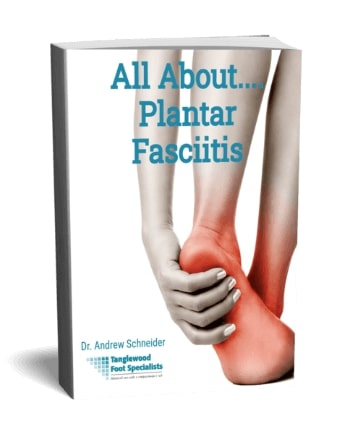
Plantar fasciitis is inflammation and micro-tearing of the plantar fascia — the thick tissue band that runs along the  bottom of your foot from your heel bone to your toes. A heel spur is a calcium deposit that forms on the heel bone, usually at the exact same attachment point. They're related but not the same thing. And in most cases, plantar fasciitis is the actual source of your pain — not the spur.
Think of your plantar fascia as your foot's built-in suspension cable. Every step you take, it absorbs impact and springs you forward. When you load it too hard for too long — through high mileage, long hours on your feet, or unsupportive shoes — it develops tiny tears faster than your body can repair them. That accumulating damage is what we call micro-tearing, and the resulting inflammation is plantar fasciitis. The "-itis" simply means inflammation. According to the American Academy of Orthopaedic Surgeons, plantar fasciitis affects roughly 2 million people in the United States each year — making it one of the most common foot complaints I treat.
So where does the spur come in? Here's the thing: your body is always trying to protect itself. When the plantar fascia repeatedly pulls on the calcaneus — your heel bone, the large bone at the back of the foot — your body applies what's known as Wolff's Law. Bone remodels under mechanical stress. To reinforce the stressed attachment site, it deposits calcium and builds extra bone outward. It's your body laying extra rebar where it thinks the foundation is cracking. It means well. It's just building in the wrong place. Research published in the Journal of Foot and Ankle Surgery confirms that about 10% of the general population has heel spurs — and only about 5% of those people ever feel any pain from them.
Why Does This Keep Happening? The Real Cause
Here's the part nobody explains: your plantar fascia has relatively poor blood supply. That matters because blood is how  your body delivers the repair materials — growth factors, collagen, oxygen — needed to heal damaged tissue. When the micro-tearing accumulates faster than blood flow can support repair, the healing process stalls. Your body sent the construction crew. They showed up, started the job, ran out of supplies, and never came back to finish. The result is a failed healing response — tissue stuck in chronic inflammation without ever progressing to true recovery.
But the fascia isn't working in isolation. Think of your body like a puppet on strings. Your calf muscles connect through the Achilles tendon directly into the heel bone — the same bone where your plantar fascia attaches. When your calves are tight (and most people's are), they pull the Achilles taut, which loads the heel attachment, which overloads the fascia with every step. This is why tight calves can lead to Achilles problems as well — it's the same chain, just a different link breaking. Treating only the heel while ignoring the calf is the single biggest reason self-treatment attempts plateau.
And that stabbing first-step pain in the morning? There's a name for it: post-static dyskinesia. During rest, your body partially heals the micro-tears and the fascia contracts into a shortened position. When you take that first step, you pull that partial healing apart in an instant. That's the ice-pick sensation. A lot of people respond by aggressively stretching the foot first thing — which actually causes fresh tearing on already-contracted tissue. The right move is a gentle, sequenced stretch — mid-back, then hip flexor, then calf — done before you ever put weight on your foot. And custom orthotics address the biomechanical cause underneath all of it, correcting how load is distributed across the fascia with every step.
The Truth About Heel Spurs
I won't judge you for being fixated on the spur. When a doctor circles something on an X-ray and names it, your brain locks onto it as the problem. That makes complete sense. But I need you to understand something: the spur is almost never the problem.
Here are the two myths I hear every week. Myth one: "My X-ray shows a spur — that's what I need to treat." The truth is that the spur is a result, not a cause. It formed because the plantar fascia was under chronic stress. About 50% of people with plantar fasciitis also have a heel spur on imaging — but so do roughly 10% of people with no heel pain at all. The spur doesn't explain your pain. The inflamed, damaged fascia does. Myth two: "I'll need surgery to remove the spur." Spur removal is extremely rare and almost never indicated. Treat the plantar fasciitis, resolve the inflammation, and the pain goes away. The spur can stay right where it is.
There's one honest exception worth knowing about. As we age, the fat pad inside the heel — the calcaneus's natural cushion — can thin significantly through a process called fat pad atrophy. When that cushioning layer wears down enough, a spur that's been sitting harmlessly for years can press into surrounding tissue and create real, localized pain. The fix isn't surgery — it's either a well-placed gel pad in your shoe or, for more significant cases, fat pad restoration for patients whose cushioning has thinned. And if your pain is coming from the back of the heel rather than the bottom, that's a different structure entirely — a bone spur on the back of the heel involves the Achilles attachment and needs a completely different workup.
Symptoms — What Your Pain Is Telling You
That first-step morning pain is almost diagnostic on its own. You swing your legs out of bed, put your foot on the floor,  and immediately want to sit right back down. Like walking on broken glass. A few minutes later it eases up — and you think, okay, I'm fine. But then you sit at your desk for two hours, stand up, and it's back.
That pattern — pain with first steps, brief relief after walking, pain returning after prolonged sitting or standing — is the signature of plantar fasciitis. You'll also likely notice it's worse barefoot or on hard surfaces, localized to the inside bottom of the heel near the arch attachment. Some people feel pain radiating into the arch. Many notice calf tightness that feels directly connected to the heel. And if you're dealing with a running injury that triggered this, the onset tends to be more acute before it settles into the chronic morning-pain cycle.
Get in to see me promptly if any of these apply: sudden severe heel pain without a clear overuse cause, significant swelling or bruising, inability to bear weight, numbness or tingling in the heel, or no improvement after 4–6 weeks of consistent self-care. Those don't need more stretching. They need an evaluation.
Heel Spur and Plantar Fasciitis Treatment — What a Houston Podiatrist Actually Does
My goal isn't just to stop your pain. It's to fix what's causing it so it doesn't come back in six months. Those are different goals, and they lead to different decisions. Here's how I approach it — and why 95% of my heel pain patients never end up in an operating room.
Level 1: Start With What You Can Change Today
Sometimes the most powerful changes are the simplest ones. Stop walking barefoot — especially those first steps in the morning on a hard floor. Keep a pair of supportive sandals beside the bed and put them on before you stand. Retire any sneakers with worn-down cushioning, even if they feel comfortable. Substitute cycling or swimming if you're a runner, temporarily — not because you're quitting, but because you're being strategic. Most people see noticeable pain reduction within 2–4 weeks of getting these habits right.
Level 2: What You Can Do at Home
Ice, not heat. I know heat feels better — but heat increases inflammation. A frozen water bottle rolled under the arch for 15–20 minutes after activity is one of the most effective tools you have. For your morning routine, do the 60-second stretch sequence before you ever put weight on the foot: 20 seconds releasing your mid-back, 20 seconds in a hip flexor lunge, 20 seconds on the calf with your heel down and back leg straight. Sequence matters — you're releasing the whole puppet-string chain before you load it. Over-the-counter insoles can serve as a bridge — look for medical-grade brands like Powerstep, Superfeet, or Spenco, not the drugstore foam inserts.
What doesn't work: aggressive morning stretching on a contracted fascia, heat, ignoring it and hoping it resolves, and continuing in worn-out shoes. I see all four of these every week. At best, they manage symptoms. At worst, they're making things worse.
Level 3: Conservative In-Office Care
When lifestyle and at-home measures aren't enough — or when your pain is significantly limiting your activity — this is where we go to work. Custom orthotics are the cornerstone of long-term plantar fasciitis management. Think of them like eyeglasses for your feet. I do a full biomechanical exam, watch you walk, take measurements, and create a 3D scan of your feet — then fabricate a device that corrects how load is distributed across the fascia with every step. Most people start feeling meaningful relief within 2–4 weeks. Cost is $700, and unlike cortisone, orthotics address the actual mechanical cause.
A cortisone injection at $120 does have a genuine role — specifically for acute flares where inflammation is severe and you need fast relief. But here's what I need you to understand about cortisone: it reduces inflammation temporarily and doesn't give your body what it needs to repair the damaged tissue. The first injection often works dramatically well, and you'll understandably want to repeat it. Don't. Repeated cortisone injections weaken the fascia over time. You're trading short-term relief for long-term damage.
A night splint worn during sleep keeps the fascia gently stretched so the morning's healing contraction doesn't build up. It's uncomfortable but effective. Physical therapy focused on the full kinetic chain — calf, hip flexor, lumbar, not just the heel — rounds out this level. With consistent care over 6–8 weeks, roughly 70–80% of people resolve at this stage.
Level 4: Advanced Regenerative Medicine — The Option Nobody Talks About
What's exciting is that we now have treatments that almost make surgery obsolete. I see this constantly in my Houston  podiatry practice — runners logging miles on Memorial Park trails, nurses and teachers on their feet all day at the Texas Medical Center, people who spend their weekends on concrete at NRG or Discovery Green. They need their pain gone completely, not just managed. These are the people regenerative medicine was built for.
Shockwave therapy uses acoustic pressure waves — not electric shocks, despite the name — delivered through a handheld device held against the skin. Think of it like aerating a compacted lawn: the waves create small channels in the damaged tissue, allowing healing factors, blood flow, and growth signals to finally penetrate the area that's been stuck. Three sessions, once a week, about 10–15 minutes each. The 82% success rate is why I used this on my own heel when I developed plantar fasciitis. A full package runs $750.
PRP — platelet-rich plasma is what I call liquid gold for healing. We draw a small amount of blood from your arm, spin it in a centrifuge to concentrate the platelets and growth factors, then inject that solution precisely into the damaged fascia tissue. Your body's own repair signals, delivered exactly where the healing has stalled. A 2022 review in the Journal of Orthopaedic Surgery and Research found standalone PRP achieves 70–80% success for chronic plantar fasciitis. Cost is $850.
For the most stubborn cases — pain lasting 3–6+ months, no adequate response to everything above — I combine them. Our regenerative medicine approach sequences PRP first (the seeds), followed by shockwave within days (the soil prep). Together, they achieve 85–95% success. Initial improvement comes within 2–4 weeks; full benefit over 3–6 months. Both are cash-pay, though FSA and HSA funds may apply. We also use red light therapy to support tissue recovery alongside these protocols.
Level 5: Surgery — When It's Truly Necessary
Look, I know foot surgery sounds scary. That fear is actually why so many people avoid getting help at all — and that delay makes everything harder to treat. Here's the reality: 95% of my heel pain patients never need surgery. Ever.
Sarah came into my office after 18 months of plantar fasciitis, two rounds of cortisone that had stopped working, and a surgery already scheduled by another provider. Three months after we treated her with our regenerative protocol, she ran her first 5K in over two years. No surgery. No ongoing pain medication. That's not unusual — that's what the right care looks like.
For the small percentage who do need surgery, the most common option is the Tenex technique — minimally invasive, ultrasound-guided, performed through a tiny puncture rather than a scalpel incision. Damaged tissue is precisely removed while healthy tissue stays intact. Weeks one and two are in a walking boot; weeks three through six involve gradual return to normal shoes and physical therapy; full activity returns over months two and three. For cases needing more direct structural correction, a plantar fascia release — partial cutting of the fascia to relieve tension — is performed either open or endoscopically, and only after all other options are genuinely exhausted. Heel spur surgery is rarely where this ends up. But when it's needed, it works.
After treating thousands of people with heel pain, I can tell you this: most of them spent months — sometimes years — trying to manage symptoms at home before coming in. The earlier we identify what's actually happening in your foot, the more options you have. Call us at 713-785-7881 or schedule an evaluation online.
What to Expect When You Come In
When you come in, I'll start by just asking you to tell me what's been going on — not in medical terms, just what your day feels like. When does it hurt? Is it worse first thing in the morning, or does it build through the day? What have you already tried? I want to hear all of it before I ever touch your foot, because the pattern tells me a lot before the examination even begins.
Then we get hands-on. I'll press along the inside bottom of your heel where the fascia meets the calcaneus — usually you'll feel it immediately right at the attachment point. I'll watch you walk. Gait tells me things about the whole kinetic chain that no image can: how your calves load, how your arch moves, whether the mechanics that caused this are still working against you with every step. If I need a better look at the bone, I'll take an X-ray — not to hunt for a spur to treat, but to rule out a stress fracture. In some cases, I'll use diagnostic ultrasound to see the fascia itself in real time and confirm how much thickening or tearing is there.
I'm not going to guess what you need. We figure out exactly where the problem is first, then build a plan around your life — your activity level, your goals, your timeline. By the end of your first visit with Dr. Andrew Schneider, you'll have a clear diagnosis and a starting plan. Most people see initial improvement within 2–4 weeks. But you leave knowing what's wrong — and what we're doing about it.
Prevention — Keeping It From Coming Back
Plantar fasciitis comes back. A lot. Not because treatment failed — but because the underlying mechanics didn't change. The pain goes away, you stop wearing the orthotics, you stop doing the calf work, and six months later you're right back where you started. Remember the eyeglasses analogy: you wouldn't stop wearing your glasses just because your vision improved while you were wearing them. Wearing your orthotics consistently is the single most important prevention habit I give people — and the most commonly abandoned one.
Keep up the calf work long after the pain resolves. The puppet-string chain doesn't stop pulling just because you feel better — it just stops being loud about it. Supportive shoes daily, including around the house. Gradual return to high-impact activity after recovery — sudden mileage spikes are the most common relapse trigger I see. And your feet change over time. What was working at 40 may need a reassessment at 55. Annual check-ins let us catch the drift before it becomes another 18-month problem. You can also download my free heel pain guide at heelpainbook.com.