What Is Heel Pain When Walking?
 Heel pain when walking usually means the tissues under or behind your heel are being overloaded or failing to heal properly. Unlike that sharp pain you feel with your very first steps in the morning—which is its own thing—walking-related heel pain signals ongoing mechanical stress, tissue breakdown, or loss of cushioning that doesn't get better with rest alone.
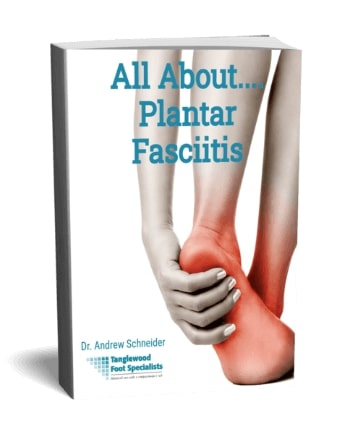
Here's what's actually happening. The most common cause is plantar fasciitis—damage to that thick band of tissue running along the bottom of your foot from your heel to your toes. But here's the part most people miss: when your heel hurts specifically while you're walking, it usually means the tissue has moved past simple inflammation.
It's in what we call a failed healing response. Your body started trying to repair the damage, but for whatever reason—poor blood supply, repetitive stress, time—that repair stalled out.¹
Think of it like a construction crew that started a job but never finished it. The tissue stays stuck in a state of chronic breakdown. Every step you take is asking damaged tissue to do work it's not equipped to handle right now. And that's why rest alone doesn't fix it.
Why Does Heel Pain Get Worse When You Walk?
Walking puts your heel under enormous pressure—and it's not just your body weight doing it. The ground pushes back up into your foot at the same time your weight pushes down. Your foot is literally getting sandwiched between those two forces with every single step. We call that the ground reactive force, and it's why heel pain so often gets worse the more you're on your feet.²
But there's more to it than just pressure. When you walk, your foot has to move through a full range of motion—from the moment your heel strikes the ground to when your toes push off. If the plantar fascia is already damaged or if you've lost cushioning under your heel, that motion tears at injured tissue over and over again.
It's not one big injury. It's a thousand small ones happening all day.
What most people don't realize is that this can also involve the Achilles tendon. Your Achilles and your plantar fascia are connected—they work as a team. When one is struggling, it changes how the other has to work.
Pain coming from the Achilles tendon can feel like heel pain, and it tends to show up or get worse with walking specifically. So if your pain is more toward the back of your heel and it flares up on hills or stairs, that's worth paying attention to.
Another factor I see all the time is fat pad atrophy—loss of the natural cushioning under your heel. You've got a fat pad under your heel—a built-in shock absorber that gets thinner as you age or after years of impact activity.³ Once that padding starts to go, hard surfaces hit differently. And walking on concrete or tile? That's when it really shows.
The Truth About Heel Spurs
Here's something that surprises a lot of my patients: heel spurs almost never cause pain. I know—that sounds wrong.  Especially if you've had an X-ray that showed a spur and a doctor pointed at it like that was the problem.
But here's the thing. A heel spur is just a bony growth that forms where the plantar fascia attaches to your heel bone. Your body actually builds that spur in response to tension on the bone—it's trying to stabilize the area. Most people walking around right now have a heel spur and have no idea, because it isn't bothering them at all.⁴ The spur itself is sitting on a thick cushion of fat tissue, so it's rarely the source of pain.
What actually hurts is the damaged tissue around it. The spur shows up on the X-ray, so it's easy to point to. But if we only focus on the spur and ignore the plantar fascia and the fat pad underneath, we're treating the wrong thing.
That's why I always tell patients: the X-ray shows you what's there, but it doesn't tell you what's hurting. And that distinction matters a lot for figuring out the right treatment.
Symptoms and Warning Signs
Walking-related heel pain feels different depending on what's actually going on underneath. The most common sign is pain that builds the longer you're on your feet—it might be manageable in the morning but get steadily worse as the day goes on. Hard surfaces like concrete or tile tend to make it flare up faster than carpet or grass.
If you're also noticing that the pain is sharp or shooting rather than just a dull ache, that often points to tissue that's actively breaking down. And if it's getting worse over time instead of staying the same, that's your body telling you the healing isn't happening on its own.
Here's when I want you to come in sooner rather than later: if the pain is severe enough that it's changing how you walk, if you notice swelling or bruising around your heel, or if the pain suddenly gets a lot worse for no clear reason. Those can be signs of a stress fracture or something else that needs attention beyond what home care can handle. And if you have diabetes—please don't wait on this. Foot problems in diabetics can escalate fast, and the sooner we catch it, the better.
How a Houston Podiatrist Treats Heel Pain When Walking
Now here's where it gets good. Because the way I approach this is different from what you've probably heard. I don't start with the most aggressive option and work down. I start with the simplest fix that could actually solve your problem—and we only move up if we need to.
Most of my patients never make it past the first couple of levels. And about 95% of cases resolve without surgery.⁵ So let's walk through it together.
Level 1: Start With What You're Doing Every Day
Sometimes, that's as simple as changing your shoes. I know that sounds too easy. But your footwear is either helping your heel heal or actively making it worse—there's no middle ground. If you're walking around in shoes with no arch support, flat soles, or a worn-out cushion, every step is adding to the damage.
Stop walking barefoot, too. I mean it—not even to grab your morning coffee. Those first steps on a hard floor without any support are doing real harm.
If you're on your feet for work, the surface you're standing on matters just as much as what's on your feet. Concrete and tile are brutal on an already-injured heel. An anti-fatigue mat at your workstation can make a surprising difference, especially on days when you're not moving much.
Level 2: What You Can Do at Home
 Ice is your best friend here—but you've got to do it right. Fifteen to twenty minutes on, then off. Don't just throw a bag of frozen peas on there and forget about it.
I like to tell patients to keep a frozen water bottle under their desk and roll their foot on it while they work. You're icing and gently moving the tissue at the same time.
Now, for some of you, these swaps may be enough to reduce the pain and give your body a chance to start healing. But I want to be honest with you: if your heel pain has been going on for more than a few weeks, home care alone usually isn't going to finish the job. It can take the edge off. It can buy you some comfort.
But it doesn't restart the healing process that's already stalled out. That's where we come in.
Level 3: Conservative In-Office Treatment
When lifestyle changes and home care aren't cutting it, the next step is coming in so I can actually examine what's going on. I'll watch you walk, look at your foot mechanics, and figure out exactly where the breakdown is happening. Sometimes imaging helps, but a lot of the time the exam tells me more than an X-ray will.
The single most important tool we have at this level is custom orthotics. Think of them like eyeglasses for your feet. While you're wearing them, they compensate for the biomechanical issues that are putting extra stress on your heel. They're molded specifically to your foot—not some generic shape off a drugstore shelf—and they redistribute pressure so your damaged tissue finally gets a break.
For a lot of patients with walking heel pain, this is the game-changer.
If inflammation is still significant, I might recommend a targeted cortisone injection to bring that down. Cortisone works well for short-term pain control—but I want to be upfront about something. It doesn't repair the tissue. It just quiets the inflammation so you can function while we work on the underlying problem.
Repeated injections over time can actually weaken the tissue further, so we use them strategically, not as a long-term fix. Physical therapy can also be part of this level, particularly if your calf muscles or Achilles tendon are contributing to the problem.
Level 4: The Third Option — Regenerative Medicine
Here's where it gets exciting. For patients whose heel pain isn't responding to conservative care, we now have treatments that almost make surgery obsolete. These aren't just pain management—they actually stimulate your body to repair the damaged tissue.
That failed healing response we talked about earlier? This is how we restart it.
Shockwave therapy is one of my favorites. It uses acoustic pressure waves—not electric shocks, despite the name—to create pathways for blood flow and healing factors to reach the damaged tissue. Think of it like aerating a lawn. You're breaking up the compacted, scarred tissue and letting the good stuff get in.
More than 80% of patients see their pain resolve after a full course of treatment—typically once a week for three weeks.⁶
PRP injections—platelet-rich plasma—take it a step further. We draw a small amount of your own blood, spin it in a centrifuge to concentrate the platelets, and inject those growth factors directly into the damaged area. I call it liquid gold for healing. Your body already knows how to fix this tissue—PRP just floods the area with the exact signals it needs to actually do it.
And when we combine the two? PRP provides the seeds—the healing ingredients. Shockwave therapy prepares the soil and creates the environment for those seeds to take root.
Together, they hit chronic heel pain hard. Most patients start noticing improvement within two to four weeks, with healing continuing over the following months.
We also have Remy laser therapy and red light therapy for patients who need additional support. And for those dealing with tissue repair on a deeper level, BPC-157 peptides have shown real promise. These are all cash-pay options—most insurance doesn't cover regenerative treatments yet—but a lot of my patients find they're far more cost-effective than the alternative.
Level 5: Surgery — Only When It's Truly Needed
Look, I know that foot surgery sounds scary. But let me put your mind at ease: about 95% of heel pain patients never need it. We only get to this conversation after we've genuinely tried everything else and your pain is still controlling your life.
When surgery is the right call, the most common procedures are a plantar fascia release or a Tenex procedure—both done on an outpatient basis at a surgery center. Foot surgery for this is minimally invasive.
Recovery typically looks like this: the first week or two you're in a protective boot, but you can bear weight. By weeks three through six, we're gradually getting you back to normal activity. Most patients are back to their regular shoes and daily life within two to three months. The success rate for recalcitrant cases—the ones that haven't responded to anything else—is 70 to 90%.
But again. Most people never get here. And I'd rather spend the time figuring out what actually works for you than jump to the one option nobody wants to hear about.
Not sure which level applies to you? That's exactly what the first appointment is for.
Contact Us for an Immediate Appointment
What to Expect When You Come In
When you come in, I'll start by listening—not just to where it hurts, but to what it's keeping you from doing. Running again? Walking the dog without wincing? Standing at work past noon? Those are the things that matter, and that's what I'm focused on from the moment you walk in.
Because getting rid of pain is only half the job. Getting your life back is the whole thing.
Then I'll get hands on. I'm going to watch you walk—actually walk, not just stand there—because gait tells me more than almost anything else. I'll check your Achilles, feel the tissue under your heel, and see how your foot is actually moving when it's doing its job.
For most patients, that exam gives me a clear picture. I'll only order imaging if something doesn't add up or if I need to rule out a stress fracture.
Once I know what we're dealing with, we'll sit down and talk through your options. If it's a simple footwear fix, we start there. But if the exam shows something deeper—tissue that's been breaking down for months, a tight Achilles, a worn-out fat pad—we'll step into orthotics, injections, or one of our regenerative treatments. I'll walk you through whatever path makes sense and what to expect at each stage.
Most patients leave that first visit with a clear plan and a realistic timeline. No guesswork, no pressure. So if you're ready to find out what's actually going on, request an appointment online. We'll take it from there.