What Is Plantar Fasciitis — And Why Does It Hurt So Much?
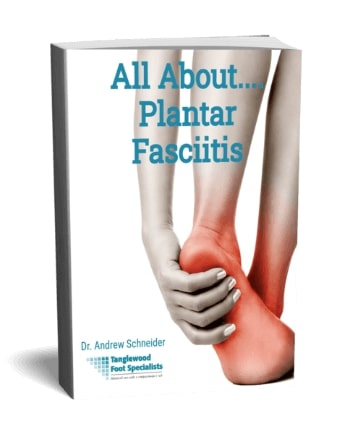
The plantar fascia is the thick band of connective tissue running along the bottom of your foot from your heel bone to  your toes — your foot's built-in shock absorber. Plantar fasciitis is inflammation and micro-tearing of that tissue, typically right at the heel attachment, when it breaks down faster than it can repair. It affects somewhere between 7 and 10 percent of the population over a lifetime — which is why I see it in my practice almost every single day.
Here's what most people don't realize: that searing pain when you first step out of bed isn't the injury happening — it's your body's repair work getting torn apart. During rest, your plantar fascia contracts and begins healing. The moment you stand, you pull that overnight repair apart. That's the clinical phenomenon called post-static dyskinesia, and it's the defining feature of this condition — the reason your worst pain comes in those first few steps, not at mile three of your run.
The deeper problem is blood supply. The plantar fascia has relatively poor circulation compared to muscle tissue, which means healing is slow even under ideal conditions. Your body started the repair job — but without adequate resources, the crew stalled out mid-project. That's not a metaphor. That's the actual biology of why this condition becomes so stubborn for so many people.
Why Plantar Fasciitis Becomes Chronic
 Most cases of plantar fasciitis don't become chronic because of bad luck. They become chronic because the root cause never gets addressed. And the most common root cause I see in my Houston practice is tight calf muscles — a condition called equinus — that most people have never heard of and no one has ever checked for.
Think of your body like a puppet on strings. Your plantar fascia isn't working in isolation — it's connected through your Achilles tendon all the way up through your calf, your hips, your mid-back. When your calf is tight, it pulls constantly on the Achilles, which transfers that tension directly into the heel insertion of the fascia. Every single step re-injures tissue that's trying to heal. You can stretch your arch, ice your heel, and wear a night splint — and still make no progress — because the problem is coming from above.
The other reason cases drag on is what I call the activity trap. You rest, the pain quiets, you assume you're healing, you resume activity — and within a few days it's back. Rest reduces the pain signal. It doesn't repair the tissue.
And if there's a structural driver like equinus that hasn't been dealt with, the cycle repeats indefinitely. I see people who've been in that loop for a year, sometimes two, before they come see me. For running injuries especially, this pattern is almost universal — because runners are the most motivated to return to activity before the underlying problem is solved.
I hear this constantly: "I just need to rest it longer." But in cases that have already been going on for three months or more, rest isn't the solution — because the underlying problem isn't activity. It's a tissue that's stuck in a failed healing response. The construction crew started the job. More waiting doesn't resupply them.
How Houston Podiatrist Dr. Andrew Schneider Treats Plantar Fasciitis
I've been treating plantar fasciitis in my Houston practice for over 25 years. My goal has never been to manage your symptoms — it's to get you back to doing what you want to do without thinking about your feet. That means finding the actual reason your fascia isn't healing, not just quieting the pain signal temporarily. And for most patients, that starts with some changes that don't require a single office visit.
Lifestyle and Footwear
The most damage in plantar fasciitis cases often accumulates between visits, not during them — and the single biggest culprit is going barefoot on Houston's hard tile and hardwood floors. Supportive shoes from the moment your feet hit the floor in the morning isn't optional; it's the foundation everything else is built on. That means real shoes — not worn-out sneakers, not flat slippers, not flip-flops.
If you're a runner at Memorial Park or training for a Houston triathlon, I'm not going to tell you to stop — but I will help you manage your load intelligently with cross-training substitutions that keep your conditioning up without repeating the exact stress pattern that's tearing the fascia. Footwear changes alone can reduce morning pain by 20–30% within two weeks. If you're not seeing that, or if you came in already past the six-week mark, we need to move further down the treatment path.
At-Home Care That Actually Works
Rolling a frozen water bottle under your arch for 20 minutes twice a day is one of the most underrated tools in early-stage management. Pair that with a sequential morning stretch — mid-back, hip flexors, calf, then plantar fascia, 20 seconds each — before your feet ever hit the floor. A night splint worn while you sleep prevents the overnight contraction that sets up that searing first-step pain. For insoles, if you're buying OTC, firm and contoured only — soft foam insoles feel comfortable and do almost nothing to offload the fascia.
Here's the honest assessment on what doesn't work: heat increases inflammation. NSAIDs blunt the pain signal but don't repair tissue. And aggressive morning stretching on a contracted, partially-healed fascia causes new micro-tears — the opposite of what you need. At-home care is the right starting point for cases under four to six weeks. For anything chronic, it becomes maintenance, not a cure.
Conservative In-Office Care
When at-home care isn't enough, custom orthotics are usually my first move — $700 cash. I take a full biomechanical  evaluation and gait analysis, then have orthotics fabricated specifically to redistribute load away from your fascia insertion point, accounting for your individual mechanics. Think of them like eyeglasses for your feet: precision compensation for the way your body actually works, not a generic arch pad from a pharmacy shelf. You'll typically notice significant pain reduction within four to six weeks of consistent wear.
A cortisone injection at $120 cash has a specific role — and it's not what most people think. Cortisone is a reset, not a cure. Used once, strategically, it can break an acute pain cycle enough that stretching and orthotics can actually do their work. What it won't do is repair damaged tissue.
Repeated cortisone injections weaken the fascia over time, trading short-term relief for a long-term problem. If someone recommends a third or fourth cortisone shot, that's the point to ask a harder question about what's actually being treated. Physical therapy referral rounds out this level — guided eccentric loading, manual therapy targeting the full kinetic chain — and it's most effective when the calf, hip flexors, and mid-back are addressed alongside the foot, not just the arch in isolation.
Regenerative Medicine — The Third Option
Here's where my practice is different from most of what you've experienced before. If your plantar fasciitis has been going on for three months or more, conservative care alone is unlikely to break the cycle. The problem at that point isn't inflammation — it's a failed healing response. The tissue is stuck. What I use to unstick it is regenerative medicine.
Shockwave therapy runs $300 per session, or $750 for the three-session package I use for most plantar fasciitis cases. Think of it like aerating a compacted lawn — acoustic pressure waves create microchannels in scarred, thickened fascia, restoring blood flow to tissue that was effectively cut off from your body's healing system. Sessions are 10–15 minutes, once weekly for three weeks. I use shockwave therapy on my own heel pain. More than 82% of patients report pain resolution after a full course.
PRP injection — $850 cash — takes a different approach. I draw a small amount of blood from your arm, process it in a centrifuge to concentrate your own growth factors, and deliver it directly to the damaged tissue under ultrasound guidance. PRP is liquid gold for healing — it gives the stalled construction crew the materials they needed all along.
Some soreness 24–48 hours afterward is normal and a sign it's working. Most people notice meaningful improvement within 2–4 weeks, with full results developing over 3–6 months. Success rate in chronic cases: 70–80%.
For the most stubborn, treatment-resistant cases, I use a combined regenerative medicine protocol — PRP followed by shockwave — at approximately $1,600. PRP first to seed the growth factors, then three shockwave sessions to activate and amplify them. Seeds and soil. The combined success rate runs 85–95%, and this protocol has helped people who were told surgery was their only remaining option.
Red light therapy at $39 per session ($180 for a six-session package) works well as an adjunct — reducing pain and inflammation between sessions while the primary regenerative protocol does its deeper work. Most insurance plans don't cover PRP or shockwave; FSA and HSA funds typically can be applied, and for most people these costs compare favorably to the cumulative cost of repeat PT co-pays, multiple cortisone shots, and eventual surgical consultation.
Surgery — When It's Truly Necessary
Look, I know foot surgery sounds scary. But here's the thing: 95% of plantar fasciitis cases resolve without it. If you're reading this, the overwhelming odds say we'll fix this long before we're anywhere near an operating room.
When surgery is genuinely necessary — typically only after 6–12 months of structured treatment without adequate response — the options are plantar fascia release (a partial incision at the heel attachment to relieve chronic tension), the Tenex procedure (a minimally invasive, ultrasound-guided needle disruption of damaged tissue), or gastrocnemius recession when severe equinus is the primary driver.
Recovery follows a clear timeline: protected weight-bearing in a surgical boot through week two, gradual transition out of the boot by weeks three through six, return to low-impact exercise by month two, and clearance for running and high-impact activity at three months pending PT progress. More than 90% of people who reach plantar fascia release report significant pain relief and full return to activity. But again — we almost never get there.
You Don't Have to Keep Living With This
If your heel pain has been hanging around for more than a few weeks, it's time to find out exactly what's driving it — and what we can do to fix it. Schedule Your Evaluation
What to Expect at Your First Visit
When you come in, I'll start by asking you something that might surprise you: not just where it hurts, but what you want to get back to doing. Because treating your heel without understanding your goals would mean I'm just managing a symptom, not solving your problem. Whether it's running Memorial Park on Saturday mornings, standing through a full shift at the Texas Medical Center, or just getting through your morning without bracing for that first step — that's what we're actually working toward.
From there, I'll do a full biomechanical evaluation — your foot structure, arch profile, and gait analysis. I'll assess calf flexibility, hip mechanics, and check for leg length discrepancy, because as we talked about earlier, the source of your plantar fasciitis is often above your foot, not in it. If I need to measure the actual thickness of your fascia or identify any tears or calcifications, I'll use diagnostic ultrasound right in the office. X-rays rule out a stress fracture and let me assess for a heel spur — and I'll give you an honest explanation of what that spur means and what it doesn't, which is different from what most patients have been told.
I won't judge you for whatever you've tried before. I won't tell you the last cortisone injection was a mistake — sometimes it buys time, and time matters. What I will do is give you an honest assessment of where your case stands and which level of treatment makes the most sense to start.
You'll leave your first appointment with a clear plan and a realistic timeline. The uncertainty is usually the hardest part of living with this condition — and that goes away in the first visit. If you're ready to get started, you can schedule an appointment online or call my Houston office directly.
The Bottom Line on Plantar Fasciitis
Heel pain has a way of changing everything — the way you move through your morning, the workouts you skip, the standing events you dread. I see it every day. What I also see is that plantar fasciitis is genuinely fixable — in most cases without surgery, and faster than most people expect once the right approach is in place.
Either way, I need to see you. Whether you've been dealing with this for two weeks or two years, there's a specific reason your fascia isn't healing — and once we know what it is, we can build a plan around it. The uncertainty is the hardest part. Let's get rid of it.
Contact Houston podiatrist Dr. Andrew Schneider at 713-785-7881 or request your appointment online. Your heels have been patient long enough.
How Long Does Plantar Fasciitis Actually Last?
The honest answer depends almost entirely on what you do about it — and when. A landmark long-term study tracking 174 patients for up to 15 years found that in severe cases, half still had symptoms at the five-year mark.<sup>1</sup> That's not a worst-case outlier. That's what passive waiting produces for a significant portion of patients.
For acute cases — those under six weeks — if you come in early and follow a structured treatment protocol, you'll typically see meaningful improvement within 6–8 weeks. The tissue hasn't had time to enter a true failed healing response, so conservative care can often break the cycle before it becomes entrenched.
If you're in the subacute range — six weeks to three months — you're still very treatable with conservative in-office care. The timeline usually extends to 8–12 weeks with custom orthotics and targeted physical therapy, especially when calf tightness gets addressed alongside the foot.
Chronic cases — anything past three months — are the people I see most often in my Tanglewood office. Someone who's been suffering for six months, a year, sometimes two years, having tried everything the internet and a few urgent care visits recommended. Without regenerative intervention, recovery measured in months is common; recovery measured in years is not unusual.
How long does your plantar fasciitis last? In my experience, it lasts exactly as long as the underlying cause goes unaddressed. Catch it early with the right treatment, and you can be pain-free in 6–8 weeks. Let it become chronic, and you're looking at a fundamentally different problem — one that requires a fundamentally different solution.
The Truth About Heel Spurs
Every week, someone comes in convinced they need surgery because of a heel spur on their X-ray. I actually find that reassuring — because it tells me we're dealing with plantar fasciitis, not something more serious. The spur doesn't need to come out. The tissue underneath it needs to heal.
Here's why the confusion is so widespread: a heel spur forms because of plantar fasciitis, not the other way around. When the plantar fascia pulls chronically on the heel bone, the bone responds by depositing calcium in the direction of that stress — a well-documented process called Wolff's Law. The spur is a record of the tension your fascia has been under, not the source of your pain. Less than 5% of heel spurs ever require surgical removal.<sup>2</sup> When an X-ray shows a visible structural abnormality, it feels like the obvious culprit — but treating the spur while ignoring the fascia is like replacing a smoke detector battery while the house is on fire.
Preventing Plantar Fasciitis From Coming Back
Plantar fasciitis has a documented recurrence rate, and it's highest in runners and anyone who spends long hours on their feet. The mechanics that created it in the first place don't disappear when the pain does — which is why maintenance isn't optional.
Custom orthotics are ongoing support, not a short-term fix. Think of the eyeglasses parallel again: you don't stop wearing glasses when your vision improves because you're wearing them. The sequential morning stretch — mid-back, hip flexors, calf, then plantar fascia, 20 seconds each — is a lifetime habit, not a treatment phase. And replace your running shoes every 400–500 miles. A compressed midsole offers zero fascia protection regardless of how the uppers look.
One thing that sets Houston apart from most American cities: you can run, train, and be outdoors year-round. That's a genuine advantage — and it's also why I see more chronic, undertreated plantar fasciitis here than I would in a city with a true off-season. Memorial Park runners, Galleria walkers, people who spend eight hours a day on hard floors at the Texas Medical Center — the load on your feet never gets a natural rest period. For anyone managing sports-related foot stress, that year-round activity calendar makes consistent prevention work non-negotiable.