Why Does Your Heel Hurt? Understanding What's Actually Going On
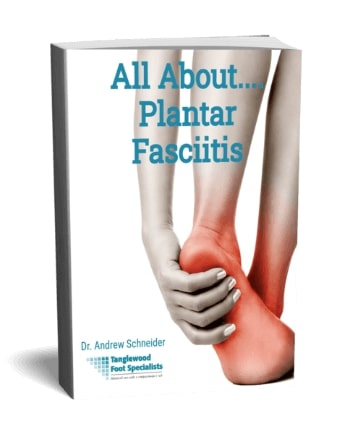
Heel pain most commonly results from plantar fasciitis — inflammation and micro-tearing of the plantar fascia, the thick  band of tissue connecting your heel bone to your toes. It can also stem from Achilles tendinitis, heel spurs, or stress fractures. The cause determines whether ice, heat, or neither is the right choice.
Here's what most people don't realize about the plantar fascia: it's not a muscle. It's dense, collagen-rich connective tissue — more like a tendon than anything else. And unlike muscle, it has relatively poor blood supply. That's the whole reason plantar fasciitis becomes such a stubborn, chronic condition. Your body keeps trying to repair those micro-tears, but without strong blood flow, the healing crew can't finish the job. A 2013 anatomy study published in the Journal of Anatomy confirmed the plantar fascia's limited vascularity — which is exactly why this condition so reliably refuses to heal on its own.
Think of it like a construction crew on a job site. The micro-tear happens, your body sends the crew to fix it, and they get started. But because blood supply is limited and you're back on your feet every day loading that same tissue, the crew keeps getting pulled off the job before the work is done. Ice doesn't send them back. Heat doesn't either. That's why the same pain greets you every single morning — and why what you do at night with a heating pad or an ice pack matters more than you'd think.
The acute versus chronic distinction is the hinge the entire ice-versus-heat decision turns on. Acute pain — the first 72 hours, or any flare following activity — behaves differently than chronic, months-long heel pain. Knowing which one you're dealing with is the first thing I sort out with everyone who walks through my door.
The Truth About Ice and Heat: What Each Actually Does
Ice works through a process called vasoconstriction. When cold hits the tissue around your heel, blood vessels tighten  and narrow. Less blood flow means less inflammation, less swelling, and a numbing effect on the nerve endings firing that sharp pain. That's why ice works fast — it's essentially turning down the volume on your body's alarm system while the underlying problem is still there.
Heat does the opposite. It causes vasodilation — your blood vessels open wide and flood the area with circulation. That increased blood flow relaxes tight tissue and can feel genuinely wonderful. The problem is timing. If you apply heat to a heel that's still actively inflamed, you're dilating vessels into tissue that's already engorged. It feels soothing for a few minutes, the way scratching a bug bite feels satisfying — and then it's worse than before.
The rule I give everyone: when in doubt, reach for ice. There's no scenario where ice makes acute heel pain worse. Heat during an active flare? I've seen that backfire hundreds of times.
Once you're past that first 72-hour window and the acute swelling has settled, contrast therapy becomes your best at-home tool. That's alternating cold and warmth — one minute cold, three minutes warm, cycling for 15 to 20 minutes total. The back-and-forth vasoconstriction and vasodilation creates a pumping effect that moves circulation in and out of the tissue more effectively than either alone. A 2016 peer-reviewed study published in the Journal of Foot and Ankle Research found contrast therapy beneficial for managing heel pain. It's one of the most underused tools I know.
The Biggest Mistakes Houston Heel Pain Patients Make
After treating thousands of people with heel pain, I can tell you the most common story I hear: "I've been icing it every night for three months and it's not getting better." That sentence tells me everything. Ice is a symptom manager. It does nothing to repair damaged fascial tissue or address the biomechanical reason the fascia keeps tearing. Pain relief and healing progress are not the same thing.
Mistake number one is reaching for heat first, almost by instinct. Warmth feels soothing — your body is wired that way. But during an acute flare, you're adding vasodilation to already-inflamed tissue. It's counterproductive, and I see it delay recovery by weeks.
Mistake number two is expecting ice to be the cure. If your pain returns every single morning after months of consistent icing, that's not a sign you need more ice. That's a failed healing response — your tissue is stuck in a loop of micro-damage and incomplete repair that no amount of cold will break. That's your body telling you it needs clinical help, not another night with a bag of frozen peas.
Mistake number three is simpler but worth saying out loud: never apply ice or heat directly to skin. Always buffer with a cloth or towel. And never — not ever — fall asleep with a heating pad on your foot. Burns and frostbite are real risks I've treated in this office. Twenty minutes on, forty off. Always buffered. No exceptions.
How a Houston Podiatrist Treats Heel Pain When Ice and Heat Aren't Enough
I want to be direct with you about something. Ice and heat are valuable tools — I use them myself and I recommend them to every patient. But they're tools for managing pain while your body heals, not tools that make healing happen. If you've been dealing with this for more than a few weeks, you've probably already figured that out. So let's talk about what actually fixes it.
Level 1: Start Here — Lifestyle Changes
The single most important thing you can do before your first appointment is change what's on your feet. From the moment you get out of bed in the morning, your plantar fascia is under load — and if your first steps are barefoot on hardwood or tile, you're tearing apart whatever overnight healing your body managed. Get supportive shoes within reach of your bed. Not slippers. Not flip flops. Something with real structure and cushioning. I won't judge you on any of this — my job is to help you understand what's loading your plantar fascia, not to lecture you about it.
Reduce high-impact activity during flare-ups. That doesn't mean stop moving — swap running for swimming or cycling temporarily so the tissue gets a chance to recover. Watch your body weight if that's a factor, because every extra pound translates directly into more stress on the fascia. Anti-inflammatory foods and fish oil won't cure plantar fasciitis, but they can ease the background inflammation that makes healing harder. If you make these changes consistently for three to four weeks and nothing shifts, it's time to move on.
Level 2: At-Home Care Protocol
Follow the ice and heat protocol we discussed — 20 minutes of ice on, 40 off, always buffered, especially after activity. The frozen water bottle trick is one of my favorites: fill a standard water bottle, freeze it, and roll the arch of your foot over it for 15 minutes while you work. Houston runners training on Memorial Park trails should keep one in a cooler in the car for post-run treatment on the drive home.
Build in a morning stretch routine before your first step. Stretch your calves, your hip flexors, and the plantar fascia itself — a simple towel stretch where you pull your toes toward your shin for 30 seconds does the job. A night splint is worth adding if your morning pain is severe. It keeps your foot in a dorsiflexed position while you sleep, so the fascia doesn't contract overnight and get torn apart again at that first step. Plan on two to four weeks before you notice a real difference. If you plateau at 40 to 60% improvement and the pain keeps returning every morning, you need clinical care — not more time with a water bottle.
Level 3: Conservative In-Office Treatment
The first thing I look at is the biomechanical cause. Heel pain doesn't happen in isolation — something about the way  you're loading your foot is creating repeated stress on the fascia. Custom orthotics that address your specific mechanics are the most durable conservative solution I have. Think of them like eyeglasses for your feet: while you're wearing them, they're compensating for your mechanics. The moment you take them off, that compensation goes with them — which is why you need to wear them consistently. At $700, they're not cheap, but they're a one-time investment that many people use for years.
A cortisone injection ($120) is often the fastest way to get pain under control. It's a fire extinguisher, not a construction crew — it puts out the immediate inflammatory flare so you can function and start rehabilitation. But I'm honest with you about the limits: cortisone doesn't repair tissue. It typically provides four to eight weeks of relief, and I'll do no more than two or three total before switching to something with real healing potential. If cortisone gives you six weeks of relief and then the pain comes back, that's your body telling you it needs repair, not more suppression.
I'll also use strapping and taping to mechanically offload the fascia between visits. It's not glamorous, but it bridges the gap well while we're building your longer-term plan. Physical therapy — targeted stretching, strengthening, and gait work — rounds this level out for many people.
Level 4: Advanced Regenerative Medicine — The Third Option
Here's what most people don't realize: between conservative care and surgery, there's an entire category of treatment that most patients have never heard of. I call it The Third Option — regenerative medicine. And what's exciting is that we now have treatments that almost make surgery obsolete for chronic plantar fasciitis.
Shockwave therapy ($300 per session, or $750 for a package of three) is what I reach for first. Think of it like aerating a  lawn — the acoustic waves create small channels in compacted, scarred tissue, letting blood flow and healing factors penetrate deeply. Sessions run about 10 to 15 minutes. There's a tapping sensation, and mild discomfort during treatment actually means we're hitting the right spot. I use shockwave on my own heel. A randomized controlled trial published in the Journal of Foot and Ankle Surgery found it produced significant pain reduction at 12-week follow-up, and what I see in practice mirrors that — more than 82% of people report meaningful relief after the full protocol.
PRP — platelet-rich plasma therapy ($850) takes it further. We draw a small amount of blood from your arm, spin it in a centrifuge to concentrate the growth factors, and inject that liquid back into the damaged tissue under ultrasound guidance. PRP is liquid gold for healing — it delivers the signaling proteins that tell your body to stop stalling and actually repair the damage. For chronic tendon and fascial problems, about 70 to 80% of people see significant improvement. A 2014 systematic review in Foot & Ankle International found PRP superior to corticosteroid injection for long-term outcomes — especially for people who'd already been through conservative care without lasting relief.
When I combine the two — PRP first, then shockwave — the results are the best I see in my practice. Seeds and soil: PRP provides the seeds, shockwave prepares the soil. Combined success rates run 85 to 95% for chronic cases. Most people start noticing improvement within two to four weeks, with the full benefit at three to six months. Neither treatment is covered by most insurance plans, but both are FSA/HSA eligible. When you factor in the cost of repeated cortisone, ongoing physical therapy, and eventual surgery, the math often favors going regenerative sooner.
For an entry-level regenerative option, red light therapy ($39 per session, $180 for a package of six) works well as a standalone for milder cases or as a complement to shockwave or PRP.
Level 5: Surgery — The 5%
Look, I know foot surgery sounds scary. But here's what I tell everyone who comes in convinced they're going to need an operation: 95% of the people I treat for heel pain never need surgery. Nine out of ten go home with a non-surgical plan that works.
For the small percentage who do need surgical intervention, modern techniques have changed the picture. The Tenex procedure is minimally invasive — done through an opening smaller than a pencil eraser, under local anesthesia, right here in my office. No general anesthesia, no hospital stay. Most people are back in normal shoes within one to two weeks. Traditional foot surgery for plantar fasciitis — a full plantar fascia release — requires a longer recovery of six to eight weeks back to activity, but carries a 90%+ satisfaction rate when correctly indicated. Surgery isn't a first resort. It's what we do when everything else has been genuinely tried and the tissue still isn't healing.
I find that people put off coming in because they're afraid I'll say they need surgery. I almost never do. Don't let that fear keep you in pain longer than it has to.
Your heel pain has a solution. Let's find yours.
SCHEDULE YOUR APPOINTMENT TODAY →
What to Expect When You Come Into My Houston Podiatry Office
When you come in, I'll start with a conversation — not just about your heel, but about your life. How long has this been going on? What does your typical day look like? What have you already tried? I ask because heel pain doesn't have one cause, and the right plan for a teacher on her feet six hours a day looks different from the right plan for a runner logging 30 miles a week. I need to understand your situation before I can recommend anything useful.
From there, I'll do a weight-bearing assessment and watch you walk. Gait evaluation tells me things a static exam can't — I can see where your foot is collapsing, where load is landing on the fascia, and what's happening upstream in your ankle, knee, and hip. I'll palpate the plantar fascia to locate the specific area of damage, test your range of motion, and if I need to rule out a stress fracture or visualize a heel spur, we have digital X-ray on-site. When I want to see the fascia itself — its thickness, whether there's tearing, how inflamed the tissue is — I use diagnostic ultrasound. I can show you what I'm seeing in real time, right there in the exam room. No mystery.
By the end of that first visit, you'll leave with a clear diagnosis and a specific plan — not "let's see how it goes." Most people start feeling real improvement within one to two weeks of beginning treatment. I find that people put off coming in because they're afraid I'll tell them they need surgery. I almost never do. What I tell them instead is what we covered earlier: 95% of cases resolve without it. Come in, let me take a look, and we'll figure out exactly where you are in that 95%. Dr. Andrew Schneider sees patients at Tanglewood Foot Specialists in Houston — schedule an appointment and let's get your mornings back.