What Is Plantar Fasciitis?
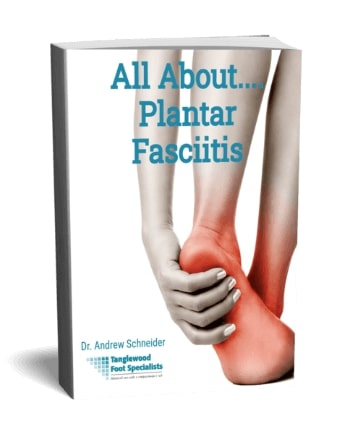
The plantar fascia is that thick band of tissue that runs along the bottom of your foot from your heel to your toes. When  it becomes damaged and inflamed, it causes that stabbing pain you feel—especially first thing in the morning. The medical term for this morning pain is post-static dyskinesia, but what matters is understanding why it happens.
Here's what's actually happening. During periods of inactivity—like when you're sleeping—the ligament starts to heal itself. This causes the plantar fascia to contract. When you step out of bed, it takes all that repair work your body did overnight and pulls it apart. That's what causes that searing pain with your first steps.
The problem is that plantar fascia has relatively poor blood supply. This is why plantar fasciitis can be such a chronic, stubborn condition.³ Without good circulation to the area, your body struggles to complete the healing process. It's like having a construction crew that started a job but never finished it—the tissue remains stuck in chronic inflammation without progressing to true repair.
Many people who suffer with heel pain assume they have a heel spur. Some do and some don't. But even if you have a heel spur, it's usually not the actual cause of your pain—it's a result of the chronic tension on the bone.
Why Your Plantar Fasciitis Exercises Aren't Working
If you've been doing exercises consistently for weeks without improvement, you're probably wondering what you're doing wrong. Here's the answer: the problem isn't your effort—it's the approach.
Problem #1: The Timing Is Wrong
Most exercise advice tells you to "stretch first thing in the morning." This sounds logical, but it's actually when your plantar fascia is most vulnerable. When you first wake up, your plantar fascia is already in a shortened position from healing overnight. Forcing it to stretch immediately can cause micro-tears in the tissue—you're literally pulling apart the repair work your body just completed.
Think about it this way: if you had a cut on your arm that was trying to heal, you wouldn't pull the edges apart every morning. But that's essentially what aggressive morning stretching does to your plantar fascia.
Problem #2: You're Only Treating the Foot
Here's what most people don't realize: your plantar fascia isn't working in isolation. It's part of a complex kinetic chain that starts in your mid-back and runs all the way to your toes.⁴
Think of your body like a puppet on strings. When one string gets tighter or twisted, it affects everything below it. When your mid-back is stiff, it changes how your hips move. When your hips don't move properly, it puts extra stress on your calf muscles. And when your calf muscles get tight, they pull on your plantar fascia, creating that intense heel pain.
This is why calf stretches alone don't fix it. You're treating a symptom, not the cause. If your hip flexors are tight and your mid-back is stiff, you're never addressing the real problem pulling on your plantar fascia. If you're also dealing with Achilles tendon pain, this kinetic chain becomes even more critical to address.
Problem #3: The Exercises Don't Address Poor Blood Supply
The plantar fascia has relatively poor blood supply compared to other tissues in your body. That's the real reason plantar fasciitis becomes chronic—without adequate blood flow, the healing process stalls out.
Simple stretching doesn't significantly increase blood flow to the damaged tissue. It might provide temporary relief by loosening tight muscles elsewhere in the chain, but it's not giving your body what it needs to actually repair the plantar fascia. This is why some people need more advanced treatments like shockwave therapy or PRP—these options specifically target the failed healing response by stimulating blood flow and triggering tissue regeneration.
In my Houston podiatry practice, I see people who've been stretching religiously for months without improvement. They often feel frustrated and defeated. But here's what I tell them: if exercises haven't improved your pain by week 4, it's not because you're doing something wrong—it's because your body needs more than just exercises to fix this.
The 60-Second Morning Sequence That Actually Works
So if aggressive morning stretching makes things worse, what should you do instead? The answer is a specific sequence that addresses the entire kinetic chain BEFORE your feet hit the floor.
⏰ TIMING IS EVERYTHING
Do this sequence BEFORE you stand up. Not after your shower. Not after coffee. Before you get out of bed. This prevents the "tearing apart repair work" problem and prepares your tissues for weight-bearing.
Why This Sequence Works
This approach is different because it addresses the kinetic chain in the right order, starting at the top (your mid-back) and working down to your foot. By releasing tension at each level before you put weight on your feet, you're preventing the cascade of stress that pulls on your plantar fascia.
We'll spend 20 seconds on each area, but the sequence is crucial. You can't skip steps or reverse the order—the releases must happen from top to bottom to be effective.
Step 1: Mid-Back Release (20 seconds)
While lying in bed, place a small ball or rolled towel behind your spine, right between your shoulder blades. Slowly rock up and down, letting the ball gently massage your thoracic spine. You should feel mild pressure, not pain. This releases the top of the kinetic chain—the first string on the puppet.
Step 2: Hip Flexor Release (20 seconds)
Sit at the edge of your bed or move into a gentle lunge position. Keep your back straight—this is key. You should feel a stretch in the front of your hip, not in your back. This prevents your hips from compensating and putting extra stress on your calves.
Step 3: Calf Release (20 seconds)
Place your affected leg behind you with your back straight. Gently lean forward while keeping your heel down. No bouncing or forcing—the key is gentle, controlled movement. You should feel a stretch in your upper calf, not behind your knee. This directly releases tension on your plantar fascia.
The key principle here is gentleness. If it hurts, you're doing it wrong. These should feel like a mild stretch, not a painful pull. I use this exact sequence myself—when I experienced plantar fasciitis firsthand (imagine my surprise when I stepped out of bed one morning and it felt like an ice pick entered my heel), this was the first thing I did every morning.
I know 60 seconds sounds too simple. But after treating thousands of people with this condition, I've found that this sequence—done consistently, before you stand—works better than 20 minutes of random stretching after you're already up and moving.
What NOT to Do
❌ Don't stretch aggressively first thing in the morning
❌ Don't only stretch your foot and calf while ignoring the chain
❌ Don't use heat instead of ice (heat increases inflammation)
❌ Don't stretch through pain
❌ Don't wear unsupportive shoes around the house—those comfortable old slippers are actually making your condition worse
When Exercises Alone Aren't Enough: Houston Podiatrist Treatment Options
I find that people are reluctant to come into the office with heel pain. This is because of the fear that they'll need surgery to correct it. I can tell you that 95% of cases are managed without any surgery.²
In my Houston podiatry practice, I use a progression approach—we always start with the least invasive options and only move to more advanced treatments when necessary. In most medical offices, doctors are trained to think in terms of medicate or operate. If medication doesn't work, the next step is surgery. But what if there's a third option that most doctors never mentioned? That's where regenerative medicine comes in.
Conservative In-Office Treatment
If you've been consistent with the 60-second sequence and supportive footwear for 4-6 weeks without significant improvement, it's time to address the underlying mechanics.
Custom Orthotics: Addressing the Mechanics
 Think of custom orthotics like eyeglasses for your feet. While I'm wearing my glasses, I can see. When I take them off, I can't. In this same way, a custom orthotic compensates for your lower extremity mechanics while you're wearing them. They don't, however, provide a lasting correction if you stop wearing them.
What they do is address the biomechanical forces causing stress on your plantar fascia. They redistribute pressure away from the painful area and work with your exercises to prevent recurrence. When combined with exercises, about 65-75% of people find significant relief within 4-6 weeks.⁵
Custom orthotics cost $700 for your first pair, $350 for an additional pair. If you're looking for a temporary option while you decide, medical-grade insoles like RediThotics, Powerstep, or Superfeet ($40-60) are better than drugstore inserts, but they're not addressing YOUR specific mechanics.
Anti-Inflammatory Interventions
Sometimes we need to control inflammation quickly while the orthotics and exercises work on the underlying problem. I used a corticosterone injection myself as part of my plantar fasciitis treatment. It provides relief within 24-48 hours and typically lasts 6-12 weeks.
Here's the honest limitation: cortisone reduces inflammation, which makes you feel better temporarily, but it doesn't provide the materials your body needs to actually repair the damaged tissue. That's why I also used Tosallin CBD/CBG cream as part of my personal protocol. After applying three pumps of cream on my heel and rubbing it in well, I found pain relief in less than five minutes. Doing this three times a day for three days essentially took my heel pain away for good. The key is the transdermal delivery system—it actually penetrates to where the inflammation is.
Night splints keep your fascia in a gentle stretch overnight, and about 40-50% of people find them helpful. The challenge is they're uncomfortable to sleep in, so compliance can be difficult.
When to Move to Advanced Treatment
If your pain persists after 8-12 weeks of orthotics and exercises, if you've had multiple cortisone injections with diminishing returns, or if your morning pain is still 6/10 or higher despite doing everything right, it's time to consider the third option.
Advanced Regenerative Medicine: The Third Option
This is where Tanglewood Foot Specialists differs from most podiatry practices. We offer regenerative medicine options that address the root problem: your body's stalled healing response.
Shockwave Therapy: Restarting the Healing Process
Think of shockwave therapy like aerating a lawn. By creating small channels in compacted soil, you allow water, air, and  nutrients to penetrate more deeply, resulting in healthier growth. Similarly, shockwave therapy creates pathways for healing factors to reach damaged tissue.
It works through four mechanisms: it stimulates blood flow to an area with poor circulation, breaks up scar tissue and calcifications, triggers the release of growth factors and stem cells, and creates controlled microtrauma that restarts your failed healing response. I use shockwave therapy to treat my own heel pain—it's that effective.
Sessions take 10-15 minutes, once weekly for three weeks. You'll feel a tapping sensation, maybe mild discomfort (about 4-5 out of 10), but there's no downtime and no anesthesia needed. More than 80%—specifically 82%—of people find their pain resolved after the full treatment.⁶ It almost makes surgery obsolete.
The cost is $300 per session or $750 for a package of three. You typically begin seeing improvement in 2-4 weeks, with continued improvement over 3-6 months.
PRP Therapy: Liquid Gold for Healing
PRP therapy uses concentrated platelets from your own blood. We draw blood, spin it in a centrifuge to concentrate the platelets, then inject those growth factors precisely into the damaged tissue. We may use ultrasound guidance to ensure perfect placement.
Unlike cortisone, which just masks inflammation, PRP provides the actual materials your body needs to repair damaged tissue. It's not about temporary relief—it's about regeneration. About 70-80% of people see significant improvement,⁷ though it takes 2-4 weeks to begin and 3-6 months for full benefit. The cost is $850.
The Combined Approach: Optimal Results
Here's where it gets really exciting. PRP provides the seeds—the growth factors and signaling proteins that tell your body to repair damaged tissue. Shockwave therapy prepares the soil and creates optimal growth conditions. Together, they create a powerful healing environment that can succeed where other treatments have failed.
The combined success rate is 85-95%.⁸ The protocol is simple: PRP injection first to deliver concentrated healing factors, then shockwave treatments begin within a few days, once weekly for three weeks. The combined investment is about $1,600.
Now, I know that sounds expensive. Currently, most insurance plans don't cover PRP or shockwave therapy. But when you compare it to months of physical therapy co-pays ($40-80 per session, 12-24 sessions = $480-1,920) or surgery ($5,000-15,000 plus recovery time), many people find it's more cost-effective than treatments that don't address the root problem.
Surgery: Only 5% Need This
Look, I know that foot surgery sounds scary. But here's what you need to know: only about 5% of people with plantar fasciitis ever need surgery.² And if you're in that 5%, modern surgical techniques are much less invasive than they used to be.
Surgery becomes necessary when you've had 9-12 months of comprehensive conservative treatment without improvement, when there's a complete fascia tear or severe structural abnormality, or when your quality of life is severely impacted.
The two main options are plantar fascia release (partial cutting to reduce tension) and the Tenex procedure (minimally invasive, ultrasound-guided removal of damaged tissue). Recovery takes 3-4 months: surgical boot with minimal weight-bearing for week 1, stitches out at week 2 with gradual weight-bearing beginning, progressive activity with transition out of boot during weeks 3-6, return to low-impact exercise at 6-8 weeks, and full recovery including high-impact activities around month 4.
The success rate is 85-90% for significant improvement. Surgery isn't a quick fix—it's a 3-4 month recovery commitment. But if we've tried everything else and you're still suffering, don't let fear hold you back from fixing the problem. Most of my surgical patients wish they'd done it sooner.
Treatment Summary
| Treatment Level | Timeline | Success Rate | Cost | Best For |
|---|
| Exercises alone | 4-6 weeks | 30-40% | Free | Mild cases, early intervention |
| Orthotics + exercises | 8-12 weeks | 65-75% | $700 | Biomechanical issues |
| Shockwave therapy | 3-6 months | 82% | $750 | Chronic cases, stalled healing |
| PRP therapy | 3-6 months | 70-80% | $850 | Tissue damage, active patients |
| Combined (Shockwave + PRP) | 3-6 months | 85-95% | $1,600 | Best results, comprehensive |
| Surgery | 3-4 months recovery | 85-90% | $5,000-15,000 | Only 5% need this |
If you've been dealing with heel pain for more than two weeks without improvement—or if it's getting worse—it's time to get it checked out. Call us at 713-785-7881 or request an appointment online. The sooner we figure out what's going on, the faster we can fix it.
REQUEST YOUR APPOINTMENT
What to Expect When You Come In
When you come in to our Houston office, I'll start by listening. I want to understand not just where it hurts, but what you're trying to get back to doing. Running? Playing with your kids? Just walking without pain? I listen to learn what your goals are—this way I better understand your needs and how to help you get there.
The exam takes about 30-45 minutes total. First, we'll spend 5-10 minutes discussing your history—how long you've had symptoms, what you've already tried, and what activities are affected. Then I'll do a physical exam for about 10 minutes, feeling to find the exact pain location, checking your range of motion, watching how you walk to spot biomechanical issues, and checking for tightness in the entire kinetic chain from your hips through your calves.
If needed, we'll take X-rays to rule out heel spurs, stress fractures, or bone abnormalities. Many people worry they have a heel spur. Some do, some don't. But even if you have one, it's usually not the actual cause of your pain—it's a result of the chronic tension on the bone.
Here's what I appreciate about working with my patients: I won't judge you if you want to start conservatively with exercises and orthotics. And I won't judge you if you've been suffering for months and want to jump straight to shockwave therapy. Either way, I need to see you so we can figure out the best path forward.
My goal isn't to sell you the most expensive treatment. It's to find what actually works for YOUR situation and YOUR goals. Some people do great with exercises and orthotics. Others need more. We'll figure it out together.
After your first appointment, the timeline depends on which treatment path makes sense for you. If we decide on orthotics, they take 1-2 weeks for fabrication, then you'll come back for a fitting appointment. If regenerative medicine is the right choice, we can often start the same day or within a week. I typically schedule follow-ups at 4-6 weeks to assess your progress and adjust our approach if needed.
Prevention and Long-Term Management
Here's the good news: once we get your plantar fasciitis under control, there are specific things you can do to keep it from coming back.
Footwear for Life
The shoes that contributed to the problem will contribute to recurrence. Even after you're pain-free, those completely flat flip-flops or unsupportive dress shoes are still problematic. Rotate your athletic shoes—don't wear the same pair every day. Keep supportive sandals next to your bed for around the house.
The 60-Second Sequence as Maintenance
Many of my patients continue the morning sequence even after they're pain-free, doing it 3-4 times per week as maintenance. This is especially important during training increases if you're a runner, or after long periods of standing.
Orthotics Are Long-Term
Remember the eyeglasses analogy: orthotics compensate while you wear them, but don't "cure" the underlying mechanics. Plan to replace them every 3-5 years as the materials compress, and you'll need a new pair if your shoes wear out or your activity level changes significantly.
Activity Progression
Don't go from 0 to 60, especially if you're returning to running or getting back to sports activities. Increase mileage or activity by no more than 10% per week. Listen to your body: if morning stiffness lasts more than 30 minutes, you're doing too much too soon.
When to Come Back
Don't wait until it's as bad as it was before. Catching recurrence early is much easier to treat. Come back in if your morning pain returns and lasts more than one week despite resuming exercises, or if you feel sharp pain (not just mild stiffness) with activity.
Houston-Specific Considerations
Houston's heat and humidity can actually affect your recovery timeline—dehydration makes tissues less pliable and healing slower. Stay hydrated, especially during summer months. Hard surfaces are everywhere in Houston: concrete sidewalks, tile floors in homes, the Medical Center's endless hallways. These unforgiving surfaces put extra stress on your plantar fascia.
For Houston runners training on Memorial Park trails or the Buffalo Bayou paths, the humidity means you'll need to replace shoes more frequently—moisture breaks down cushioning faster than in drier climates.
Think of plantar fasciitis management like maintaining a car. You can fix the problem, but if you go back to the same habits that caused it—bad shoes, sudden activity increases, ignoring early warning signs—it's going to break down again.