What Is a Plantar Wart?
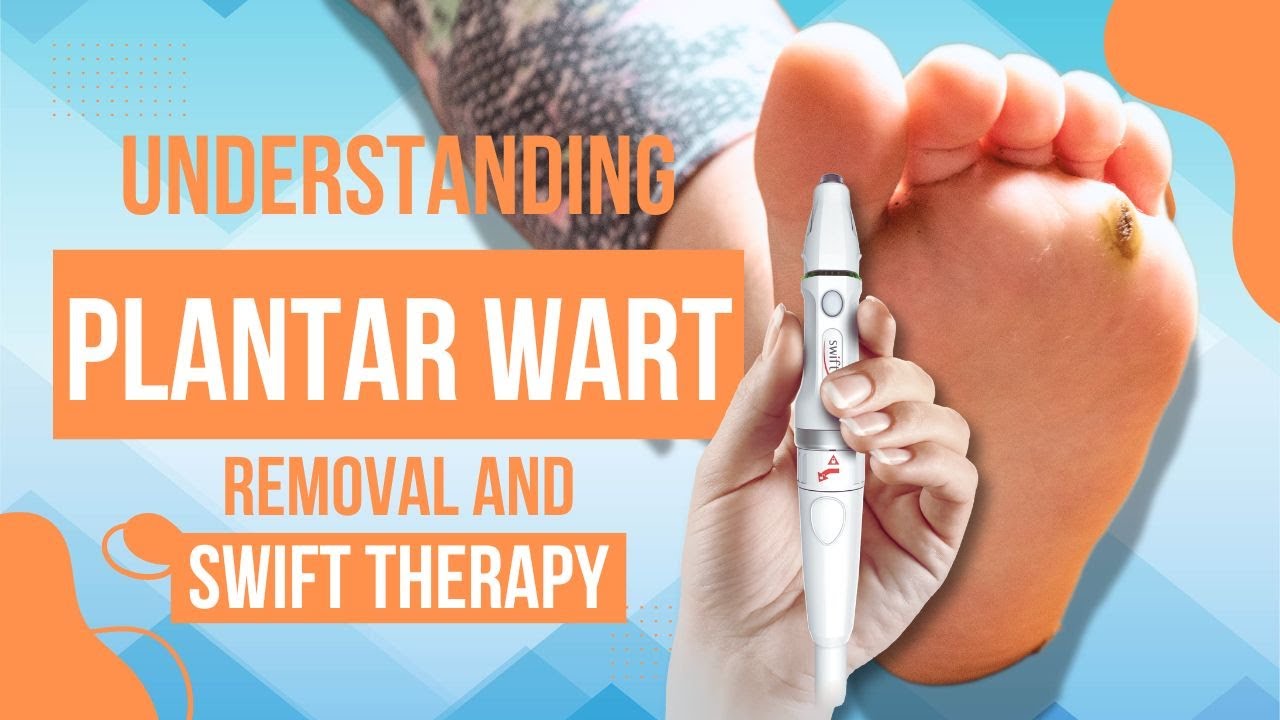
 A plantar wart is a noncancerous skin growth on the sole of the foot caused by the human papillomavirus (HPV). The clinical name is verruca plantaris — same thing, fancier name. The virus enters through small cuts or breaks in the skin, triggering abnormal skin cell growth that forms a rough, thickened lesion, often dotted with tiny dark specks that are clotted blood vessels feeding the wart.
Those dark specks are the detail that matters most. They're not seeds — that's a folk medicine term that's been passed down for generations and doesn't reflect what's actually happening. What you're seeing are thrombosed capillaries: tiny blood vessels that the wart has recruited to feed itself. Their presence is the clearest single sign that separates a plantar wart from corns and calluses, which don't have their own blood supply.
Here's the thing that surprises most people: what you can see on the surface is only a fraction of what's actually there. Plantar warts grow inward, embedding themselves in the dermis — the deeper layer of skin — while a relatively thin callus cap forms on top. That iceberg structure is exactly why surface treatments keep failing. You're treating the tip while the viral tissue underneath stays untouched.
Some warts form alone. Others cluster into what's called a mosaic wart — a group of individual plantar warts that have grown together and share a connected blood supply and viral network.
Mosaic warts are harder to clear with conventional approaches, and they're among the strongest candidates for plantar wart removal using the most advanced tools available.
How Do You Actually Get a Plantar Wart?
HPV enters through micro-abrasions in the skin — and "micro" means exactly that. You don't need a visible cut or open blister. The normal friction of walking on a contaminated surface is enough to create the kind of microscopic skin wear the virus needs. That's an uncomfortable truth, but it also explains why plantar warts don't discriminate: they show up in athletes, kids, and people who consider themselves meticulous about hygiene.
Here's what most people don't realize: you were probably exposed months before your wart appeared. The incubation period for HPV is 2 to 6 months, meaning the virus was quietly establishing itself in your skin long before anything became visible. By the time you're staring at a growth on your heel trying to figure out what it is, the infection has been there for weeks — sometimes longer. That's why people can never pinpoint where they picked it up.
I always tell people in my Houston practice: think of locker rooms and pool decks like greenhouses for HPV. The warmth and moisture aren't just uncomfortable — they're the exact conditions the virus needs to survive on surfaces long enough to transfer to bare skin. Houston's year-round warmth makes this a bigger problem here than in most parts of the country. Locker rooms at local gyms, pool decks at Galleria-area fitness clubs, public showers at parks along Buffalo Bayou — these surfaces stay warm and humid twelve months a year, with no cold-weather dormancy period to break the cycle.
A few things make the risk higher. Kids and teenagers are particularly vulnerable because their immune systems haven't yet developed robust surveillance against HPV. Pre-existing skin breaks from athlete's foot or cracked heels give the virus an easier entry point.
And auto-inoculation — touching your own wart and then another area of your foot — is how most people end up with multiple warts after starting with one. One practical note: you didn't get this from touching a toad. That myth has outlasted any evidence for it by about a century. For parents with kids in pediatric foot care situations — youth swim teams, gymnastics, martial arts — this exposure risk is real and year-round in our climate.
The Truth About OTC Plantar Wart Treatments
Let's talk about what's on the shelf at the pharmacy. The box on salicylic acid treatment says to use it daily for up to 12 weeks, and most general health sources list it as the first-line recommendation. That's not entirely wrong — but it leaves out a number that changes the picture: the combined success rate for over-the-counter salicylic acid and at-home cryotherapy kits is around 50%. A coin flip, even when you follow the instructions perfectly.
Here's why they fall short. Salicylic acid works by breaking down the keratin in the hardened outer skin layer — it softens and removes the callus cap. But HPV doesn't live in the outer skin layer. It lives in the dermis, the deeper tissue that salicylic acid never reaches.
The wart looks smaller, or seems to resolve, and then it comes back. Not because you did anything wrong, but because the viral tissue that survived in the dermis simply regrew the surface tissue above it.
Cryotherapy from a drugstore kit has the same fundamental limitation — it freezes the surface, which blisters and separates, but it doesn't trigger immune recognition of HPV. In-office cryotherapy with liquid nitrogen is more aggressive, but its success rate is also roughly 50%. For a brand-new, small, single wart in a child, these approaches occasionally work.
But if your wart has been there for more than a few months and you've already run this course, you have your answer about whether they're enough.
I won't judge you for spending twelve weeks with an acid pad. That's what the box says to do, and it wasn't an unreasonable first step. But now you know why it didn't work — and not responding to OTC treatment doesn't mean your only option is foot surgery.
For plantar warts, surgery almost never comes into the picture. There's a highly effective middle option that most general health websites don't mention at all, and that's what the rest of this article is about.
How a Houston Podiatrist Treats Plantar Warts — From Simple to Advanced
After treating thousands of plantar warts over 25 years, my approach has changed significantly — not because the biology changed, but because the tools did. I used to reach for liquid nitrogen first. Now I almost never do. Here's how I think through the full progression, and why each level exists.
Exposure Control — Running Concurrently With Everything Else
The first thing I address with every plantar wart, no matter where we are in treatment, is stopping new exposure. That means flip-flops or shower sandals in every communal wet space — locker rooms, pool decks, gym showers — without exception. Moisture-wicking socks. No shared footwear with family members.
This isn't a treatment for the wart you already have, but it's what keeps one wart from becoming five. In Houston's climate, where pools and gyms stay busy year-round, this habit genuinely matters more than it does in most cities.
At-Home Care
For a wart that's been present less than a few months — single lesion, no prior treatment, patient willing to commit — at-home salicylic acid (17–40% concentration) is a reasonable starting point. The protocol matters: soak the foot for five minutes in warm water, file down the dead white surface skin between applications, and apply the acid daily for 8 to 12 weeks. Duct tape occlusion has some modest evidence behind it, particularly for recently acquired single warts in children.
The honest success rate across these methods combined is around 50%. If you've completed a full course with no resolution, that tells you what you need to know — it's time to move to in-office care.
Conservative In-Office Treatment
When at-home treatment isn't enough, or when your wart has already been present for several months, you've got a few good in-office options. Cryotherapy with liquid nitrogen — the freeze-blister-separate approach — is effective for some people, particularly those with a single wart who haven't tried it before. It typically takes 2 to 6 sessions over 4 to 12 weeks, it's uncomfortable, and its success rate sits at roughly 50%.
Cantharidin, sometimes called "beetle juice," is a blistering agent I apply in-office that causes the wart to separate from below. It doesn't involve a needle, which makes it excellent for children with needle sensitivity, and its success rate is 60 to 70%. Prescription-strength topicals like trichloroacetic acid or 5-fluorouracil applied by a physician bring success rates to the 60 to 75% range over 6 to 10 weeks of treatment. These are real options, and I still use them — but now you know what the actual success rates are before you commit to months of sessions.
Swift Microwave Therapy — The Third Option
 Here's what most people don't realize about why your immune system hasn't cleared this wart on its own. HPV is clever — it replicates entirely within the outer skin layer, the part your immune system doesn't actively patrol. Your body actually started fighting it; that's what those dark capillary dots represent.
But it's like a construction crew that started the job and then stopped. Swift microwave therapy is what gets the foreman back on site.
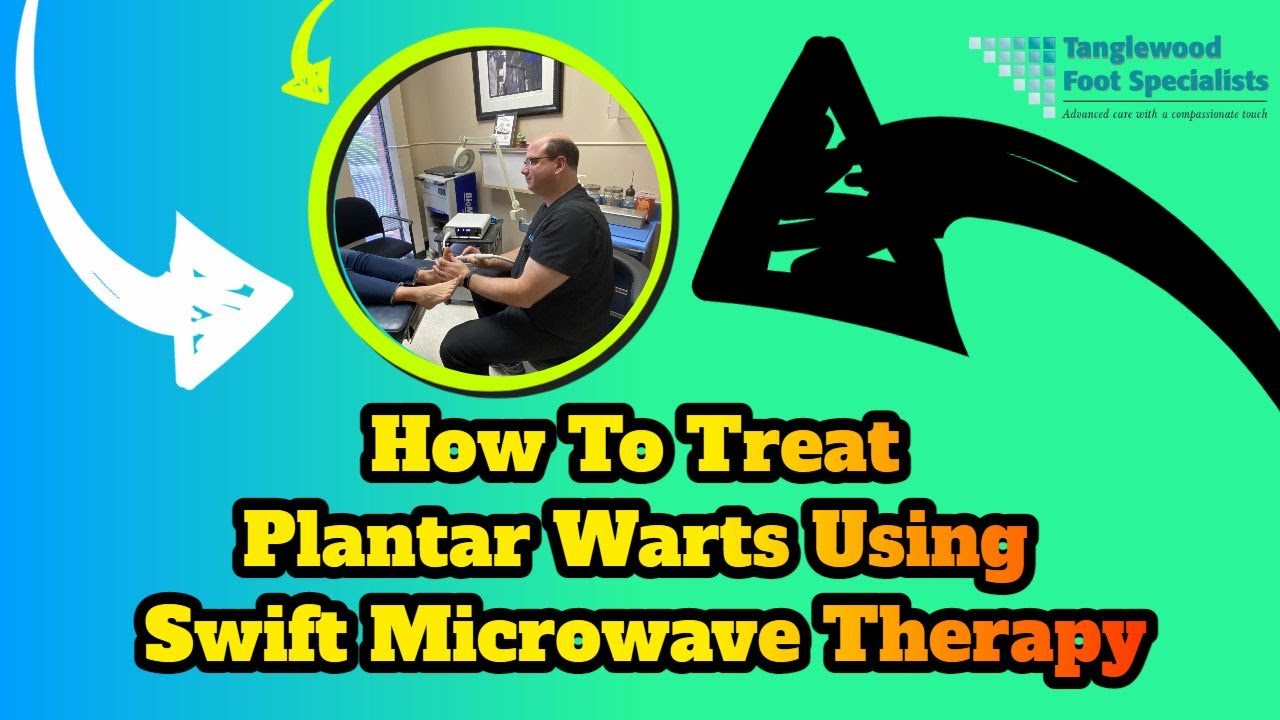
Here's what actually happens during treatment. A small microwave probe is applied directly to the wart tissue. The microwaves heat the water molecules inside the wart cells, causing controlled cellular disruption — and that disruption exposes HPV's viral proteins to your immune system for the first time. Once your immune system recognizes those proteins, it mounts a targeted response that works from the inside out.
Here's what sets Swift apart from everything above it: the immune response isn't localized. If you have multiple warts on the same foot, your immune system addresses them simultaneously — including ones we haven't directly treated. Each session takes under 10 minutes, and the discomfort peaks at about a 4 to 5 out of 10 and resolves within seconds.
No anesthesia, no bandage, no downtime. You walk out and return to normal activity immediately.
Most people complete 3 to 4 sessions spaced 4 weeks apart. The elimination rate is 84%, with a recurrence rate of less than 1%. Compare that to the roughly 50% you get from every approach listed above it, and the calculus becomes clear. Pricing is $265 per session or $795 for the standard 3-session series.
Swift is particularly well-suited for warts that have been present longer than 3 months, mosaic or multiple warts, and anyone who's already failed previous treatment. Active people who can't afford downtime are ideal candidates — and so are children who won't tolerate repeated cryotherapy sessions.
For a deeper look at what regenerative medicine options like Swift represent for foot care, or to understand what regenerative medicine means for foot pain more broadly, those pages are worth reading. I also use Remy Class IV laser for a range of foot conditions — and for anyone dealing with toenail fungus treatment alongside a wart, laser can address both concerns during the same treatment period. Dr. Andrew Schneider has been offering Swift therapy in Houston since it became available in the U.S., and the results have fundamentally changed how I approach wart treatment.
Surgery — A Genuine Last Resort
Look, I know foot surgery sounds like overkill for something sitting on the surface of your skin — and honestly, for plantar warts, it usually is. In 25 years, I can count on one hand the warts that truly needed a scalpel. But even if we ever have that conversation, we're talking about a simple office procedure under local anesthetic, same-day walking. It's not what the movies make it look like.
The procedure is called curettage with electrodesiccation: I use a small scooping instrument to remove the wart tissue and apply an electrical current to destroy any remaining viral cells. Recovery unfolds over about 6 to 8 weeks — the first week involves wound care and protective padding, and the second week sees the wound closing with a return to normal shoes. Weeks 3 to 4 allow full walking, with full activity returning around week 6 to 8.
Success rates for surgical removal sit at roughly 70 to 75% — notably lower than Swift — because residual viral tissue at the wound margins can allow recurrence. Scar tissue on the weight-bearing sole also doesn't behave like scar tissue elsewhere on the body, which is a real clinical consideration. Surgery works, but it's genuinely a last resort, not a shortcut.
Not Sure Which Treatment Is Right for You?
I'll examine your wart, tell you exactly what I think is going on, and give you an honest recommendation — no pressure.
Schedule an Appointment
Plantar Wart Symptoms: What You're Actually Feeling
Most people notice one of two things first: a rough, thickened patch on the sole that they initially dismissed as a callus, or a nagging sensation — not quite sharp pain, more like a pebble that never leaves your shoe. Both are classic presentations of a plantar wart, and both are easy to misread if you don't know what to look for.
The most common symptoms — what you'll experience somewhere between 70 and 90% of the time — are a defined rough growth with an irregular, sometimes cauliflower-like surface, tenderness when you stand or walk directly on it, and those small dark specks we talked about earlier. Skin line interruption is something I check at every exam: normal ridge lines flow continuously through a callus, but they break around a wart. That's a professional-level diagnostic detail, but you can see it clearly if you look closely under good light.
Some warts — 30 to 50% — cause no pain at all, particularly if they're sitting on a non-weight-bearing area of the sole. That's actually one of the reasons they go untreated for so long. And some people develop satellite warts appearing adjacent to the original, which is early mosaic formation — a signal that the viral network is spreading.
The Squeeze Test
Here's a simple way to get a better sense of what you're dealing with before you come in: squeeze the growth from the sides rather than pressing directly on it. If lateral pressure is more painful than direct pressure, you're more likely looking at a wart. A callus hurts most with direct downward pressure; a wart hurts most when you pinch the sides.
It's not a perfect test, but it's a useful starting point — and it's the same assessment I'll do in the office when you come in.
Seek care promptly if:
- The growth changes color rapidly or bleeds without trauma
- You have diabetes or a compromised immune system — warts in these populations can grow aggressively and complicate other conditions, so prompt evaluation matters; see diabetic foot care for more on why
- Pain is severe enough to change how you walk — the biomechanical compensation that happens when you unconsciously shift weight off a painful spot causes real secondary heel and ankle pain over time
What to Expect at Your Houston Appointment
When you come in, I'll start with a visual exam — the growth itself, the surrounding skin, and those skin line patterns I mentioned earlier. I'm going to look at the borders, check the texture, and then perform the squeeze test right there in the room to confirm whether we're dealing with a wart, a callus, a corn, or something else. If there's a thick callus cap sitting over the lesion, I'll pare it down during that first visit. That does two things at once: it gives you immediate relief from the direct pressure, and it gives me a clear view of what's underneath — including whether those dark capillary dots are present.
I'm also going to ask you some questions that might seem basic, but matter a lot for treatment planning. How long has this been there? What have you tried? Has it gotten bigger, or stayed the same?
Do you have any other foot issues going on — nail changes, skin irritation, anything else? I ask because the right treatment for a wart that's been there four months looks different from the right treatment for one that's been there two years with two failed cryotherapy courses behind it. If the diagnosis is still ambiguous after the visual and paring — which is uncommon, but does happen — I'll take a small biopsy. Results come back within a few days confirming HPV.
Then we'll talk about options. If it's a new, single wart with no prior treatment history, we may start with a conservative in-office approach and see how you respond. But if you've already been through the standard treatments and we're still here, my recommendation is almost always Swift.
I'll explain exactly what the process looks like, what to expect at each session, and what the realistic timeline is for your specific situation. I don't overpromise — if we're starting Swift therapy today on a wart that's been there for two years, it's a 3 to 4 session process and you'll see progressive improvement, not an overnight result. But 84% of the time, we get there.
Either way, I need to see you. The longer a plantar wart goes without the right treatment, the more established the viral network becomes — and the harder it's to clear. Schedule your appointment online, or call 713-785-7881.
And if you're also dealing with something adjacent — an ingrown toenail treatment issue, nail discomfort, anything else on your foot — bring it up. I'll address whatever you walk in with.
Preventing Plantar Warts — and Keeping Them From Coming Back
Swift's immune response yields a recurrence rate of less than 1%, which is genuinely different from anything else in the treatment landscape. But that refers to the wart we cleared — it doesn't make you immune to re-exposure at a contaminated surface. If you return to the same locker room barefoot, a new infection can establish itself through a new skin break. Prevention habits matter even after successful treatment.
The hierarchy here is straightforward. Flip-flops or shower sandals in every communal wet space — non-negotiable, every time. Moisture-wicking socks that keep your feet dry between exposures. No shared footwear or towels with family members, particularly if anyone in the household has a current or recent wart.
Regular self-inspection of the soles matters too, especially if you're immunocompromised or diabetic — any new rough growth warrants a call.
I'd encourage every parent in the Tanglewood and Memorial Park neighborhoods to make flip-flops non-negotiable in locker rooms and shared showers. Club soccer, swim teams, gymnastics, martial arts — Houston kids are in and out of these environments year-round. It's a five-dollar habit that genuinely prevents this. A pediatric foot specialist visit is also worth scheduling if your child has a history of warts or is in high-exposure activities regularly.