What Is PRP for Plantar Fasciitis?
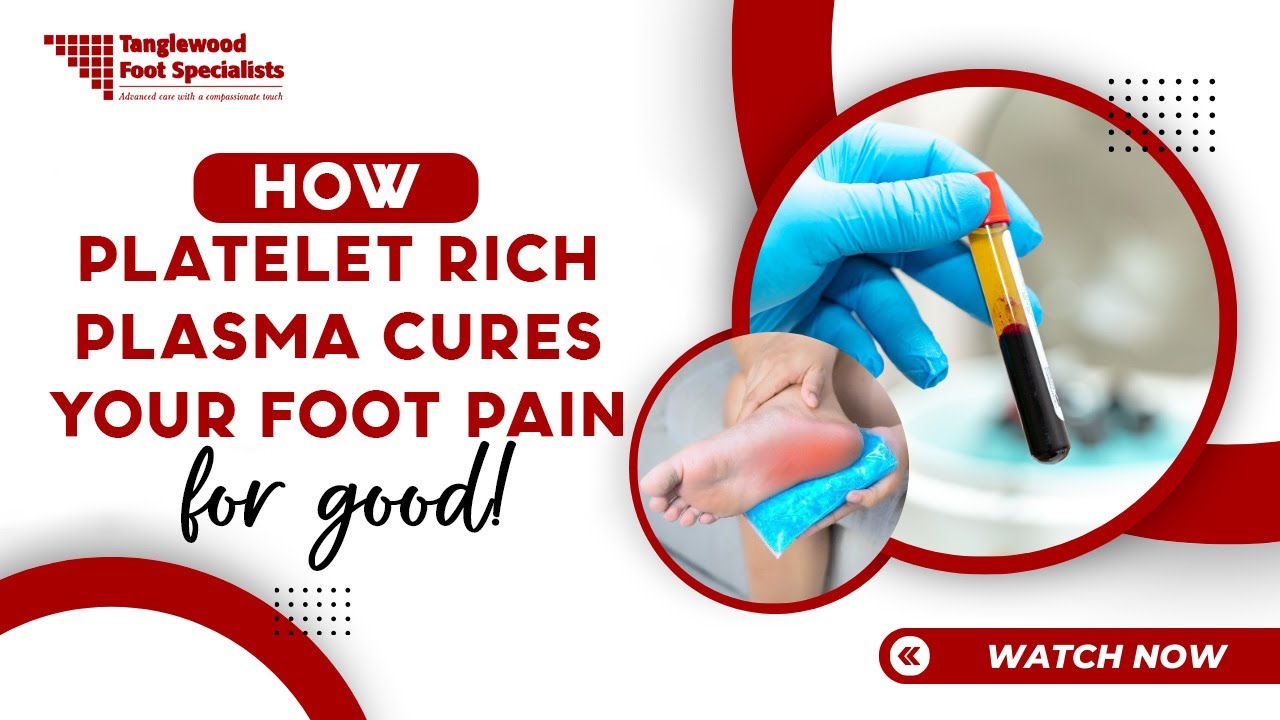
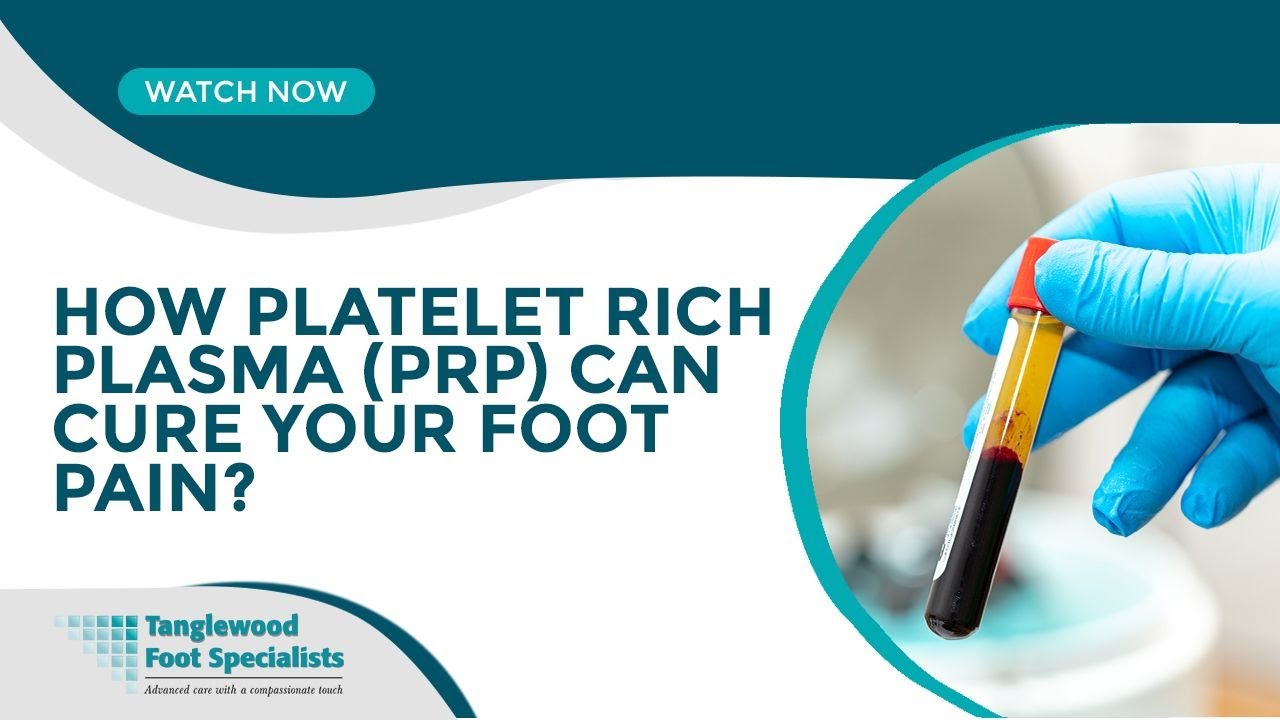
Platelet-Rich Plasma (PRP) for plantar fasciitis is a regenerative medicine treatment that uses concentrated healing  factors from your own blood to repair degenerated tissue in the plantar fascia. A podiatrist draws blood, spins it to concentrate platelets 5-10 times normal levels, and injects the plasma directly into damaged fascia under ultrasound guidance. PRP stimulates tissue regeneration rather than just suppressing inflammation like cortisone injections.
Here's what's actually happening. Your blood platelets do more than just clot wounds—they're packed with growth factors that tell your body "build new tissue here." Think of them as your body's construction crew. In a normal injury, platelets rush to the site and coordinate healing. But in chronic plantar fasciitis? That construction crew left the job site months ago.
PRP delivers 5 to 10 times the normal number of these "construction workers" directly to the damaged fascia. Suddenly you've got carpenters, electricians, and a foreman with blueprints—actual healing starts. And I'm not guessing where to inject. I use diagnostic ultrasound to watch the needle enter the damaged tissue in real-time, placing those growth factors exactly where they're needed.
The key distinction? Cortisone turns off your body's alarm system. Pain stops, but the tissue keeps degenerating. PRP rebuilds the tissue itself. Different goals, different results. Research published in the Journal of Foot and Ankle Surgery confirms that PRP stimulates actual tissue regeneration through multiple growth factors including PDGF, TGF-β, and VEGF.1
Why Does Plantar Fasciitis Stop Healing on Its Own?
Here's what most people don't realize: plantar fasciitis and plantar fasciosis are different problems.
In the first 6 weeks—what we call acute fasciitis—you've got inflammation. The tissue is red, angry, and swollen, but it has good blood supply. Your body's actively trying to fix things. This is when stretching, ice, and rest can actually work because your natural healing response is engaged.
But after 6 months? You're dealing with fasciosis. That's chronic degeneration. The fascia has worn out, developed scar tissue, and lost its blood supply. There's no inflammatory response anymore—no healing cells rushing to the rescue. Collagen is breaking down faster than it's being rebuilt. Your body has essentially given up trying to heal that fascia.
This is why cortisone stops working after a few shots. It's designed to suppress inflammation. But if there's no inflammation left to suppress, you're using a fire extinguisher on a house that already burned down months ago. The tissue is degenerating, not inflamed.
And here's the tough truth: that old statistic about "plantar fasciitis goes away on its own in 6-12 months"? That's based on studies of acute cases. If you're 8 months in and still limping, you're not in that statistic. Chronic fasciosis rarely self-resolves. Research from the American Orthopaedic Foot & Ankle Society shows that chronic plantar fasciosis involves degenerative changes including collagen fiber disorganization and neovascularization, not active inflammation.2 Stretching and ice aren't going to regenerate degenerated tissue—you need intervention to restart the healing cascade.
PRP vs. Cortisone: What's the Actual Difference?
I get asked this every single day: "Why would I pay $1,200 for PRP when cortisone is covered by insurance?" Fair question. Let me break down what you're actually buying.
Cortisone is the symptom manager. It works fast—you'll feel relief in 24 to 72 hours. But it only lasts 4 to 12 weeks. The mechanism? It suppresses inflammation, which is great for acute flare-ups. But it doesn't rebuild tissue. And with repeated use? It actually weakens your fascia. That's why I max out at 2 to 3 shots. Research shows cortisone versus saline is only effective in the first 4 weeks anyway.
PRP is the tissue regenerator. It takes 8 to 12 weeks to work—gradual healing, not instant relief. But it lasts 12+ months because you're stimulating new collagen formation. You're rebuilding the fascia, not just turning off pain signals. There's no weakening risk. The fascia actually gets stronger.
A 2024 meta-analysis published in Foot & Ankle International showed PRP is more effective than cortisone at 6 months—and that difference grows at 12 months.3 That's because cortisone wears off. PRP keeps working.
Look, I know $1,200 sounds like a lot. But compare that to 6 months of physical therapy you already tried ($2,400), three cortisone shots that wore off ($900), and you're still limping. PRP is a one-time investment in actual healing—not renting relief for 8 weeks.
Now, I'm not anti-cortisone. If you're 3 weeks into plantar fasciitis, can't walk, and need immediate relief while we get you into custom orthotics? Cortisone buys time. But if you're 8 months in? Wrong tool for the job.
Who's a Good Candidate for PRP?
The ideal PRP candidate has heel pain for 6+ months, has tried conservative care like stretching and orthotics (maybe even cortisone), and an ultrasound or MRI shows thickened, degenerated fascia. You want to return to running, sports, or just pain-free walking. And you're willing to modify activity for 2-3 weeks post-injection while the tissue heals.
If you're only 4 weeks into plantar fasciitis, I'm going to suggest Level 2 and 3 treatments first. PRP is for chronic cases—we don't need to go nuclear if stretching and orthotics will work.
Who's NOT a candidate: Active infection anywhere in your body, blood thinners or platelet disorders, pregnancy (out of caution, not proven risk), or unrealistic expectations. PRP isn't magic—it's biology. Takes 12 weeks for full results. If you're expecting to be pain-free in 3 days like cortisone, you'll be disappointed.
When you come in, I'll look at your ultrasound, we'll talk about what you've tried, and I'll give you my honest opinion: are you a PRP candidate, or should we try shockwave first? I'm not selling you PRP if you don't need it—I'm trying to get you the best outcome with the least invasive option.
Houston Podiatrist Treats Plantar Fasciitis with PRP
After treating thousands of Houston patients with heel pain over 25 years, I've learned this: plantar fasciitis treatment isn't a menu where you pick what sounds good. It's a ladder. You start at the bottom and climb methodically. But here's where my experience matters—I can tell you when to stop wasting time on one rung and move to the next.
Too many patients spend 18 months on stretching and cortisone when their fascia is degenerating. That's where The Third Option comes in.
LEVEL 1: Lifestyle Changes (4 to 6 Weeks)
Sometimes, that's as simple as ditching the flip-flops and wearing supportive shoes 24/7—even around the house. I tell my patients: if it doesn't have a back, don't wear it. Your fascia needs support during every single step right now.
Surface modification matters too. Minimize concrete and tile walking when possible. Choose grass, rubber mats, or carpet. This is especially critical for Houston patients—our city isn't designed for walking. You're parking in concrete lots, walking across asphalt to your office, standing on tile floors. Every surface is hard. If you can find grass—Memorial Park trails instead of sidewalks—or use custom orthotics with anti-fatigue mats at your standing desk, do it.
Activity modification means listening to your body. If running makes it worse, stop running temporarily. If standing 12-hour shifts is killing you, can you sit for 5 minutes every hour? Morning stretching before that first step out of bed is non-negotiable.
Effectiveness: 30 to 40% improvement for acute cases. Minimal for chronic cases. If you're compliant for 4 weeks and still limping? Let's talk.
LEVEL 2: At-Home Care (6 to 8 Weeks)
Calf stretching is the MVP here. About 80% of my plantar fasciitis patients have tight calves. Stretch your calf against a wall—hold 30 seconds, repeat 3 times, do it 3 to 4 times daily. Plantar fascia stretches help too—pull your toes back toward your shin.
Ice massage works. Freeze a water bottle, roll it under your foot for 15 minutes. Night splints reduce morning pain by 60 to 70%—they keep your fascia stretched while you sleep so that first step doesn't tear healing tissue.
Here's what doesn't work: those $40 "plantar fasciitis socks" everyone's selling on Instagram? Save your money. Topical creams don't penetrate deep enough to help. Heel cushions alone won't fix biomechanical stress.
Success rate: 40 to 50% when done religiously. But let's be honest—if you're 8 months in, stretching isn't going to regenerate degenerated tissue.
LEVEL 3: Conservative In-Office (8 to 12 Weeks)
Custom orthotics correct the biomechanical stress causing repeated fascia trauma. They're like eyeglasses—they don't heal damaged tissue, but they prevent re-injury. Timeline: 8 to 12 weeks. Success rate: 60 to 70%. Cost: $400 to $600.
Cortisone (strategic use): Week 3, can't walk, severe inflammation? Cortisone buys relief. Month 8 with degenerative fasciosis? Wrong tool. And repeated cortisone weakens tissue—I cap it at 2 to 3 injections maximum.
Physical therapy: 6 to 12 weeks, 2 to 3 times per week. Manual fascial release, Graston technique, supervised stretching. Success rate: 50 to 60%. Without insurance, you're looking at $150 to $200 per session.
LEVEL 4: Advanced Regenerative—THE THIRD OPTION (12 to 24 Weeks)
What's exciting is that we now have treatments that almost make surgery obsolete. This is where regenerative medicine changes the game.
Shockwave Therapy:
 High-energy sound waves break up scar tissue and restart the healing cascade. My patients call it "the magic eraser." At Tanglewood, we use a 3 to 5 session protocol, one week apart. Each session takes 10 to 15 minutes, no anesthesia needed.
Timeline: Soreness for 24 to 48 hours, then pain reduction starts in weeks 1 to 4. Continued improvement weeks 6 to 12. Full effect by 12 to 16 weeks.
Success rate: 82% achieve significant pain reduction by 12 weeks, according to research published in the Journal of Orthopaedic Surgery and Research.4
Cost: $1,500 to $2,500 for full protocol.
Best for: Chronic fasciosis (6+ months), failed conservative care, injection-phobic patients.
PRP Injection—Liquid Gold:
Here's the step-by-step procedure. I draw 30 to 60cc of blood from your arm. We spin it in a centrifuge to separate the platelets—we're extracting that "golden layer" packed with growth factors. Then I use ultrasound guidance to inject the concentrated plasma directly into the degenerated fascia.
I also use a fenestration technique—controlled micro-trauma where I essentially "poke" the damaged tissue multiple times. Think of it like lawn aeration for damaged fascia. It sounds aggressive, but it jumpstarts healing.
Post-procedure protocol: You'll wear a walking boot for 2 weeks. That's scaffolding while the construction crew rebuilds. No NSAIDs for 2 to 3 weeks—they block the inflammatory cascade we're trying to stimulate. Tylenol only for pain. Activity modification for 4 to 6 weeks.
Timeline breakdown:
- Days 1 to 5: Increased soreness (this is GOOD—growth factors working)
- Weeks 1 to 3: Soreness gradually improves
- Weeks 4 to 8: Noticeable pain reduction as new collagen forms
- Weeks 8 to 12: Continued improvement
- Full healing: 12 to 16 weeks (we're rebuilding tissue, not masking pain—biology takes time)
Success rate: 70-75% achieve ≥50% pain reduction at 6 months. Superior to cortisone long-term.5
Cost transparency: $800 to $1,500 per injection. Most need one injection. Some need two (8 to 12 weeks apart). Not covered by insurance—they label it "investigational" despite 15 years of research. But it's HSA/FSA eligible. We offer payment plans because cost shouldn't prevent healing.
Who's ideal: Chronic cases (6+ months), failed conservative care, active individuals who want tissue healing not a Band-Aid.
Who's NOT: Active infection, platelet disorders, blood thinners, pregnancy, active cancer.
Combined Protocol: PRP + Shockwave:
Here's where we get really effective. Shockwave preps the tissue—breaks up scar tissue, increases blood flow—then PRP delivers the regeneration. It's like preparing soil before planting seeds.
Protocol: Weeks 1 to 2: Shockwave sessions. Week 3: PRP injection. Week 4: Optional shockwave booster.
Success rate: 85 to 90% by 16 weeks.
Cost: $2,000 to $3,000 total.
LEVEL 5: Surgery—Last Resort (Only 5% Need It)
Look, I know foot surgery sounds scary. But here's the truth: 95% of plantar fasciitis cases resolve without surgery. And if you're in that 5%? We have minimally invasive options—1 to 2 tiny incisions, walking same day, back to work in 2 weeks. Not 1990s medicine.
When it's indicated: You've tried everything for 12+ months—orthotics, PT, shockwave, PRP—and you're still limping. Or you have a complete fascia rupture. Or severe structural issues like a significantly flat foot that's causing mechanical overload.
Minimally invasive fasciotomy:
This is an endoscopic or ultrasound-guided release. I make 1 to 2 tiny incisions (5mm each) and partially release 30 to 50% of the fascia—just enough to reduce tension without destabilizing your arch. Outpatient procedure, takes 20 to 30 minutes.
Recovery timeline:
- Week 1: Surgical shoe or boot, weight-bearing as tolerated with a limp, elevation and ice
- Week 2: Transition to athletic shoes, most patients back to desk jobs
- Weeks 3 to 6: Progressive activity, physical therapy begins, back to light-duty work
- Months 2 to 3: Full activity clearance, gradually resume running and sports
- Full recovery: 3 to 4 months
Success rate: 85 to 90% achieve good-to-excellent outcomes.
Risks: Nerve damage 2 to 3% (usually temporary), infection less than 1%, incomplete release 5 to 10%, arch collapse less than 1%.
Here's my surgical philosophy: I consider surgery a success when we AVOID it. My goal is to exhaust every regenerative option first—because once we cut tissue, there's no going back. But when we do need surgery? We use the most advanced, minimally invasive techniques with the fastest recovery possible.
Ready to Discuss Your Treatment Options?
Not sure which level is right for your heel pain? Let's create a personalized treatment plan. Call 713-785-7881 or schedule online.
What to Expect When You Come to Tanglewood Foot Specialists
When you come in, I'll start by listening. I want to know: How long have you had pain? What have you tried? What do you want to DO—not just "less pain," but run a 5K, play with your kids, stand through your workday without limping?
Then I'll examine your foot, test your range of motion, check for tight calves (almost always a factor), and watch how you walk. We'll do an in-office ultrasound so I can show you in real-time where your fascia is thickened, scarred, or torn. No guessing—we're looking at the tissue.
After that, I'll tell you exactly where you are on the treatment ladder and what I recommend. If you're 3 weeks in, I might suggest custom orthotics and stretching. If you're 9 months in with degeneration on ultrasound? I'm probably recommending PRP or shockwave. We'll map out a timeline—whether it's 6 weeks of conservative care or 12 weeks of PRP healing. You'll know what to expect at every step.
And look, if you've ignored heel pain for a year because you thought it would "just go away," I'm not going to lecture you. I just need to see you now so we can figure out what'll work.
How Much Does PRP for Plantar Fasciitis Cost in Houston?
Direct answer: $800 to $1,500 per injection at Tanglewood Foot Specialists. Most patients need one injection. Some need two (8 to 12 weeks apart).
The price variation depends on preparation method. Basic PRP kits produce one concentration level. Advanced centrifuge systems concentrate platelets more effectively—you're paying for precision and higher platelet counts.
Here's the frustrating part: insurance labels PRP "investigational" despite 15 years of peer-reviewed research. Translation: you're paying out-of-pocket. But there's good news—PRP qualifies for HSA/FSA, so you can use pre-tax dollars. Let's talk about what works for your budget.
Compare $1,200 for PRP to 6 months of physical therapy you already tried ($2,400), three cortisone shots that wore off ($900), and lost work days from limping around. When you frame it as investment in healing versus renting relief, the math changes.
What you're paying for: ultrasound guidance for precision placement, 25 years of experience knowing who's actually a good candidate and who's wasting their money, and follow-up care to make sure you heal properly.
How Long Does It Take PRP to Work for Plantar Fasciitis?
Here's the realistic timeline. Days 1 to 5, you'll be sore—more sore than before. Don't panic. That's growth factors working. It's supposed to hurt a bit. Think of it like the soreness after a hard workout—it means something's happening.
Weeks 1 to 3, that soreness gradually improves. You're in the boot, doing modified activity, and tissue is rebuilding behind the scenes. Week 4 to 8 is when you start noticing—"Hey, my morning pain is 50% better." That's new collagen forming, blood vessels growing into the fascia.
Weeks 8 to 12, continued improvement. Most patients are back to normal activities with minimal pain by this point. Full healing takes 12 to 16 weeks. This isn't cortisone where you're better in 3 days. We're rebuilding tissue. Biology takes time.
Why it's gradual: You're regenerating fascia—laying down new collagen, growing blood vessels, remodeling scar tissue. None of that happens overnight. Your body needs 12-16 weeks to complete the remodeling phase.
When to worry: If you're 8 weeks out and haven't seen ANY improvement, call me. Either we didn't hit the right spot (rare with ultrasound guidance), or you're in that 25-30% who don't respond to PRP alone. Either way, I need to see you so we can discuss Plan B—maybe combined shockwave, maybe a second injection, maybe we're dealing with a different problem.
Success rate reminder: 70-75% see significant improvement—better than cortisone at 6 months. But I'm not going to promise 100%. If I did, you should walk out of my office.