What Is Chronic Foot Pain (And Why Does It Keep Coming Back)?
Chronic foot pain is any foot or ankle pain that's lasted longer than three months despite your best efforts to make it  better. We're talking about conditions like plantar fasciitis, Achilles tendinopathy, Morton's neuroma, or arthritis that just won't quit.
Here's the thing most people don't realize. When you first injure your foot—let's say you ramped up your running too quickly or spent a week at a trade show walking on concrete—your body immediately sends out healing signals. Blood flow increases to the area. Growth factors arrive. Inflammation starts the repair process. In an acute injury, this sequence works perfectly. You rest for a few weeks, maybe ice it, take some ibuprofen, and you're good to go.
But in chronic pain, something's gone wrong with that healing process. Your body started trying to heal the tissue, but somewhere along the way, it got stuck. The construction crew showed up, looked at the plans, walked around the site, and then... never finished the job. The tissue remains in a state of low-grade inflammation without progressing to actual repair.
Why Your Foot Pain Won't Heal on Its Own
So why does healing stall out? After treating thousands of patients with chronic foot pain in our Houston podiatry practice, I've identified three main reasons.
Poor Blood Supply
Some areas of your foot just don't get great blood flow. The plantar fascia, for example, has relatively poor blood supply compared to muscles. The Achilles tendon has a zone about 2 inches above where it attaches to your heel bone that's notorious for poor circulation. Without adequate blood flow, your body can't deliver the oxygen and nutrients needed for repair. It's like trying to build a house when half your materials never arrive.
Scar Tissue and Adhesions
When tissue gets chronically inflamed, it often develops scar tissue and adhesions. This isn't just "a little tight"—the tissue fundamentally changes structure. In our Houston podiatry practice, I see this all the time with patients who've had heel pain for a year or more. When I do diagnostic ultrasound, I can literally see the thickened, scarred plantar fascia on the screen. That tissue didn't just get a little inflamed—it fundamentally changed structure.
Scar tissue is tough and inflexible. It doesn't stretch or move the way healthy tissue does. And it creates barriers that prevent healing factors from reaching damaged areas. Your body keeps trying to heal, but it's like shouting instructions through a thick wall—the message isn't getting through.
Constant Mechanical Stress
Here's where things get really frustrating. Even if you're "resting," you're still walking to the bathroom, standing in the kitchen, going to your car. Every step you take puts force on damaged tissue. For the plantar fascia, that's about 1.5 times your body weight with every step. For the Achilles tendon, it's up to 3 times your body weight.
And here's what makes it worse: the way you walk changes when you're in pain. You start compensating—rolling to the outside of your foot, taking shorter steps, favoring the other leg. These compensations create new mechanical problems that keep the cycle going. Your body can't heal tissue that's being stressed hundreds of times every single day.
Understanding the "Failed Healing Response"
Let me explain what's happening at a cellular level, because understanding this really changes how you think about treatment options.
Normal healing happens in three phases. First comes inflammation—that's when blood rushes to the area and your immune system starts cleaning up damaged tissue. Then comes proliferation—your body starts building new tissue, laying down collagen fibers, and creating new blood vessels. Finally comes remodeling—the new tissue gets organized and strengthened into something that can handle normal stress.
In chronic foot pain, you're stuck in phase one or early phase two. Your body keeps sending inflammatory signals, but it can't progress to actually building new, healthy tissue. It's like having a construction crew that shows up every day, walks around the site, looks at the plans, and then leaves without doing any actual work.
This failed healing response has a name in medical literature: chronic tendinopathy, chronic plantar fasciosis, or chronic inflammation. The "-osis" ending instead of "-itis" is significant—it means the tissue has actually started to degenerate rather than just being inflamed.
In our Houston practice, I explain it to patients this way: Your body's alarm system is stuck in the "on" position. It keeps telling you something's wrong (that's the pain), but it's lost the ability to fix what's wrong. That's exactly where regenerative medicine comes in—but we'll get to that in a minute.
How Houston Podiatrist Treats Chronic Foot Pain: Your Treatment Options
When you come into our Houston office with chronic foot pain, I don't start with the most aggressive treatment. We follow a systematic approach that starts simple and only progresses when needed. Here's what that actually looks like.
Lifestyle and Footwear Modifications
Sometimes, that's as simple as changing your shoes. I see patients all the time who are wearing completely the wrong footwear for their foot structure. If you have high arches and you're in flat, unsupportive shoes, you're putting excessive pressure on your heel and the ball of your foot with every step. If you have flat feet and you're in rigid shoes without cushioning, you're not getting the shock absorption you need.
For patients who stand on hard surfaces all day—and in Houston, I see a lot of warehouse workers, retail staff, and healthcare workers at the Medical Center—we talk about anti-fatigue mats. These redistribute pressure and can make a significant difference. We also look at activity modifications. If you're a runner, we might temporarily shift you to cycling or swimming while we work on healing the damaged tissue.
Now, for some of you, these changes are enough to break the pain cycle. But if you've already had pain for six months or more, you probably need more than just better shoes.
At-Home Care Techniques
Ice remains one of the most effective tools you have. Twenty minutes on, forty minutes off. The cold reduces inflammation and gives you temporary pain relief. But here's what doesn't work: heat. I know heat feels good in the  moment, but it actually increases blood flow to an already inflamed area, which makes things worse.
Stretching can help, but timing matters. That aggressive morning stretch you've been doing? It might actually be causing more damage. When you first wake up, your plantar fascia's in a shortened, contracted position. Forcing it to stretch immediately can create micro-tears. Instead, try gentle ankle circles before you even get out of bed, then ease into weight-bearing gradually.
The foam roller technique I teach involves rolling your foot over a frozen water bottle for 15 minutes in the evening. This combines the benefits of ice and gentle tissue mobilization. You're getting both anti-inflammatory effects and mechanical stimulation of healing.
Here's the honest truth about those over-the-counter arch support inserts from the drugstore: they're better than nothing for mild discomfort, but if you've had chronic pain for months, you need something more sophisticated. The generic insoles can't address your specific biomechanical issues.
Conservative In-Office Treatments
When lifestyle changes and home care aren't enough, that's when we bring in more targeted treatments. Custom orthotics are often the foundation of conservative care. Think of them like eyeglasses for your feet. While you're  wearing them, they compensate for your biomechanical issues—redistributing pressure, supporting your arch, and controlling excessive motion.
In our Houston practice, I create custom orthotics from a 3D scan or mold of your feet. These aren't the generic drugstore inserts I just mentioned. They're precisely calibrated to address YOUR specific foot mechanics. For conditions like plantar fasciitis or metatarsalgia, properly made orthotics can redistribute pressure away from damaged tissue, giving it a chance to heal.
Strapping and taping techniques can also help. I use specific taping patterns that support the arch and take tension off the plantar fascia. Some patients wear this tape for a week or two while we're working on healing. It's not a permanent solution, but it can provide significant relief during the acute phase.
Corticosteroid injections are another tool in the conservative toolbox. Here's what you need to understand: cortisone reduces inflammation, which makes you feel better temporarily, but it doesn't provide the materials your body needs to actually repair damaged tissue. Even worse, repeated cortisone injections can actually weaken tendons and other soft tissue over time. You're trading short-term relief for potential long-term problems.
I use cortisone strategically—usually to control severe inflammation so we can move forward with other treatments. But it's not my go-to, and I never do more than two or three injections in the same area.
Physical therapy can be valuable, especially when we're addressing muscle imbalances or gait problems that contribute to your foot pain. A skilled physical therapist can teach you specific exercises, manual therapy techniques, and functional movement patterns. But here's the honest truth: for chronic conditions where healing has stalled for months, physical therapy alone often isn't enough.
Advanced Therapy: The Third Option
Now here's where things get interesting. In most medical offices, doctors are trained to think in terms of "medicate or operate." If medication and conservative care don't work, the next step is surgery. This binary thinking has been drilled into physicians throughout their training.
But what if there's a third option that most doctors never mentioned? Between "live with it forever" and "let's cut it out," there's regenerative medicine—treatments that actually restart your body's stalled healing response.
In our Houston podiatry practice, I don't think in terms of just two choices. I've personally used regenerative medicine on myself when I developed plantar fasciitis. I've seen it work for thousands of my patients. And I'm going to be  completely honest with you: it doesn't work for everyone, but when it does work, it can be remarkable.
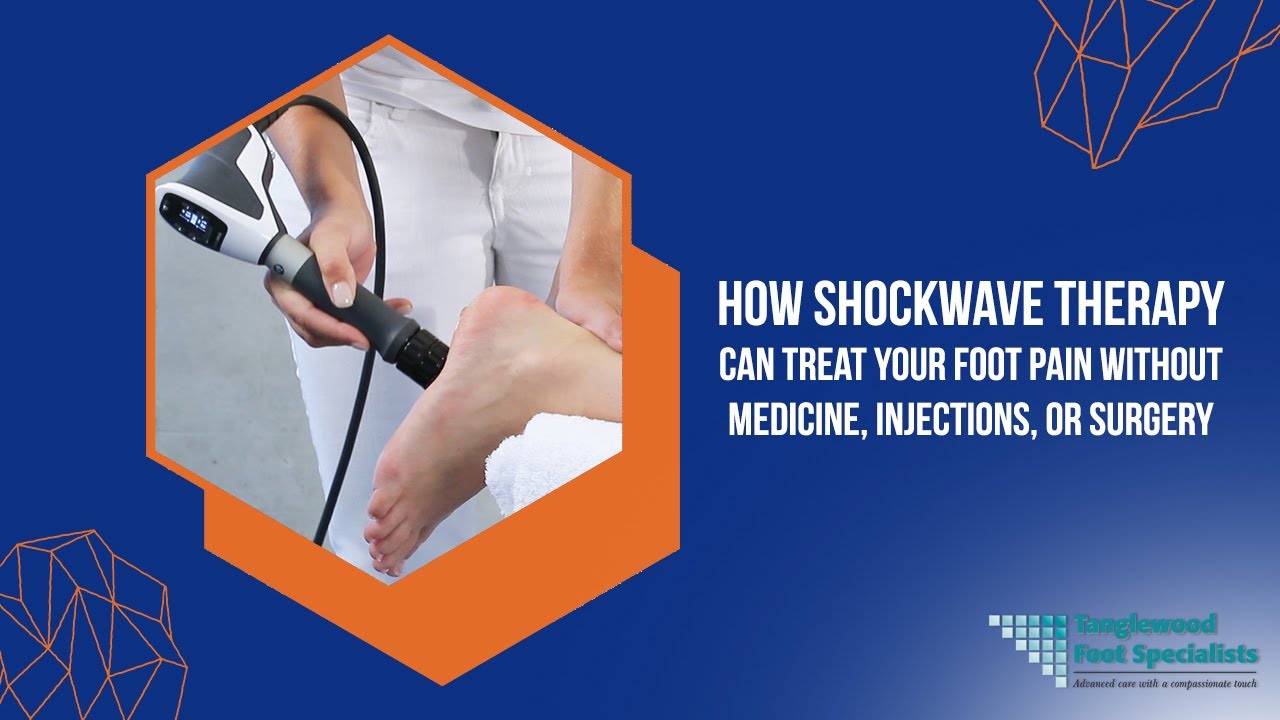
Shockwave therapy uses acoustic pressure waves to stimulate healing. Think of it like aerating a lawn. When soil gets compacted, water and nutrients can't penetrate. You aerate it, creating channels, and suddenly everything can reach the roots. Shockwave does the same for damaged tissue. It increases blood flow, breaks up scar tissue, triggers release of growth factors, and creates controlled microtrauma that restarts the healing process.
Each session takes 10-15 minutes. You'll feel a tapping sensation—some mild discomfort actually indicates we're treating the right spot. Most patients need three to four treatments, typically once a week. Research published in the Journal of Orthopaedic Surgery and Research¹ demonstrates that more than 82% of patients find their pain is resolved after a full course of shockwave therapy.
Class IV Laser Therapy (Remy Laser)
 We also use the Remy Class IV laser for pain relief and accelerated healing. This isn't the low-level laser you might've seen at a chiropractor's office—Class IV lasers penetrate much deeper into tissue. The laser energy stimulates cellular activity, reduces inflammation, and promotes blood flow to damaged areas.
What I like about laser therapy is that it's completely painless. You'll feel warmth during treatment, but that's it. Sessions take about 10 minutes. We typically do it two to three times a week for a few weeks. It works particularly well when combined with other regenerative treatments—the laser helps prepare tissue to respond better to PRP or shockwave.
PRP Therapy
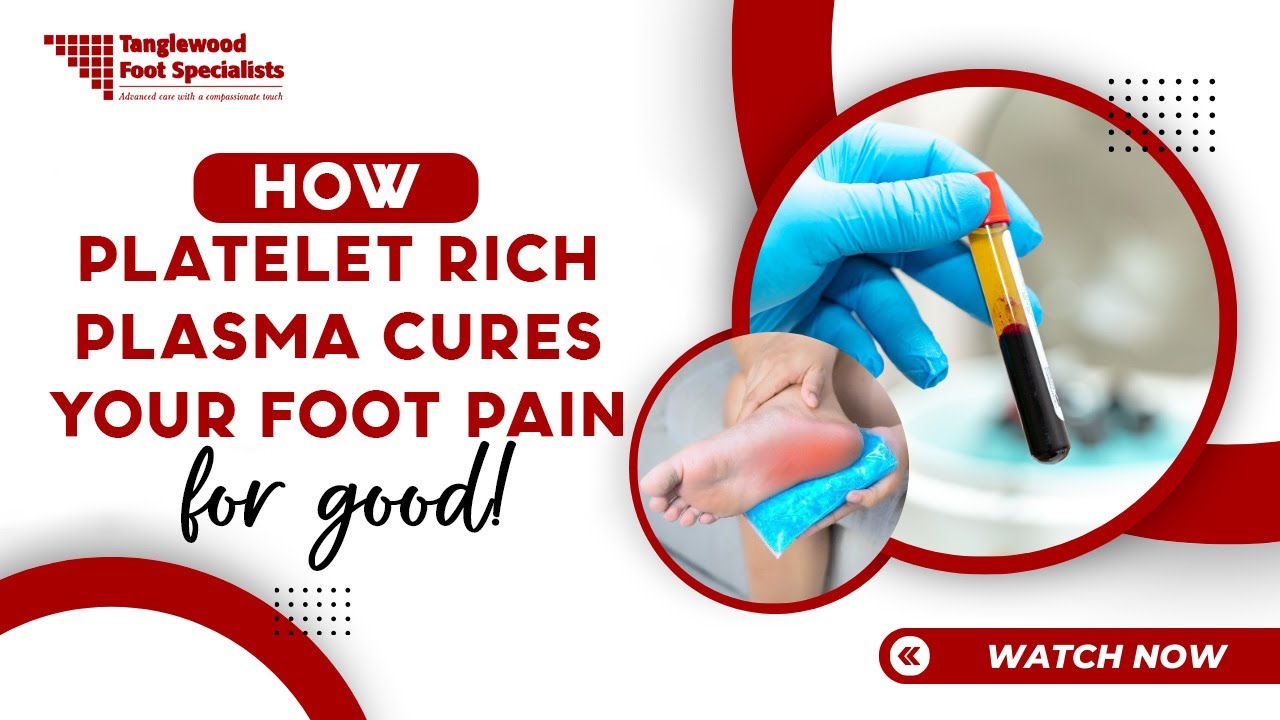
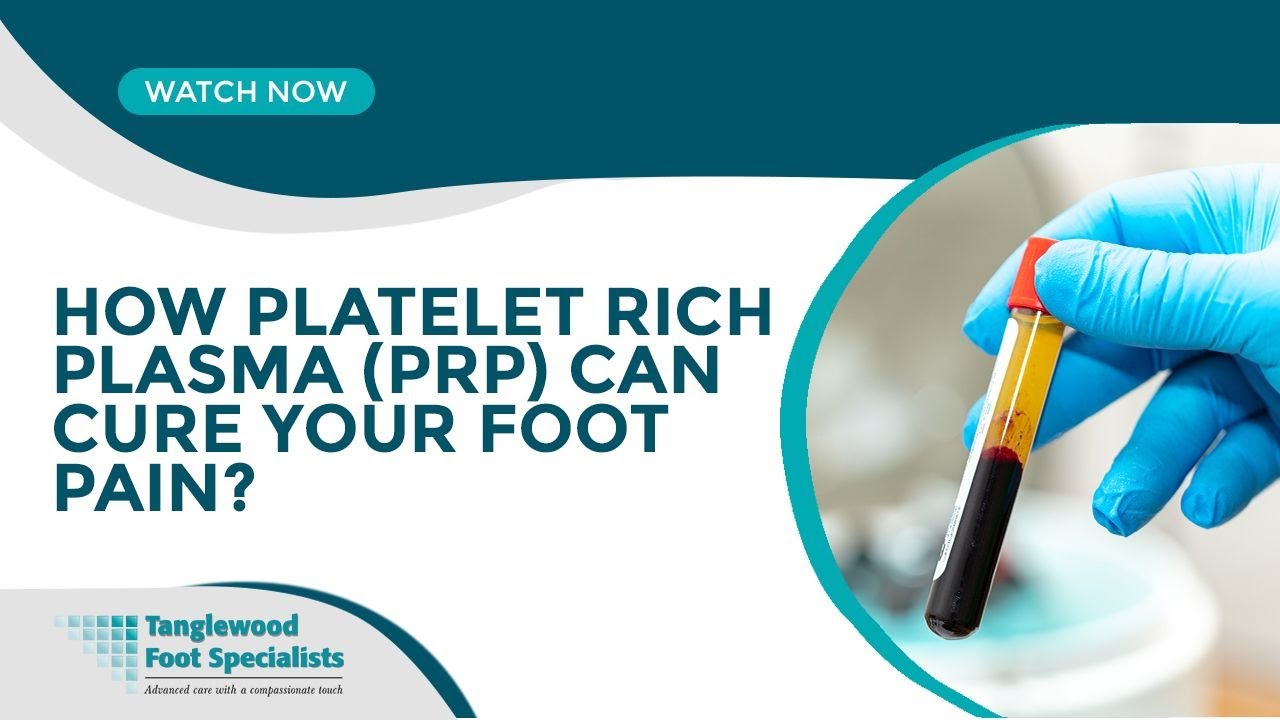
PRP therapy takes a different approach. I draw a small amount of your blood, spin it in a centrifuge to concentrate the  platelets, and inject that concentrated healing solution directly into the damaged tissue. Platelets contain growth factors—the signaling proteins that tell your body where to repair, what to build, and when to start. For chronic injuries where those signals have faded, PRP brings them back at high concentration.
What's exciting is that we now have treatments that almost make surgery obsolete. When we combine PRP with shockwave therapy, studies show success rates² jump to 85-95% for chronic conditions that haven't responded to conventional treatments. PRP provides the seeds—the growth factors and healing signals. Shockwave prepares the soil and creates optimal conditions. Together, they restart healing that's been stuck for months or even years.
Here's what I did for my own plantar fasciitis: I started with a corticosteroid injection to control the acute inflammation. Then I used my custom orthotics (which I was already wearing). Next came shockwave therapy. Finally, I applied Tolcylen CBD/CBG transdermal cream—three pumps, three times daily for three days. After applying three pumps of cream on my heel and rubbing it in well, I found pain relief in less than five minutes. Doing this three times a day for three days essentially took my heel pain away for good.
When Surgery Becomes Necessary
Having said all that, some patients will need foot surgery. Why is that the case? Sometimes conservative treatments and  regenerative medicine have been tried without adequate success. Sometimes there's a structural problem—like a severely torn tendon or advanced arthritis—that no amount of healing stimulation will fix. And sometimes patients just want the most definitive solution with a predictable timeline.
Look, I know that foot surgery sounds scary. But modern foot surgery is NOT what you're imagining. These aren't the procedures your uncle had in 1995 where he was in a cast for three months. Today's techniques are minimally invasive, use smaller incisions, and have dramatically faster recovery times.
For plantar fascia release specifically, we're talking about a 20-30 minute procedure. I make a small incision—usually about an inch long—and partially release the tight plantar fascia that's been causing your pain. You walk out in a surgical boot the same day. No cast, no months on crutches. You can bear full weight on your foot without crutches from day one.
Here's the week-by-week reality: Weeks 1-2, you're in the boot full-time. Weeks 3-4, you transition to regular shoes for part of the day. By weeks 6-8, you're back to regular shoes all the time and moderate activity. By months 3-4, you're at full activity including running if that's your goal.
Success rates for properly performed foot surgery are 70-90% when done for the right reasons at the right time, according to research from leading medical institutions³. That said, I'm going to be honest: about 10-15% of patients develop complications like lateral column pain or feel like the correction was too aggressive. These are usually manageable, but they're real.
But here's the most important thing I want you to know: about 85-95% of chronic foot pain cases resolve without surgery when we use the full range of treatment options available. Surgery is a last resort, not a first choice. And even if you try regenerative medicine and it doesn't work, surgery is still there as an option. You're not making a forever decision—you're making the next right step.
[MID-ARTICLE CTA: If you're dealing with chronic foot pain and nothing's worked so far, contact us for an immediate appointment. I'll examine your foot, look at your imaging, and help you figure out which treatment approach makes sense for your goals. Call 713-785-7881 or request an appointment online.]
What to Expect When You Come In to See Me
When you walk into our Houston office, you're not going to get rushed through in 10 minutes with a generic treatment plan.
Here's what actually happens.
 I'll start by sitting down with you and really listening. I want to know what you want to get back to doing. Are you trying to run a half marathon? Get back to your standing job without pain? Play with your grandkids without limping? Your goals matter because they shape which treatment approach makes sense. A 25-year-old training for a marathon needs a different plan than a 65-year-old who just wants to walk through the grocery store comfortably.
Then I'm going to ask you questions about your pain. When does it hurt most? What makes it better or worse? What have you already tried? How long has this been going on? I need to understand the pattern because that tells me what's happening at a tissue level. Morning pain that eases up after you've been moving suggests plantar fasciitis. Pain that gets worse as the day goes on points toward a different problem.
Next comes the physical examination. I'll examine your foot and ankle, watch you walk, check your range of motion, and palpate the painful areas. I might have you do specific movements that reproduce your symptoms—not to torture you, but because where and how you hurt tells me exactly what's damaged. If you have heel pain, I need to know if it's at the bottom of your heel, the back of your heel, or the inside of your heel. Each location means something different.
If we need imaging, I'll explain why. Sometimes I can diagnose the problem through examination alone. Other times, I need an X-ray to look at bone structure or an ultrasound to see what's happening with your soft tissues. MRI is rarely necessary as a first step—we usually reserve that for when something's not responding to treatment the way we'd expect.
Then we'll talk about your treatment options. If it seems like we can solve this with footwear changes and orthotics, that's where we'll start. But if I see signs that your healing response has stalled for months—thickened tissue on ultrasound, significant pain despite conservative care, poor blood flow to the area—then I'm going to talk to you about regenerative medicine. I'll explain exactly what we'd do, what the timeline looks like, and what it costs.
If you've already tried regenerative medicine elsewhere without success, or if your imaging shows severe structural damage, we might need to discuss surgery. But here's what I want you to know: I'm not going to pressure you into any treatment. This is your foot, your life, your decision. My job is to give you the information you need to make the choice that's right for you.
Most appointments take 30-45 minutes. If we're doing a procedure that same day—like injecting cortisone to calm down severe inflammation—it adds another 15-20 minutes. If we're starting regenerative therapy, we'll schedule that for a separate appointment so we have adequate time.
After your first visit, you'll know exactly what's causing your pain and what your options are. For some patients, we start treatment immediately. For others, we schedule a follow-up for a procedure or to check on progress with conservative care. Either way, you're not leaving confused about what's wrong or what comes next.
How to Decide: A Framework for Your Situation
So how do you actually decide between regenerative medicine and surgery? Here's the truth: I don't make this decision FOR patients—I make it WITH them. When you sit in my Houston office trying to figure out your next move, here's the framework we use together.
Try Regenerative Medicine First If:
- You've had pain for 3-6 months but haven't tried regenerative approaches yet
- Your imaging shows chronic damage but not severe structural problems
- You want to avoid surgery if possible
- You can afford the upfront cost (or your FSA/HSA covers it)
- You're okay with a treatment that takes 2-4 months to show full results
- You're active and want to maintain your activity level during treatment
Learn more about regenerative medicine for foot pain and how it can help restart your body's healing response.
Consider Surgery If:
- You've tried regenerative medicine without adequate improvement
- Your imaging shows severe structural damage (significant tears, advanced degeneration)
- You've had pain for more than 12 months despite comprehensive conservative care
- You need a predictable timeline (surgery recovery is more standardized)
- You prefer one bigger intervention over multiple treatments
- You're okay with 6-8 weeks of modified activity during recovery
Remember These Key Points:
- These aren't mutually exclusive. If you try regenerative medicine and it doesn't work, surgery is still an option. You're not making a forever decision—you're making the next right step.
- Success rates are high for both: 85-95% for combined regenerative therapy, 70-90% for surgery
- Timeline differs: regenerative medicine takes 2-6 months for full benefit, surgery has you back to regular shoes in 6-8 weeks
- Either way, I need to see you to examine your specific situation
I've seen both approaches work beautifully for the right patients at the right time. The question isn't which one is "better"—it's which one is better for you right now.
Conclusion
Living with chronic foot pain is exhausting. It affects everything—your sleep, your mood, your relationships, your work. You modify your entire life around it—avoiding activities you love, turning down invitations, constantly planning your day around when your foot will hurt least. And after months or years of trying everything only to have the pain come back, it's easy to lose hope.
But here's what I want you to know: you have real options. Regenerative medicine has helped thousands of my patients heal tissue that wouldn't heal on its own. Modern surgery—when it's needed—is nothing like what you're imagining. And even simple changes like proper orthotics can make a dramatic difference when they're precisely fitted to your biomechanics.
I won't judge you regardless of which path you choose. Some patients prefer to try regenerative medicine first and see surgery as a last resort. Others want the most definitive solution right away. Some want to start conservative and work their way up. All of those approaches are valid. My job isn't to push you toward one treatment—it's to help you understand which approach makes sense for YOUR situation, YOUR goals, and YOUR life.
Either way, I need to see you to figure out exactly what's causing your chronic foot pain and which treatments are most likely to work. Call Tanglewood Foot Specialists at 713-785-7881 or request an appointment online. The sooner we identify what's keeping your healing stalled, the quicker we can restart it and get you back to the activities you love.
You deserve feet that don't hurt. Let's get you there.
References
- Sun J, Gao F, Wang Y, et al. Extracorporeal shock wave therapy is effective in treating chronic plantar fasciitis: A meta-analysis of RCTs. Journal of Orthopaedic Surgery and Research. 2017;12:78. Available at: https://josr-online.biomedcentral.com/articles/10.1186/s13018-018-0895-8
- Hamid MS, Mohamed Ali MR, Yusof A, George J, Lee LP. Platelet-rich plasma (PRP) for acute muscle injury: a systematic review. PLoS One. 2014;9(2):e90538. Available at: https://pubmed.ncbi.nlm.nih.gov/32284576/
- Mayo Clinic Staff. Plantar fasciitis: Diagnosis and treatment. Mayo Clinic. Available at: https://www.mayoclinic.org/diseases-conditions/plantar-fasciitis/diagnosis-treatment/drc-20354922
- Johns Hopkins Medicine. Platelet-Rich Plasma (PRP) Treatment. Available at: https://www.hopkinsmedicine.org/health/treatment-tests-and-therapies/platelet-rich-plasma-prp-treatment
About the Author
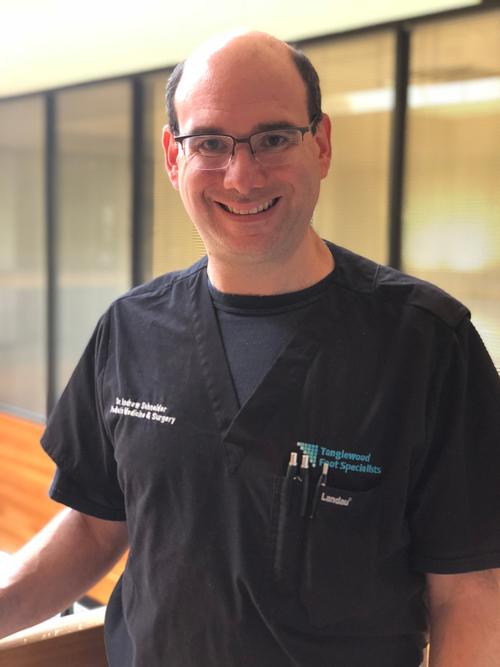
Dr. Andrew Schneider is a board-certified podiatrist with over 25 years of experience treating chronic foot and ankle conditions in Houston, Texas. He specializes in regenerative medicine approaches including PRP therapy, shockwave therapy, and advanced laser treatments. Dr. Schneider practices at Tanglewood Foot Specialists in Houston.
Contact Information
Tanglewood Foot Specialists Houston, Texas Phone: 713-785-7881 Website: www.TanglewoodFootSpecialists.com