What Plantar Fasciitis Actually Does to Your Heel
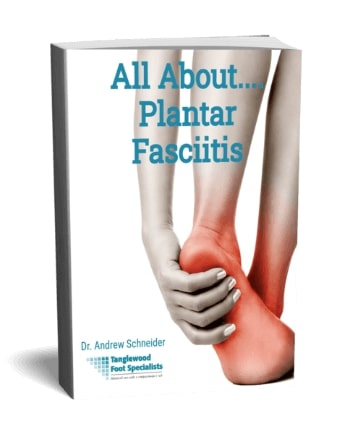
Plantar fasciitis is inflammation and micro-tearing of the plantar fascia — the thick band of tissue connecting your heel  bone to the base of your toes. It's most recognized as that stabbing heel pain you feel during your very first steps in the morning. In chronic cases, the tissue can shift into a degenerative state called plantar fasciosis — where the healing process has stalled rather than progressed, and the tissue is breaking down without properly repairing.
Here's what's actually happening during those brutal first steps. During rest, your plantar fascia contracts and partially heals — your body is trying to do its job overnight. The moment you load that foot, you tear apart that partial repair; that's the searing pain, and it has a clinical name: post-static dyskinesia. Understanding that mechanism changes how you read the signs of recovery, because as healing progresses, that window of morning pain gets shorter and shorter.
The core reason plantar fasciitis becomes chronic is blood supply — or the lack of it. The plantar fascia is notoriously poorly vascularized tissue, which means your body is trying to heal something that doesn't get much of the oxygen and nutrients that healing requires. It's like a construction crew that keeps running out of materials — they show up, they start the job, but they can't finish it. Without outside intervention, a lot of people stay stuck in that loop for months, or years.
One more thing worth understanding before we get to the healing signs: a heel spur on your X-ray is almost certainly not the problem. Heel spurs are a result of plantar fasciitis, not a cause — they form as a response to chronic tension at the fascia's attachment point, and less than 5% ever need removal. I mention this because plenty of people come into my office convinced that spur is the culprit and surgery is the only answer. It's almost never true.
The Signs Your Plantar Fasciitis Is Healing
After treating thousands of patients with plantar fasciitis, I've learned that recovery isn't dramatic — it doesn't announce itself. It shows up quietly, in specific and measurable ways, and if you don't know what you're looking for, you can miss it entirely. And if you're not seeing any of these signs after six to eight weeks of consistent treatment? That matters too — I'll get to chronic heel pain that isn't responding in the next section.
Sign 1 — Your morning pain duration shrinks
 This is the first improvement I look for — not zero morning pain, but shorter morning pain. If you used to limp for an hour after getting out of bed and now it's ten minutes, that's not wishful thinking. That's your plantar fascia completing more of its overnight repair cycle without loading tearing it apart — the window of post-static dyskinesia is narrowing. That's real, measurable healing.
Sign 2 — Post-rest stiffness fades faster throughout the day
Early in the condition, sitting through a meeting and standing up produces almost as much pain as getting out of bed. As healing progresses, you'll notice that mid-day stiffness after sitting diminishes — you can stand up without bracing yourself for it. The inflammatory cascade your body triggers after periods of inactivity is calming down. The tissue is becoming less reactive, and that's a big deal.
Sign 3 — Your activity tolerance increases
You can walk farther, stand longer, or get through a workout before pain arrives. And when it does arrive, it's less severe than it used to be. What's happening clinically is that your tissue is starting to bear load without triggering the full inflammatory response — meaning micro-tears are filling in with organized collagen rather than disordered scar tissue. That's the difference between tissue that's healing and tissue that's just getting beat up again.
Sign 4 — Pain character shifts from sharp to dull
Sharp, pinpoint pain signals active micro-tearing in acutely inflamed tissue. When that gives way to a broader ache or soreness — diffuse rather than stabbing — that transition is a meaningful clinical milestone. The tissue is entering a remodeling phase, and it's a different kind of hurt. Most people don't realize this shift is progress, not just variation.
Sign 5 — Your calf flexibility improves
Here's what most people don't realize: calf tightness — what I call equinus — is one of the primary upstream drivers of plantar fasciitis. Your plantar fascia isn't working in isolation. Think of your body like a puppet on strings: when the calf gets tight, it pulls on everything below it, transmitting tension straight down into the fascia. When you notice your calves loosening and you can stretch deeper without the back of your leg feeling locked up, that's both a healing signal and protection against recurrence — and it's exactly why I pair calf flexibility work with custom orthotics for almost every chronic case.
Sign 6 — Direct heel tenderness decreases
There's a specific spot on the inner heel — right at the fascia's attachment to the heel bone — that's intensely reactive when plantar fasciitis is active. I check this at every follow-up visit. When that spot becomes less reactive to direct pressure, less likely to make you pull your foot away, the inflamed and hyper-sensitized tissue at the attachment point is calming. It's a reliable clinical marker that I trust more than most self-reported measures.
Sign 7 — You stop thinking about your foot during normal activities
This one is entirely subjective — but it's powerful. When plantar fasciitis is bad, every step is a conscious event: you're managing your gait, avoiding certain surfaces, calculating how far you've walked. Recovery is happening when your foot stops being the loudest thing in the room. What's going on clinically is that as peripheral sensitization decreases, your nervous system stops amplifying every step the way it did when pain was constant.
Sign 8 — Improvement trends across weeks, not just days
Healing tissue is still vulnerable — a long day on your feet, a hard surface, a change in footwear can all produce a rough morning even when you're genuinely improving. I tell my people to stop tracking individual days and start tracking weeks. One rough morning after five good ones isn't a setback — it's just Tuesday. The trend line over two-to-three-week windows is what tells you whether you're actually getting better.
How a Houston Podiatrist Treats Plantar Fasciitis — and Speeds Up Your Recovery
I don't use a one-size-fits-all protocol. What I do for someone who's been dealing with this for three weeks looks very different from what I do for someone who's been living with it for two years. But the progression is always the same — we start with what's least invasive and work toward what's most effective for your specific situation.
Lifestyle Changes
Sometimes the most important changes are the ones that happen before you even walk into my office. Footwear is first — structured shoes with a firm midsole and real arch support need to be on your feet from the moment they hit the floor each morning, including that walk to the bathroom. Barefoot walking at home is one of the most common ways people undo real progress without realizing it. A night splint — worn while you sleep to hold the fascia in a gently elongated position — can significantly shorten that brutal morning pain window by breaking the overnight contraction cycle, and shifting to shock-absorbing surfaces during the day gives the tissue a fighting chance to repair between loads.
At-Home Care
For mild or early cases, a structured home routine can get things moving in the right direction. Ice rolling — a frozen water bottle rolled under the foot for about 20 minutes — reduces inflammation while providing gentle soft-tissue work at the same time. Calf stretching matters more than most people realize: a standing wall stretch held 30 seconds, both straight-leg and bent-knee, addresses the upstream equinus tension feeding into the fascia — but do it after warming up, not cold first thing in the morning. Foam rolling the calf and posterior chain extends that benefit even further up the chain.
Now, for some of you, these changes may be enough — especially if you're catching this early. But I want to be honest about their limits: at-home care manages symptoms well; it doesn't rebuild damaged tissue. If you've been dealing with this for more than six to eight weeks without meaningful improvement, you're not being impatient. Your body is signaling that it needs more than you can give it at home.
A word on what doesn't work: heat feels soothing but increases inflammation in already-inflamed tissue. Aggressive morning stretching — yanking on a fascia that's contracted and partially healed overnight — creates fresh micro-tears. And massage guns applied directly to the heel insertion are too aggressive for acute tissue; aim them at the calf instead.
Conservative In-Office Care
When at-home care isn't getting you where you need to be, this is where I spend most of my time with plantar fasciitis. A cortisone injection ($120) is the fastest tool I have for breaking an acute pain cycle — most people feel meaningful relief within 48 to 72 hours, and it's a completely appropriate first-line intervention. But cortisone reduces acute inflammation; it doesn't repair tissue. And repeated injections — more than two or three total — weaken the fascia over time and raise the risk of rupture, so if you've already had several rounds and the pain keeps coming back, that pattern is telling you something important.
Custom orthotics ($700) are the most important conservative investment for long-term resolution. Think of them like eyeglasses for your feet — while you're wearing them, they're correcting your specific biomechanical pattern, whether that's overpronation, supination, leg length discrepancy, or high arch mechanics, so the fascia stops being re-injured with every step you take. Unlike an OTC insole molded to some average foot that doesn't exist, custom orthotics are built precisely from a mold of your foot architecture. They don't cure the underlying condition, but they eliminate the mechanical cause that's been re-injuring the tissue every single day.
I'll also typically use strapping and low-dye taping to offload the fascia during high-activity periods, and I'll refer you to physical therapy if your gait mechanics, calf strength, or posterior chain flexibility need structured work. When all of conservative care — lifestyle changes, home routine, in-office treatment — is followed consistently, approximately 95% of plantar fasciitis cases resolve without ever needing surgery.
Advanced Regenerative Medicine — The Third Option
Here's where my approach differs from what most people have been told is possible. For cases that aren't responding  to conventional care, we now have treatments that essentially restart the healing process from scratch — and they almost make surgery obsolete.
Shockwave therapy ($300 per session | $750 for a three-session package) works by delivering acoustic pressure waves — not electricity, despite the name — through a handheld device placed against the skin over the damaged tissue. Think of it like aerating a compacted lawn: the waves create micro-channels in scarred, stagnant tissue, allowing blood flow and healing factors to penetrate for the first time in months. It simultaneously stimulates new blood vessel formation, breaks up calcifications and scar tissue, triggers growth factor release, and creates controlled micro-trauma that re-initiates a stalled healing response.
Sessions run 10 to 15 minutes, once a week for three weeks. More than 82% of people who complete the full protocol experience lasting pain resolution. I use it on my own heel pain — and I've seen it change people's lives.
Platelet-rich plasma therapy ($850) starts with a small blood draw from your arm. That blood is processed in a centrifuge to concentrate the plasma rich in platelets — the cells packed with growth factors that signal your body to mobilize repair. That concentrated plasma, what I call liquid gold for healing, is injected under ultrasound guidance directly into the damaged fascia tissue, delivering the biological raw materials that a stalled healing response can't generate on its own. PRP produces significant improvement in 70 to 80% of chronic tendon cases as a standalone treatment.
For the most stubborn cases — those that haven't responded to anything else — I use both together as the Seeds and Soil protocol (~$1,600 combined). PRP goes in first, delivering concentrated healing factors directly to the tissue. Shockwave treatments follow within a few days and continue weekly for three weeks, activating those growth factors and creating the optimal environment for them to work. PRP provides the seeds; shockwave prepares the soil.
The combined regenerative treatment options produce an 85 to 95% success rate for chronic cases that haven't responded to conventional care. Initial improvement typically appears within two to four weeks, with continued tissue remodeling over three to six months. For people who've been told surgery is their only option, this protocol is often the answer they've been looking for.
Two additional adjuncts I use depending on the case: Remy Class IV laser therapy ($97 per session | $497 for a six-session package) uses photobiomodulation — specific wavelengths of light — to reduce pain and accelerate tissue healing; I often combine it with shockwave for enhanced results. And BPC-157 peptide therapy is an emerging oral adjunct that supports connective tissue repair at a systemic level — ask me about it at your appointment.
Surgery — When It's Necessary
Look, I know surgery sounds scary — especially on your foot, where you need to walk the next day. But here's what I want you to understand: only about 5% of my plantar fasciitis patients ever reach this point. The people who do are almost always relieved they did it, because they finally get the lasting resolution that years of conservative treatment couldn't deliver. Modern plantar fascia surgery is far less dramatic than most people imagine.
The most common procedure is a plantar fascia release — a partial detachment of the fascia from its heel bone attachment to relieve the chronic tension that's been driving your pain. In appropriate candidates, this can be done endoscopically through a small incision. When calf tightness is the primary driver, a gastrocnemius recession — surgical lengthening of the gastrocnemius muscle — removes the excess tension transmitting down the chain. For true fasciosis cases, the Tenex procedure uses ultrasound guidance to remove degenerative scar tissue with minimal disruption to surrounding tissue.
Recovery follows a predictable path: protected weight-bearing in a surgical boot for the first week, gradual return to normal shoes and physical therapy by weeks four to six, and most people back to full activity within three to four months. Active patients returning to sport need a structured, graduated reintroduction — returning to running after surgery isn't just "resume when the pain stops." Long-term success rates run 80 to 90% in people who've exhausted conservative and regenerative options first.
Not sure which level is right for your situation? Come in for an evaluation and we'll work through it together. Call us at 713-785-7881 or schedule a visit online.
What Happens When You Come to My Houston Office
When you come in, I'll start by listening. Not with a checklist — just listening. I want to hear the full story: when the pain started, how it's evolved, what makes it better or worse, what you've already tried and for how long. That history matters more than most people realize, because whether we're dealing with acute fasciitis or a chronic degenerative case changes everything about the path I recommend.
After that, I'll do a hands-on physical exam — assessing the tenderness at the medial heel, checking your ankle range of motion and calf flexibility, watching how you walk, and evaluating your arch mechanics and foot structure. If I need to rule out a stress fracture or assess any heel spur formation, I can take a digital X-ray right in the office. And if I want to see the plantar fascia itself — its thickness, whether we're dealing with inflammation or true degeneration — diagnostic ultrasound lets me visualize the tissue directly. That distinction guides exactly what treatment makes sense for your situation.
I see people from all over Houston — from the Galleria and Memorial Park, from the Texas Medical Center and Midtown, from our own Tanglewood neighborhood — and the pattern is almost always the same: they waited six months longer than they should have because they weren't sure the pain was bad enough to warrant a visit. I want you to know: it is. I won't judge you for how long you waited, what you've already tried, or what your feet look like when you walk in. Most people leave their first appointment with a clear plan and start feeling initial improvement within two to four weeks of the right treatment.