What Is Regenerative Medicine in Podiatry?
Regenerative medicine in podiatry refers to treatments that use your body's own biological healing mechanisms to  repair damaged tendons, ligaments, and soft tissue — rather than masking pain with medication or removing tissue surgically. The most common options are platelet-rich plasma therapy, extracorporeal shockwave therapy, and photobiomodulation — a light-based therapy that stimulates cellular repair. These treatments are designed to restart healing processes that have stalled in chronically injured tissue — and that distinction matters more than most people realize.
Here's what most people don't realize: regenerative medicine isn't one treatment. It's a category, and the treatments inside it share one goal — actually repairing what's damaged, not just turning down the pain signal temporarily. Cortisone suppresses your inflammatory response, which is why you feel better fast.
Regenerative treatments stimulate biological repair, which is why the results are slower to appear but genuinely different in terms of tissue outcomes. These aren't minor variations on the same idea — they work through completely different mechanisms.
The field has been used in orthopedic medicine since the 1990s. Elite athletes were relying on these treatments long before they became accessible to everyone. When you hear "regenerative medicine" and think it sounds new or experimental, that reaction is understandable — but it's not accurate.
What's new is that these treatments are now available in a podiatry office, at transparent cash pricing, without a referral to a hospital system or sports medicine specialist. You can read more about the full range of types of regenerative treatments available for foot and ankle conditions, and about regenerative medicine for foot pain more broadly.
Why Does Conservative Care Stop Working?
The plantar fascia and Achilles tendon have notoriously poor blood supply — and that's structural, not a failure of your  effort or your patience. Blood is what delivers oxygen, nutrients, and the repair cells your body needs to heal damaged tissue. When those structures can't get adequate blood flow to the injured area, healing slows dramatically. You might be doing everything right and still not getting better, and this is usually why.
When inflammation becomes chronic — roughly three months or longer — something shifts. Your body stops progressing toward repair and gets stuck in a loop of generating inflammatory signals without completing the healing cycle. Scar tissue forms instead of healthy tissue. The condition now has a clinical name: tendinopathy, or what I call a failed healing response.
It's like your body sent a construction crew to fix the damage, they started the job, then stopped — leaving the project indefinitely half-finished. More rest doesn't restart that crew. It just means you're waiting in the same place.
This is also why cortisone stops working over time for chronic heel pain. Cortisone reduces inflammation quickly — sometimes within 48 hours — and it genuinely has a place in the treatment toolkit, particularly for breaking a pain cycle or making physical therapy more effective. But it doesn't supply the repair materials your tissue needs, and repeated injections can actually weaken tendons over time.
You're trading short-term relief for a structural problem that's still there. At some point, you stop getting even the short-term relief. That's when I know it's time to have a different conversation.
The Truth About Regenerative Medicine and Insurance
The most common thing I hear when I mention PRP or shockwave therapy is some version of: "If my insurance doesn't cover it, doesn't that mean it's experimental?" I hear this all the time, and I understand why it feels logical. But the connection between insurance coverage and clinical evidence isn't what most people assume.
Insurance coverage lags clinical evidence by years — sometimes by a decade or more. PRP therapy has peer-reviewed literature going back to the 1990s. Shockwave therapy is used in major hospital systems worldwide and has been adopted as a standard treatment protocol in orthopedic medicine across Europe and Asia.
A denial letter is a billing decision. It says nothing about whether the treatment works.
Here's what I want you to have when you're making this decision — complete cost information. Shockwave therapy runs $300 per session, or $750 for the 3-session package. PRP is $850. The combined protocol is approximately $1,600, and FSA and HSA accounts often apply.
For context, surgery plus facility fees plus post-surgical physical therapy plus recovery time can run 10 to 20 times higher — and that's before accounting for time off work or the roughly 10% of people who need revision procedures. I want you making this decision with real numbers, not based on what a coverage denial implies.
How a Houston Podiatrist Treats Chronic Foot and Ankle Pain
My approach has always been the same: find the least invasive path that gives you the best outcome for your specific situation. Surgery is never the first conversation in my office. For the overwhelming majority of people I see in my Houston practice, it's never a conversation we need to have at all. What follows is the progression I actually use — starting with the simplest interventions and moving forward only as far as your condition requires.
Lifestyle Changes
Sometimes the most impactful change happens before you ever set foot in my office. Worn-out or unsupportive footwear is the single most underestimated variable I see — the right shoe for the activity matters more than most people realize, especially in Houston where the year-round heat keeps most of us outdoors and active far more months than people in colder climates get. Running injuries and chronic tendon conditions are some of the most common things I treat, and a surprising number trace back to footwear that was never right for the load being placed on it.
A basic footwear audit, some activity modification to reduce high-impact stress without going sedentary, and an anti-inflammatory dietary approach can meaningfully shift the environment for everything that follows. Lifestyle changes alone rarely resolve a chronic condition, but without them, even excellent clinical treatment underperforms.
At-Home Care
For acute or early-stage cases, the right at-home approach makes a real difference. Ice — 20 minutes on, 40 minutes off — is effective for managing inflammation, and that sequence matters. Calf and plantar fascia stretches help, but only after the tissue is warmed up; aggressive cold-start stretching first thing in the morning can cause micro-tears in already-compromised tissue.
Night splints keep the plantar fascia in a gently lengthened position during sleep, which reduces that stabbing first-step pain most people dread. Over-the-counter insoles like Powerstep or Superfeet provide some arch support for mild cases.
Hoping doesn't work. If you've been icing and stretching for six months and the pain is still there every morning, your body is telling you something. At-home care manages symptoms and reduces mechanical stress — it can't restart a stalled healing response in chronically injured tissue. When that's the situation you're in, it's time to come in.
Conservative In-Office Care
 When at-home measures aren't enough, I have several in-office options before we're anywhere near a conversation about surgery. Custom orthotics — $700, with an additional pair at $350 — are calibrated to your foot's specific biomechanics, not a generic arch shape. Think of them like eyeglasses for your feet: while you're wearing them, your mechanics improve and the mechanical stressor that keeps re-injuring healing tissue gets removed. They don't cure the underlying damage, but they stop making it worse with every step.
A cortisone injection at $120 delivers fast, real pain relief — usually within 48 hours — and I use it strategically. It's an excellent tool for breaking a pain cycle and making physical therapy more effective. What it doesn't do is repair tissue.
And if you've already had several cortisone shots without lasting results, we've reached the point where that tool has given you what it can. I also use Remy Class IV laser — $97 per session or $497 for a six-session package — which delivers concentrated photon energy to damaged tissue and stimulates cellular repair at the mitochondrial level, reducing inflammation without systemic effects. Red light therapy at $39 per session, or $180 for a package, works through specific light wavelengths to reduce inflammation and support tissue repair.
Conservative care resolves 60–70% of new presentations within six to eight weeks. For chronic cases three months or longer in duration, that rate drops significantly — and that's exactly where regenerative medicine earns its place.
Advanced Regenerative Medicine — The Third Option
Most people think there are only two options when conservative care stops working: keep trying what isn't working, or schedule surgery. That's the gap regenerative medicine fills, and it's why I call it the third option.
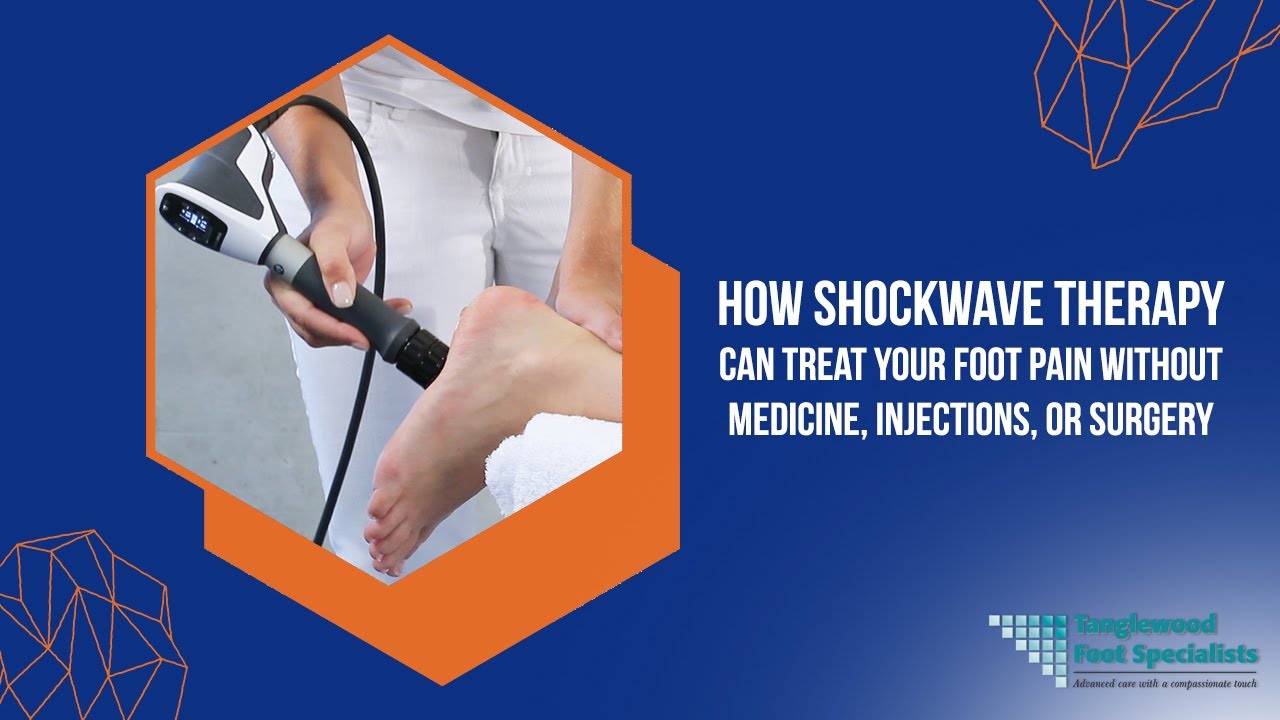
Shockwave therapy — $300 per session or $750 for the three-session package — is actually the treatment I use on my  own heel pain. Despite the name, there's no electric shock involved. It delivers acoustic pressure waves through a handheld device placed against the skin — no incision, no anesthesia, no downtime. Sessions run 10–15 minutes, once weekly for three weeks.
Think of it like aerating a lawn: compacted soil blocks water and nutrients from reaching roots, so you punch channels through it. Shockwave creates similar microchannels in damaged tissue, improving blood flow and allowing healing factors to reach areas too scarred or calcified to respond to anything else. The mild tapping discomfort you'll feel during treatment is a good sign — it means we're hitting the right spot. More than 82% of people who complete the full protocol find their pain resolved, which is a number that almost makes surgery obsolete for the conditions shockwave treats.
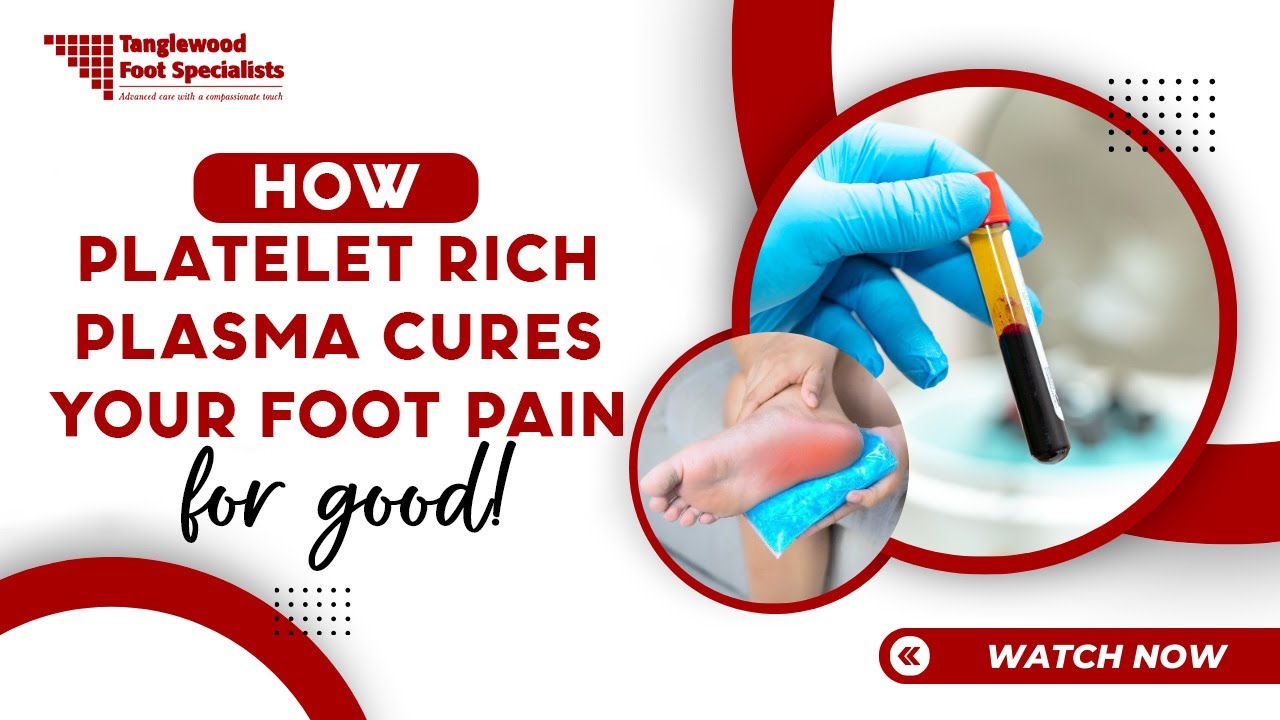
PRP injection therapy — $850 — is what I think of as liquid gold for healing. I draw a small blood sample, similar to a routine lab draw, and process it in a centrifuge for about 15 minutes. That separates out the plasma layer concentrated with platelets and growth factors — specialized proteins that tell your body to send repair cells, increase collagen production, and shift tissue from chronic inflammation into active healing. I inject that concentrate precisely into the damaged area, often using ultrasound guidance to make sure we're placing it exactly where it needs to go.
Unlike cortisone, the results are durable because the mechanism is fundamentally different: we're not suppressing the problem, we're rebuilding the tissue. Most people notice initial improvement within two to four weeks, with full tissue remodeling at three to six months. For Achilles tendon pain and sports-related foot conditions, where surgical downtime is genuinely impractical, this is often the treatment that changes everything.
When I combine both — PRP first, then shockwave once weekly for three weeks — the results are meaningfully stronger than either alone. PRP provides the seeds: the growth factors and signaling proteins that tell your body to repair. Shockwave prepares the soil: creating the optimal biological environment for those seeds to take hold.
Together, the combined protocol runs approximately $1,600 and produces an 85–95% success rate for chronic conditions that haven't responded to conservative care. I also use BPC-157 peptide as an adjunct for people with significant tendon or soft tissue involvement — a body-protective compound taken systemically to support and optimize the entire healing environment.
Surgery — When It's Actually Necessary
Look, I know foot surgery sounds scary. That's actually one of the main reasons people delay getting help — and it means they've been in pain longer than they had to be. Here's what I want you to understand: the overwhelming majority of the chronic foot and ankle conditions I treat never reach the operating room.
Ninety-five percent of plantar fasciitis cases resolve without surgery. For most of the chronic soft tissue conditions I see, the numbers are similar — and they improve even further when people get to regenerative care before the damage has gone on too long.
When surgery is genuinely indicated, I perform endoscopic plantar fascia release, the Tenex procedure for minimally invasive tendon debridement, Achilles repair, and arthroscopic joint procedures. Endoscopic release — the most common — is done on an outpatient basis. Weeks one and two involve a surgical boot and protected weight bearing while swelling settles. By weeks three through six, most people are transitioning to supportive footwear and beginning range-of-motion work.
Normal daily activity typically resumes at two to three months, with clearance for high-demand athletic activity at three to six months, usually with custom orthotics for ongoing support. For people who genuinely need podiatric surgery, the outcome data is strong — over 90% satisfaction when the procedure is appropriately indicated and well-executed. But that conversation starts only after everything else has had a fair chance.
Not Sure Which Level Is Right for You?
That's exactly what your first appointment is for. We'll examine your foot, review your history, and map out the clearest path forward together.
Schedule Your Evaluation
What to Expect When You Come In
When you come in, I'll start with a thorough biomechanical examination — how your foot is structured, how you walk, and where the load is concentrated. I want to understand the full picture before I say anything about treatment, because the same symptom can have very different causes, and the wrong diagnosis leads to the wrong treatment plan. Most new patient appointments run 45 to 60 minutes, and the goal is that you leave with a clear plan, not another "let's wait and see."
I'm going to ask you questions about your history: how long the pain has been there, what you've already tried, what makes it better or worse, and what you're trying to get back to. That last question matters as much as any clinical finding. I need to know whether you're trying to run a 5K or just walk through a grocery store without pain — because that shapes every recommendation I make.
We'll talk through imaging when it's relevant. X-rays are useful for ruling out fractures and assessing bone structure; diagnostic ultrasound lets me look at soft tissue in real time, which is particularly valuable when I'm evaluating tendon damage or confirming a PRP injection site. I won't order imaging just to order it — only when it changes what we do.
I won't judge you — whether you've been ignoring this for two years, cycling through cortisone shots, or trying every home remedy you could find online. I've seen all of it, and none of it changes my job, which is to figure out where you are right now and what gets you better from here. My practice is in the Tanglewood area of Houston, close to the Galleria, and I keep same-day and next-day appointments available as often as I can — because I know that when you're dealing with chronic pain, "we'll get you in six weeks" isn't the answer you need.
Either way, I need to see you. There's no treatment decision I can make from the outside — not by reading your symptoms online and not by you trying to figure out which option fits your situation. The exam tells us what's actually happening, and from there the path forward is usually clearer than you'd expect.