What Is an Ingrown Toenail, Exactly?
 An ingrown toenail occurs when the corner or edge of your toenail grows into the surrounding skin rather than over it. This causes pain, redness, and swelling at the nail border — most often on the big toe. Left untreated, bacteria can enter the skin and cause an infection that may require medical treatment, as the American Podiatric Medical Association notes.
Here's what's actually happening inside that swollen toe. Your nail is designed to grow straight forward over soft tissue — not downward or sideways into it. When the nail edge curves or the skin fold rises up around it, the nail starts pressing into living tissue with every single step you take. That constant pressure is why it doesn't just hurt when you bump the toe; it hurts when you walk, when you wear shoes, sometimes even when a bedsheet touches it.
Most people assume ingrown toenails are always caused by bad trimming. Sometimes they are. But there's another scenario no one talks about: a naturally curved nail — what we call an involuted or pincer nail shape — where the sides of the nail arc downward more sharply than normal. That type of nail is built to grow into the skin fold no matter how carefully you cut it, a pattern well documented in the clinical literature on nail anatomy and predisposing factors.
And if you also happen to have toenail fungus that has thickened and distorted the nail, that only increases the risk. Understanding which situation you're dealing with is the whole ballgame — it's why about 20% of all foot complaints I see come down to ingrown toenails.
Why Do Ingrown Toenails Keep Coming Back?
There are two categories of causes here, and they need completely different solutions. The first category is behavioral — things you can actually control. The second is structural, and no amount of trimming technique fixes it.
On the behavioral side: cutting nails too short, rounding the corners to follow the curve of the toe, and wearing shoes with a narrow toe box are the big three. When you cut a curved corner, you're creating a pointed edge that acts like a needle driving into the soft skin fold on either side. And when your shoe is squeezing your toes laterally all day, it's forcing that skin fold against the nail edge with every step. Houston's heat and humidity make this worse than people realize — your feet spend long hours inside closed shoes in a warm, damp environment, the skin around the nail fold softens, and even a slightly sharp edge can start working its way in.
On the structural side, it's a different story. If you have a hereditary curved nail shape — an involuted or pincer nail — the sides of the nail arc naturally downward. The nail is built to grow into the skin fold. Wide nail plates relative to the toe width cause the same problem, as do elevated lateral nail folds, where the skin literally rises up around the nail rather than the nail growing down into it.
Runners and athletes logging heavy weekly mileage add repetitive micro-impact into the mix, which compounds the structural issue with mechanical stress.
I won't judge you for how you've been trimming your nails. But if you've corrected your technique, you've switched to better shoes, and you're still ending up with the same swollen toe every few months — your nail shape is almost certainly the reason, not your habits. And the fix for that looks very different from the fix for a trimming problem.
The Myth That Makes Ingrown Toenails Worse
There's one thing I see regularly that turns a minor problem into a painful, infected mess: people trying to dig out the  corner of the nail themselves. The thinking makes sense — if the sharp edge is the problem, just remove it. But here's what's actually happening when you do that.
The nail matrix is the growth center at the base of your nail — it's where the nail is actually produced. It doesn't know what you did at the tip. It keeps growing the same curved shape it always has, but now with a sharper, more jagged leading edge.
When you cut a V-shape into the nail, dig at the corner, or rip out the nail edge in the bathroom, you get temporary relief for a week or two. Then the nail grows back — and that newly sharpened point pierces the skin fold more aggressively than before. The next ingrown nail is almost always worse than the one you tried to fix.
In my practice, I regularly see infections that started as home fixes. What began as a minor irritation became a swollen, draining toe that needed antibiotics and a procedure to clean up. Hoping doesn't work. And digging doesn't work either.
Warning Signs You Shouldn't Ignore
Most people in the early stages notice tenderness and redness along one side of the nail border, mild puffiness on one side of the toe, and pain when wearing closed shoes that disappears in sandals. The skin near the nail edge may feel firm and warm. Caught here, this is very manageable.
Some people progress further. You might see skin beginning to grow over the nail edge — that's hypergranulation tissue, the body's attempt to protect itself that actually makes things worse. Persistent throbbing even without shoe pressure, and yellow or white drainage from the nail border, both mean infection is already present and home care won't cut it.
Seek care today — not next week — if you're seeing pus actively draining from the nail border, redness spreading past the nail and up the toe (that's cellulitis moving through the soft tissue and it's a medical emergency), or fever alongside the toe pain. And if you have diabetes, any ingrown toenail is a medical priority. A seemingly minor infection can escalate to serious diabetic foot complications within days — please schedule your diabetic foot checkup and don't wait. Growing children and teenagers are also high-incidence — parents should watch for early redness at the nail border, especially during growth spurts when shoe fit changes fast.
How a Houston Podiatrist Treats Ingrown Toenails — From First Visit to Permanent Fix
In my Houston practice, I take a straightforward approach: we start with the least invasive option that makes clinical sense for where you are right now. If your ingrown nail is mild and caught early, we may not need to do anything in the office at all. If it's infected or keeps coming back, I have options that end this permanently — same day, in-office, with local anesthesia — consistent with clinical guidelines published in American Family Physician.
At-Home Management — For Mild, Early-Stage
Sometimes, that's as simple as changing what you do at home for a week. Soak the foot in warm water for 15–20 minutes twice daily to soften the surrounding skin, then gently tuck a tiny wisp of cotton or waxed dental floss under the nail edge to guide it to grow over — not into — the skin fold. Wear open-toed shoes or sandals until the symptoms ease. Caught at the very first sign of redness, this can resolve things in one to two weeks.
But I'll be honest with you about its limits. This approach works only when the nail is barely starting to turn. If you've tried it before and the toe got worse, if there's any sign of infection already, or if you have diabetes, skip this step and come see me instead. There's no benefit to waiting at that point.
Professional Trimming and Education — In-Office, Mild to Moderate
For a nail that's progressed past the early stage, I can safely trim the nail edge at the correct angle in the office — removing only what needs to go without creating additional trauma. More importantly, I'll look at your specific nail anatomy and give you personalized guidance. The standard "straight across" rule sometimes needs adjustment for curved or wide nail plates, and what you've been told is correct trimming may actually be wrong for your nail shape. This is a single-visit solution that provides immediate relief from the acute pressure, and we'll figure out whether your trimming habits or your nail shape is driving the problem.
Onyfix Nail Correction System — Non-Surgical, For Structural and Recurring Cases
 This is the option that changes everything for people with curved nails — and it's not mentioned anywhere else in Houston's top podiatry content. The Onyfix nail correction system is a composite strip that bonds to the surface of the toenail. It gently and progressively reshapes the nail's growth arc over several months — no cutting, no needles, no pain. Think of it as a retainer for your toenail, the same principle as orthodontic braces applied to nail shape.
Onyfix is ideal for recurring ingrown toenails where the nail's natural curvature is the underlying problem, and for anyone who wants a non-procedural solution. You can wear it comfortably in closed-toe shoes with no activity restrictions. Results typically become visible within two to three months as the nail grows out in a flatter arc. If you've been getting the same ingrown nail every few months and you're tired of the cycle, this is the conversation we need to have.
Partial Nail Avulsion — For Infected or Acutely Painful Nails
When the nail is infected or you're in significant pain right now, I'll numb the toe completely with a local anesthetic — once it's numb, you won't feel a thing. Then I carefully remove just the ingrown nail edge, not the entire nail. The remaining nail looks and functions completely normally.
You walk out in your own shoes. The whole in-office procedure takes 15–20 minutes, mild tenderness lasts two to four days, and you're back to normal activity within a week. Cash price is $350 plus the visit fee.
The one limitation worth being upfront about: this resolves the acute problem but doesn't change the underlying nail shape. If your nail is curved, the edge may grow back ingrown within a few months — a recurrence pattern confirmed in a Cochrane systematic review of ingrown toenail interventions. That's not a failure — it's just a signal that we need to address the root cause with one of the options above or below.
Matrixectomy — Permanent Solution
The matrixectomy is the procedure that ends this permanently, and I want to make sure you understand what it actually involves before you decide whether it's right for you. Look, I know the word "procedure" sounds scary. But most of my patients tell me they barely felt anything and wished they'd come in months sooner — it's one of the most straightforward things I do.
I numb the toe exactly as with the avulsion. After the ingrown nail edge is removed, I treat the nail matrix — the growth cells at the base of that nail edge — with a chemical solution called phenol that permanently prevents that section from ever regrowing. The nail looks completely normal afterward; you simply have a slightly narrower nail plate on one side.
Recovery is the same as an avulsion: mild tenderness for a few days, full activity resumed quickly. The success rate is 99% — the highest of any ingrown toenail treatment in the clinical literature. Cash price is $450 plus the visit fee. For most people dealing with a recurring structural ingrown nail, this is the right answer.
If this sounds like what you've been dealing with, don't wait for it to get infected. Contact us for an appointment and we'll figure out the right path for your specific nail — same day if you need it.
What to Expect When You Come In
When you come in, I'll start by looking at the toe — the nail shape, how far the edge has grown into the skin fold, and whether there's any infection present. I can usually tell in about 60 seconds what's going on and what your options are. No jargon, no assumptions that you should already know the terminology — I'll explain exactly what I'm seeing in plain language.
If the toe needs same-day treatment, we can almost always do it that visit. I won't send you home to "wait and see" if the nail is infected or you're in significant pain right now. If the problem is structural — a curved nail that's going to keep doing this — I'll explain whether the Onyfix system or a matrixectomy makes more clinical sense for your situation, based on your nail shape, how often this has happened before, and what your goals are. We'll decide together, not unilaterally.
For any in-office procedure, you'll be in and out in under an hour. Most people drive themselves here and go straight back to work afterward. For anyone with diabetes, I take additional time to examine circulation and nerve sensitivity in both feet — a full diabetic foot exam is standard for me, not optional, because that context changes how I approach everything.
Dr. Andrew Schneider has treated ingrown toenails for more than 25 years here in Houston — there's no variation I haven't seen, and nothing about your situation is going to surprise me.
Five Things Houston Podiatrists Actually Recommend to Prevent Ingrown Toenails
Most prevention advice you'll read online tells you the same three things: trim straight across, wear better shoes, keep your feet clean. That's not wrong. But it's incomplete — and it explains why so many people do everything "right" and still end up back in this situation. Here's what actually matters, and more importantly, why.
Trim straight across — but know your nail shape first
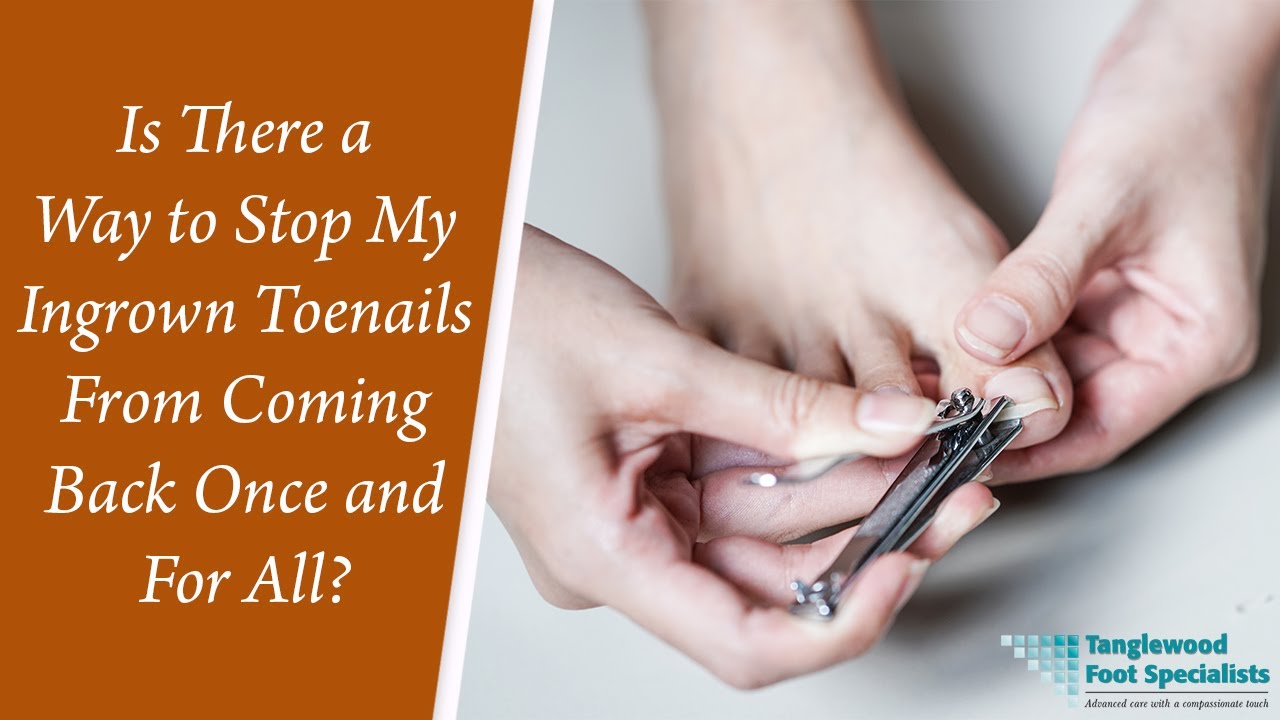
The standard guidance is sound: use toenail clippers with a wide jaw, cut straight across, don't round the corners. Rounding the corners creates a pointed edge that acts like a needle driving into the skin fold on regrowth. But here's the nuance no article mentions — if your nails are naturally curved, even perfect straight trimming leaves corners that arc downward and dig in.
That's where reshaping the nail without any cutting becomes the real prevention strategy, not better scissors technique.
Leave your nails slightly longer than you think
The nail edge should sit at or just past the tip of your toe — level with the flesh when you look straight down at it. A nail cut shorter than the toe tip has no forward path; the plate bows at the sides and grows into the skin fold instead. In Houston, I see a lot of people who keep their nails trimmed very short from March through October — sandal season runs long here — and then wonder why they're dealing with ingrown toenails every summer. A nail cut below the tip of your toe has nowhere to go but sideways.
Choose shoes for toe box width, not just length
A shoe can fit perfectly in length and still crush your toes laterally. That continuous side pressure forces the skin fold against the nail edge with every step, all day long. The test: wiggle your toes inside the shoe. If you can't, the toe box is too narrow.
For kids' shoe fit guidance, this is especially critical — kids' feet outgrow shoes fast, and parents often don't realize the toe box is too tight until the ingrown nail is already there.
Keep feet clean and dry — especially in Houston's climate
Wash with soap and warm water daily, then dry thoroughly between toes after showering. Houston's combination of heat and humidity means feet stay damp longer inside closed shoes than almost anywhere else — moisture softens the lateral skin fold, dramatically lowering the force needed for a nail edge to penetrate. Moisture-wicking socks help. So does rotating shoes between wears so they dry out fully inside before you put them back on.
Inspect your feet weekly
Redness at the nail border is the earliest warning sign — and it's vastly easier to treat at that stage than after infection sets in. If you have diabetes, weekly self-inspection is non-negotiable; diabetic toenail care follows a different protocol and requires professional oversight. Runners should check both big toenails after any run over five miles — black discoloration under the nail changes the nail shape as it grows out and increases ingrown risk significantly.