Why Your Heel Hurts: What's Actually Going On
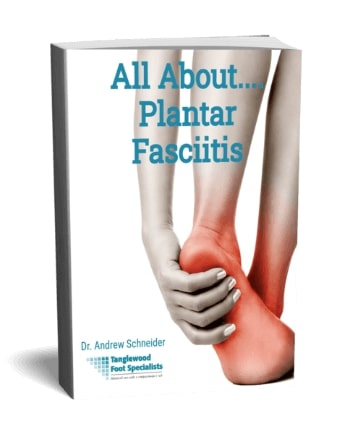
Most heel pain comes from a condition called plantar fasciitis — the inflammation and micro-tearing of the plantar  fascia, a thick band of tissue that runs along the bottom of your foot from your heel bone to your toes. It's the most common cause of heel pain I treat in my practice, and it accounts for roughly 2 million doctor visits in the United States every year.<sup>[1]</sup>
Here's what's actually happening when you feel that stabbing pain with your first step. During periods of rest — overnight, or even after sitting for an hour — your plantar fascia begins to contract and attempt to repair itself. Then the moment you stand up and put weight on your foot, all that repair work gets pulled apart. That's the tearing sensation. That's why the first few steps are always the worst, and why it often eases up after you've been walking for a few minutes.
The problem — and this is what makes plantar fasciitis so stubborn — is that the plantar fascia has relatively poor blood supply compared to most tissues in your body. Blood delivers the oxygen, growth factors, and healing cells needed to actually complete a repair. Without adequate blood flow, your body keeps starting the healing process and never finishing it. Think of it like a construction crew that shows up every night, lays some groundwork, and then gets sent home before the job's done. Every morning, you're back to square one.
What Heel Pain Actually Feels Like
Most of the time, it's that sharp, stabbing pain under the heel with your first steps in the morning — pain that eases after five or ten minutes of walking but comes back after long periods of sitting or standing. Sound familiar? That pattern alone tells me a great deal before I've even examined your foot.
But not all heel pain is plantar fasciitis. If your pain is at the back of the heel — where the Achilles tendon meets the heel bone — that points to Achilles tendinitis, which is a different problem that needs a different approach. Numbness or tingling alongside the pain may mean nerve involvement. And if you have diabetes, don't wait on heel pain — diabetic foot care requires earlier intervention because healing is much slower and complications escalate fast.
A few situations where you shouldn't wait: sudden severe heel pain after a fall or jump (think stress fracture), pain that keeps getting worse after two or more weeks of rest, or any wound on your foot that isn't healing. Come in. Those need to be looked at promptly. For everything else, the timing and location of your symptoms tell us a lot — and we'll sort it out together.
Will Heel Pain Go Away on Its Own? The Honest Answer
Sometimes, yes. If you've had heel pain for less than six weeks and you address it quickly — supportive footwear, activity modification, morning stretching before your first step — there's a real chance it resolves on its own. That's the "it went away" story you've heard from a friend or coworker. Those cases are real, and I don't want to dismiss them.
But here's what most people don't realize: once heel pain crosses the 6–8 week mark without meaningful improvement, the equation changes. At that point, the tissue has likely entered what I call a failed healing response. Your body started trying to fix the injury, but scar tissue formed, the healing process stalled out, and passive rest simply can't break that cycle. You can ice it, rest it, and stay off it for a week — and the pain will back off just enough to make you think it's getting better. Then you walk across your kitchen barefoot, and it's all back.
The inflection point I watch for is six to eight weeks. If you're past that mark and it's still greeting you every morning, your heel is telling you something important. And the longer a failed healing response sits without intervention, the more scar tissue accumulates — which makes recovery slower and treatment more involved. This is especially true for runners and active patients who keep training through heel pain. Every mile you put on tissue that can't complete its repair cycle makes the hole deeper.
The Truth About Heel Spurs (It's Not What You Think)
If you've had an X-ray, there's a good chance someone mentioned a heel spur — and there's an equally good chance  that sent you straight to Google, where you found a lot of alarming information about bone surgery. I want to clear this up, because fear of heel spur surgery keeps a lot of people from getting the help they actually need.
A heel spur isn't the cause of your pain. It's the result of it. When the plantar fascia pulls chronically on the heel bone, your body responds by depositing extra calcium at the attachment point — a process called Wolff's Law. The spur formed because the underlying condition went unaddressed for long enough. Treating the spur without treating the plantar fasciitis would be like patching a ceiling stain without fixing the roof leak that caused it.
Here's the part that should actually reassure you: less than 5% of heel spurs ever require surgical removal.<sup>[5]</sup> I can't tell you how many patients avoided getting help for years because they were convinced they'd need heel spur surgery. They didn't need surgery. They needed treatment for the underlying condition — and once we addressed that, the spur became completely irrelevant to their pain. So if that fear has been holding you back, let it go. The spur isn't your problem. The plantar fasciitis is.
How a Houston Podiatrist Treats Heel Pain That Won't Go Away
My goal isn't to get you out of pain today and back in my office in six months with the same problem. My goal is to figure out why your heel hasn't healed — and fix that. The treatment plan looks different depending on how long you've had this, what you've already tried, and what's driving the problem biomechanically. Here's how I approach it, from the simplest changes through the most advanced options.
Level 1 — Lifestyle Changes
Sometimes, the most powerful first step is also the simplest. Stop walking barefoot — especially first thing in the morning and on hard surfaces. Tile, concrete, and hardwood are brutal on an inflamed plantar fascia before it's had a chance to warm up.
Houston has no shortage of those surfaces — Memorial Park trails, downtown office buildings, Galleria tile floors. Your feet feel every bit of that without proper support. Keep supportive shoes right next to your bed and slip them on before your feet hit the floor.
Switch to lower-impact activities like swimming or cycling while you're healing. And if your athletic shoes have more than 300–400 miles on them, replace them — the cushioning compresses long before the upper wears out. For acute cases caught early, these changes alone can turn things around within two to four weeks.
Level 2 — At-Home Care
The most important at-home strategy is one most people skip entirely: stretch before your first step. Before your feet hit the floor in the morning, sit up and pull your toes back toward your shin for 30 seconds. Do it again before standing after any extended sitting. This re-lengthens the plantar fascia gradually instead of tearing the overnight repair work apart all at once. Ice for 15–20 minutes after activity — not before. A frozen water bottle rolled under your foot for 10 minutes does double duty: icing and massaging the fascia at the same time.
Night splints are an option, and I want to be honest with you: only about 60–70% of people find them tolerable enough to use consistently. They hold your foot in a dorsiflexed position overnight to prevent the fascia from contracting while you sleep — sound in theory, genuinely uncomfortable for many people in practice.
I also recommend Tosallin CBD/CBG cream for at-home pain management. I used it myself when I had plantar fasciitis; three pumps rubbed in well, three times a day, and I had relief in under five minutes. Three days in, the pain was essentially gone. It uses a transdermal delivery system that actually penetrates to the site of inflammation — something most topicals can't do. You can also explore red light therapy as a supportive tool between office visits.
Level 3 — Conservative In-Office Care
When at-home measures aren't moving the needle after two to three weeks, it's time to come in. A cortisone injection ($120) is often where we start — it's a powerful anti-inflammatory that can break the pain cycle and give the tissue a window to recover. Here's what I want you to understand about cortisone, though: it controls inflammation, but it doesn't repair tissue. It's a reset button, not a cure. Used strategically, it's genuinely valuable. Used repeatedly without addressing root cause, it can weaken the tissue over time.
Custom orthotics molded to your specific foot ($700) are the most important long-term tool I have for plantar fasciitis. They're built from a precise digital scan of your foot and engineered to correct the biomechanical drivers — overpronation, structural imbalances, gait patterns — that are keeping the fascia under chronic stress. If flat feet or overpronation are driving the problem, a pharmacy insole simply cannot do what a custom device does. Physical therapy can be a strong addition, especially for rebuilding calf flexibility and intrinsic foot strength. With consistent conservative care at this level, over 90% of patients resolve without needing anything more.
Level 4 — The Third Option: Regenerative Medicine
There's a whole category of regenerative medicine options that most patients never hear about — sitting right between conservative care and surgery — and this is where things get genuinely exciting. If you've done the stretching, the orthotics, the cortisone, and you're still dealing with this, these are the options I want you to know about.
Shockwave therapy for chronic heel pain ($750 for three sessions) uses acoustic pressure waves — not electric shocks,  despite the intimidating name — to restart the healing response in chronically injured tissue. Think of it like aerating a lawn: the waves create micro-channels that allow blood flow, growth factors, and healing cells to reach tissue that's been starved of them. Three sessions, once a week, about 15 minutes each. A 2022 meta-analysis in the Journal of Foot and Ankle Surgery found 82% of patients with chronic plantar fasciitis reported significant pain resolution after a full shockwave course.<sup>[3]</sup> That number alone almost makes surgery obsolete.
PRP injections concentrate your body's own healing factors ($850) — we draw a small amount of your blood, spin it in a centrifuge to isolate the platelet-rich plasma, and inject it precisely into the damaged tissue. I call it liquid gold for healing. It delivers a concentrated burst of growth factors right to the spot that's been starved of them. A systematic review of PRP outcomes in chronic tendon conditions found 70–80% of patients saw significant improvement.<sup>[4]</sup> When we combine shockwave and PRP — shockwave first to prepare the tissue, then PRP to flood those newly opened channels with healing factors — the combined success rate climbs to 85–95%. It's seeds and soil working together.
The Remy Class IV laser penetrates deep into damaged tissue ($497 for six sessions) through a process called photobiomodulation — which is a complicated way of saying it recharges your cells' ability to heal. Chronically injured tissue runs on depleted cellular energy; the cells can't produce what they need to repair themselves. The Remy delivers specific wavelengths of light that stimulate the mitochondria to produce more ATP — the energy currency your body uses for healing.
After each session, I press on the tender spot on your heel. In most cases, the pain is dramatically reduced or completely gone right there in the office. That's not temporary relief. That's tissue responding. For the most stubborn cases, I sometimes add BPC-157 peptide therapy to support tissue repair as a final layer. Most people start feeling improvement within two to four weeks; full tissue remodeling takes three to six months.
Level 5 — Surgery (For the 5% Who Need It)
Look, I know foot surgery sounds scary. But here's what I want you to hold onto before you read another word: 95% of patients — including people who've been dealing with this for years — get better without ever going to an operating room. The American Academy of Orthopaedic Surgeons confirms surgical intervention for plantar fasciitis is appropriate in fewer than 5% of cases.<sup>[5]</sup> I take that seriously, and I don't recommend it until we've genuinely exhausted everything above.
When that's the case, I most commonly perform Tenex — a minimally invasive procedure that uses ultrasonic energy to break down and remove damaged scar tissue through a needle-sized instrument, under local anesthesia, in about 20 minutes. Most people are back in shoes within two to four weeks. For cases needing more extensive repair, a plantar fascia release partially reduces the tension on the fascia through a small incision. Both approaches carry over 90% success rates with the right patient selection. But again — the vast majority of people I see never get there.
If you've been dealing with heel pain for more than a few weeks without improvement — or if it keeps coming back — call us at 713-785-7881 or request an appointment online. The sooner we identify where you are in the progression, the more options you have.
What to Expect When You Come In
When you come in, I'll start by listening — not just to where it hurts, but to when it hurts, how it started, how long it's been going on, and what you've already tried. That last part matters more than you'd expect. I'm not going to suggest you stretch and ice if you've been stretching and icing for six months.
I need to understand where you are in the progression before I say anything about where we're going. And I won't judge you for waiting. Most of the people who come through my door have been dealing with this longer than they want to admit. That's okay. You're here now.
After we talk, I'll do a thorough physical exam — pressing along the plantar fascia to map where the tenderness is concentrated, watching how you walk, and evaluating your footwear. I'll almost always take a digital X-ray to rule out a stress fracture and get a look at the heel bone structure. If the soft tissue picture isn't clear from the exam, I may use diagnostic ultrasound to look directly at the fascia — we can see the tissue in real time, identify thickening, tearing, or scar tissue, and confirm exactly what we're dealing with. The whole visit typically takes about 45 minutes, and you'll leave with a clear explanation of what I found and what I recommend.
I won't throw every treatment at you at once. I'll tell you exactly where I think you are in the progression, what I'd recommend starting with, and why — including what we'd try next if the first approach doesn't get you where we want to be. For most patients, that first conversation brings real relief even before any treatment begins. Not because the heel pain is gone, but because they finally understand what's happening and have a real plan. That's the part I care about most. You deserve a clear answer and a path forward — not just another instruction to rest and stretch.
Dr. Andrew Schneider has been treating heel pain in Houston for over 25 years. When you're ready, schedule your appointment and let's figure out exactly what your heel needs.