If you have flat feet, the shoes you wear can make a major difference in how your feet feel at the end of the day. And while a soft, heavily cushioned shoe may feel comfortable when you first try it on, cushioning alone isn’t necessarily what a flat foot needs.
The key is control and support.
People with flat feet often experience increased pronation, meaning the foot rolls inward as they walk. Pronation itself is a normal part of walking. But when the foot rolls inward too much, it can place additional stress on the foot and ankle and contribute to discomfort.
So, how do you choose shoes that work with your flat feet instead of against them?
Table of Contents
- Start by Understanding Your Flat Feet
- Motion-Control Shoes for Flat Feet
- Stability Shoes Offer a Middle Ground
- What Should You Look for in a Shoe for Flat Feet?
- Can an Insole Make a Shoe Better for Flat Feet?
- When Custom Orthotics May Help
- There’s No Single “Best Shoe” for Every Flat Foot
- Get Help for Painful Flat Feet in Houston
Start by Understanding Your Flat Feet ![An image of flat feet]()

Having flat feet simply means that your arches are lower than average or collapse when you’re standing.
That doesn’t automatically mean something is wrong. Some people have flat feet their entire lives and never experience pain.
For others, however, the way the foot moves can contribute to problems in the feet, ankles and even higher up the leg. Flat feet may also be associated with conditions such as plantar fasciitis and other sources of foot or ankle discomfort.
That’s why choosing shoes based only on appearance, cushioning or brand can be a mistake.
Instead, pay attention to how much stability your feet actually need.
Motion-Control Shoes for Flat Feet
There are two major categories of supportive shoes that can work well for people with flat feet.
The first is the motion-control shoe.
Motion-control shoes offer a high level of support and are designed to limit excessive movement of the foot. They can be especially helpful for people with flatter feet and significant overpronation.
Typically, these shoes have a firmer and more structured construction than a neutral running or walking shoe.
That extra structure isn’t there by accident. Its job is to help prevent your foot from rolling too far inward every time it hits the ground.
If your feet become tired or painful after long periods of walking or standing, or if you know that you significantly overpronate, a motion-control shoe may be worth considering.
Stability Shoes Offer a Middle Ground
Not everyone with flat feet needs the maximum amount of control.
If your flat feet are milder, a stability shoe may provide a better balance.
Stability shoes offer support to help control excessive motion while generally providing a more flexible and cushioned feel than a motion-control shoe. They can be a good option for people with mild flat feet or those who need some additional control without wanting an especially rigid shoe.
Think of the difference this way:
Motion-control shoes: Maximum support and control.
Stability shoes: Support with more flexibility and cushioning.
Neither category is automatically better. The right choice depends on your foot structure, the amount you pronate, your activities and whether you’re experiencing pain.
What Should You Look for in a Shoe for Flat Feet?
When you’re shopping for shoes, don’t rely only on the label on the box.
Pick up the shoe and examine it.
A supportive shoe for flat feet should generally feel relatively firm and stable. We recommend well-supported, firm shoes for people with low arches rather than footwear that offers little structural support.
Most importantly, the shoe should be comfortable when you try it on. Don’t buy an uncomfortable shoe with the expectation that you’ll eventually break it in.
And remember that everyone’s feet are different. A shoe your friend loves may be completely wrong for your foot.
Can an Insole Make a Shoe Better for Flat Feet?
Sometimes, choosing the right shoe isn’t enough.
An over-the-counter insole can add arch support and provide additional control beyond what the shoe itself offers.
That can be particularly useful if you find a shoe that’s comfortable but doesn’t provide quite enough support.
But an over-the-counter insert has limitations. It’s manufactured for an average foot, not specifically for yours.
For someone who continues to experience foot pain, ankle pain or fatigue despite wearing appropriate shoes, it may be time to look beyond store-bought inserts. And that's when it's time to consider custom orthotics.
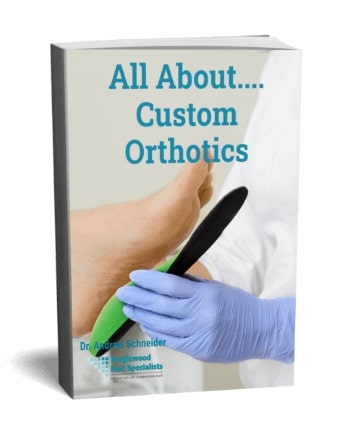
When Custom Orthotics May Help
Custom orthotics are designed specifically for the shape and mechanics of your feet.
For many patients with symptomatic flat feet, orthotics can be used to provide additional stability, redistribute pressure and support the foot inside the shoe.
This doesn’t mean that everyone with flat feet needs custom orthotics.
If your feet are flat and completely comfortable, there may be nothing that needs to be treated.
But if you’re repeatedly dealing with pain, if your shoes seem to wear unevenly or if you can’t find footwear that keeps you comfortable, it’s worth finding out whether your foot mechanics are contributing to the problem.
There’s No Single “Best Shoe” for Every Flat Foot
This may be the most important point.
Searching online for the “best shoe for flat feet” will give you plenty of lists filled with specific brands and models. But your feet don’t know which sneaker won an online ranking.
They respond to how a shoe actually controls and supports your foot.
Someone with mild flat feet may do perfectly well in a stability shoe. Someone with substantial overpronation may feel better with motion control. Another person may need additional support from an insole or custom orthotic.
The goal isn’t to find the shoe with the biggest promises.
It’s to find the shoe that lets you walk, work, exercise and go through your day without your feet paying the price.
Get Help for Painful Flat Feet in Houston
If you’re dealing with persistent foot or ankle pain, don’t assume that flat feet are simply something you have to live with.
At Tanglewood Foot Specialists, we can evaluate your foot structure and the way your feet function when you walk. From there, we can determine whether changing your shoes, adding more support or using custom orthotics could help address the source of your discomfort.
If your flat feet are causing pain, contact us today to request an appointment with Tanglewood Foot Specialists in Houston. We'll help you find out what kind of support your feet actually need.