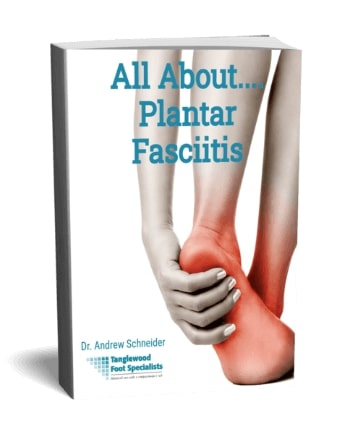
What Is Plantar Fasciitis?
Plantar fasciitis is a degenerative condition of the plantar fascia — the thick band of tissue that runs along the bottom  of your foot from your heel bone to the base of your toes. When that tissue breaks down faster than your body can repair it, you get the classic stabbing heel pain that's worst with those first steps in the morning.
Here's what's actually happening when you feel that pain. While you sleep, your plantar fascia contracts and your body tries to knit the micro-tears back together. The moment you put weight on your foot, it pulls all that overnight repair work apart in an instant. That searing first-step pain isn't random — it's a healing response being interrupted, over and over, every single morning.
Here's what most people don't realize — if you've had heel pain for more than a few months, you're not dealing with simple inflammation anymore. The tissue has actually broken down. That distinction matters enormously, because early plantar fasciitis responds to ice and rest, but once it's been going for six weeks or more, the condition shifts into what we call fasciosis — actual tissue degeneration. Anti-inflammatories and cortisone don't rebuild degenerated tissue. That's why they stop working.
One more thing worth clearing up: if your X-ray showed a heel spur vs. plantar fasciitis finding, the spur almost certainly isn't what's causing your pain. Heel spurs form as a consequence of chronic fascial tension — they're a side effect, not the source. Treating the fascia resolves the pain whether the spur is there or not.
Why Does Plantar Fasciitis Happen — and Why Won't It Go Away?
The plantar fascia has notoriously poor blood supply compared to most soft tissue in your body. That's the core reason this condition becomes so stubborn. When tissue gets injured without adequate blood flow to fuel repair, your body's healing response starts — then stalls. The injury stays effectively open for months, sometimes years.
Not because you're doing anything wrong. Because the biology got stuck.
I think of it like a construction crew that showed up, poured the foundation, and then just... left. The job never finished. In chronic plantar fasciitis, that's exactly what happened — your body launched a repair response that never completed, and every step you take re-aggravates tissue that was never allowed to fully heal.
In Houston, the conditions are almost purpose-built for this problem. Hard tile floors in every home, flip-flops worn year-round because our winters barely exist, and jobs that demand hours of standing on unforgiving surfaces. I see healthcare workers from the Texas Medical Center, teachers standing on classroom concrete, and energy sector professionals who've convinced themselves that dress shoes with no support are just part of the job. None of these are character flaws — they're biomechanical realities I can help fix.
And one of the most overlooked drivers of recurrence is tight calf muscles — a condition called equinus — where the calves are too short to allow proper foot flexion, so the plantar fascia absorbs extra load with every single step.
The other pattern I see constantly: someone rests for three weeks, the pain eases, they return to normal activity, and it flares right back. That's not bad luck. Passive rest slows morning heel pain recovery in chronic cases by reducing the already-limited blood flow to the fascia. Controlled movement combined with biomechanical correction consistently outperforms rest alone.
I won't judge you about your weight, either — every extra pound adds roughly four pounds of pressure per step, and that's just physics. I've treated marathon runners at their ideal weight with severe plantar fasciitis, and heavier people who've never had a foot problem in their lives. The sports injuries affecting the foot I see most often aren't from dramatic falls — they're from accumulated load on tissue that never fully healed.
Cortisone Shots Help — But Here's What They Don't Do
I'm not anti-cortisone. I've given thousands of cortisone injections over 25 years, and I'll give more. But I want you to  understand what you're actually getting — significant short-term relief, not long-term healing. If you've already had two or three shots and you're back in pain, it's time to talk about what actually repairs the tissue.
Cortisone works by suppressing inflammation. For acute cases — pain that's been present for a few weeks — one well-timed injection combined with stretching and supportive footwear can be enough to turn the corner. But in chronic plantar fasciitis, the problem isn't primarily inflammation anymore. It's degenerated tissue. Cortisone can quiet the pain signal without touching the underlying structural breakdown, which is why the relief typically fades in four to eight weeks and you're right back where you started.
There's also a limit on how many shots are safe in the same location. More than two or three cortisone injections at the heel attachment site increases the risk of weakening the fascia — in rare cases, contributing to a partial rupture. That's not a reason to panic if you've already had injections. It is a reason to think of cortisone as a bridge, not a destination. Read more about what cortisone shots for plantar fasciitis can and can't do — and when it makes sense to move on to something that actually rebuilds the tissue.
How a Houston Podiatrist Treats Plantar Fasciitis — All Five Levels
After treating thousands of Houston patients with plantar fasciitis over 25 years, I've learned that there's no single treatment that works for everyone — and anyone who tells you otherwise is oversimplifying. What works depends on how long you've had it, what you've already tried, and what your life actually demands. Here's how I think through it.
Lifestyle Changes
The very first thing I look at is what's on your feet — and what's under them. Eliminating flat shoes, flip-flops, and bare feet on hard tile and wood floors costs you nothing and often produces noticeable improvement within a week or two. In Houston, going barefoot on hard floors at home is one of the most common triggers I see, and one of the easiest to fix.
I also want you doing calf stretches three times daily — a towel stretch before your feet hit the floor in the morning, a runner's stretch against the wall mid-day, and heel drops off a stair edge in the evening. The goal at this level is to reduce load on the damaged fascia while you're still moving. Complete rest isn't the answer — reducing the wrong kind of load is.
At-Home Care
For managing pain between visits, a frozen water bottle rolled under your foot for 15–20 minutes after activity works well — after, not before. A night splint, which holds your foot in a neutral position while you sleep, is the single most underused home treatment for this condition and one of the most effective. It prevents the fascia from contracting overnight so those first morning steps don't tear it open again.
Read through what actually works for heel pain treatment at home and why some common strategies backfire — foam rolling the bottom of the foot, for instance, tends to irritate already damaged tissue. Roll your calves instead. And while ibuprofen or naproxen can blunt a flare, they're not a long-term plan. If four to six weeks of consistent home care hasn't moved the needle, it's time for something more targeted.
Conservative In-Office Care
 Custom orthotics ($700) are the cornerstone of my conservative treatment plan. Think of them like eyeglasses for your feet. When you're wearing glasses, they correct your vision — and the moment you take them off, you're back to where you started. Custom orthotics work the same way: cast from a mold or 3D scan of your specific foot, they correct your individual mechanics and redistribute load off the damaged fascia with every step.
Most people notice meaningful pain reduction within two to four weeks of consistent use. They manage the biomechanics beautifully, though they don't rebuild tissue that's already degenerated. Read more about custom orthotics for plantar fasciitis and what separates a properly fitted device from the inserts you'll find at a pharmacy.
A single cortisone injection ($120) combined with custom orthotics and a dedicated stretching protocol resolves the majority of early cases — roughly 70–80% improve significantly when conservative care starts within the first few months. For chronic cases, that success rate drops considerably, and that's when I start the conversation about what actually repairs the tissue rather than just managing it.
Advanced Regenerative Care — The Third Option
Most people dealing with chronic plantar fasciitis are told there are two options: keep trying cortisone, or schedule surgery. That's not the full picture. There's a regenerative medicine for foot pain pathway that sits squarely between those two — and for cases that have failed conventional care, it's where the real results happen.
Shockwave therapy ($300 per session, or $750 for a three-session package) is the treatment I reach for first in chronic  cases. Think of compacted, scarred-over fascia tissue the way you'd think of a neglected lawn — packed down, unable to absorb water or nutrients, no longer able to do its job. Shockwave is like aerating that lawn. Acoustic pressure waves — not electric shocks, despite the name — are delivered through a handheld device pressed against your heel, 10–15 minutes per session. The waves break up scar tissue and calcifications, stimulate blood flow to tissue that normally has almost none, and trigger the release of growth factors that restart a healing response that's been stalled for months.
I've used shockwave therapy on my own heel pain. And I prescribe it regularly to Houston runners training on the Memorial Park loop — people who can't simply stop running for six weeks and need a treatment that works with their schedule, not against it. Success rate: 82%, three sessions, once weekly. Get the full breakdown of shockwave therapy for plantar fasciitis here.
PRP — platelet-rich plasma ($850) is the other regenerative tool I use regularly for chronic fascia damage. Your blood platelets are packed with growth factors — the signaling proteins that tell your body to build new tissue. Think of them as your body's construction crew. In a normal acute injury, that crew rushes to the site and coordinates repair. In chronic plantar fasciitis? The crew abandoned the job site months ago.
PRP draws blood from your arm, spins it in a centrifuge to concentrate the platelets five to ten times above normal levels, then injects that concentrate directly into the damaged fascia under ultrasound guidance. You'll have some soreness for a day or two — expected, and a sign the growth factors are working. Initial improvement typically shows at two to four weeks, with full benefit at three to six months. Read the complete PRP for plantar fasciitis guide for what to expect before, during, and after.
The combined shockwave + PRP protocol (~$1,600 total) is what I call the Seeds and Soil approach — and it's what I reach for when someone has been suffering for a year or more and nothing else has worked. PRP provides the seeds: concentrated growth factors that signal your body to lay down new fascia tissue. Shockwave prepares the soil: breaking up scar tissue, flooding the area with blood flow, and creating the conditions those growth factors need to take hold.
Done in sequence — PRP injection first, then three weekly shockwave sessions starting within a few days — they create a healing environment that neither achieves alone. Combined success rate: 85–95%, even in cases that failed every prior treatment. This protocol is cash-pay, but FSA and HSA funds typically apply. When you compare the cost against repeated co-pays, ongoing cortisone, and ultimately surgery with rehabilitation, the math usually favors regenerative care. See what platelet-rich plasma treatment looks like at our practice.
Surgery — For the 5% Who Need It
Look, I know surgery sounds scary. But plantar fasciitis surgery has one of the highest satisfaction rates of anything I do — and the procedure is far less dramatic than most people imagine.
The surgery is called an Endoscopic Plantar Fasciotomy, or EPF. A small camera is inserted through a tiny incision near your heel, and under direct visualization, I partially release the plantar fascia at its heel bone attachment. That reduces the tension driving your pain and gives the tissue the mechanical slack it needs to finally heal. Endoscopic means minimal disruption to surrounding soft tissue, which translates directly to faster recovery and less post-operative discomfort.
Week one, you're in a surgical boot with limited weight-bearing. By week two, most people are moving around the house without crutches. Weeks three to six, you're transitioning into supportive shoes and starting physical therapy.
Most desk-based workers are back at work by week three or four. Running typically gets cleared around the three-month mark. Success rate with appropriate candidate selection: greater than 90%.
Here's the number that matters most: 95% of plantar fasciitis cases resolve without surgery. If you're reading this and wondering whether you're in that 5% — you're probably not. But if we've genuinely exhausted every other option and you're still limping every morning, we'll have that honest conversation. Get the full picture on plantar fasciitis surgery — including who actually needs it — and what foot surgery recovery looks like in practice.
Not sure which treatment level fits your situation?
Schedule a consultation and I'll walk you through exactly what I'd recommend — and why. No pressure, no rush.
Schedule a Consultation
What to Expect When You Come In
When you come in, I'll start with a full biomechanical evaluation — not just poking at your heel and confirming what you already suspect. I want to watch how you walk. I'm going to assess your arch structure, check calf flexibility, and look at how load distributes through your foot with each step. A runner training for a race gets a different treatment plan than a teacher standing on classroom concrete six hours a day, even if the diagnosis is the same.
Then we'll talk through your history — what you've already tried, how long the pain has been present, whether mornings are the worst or whether it's constant by afternoon. I'll press along the bottom of your heel to locate the exact point of maximum tenderness, which tells me a great deal about where in the fascia the damage is concentrated. If I need more information, I'll take X-rays to rule out stress fracture and assess any heel spur. More often, I'll use diagnostic ultrasound — it shows me the thickness and quality of the tissue in real time, which is far more informative than X-ray for soft tissue problems.
Dr. Andrew Schneider has been doing this evaluation for over 25 years, and what I'm looking for goes well beyond the obvious.
Once I have the full picture, I'll give you my honest assessment — what's driving your pain, what we haven't tried yet, and what I'd recommend given your specific situation. If conservative care is likely to resolve your case, that's what I'll suggest. If you're already past that point — eight months in, two rounds of cortisone — I'll tell you that directly and explain what's next. Most people leave that first visit with a clear plan and a realistic sense of what to expect.
Follow-up for conservative protocols is typically at four to six weeks. For running injuries and active people on a regenerative protocol, I'll want to see you more frequently during the treatment window. Either way, I need to see you — because plantar fasciitis that's been running for six months or more rarely resolves without understanding what's driving it in your specific foot.
You Don't Have to Keep Living Around This Pain
Plantar fasciitis has a way of becoming your whole life — every step a reminder, every morning a negotiation. I've seen it keep Houston runners off the trails for months, push teachers through school days on adrenaline and ibuprofen, and turn something as simple as walking through a grocery store into something you dread. That's not a small thing. And it's not something you should just accept.
Here's what I want you to take away from all of this: 95% of cases resolve without surgery. The longer you wait, the longer recovery takes — but it's never too late to get a real diagnosis and a plan that actually fits your life. I won't judge you for how long you waited or what you did before you got here. What matters is what we do next.
Contact Tanglewood Foot Specialists at 713-785-7881 or request an appointment online. Let's find out what's actually driving your heel pain and put together a plan to end it — for good.
Keeping Plantar Fasciitis From Coming Back
Some people are structurally predisposed to this condition — flat arches, chronically tight calves, or a leg length difference that shifts load unevenly with every step. For them, custom orthotics and regular stretching aren't a one-time fix. They're ongoing maintenance. Like glasses. That's not failure; that's just how those mechanics work, and recognizing it early saves years of repeat flares.
The single highest-return prevention habit is ongoing calf stretching — three minutes, morning and evening, every day. Research consistently links equinus (calf tightness) to plantar fasciitis recurrence, and it's one of the most correctable risk factors there is.[1] Footwear matters just as much. Anything flat, thin-soled, or unsupported is a relapse risk — including certain "comfortable" styles without real arch support. In Houston, where flip-flop season lasts approximately eleven months, that's not a small consideration.
When you return to activity after a flare, don't jump straight back to your previous training volume. Gradual load progression — no more than 10% increase in mileage or standing time per week — gives the fascia time to adapt without re-tearing. And if morning pain creeps back after more than a few days of rest, don't wait six months this time. Call early. The difference between a two-week intervention and a two-year recovery often comes down to how quickly you pick up the phone.