What's Actually Happening When Your Heel Hurts
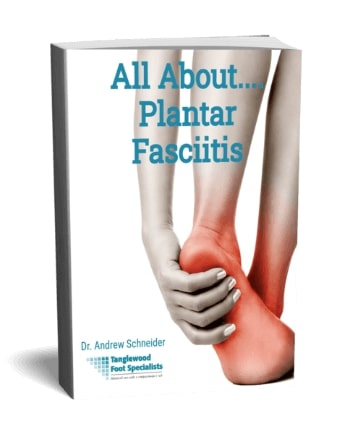
 Heel pain running is most often plantar fasciitis — inflammation and microscopic tearing of the plantar fascia, the thick band of connective tissue that runs along the bottom of your foot from your heel to your toes. With every stride, that band absorbs enormous repetitive impact. When the load you're putting on it exceeds what the tissue can repair between runs, the breakdown begins.
Here's what most people don't realize: the plantar fascia has relatively poor blood supply compared to muscle tissue. Your body tries to repair it, but without adequate blood flow delivering the healing materials, that repair process stalls. I call it a failed healing response — your body started fixing the problem but never finished the job.
Think of it like a construction crew that showed up, started the work, and then just stopped. The crew is still there. Your body is still trying. But nothing is getting done. That's why plantar fasciitis can linger for months even when you're doing "all the right things" — rest, stretching, ice. The underlying tissue damage isn't resolving because the conditions for healing were never fully established.
One more thing worth clarifying: bottom-of-heel pain and back-of-heel pain aren't the same condition. Plantar fasciitis creates pain along the bottom where the fascia attaches to the heel bone. Pain at the back of your heel — where your Achilles tendon meets the bone — points to insertional Achilles tendinopathy or a Haglund's deformity. Many runners have one. Some have both. The distinction matters because the treatment path is different.
Why Runners Specifically Get This
Your plantar fascia isn't working in isolation. It's part of a chain running from your mid-back through your hips, your calf  muscles, and down to your heel. Think of it like a puppet on strings — when one string gets tighter or twisted, everything below it takes the strain. For runners, that tight string is almost always the calf complex. Speed work and hill repeats shorten the calf muscles and Achilles tendon over time, and most runners never address that tightening until their heel starts screaming.
Mileage ramp-up is the other major driver. Increasing your weekly volume by more than 10% loads the fascia before it can adapt. Add Houston's hard concrete surfaces and the cambered shoulders of most running roads, and cumulative stress builds fast. Your shoes matter more than most runners think — worn-out cushioning after 400–500 miles eliminates the protection your heel needs at impact on every single stride. These factors stack, and when they do, the fascia loses the battle.
Foot structure also plays a role, but not in the simple way most people assume. Overpronation, high arches, and flat feet each create different loading patterns — but the key isn't just that you're overpronating, it's why. Hip weakness, late-run fatigue, and foot mechanics can all produce the same pattern. Treating the pattern without finding the driver is why so many runners end up back in my office after the pain temporarily settles down.
And one misconception I hear constantly: your heel spur isn't causing your pain. It's the result of the same chronic fascial tension that caused your plantar fasciitis — not the source. Less than 5% of heel spurs ever need treatment on their own. Chasing the spur is a dead end. What needs treatment is the tissue and the mechanics around it. You can also explore more about Achilles tendon problems and related running injuries if you're trying to pin down exactly what's going on.
The Truth About "Just Rest It"
Every article you'll find on runner's heel pain tells you the same thing: rest. Stop running, elevate, ice, and wait. And I understand why that advice gets repeated — it's simple, it's safe, and it occasionally works for mild, early-stage cases. But for the majority of runners dealing with persistent heel pain, complete rest is the wrong prescription.
Here's the thing — tendons and fascia need mechanical stress to remodel collagen and rebuild strength. Complete rest removes the controlled loading that actually stimulates repair. What happens when you take six weeks completely off? The pain quiets down, you feel better, you go back to your normal training volume, and within two to three weeks, you're right back where you started. I see this every week in my practice. Someone rests for three months, the pain goes away, they start running again — and within two weeks, they're back in my office. Hoping doesn't work. We need an actual plan.
What you need during recovery isn't zero activity — it's a strategic reduction in high-impact volume while you maintain lower-impact movement, build targeted strength, and address the upstream biomechanical drivers that started the problem. Pool running, cycling, and elliptical work preserve your fitness while the tissue recovers. The runners who get better and stay better are the ones who use that modified training window to fix what caused the breakdown in the first place.
How a Houston Podiatrist Treats Heel Pain in Runners
I've been treating runners in Houston for over 25 years. My goal isn't just to get your heel pain to zero — it's to get you back to your training, your race, your morning run along the bayou. Every plan I build is specific to how your body moves and what your running life actually looks like. Here's exactly how I approach this.
Load Modification and Lifestyle Adjustments
The first move isn't stopping you cold — it's reducing high-impact volume by 20–30% while redirecting that fitness into pool running, cycling, or elliptical work. Houston runners face specific challenges that out-of-market advice ignores entirely: year-round training on concrete, summer heat and humidity that accelerates calf tightness, and flat terrain that never forces the ankle mobility work that hill training naturally provides. If you're logging miles on Memorial Park's inner loop or along Buffalo Bayou, you're running on some of the most heel-stressful surfaces around — and your plan needs to account for that.
A shoe audit is part of every first visit. Racing flats and minimalist shoes dramatically increase plantar fascia load. Shoes need replacing every 400–500 miles — most runners go well past that.
At-Home Care
I'll give you a specific protocol, not a generic one. Ice after every run — 20 minutes on, 40 off. Not heat, even though heat feels better in the moment; it increases inflammation at the wrong phase of healing. A night splint worn during sleep prevents the overnight fascial shortening that causes that morning tear-apart cycle.
Medical-grade OTC insoles like Powerstep or Superfeet are useful as a bridge while we work on the underlying mechanics. The morning stretch sequence matters, but so does timing — forcing an aggressive stretch on a shortened, partially healed fascia causes microtears before you even get out of bed. What doesn't work: Dr. Scholl's scanner insoles, heat packs, and hoping that running through it at the same volume will resolve it on its own.
Conservative In-Office Treatment
When at-home management isn't moving the needle after 6–8 weeks, we shift to in-office care. A cortisone injection ($120 cash) rapidly reduces inflammation, often within 48–72 hours — it's a powerful tool for breaking the acute pain cycle so rehabilitation can begin. My honest caveat: cortisone doesn't repair tissue. Repeated injections over time can actually weaken the fascia and increase rupture risk. It's a bridge, not a cure.
Custom orthotics built specifically for how you run ($700 cash, first pair) are a different category entirely. Think of them like eyeglasses for your feet — precision correction for your specific biomechanics, fabricated to the way you actually run, not just how you stand. I build running orthotics with forefoot load patterns, push-off mechanics, and cadence accommodation in mind. Most runners feel meaningful relief within 2–4 weeks of consistent wear.
Physical therapy addresses the kinetic chain above the foot — hip weakness, Achilles tightness, running form — and eccentric calf strengthening (the Alfredson protocol) is among the most evidence-supported interventions for fascial and tendon repair. Conservative in-office care typically produces meaningful, lasting results over 6–12 weeks when the program is followed consistently.
Regenerative Medicine — The Third Option
Here's what most people don't realize: there's an entire category of treatment sitting between conservative care and surgery that almost none of your Google results mention. I call it the Third Option — and for chronic heel pain in runners, it's often the option that finally closes the case.
Shockwave therapy ($300/session; $750 for a package of three) delivers acoustic pressure waves directly to the  damaged fascia. Think of it like aerating a lawn: the waves create small channels in compacted tissue, allowing blood flow and healing factors to reach an area that's been starved of both. Sessions run 10–15 minutes, once a week for three weeks. More than 82% of my patients with plantar fasciitis find their pain resolved after completing the full course — and I've used it on my own heel pain.
PRP injection ($850 cash) takes a small amount of your own blood, concentrates it in a centrifuge, and delivers it precisely into the damaged tissue — often under ultrasound guidance. This is liquid gold for healing. Your own body's concentrated repair kit, placed exactly where it's needed. Initial improvement typically begins within 2–4 weeks; full benefit develops over 3–6 months, and results are durable because the tissue is actually being rebuilt. 70–80% of patients with chronic tendon and fascial conditions see significant improvement.
The most powerful protocol combines both. PRP goes in first — the seeds. Shockwave begins within a few days and repeats weekly for three weeks, preparing the soil. Together, they produce an 85–95% success rate in chronic cases — the protocol that has made surgery feel almost obsolete in my practice for heel pain. Red light therapy and Class IV laser treatment round out the regenerative medicine options available, particularly useful for runners who can't tolerate injection-based treatment or want a low-cost adjunct to their recovery protocol.
Surgery — When It's Truly Necessary
Look, I know foot surgery sounds scary. But here's the reality: 95% of runners with heel pain never reach this level. Surgery is reserved for the small group who've genuinely exhausted conservative care and regenerative medicine and are still dealing with debilitating, chronic pain.
When we do get there, the procedures are far less invasive than they were a decade ago. Endoscopic plantar fascia release is a minimally invasive partial release performed through tiny incisions. Tenex ultrasonic percutaneous tenotomy is even less invasive — ultrasound-guided removal of damaged tissue under local anesthesia, no general anesthesia required.
Recovery from plantar fascia release runs 1–2 weeks of protected weight-bearing, progressive loading through weeks 3–6, physical therapy starting around month two, and full return to running by months 4–6 with clearance. Surgical options produce good to excellent outcomes in 70–85% of patients at one year. But again, most of you won't need this.
Contact us for an evaluation — if your heel pain keeps coming back no matter what you try, let's figure out exactly what's driving it and build a plan that actually works.
What to Expect When You Come In
When you come in, I'll start with a thorough biomechanical examination — how your foot moves, how your ankle flexes, and exactly where the pain is located. I'll watch you walk. I'll assess your calf flexibility and work my way up the kinetic chain through your hips. That assessment tells me more about what's driving your heel pain than an MRI does in most cases, because I'm looking at the whole system that's loading your fascia with every stride, not just the tissue where the pain lives.
I'll ask you about your training volume, your shoe rotation, how long this has been going on, and what you've already tried. If I need to rule out a stress fracture or evaluate a heel spur, X-rays take about five minutes in-office. From there, we'll build your plan together. I'll tell you exactly what I think is going on, what I recommend, and why — in plain language, not medical shorthand. If conservative care is the right starting point, we start there. If your history tells me we're already past that window, I'll say so and explain the next step.
I won't judge you for how long you waited, how many miles you've tried to run through it, or what home remedies you've already attempted. I just need the full picture so I can give you the right answer. Most runners start feeling meaningful improvement within 2–4 weeks of a structured plan. Ready to get started? Schedule your evaluation and we'll figure it out together.
Keeping Your Heel Pain From Coming Back
The runners who stay pain-free are the ones who keep doing the things that fixed them — not just until the pain  stopped. Maintain your orthotics consistently, not just during the painful period. The mechanics that created the problem are still present when the pain disappears, and without correction, they'll reload your fascia the same way they did before.
Follow the 10% weekly mileage increase rule going forward, and build deliberate recovery weeks into every three-to-four week training block. Your body needs that rhythm, especially in Houston's year-round running climate — 52 weeks of outdoor training is a gift, but it means you never get the natural off-season break that colder climates impose.
Commit to calf and Achilles maintenance work daily — not just a pre-run stretch when you remember. The puppet strings that pull on your fascia with every stride need consistent management, not crisis intervention when the pain returns. Shoe rotation between two pairs extends cushioning life and reduces cumulative load. Replace at 400–500 miles without exception. If you're dealing with recurring heel trouble tied to how you train or move, the sports-related foot injuries section of our site covers athletic recurrence patterns in more depth.
After treating thousands of patients, I can tell you that the runners who stay pain-free long-term are the ones who kept doing the things that fixed them. That's not a complicated ask. It's consistency — in your footwear, your training progression, and your maintenance work. Give your body the same discipline you bring to your training, and your heel won't pull you off the road again.
Get Back to Running — For Good
Heel pain as a runner isn't just a physical problem — it's a threat to something that matters to you. Whether you're training for a Houston marathon, logging your morning Memorial Park miles, or just trying to stay active without limping through your day, this is worth fixing properly. The good news is that 95% of runners with heel pain never need surgery, and the full range of treatment — from load modification through regenerative medicine — is available right here in Houston.
I won't judge you for how long you've been dealing with this or what you've already tried. Either way, I need to see you to figure out exactly what's driving your heel pain and build a plan that gets you back to running — and keeps you there.
Don't keep waiting for it to go away on its own. Call Houston podiatrist Dr. Andrew Schneider at 713-785-7881 or request your appointment online. Let's get you back to running.