Why Most Foot Pain Doesn't Require Surgery
 Most common foot conditions — including plantar fasciitis, bunions, Morton's neuroma, Achilles tendinopathy, hammertoes, and heel spurs — respond to non-surgical care when treated properly and early. Research shows 95% of plantar fasciitis cases resolve without surgery. The goal is always to find what hasn't been tried yet, not to schedule an operation.
Here's what most people don't realize: chronic foot pain isn't a sign surgery is inevitable. It's usually a sign the healing process stalled. Your body started trying to repair the injury — it sent resources, it began reconstruction — and then it stopped. It got stuck in a low-grade inflammatory state without ever completing true tissue repair.
Think of it like a construction crew that showed up, laid some materials, and never came back. The damage is real, the effort was real, but the job isn't done. My job is to figure out why that crew stopped working and get them back on site. That's a very different problem than "nothing can fix this." And it almost always has a solution that doesn't involve a scalpel.
This is also why so many people end up being told surgery is their only option. They've had one or two things tried — rest, maybe a cortisone shot — and when those didn't hold, the next logical step in a busy practice is an operating room referral. But there's an entire tier of treatment sitting between "basic conservative care" and "surgery" that most practices don't offer. That's where regenerative medicine lives. And that's where a lot of the most dramatic outcomes happen.
The Most Common Conditions I See Before Surgery Gets Mentioned
After treating thousands of people across the Houston area, I can tell you something that surprises most people: the conditions that most often lead to an unnecessary surgery referral aren't rare or exotic. They're the ones I see every single week.
Heel pain and plantar fasciitis top the list. Most people get referred for surgical evaluation after a single cortisone injection wears off — which is not a failed course of conservative care. That's one tool that provided temporary relief. Ninety-five percent of plantar fasciitis cases never need surgery. The ones that do reach that point are the ones where nothing — not stretching, not orthotics, not shockwave, not PRP — has moved the needle after a full 9 to 12 months of genuine effort.
 Bunion pain is another one. Surgery is the only structural correction for a bunion — I won't pretend otherwise — but it's not always the right time, and for many people, it's not the right time for years. Conservative care manages symptoms effectively in the meantime, and a lot of people live comfortably with their bunions for a long time before surgery ever becomes a real conversation. The question isn't whether surgery could fix it. It's whether you actually need it right now.
Morton's neuroma gets diagnosed too quickly and referred too fast. That burning, electric sensation between your toes responds well to orthotics, footwear changes, cortisone, and alcohol sclerosing injections before a neurectomy is ever warranted. Achilles tendon pain is particularly well-suited to regenerative treatment — surgical reconstruction is a genuine last resort here, and I rarely reach it. And hammertoes in mild-to-moderate cases are very manageable without an operation; surgery comes into the picture only when the toe becomes rigid or starts causing real functional problems.
Here's something else worth knowing. The source of your foot pain often isn't entirely in your foot. Your calf muscles, your hips, even your lower back — they're all pulling on the same strings. Think of your body like a puppet. When one string gets tight or twisted, everything below it feels it. I've seen people with chronic heel pain whose real problem was severe calf tightness, and once we addressed that, the heel followed. This kinetic chain piece is something most imaging misses entirely — and it's something I look for in every evaluation.
The Truth About "Conservative Treatment Failed"
This is the phrase I hear most often from people who've been told surgery is next: "I've already tried conservative treatment and it didn't work." I understand why they believe that. But in most cases, what they've tried isn't what I'd call a full conservative course.
Typically, they've rested it. They bought an OTC insole. Maybe they had one cortisone injection. That's not conservative treatment — that's an educated guess, and it's the approach most people take before they ever see a specialist. A real conservative course looks like 8 to 12 weeks of consistent, biomechanically correct stretching, combined with custom orthotics fabricated to your specific foot, anti-inflammatory management, and targeted physical therapy — all at the same time, not tried one by one and abandoned. For the vast majority of people, that combination works. But they've never had it done properly.
I won't judge you for what you tried before. Most people do exactly what they're told: rest it, ice it, take ibuprofen. That's not failure. That's the starting point, and it's where everyone begins.
What I'm looking for when you come in is what hasn't been tried yet — and in almost every case, there's something. Even for people who've been dealing with this for two years, there's usually a next step that hasn't been taken. And there's an entire tier of regenerative treatment between conservative care and surgery that most practices don't offer — which means most people don't even know it exists. We'll get to that.
How a Houston Podiatrist Treats Foot Pain Before Considering Surgery
My philosophy is simple: we always start with the least invasive option that has a real chance of working, and we only escalate when there's a genuine clinical reason to do so. Surgery is never the default. It's the destination we're trying to avoid together.
Footwear and Lifestyle Changes
Sometimes, that's as simple as changing your shoes. A wide toe box, a low heel, and structural arch support address the foundational mechanics for nearly every condition I treat — plantar fasciitis, bunions, neuromas, Achilles tendinopathy, all of them. Activity modification matters too, and I want to be clear: I'm not talking about elimination. Low-impact cross-training like swimming or cycling keeps you moving without loading damaged tissue.
Stop walking barefoot at home. Yes, even to get your morning coffee. Those first few steps on hard floors without support are when a lot of the damage happens, and it's one of the most effective changes you can make. I give this two to four weeks to assess baseline response, and for some people, this alone shifts the trajectory.
At-Home Care That Actually Works
For heel pain specifically, rolling a frozen water bottle under your foot does two things at once: cold therapy for inflammation and myofascial release for the fascia itself. A seated plantar fascia stretch — ten seconds, ten repetitions, done before your feet hit the floor in the morning — reduces that tearing pain on the first steps. Night splints hold the fascia in a lengthened position during sleep, which prevents the contraction-and-tear cycle that makes mornings so brutal. Ice after activity, fifteen to twenty minutes; not heat, which feels good but increases acute inflammation.
Hoping the pain goes away is not a strategy. I've seen people wait eighteen months to call me. And for chronic conditions where the healing response has already stalled, passive rest doesn't restart it — it just sustains the stall. What doesn't work: aggressive morning stretching (it causes microtears), indefinite rest, and tennis ball rolling as a primary treatment. The tennis ball is analgesic, not therapeutic. It makes the foot feel better without doing anything about the underlying problem. I'll tell you that honestly even though it's not what most people want to hear. Check the heel pain treatment at home guide for the full breakdown of what's actually worth doing.
Conservative In-Office Treatment
Custom orthotics are the backbone of conservative in-office care. Think of them like eyeglasses for your feet. While I'm wearing my glasses, I can see. When I take them off, I can't. A custom orthotic compensates for your foot's biomechanical problems while you're wearing it — it doesn't cure the underlying mechanics, but it removes the abnormal stress that keeps re-injuring the same tissue.
We do a full biomechanical exam and 3D scan, and fabricate to your exact specifications. Cash price is $700 (additional pair $350). Most people feel a difference within two weeks; full accommodation takes four to six weeks. For plantar fasciitis in combination with a stretching protocol, orthotics for plantar fasciitis carry a 70 to 80% success rate.
Cortisone injections have a specific role — rapid inflammation control within 48 to 72 hours, with 70 to 80% of people getting significant short-term relief. Cash price is $120. But cortisone is a bridge, not a destination. It suppresses inflammation temporarily without repairing the damaged tissue underneath. Repeated injections carry real risks: plantar fascia rupture, fat pad atrophy. I limit them to two or three per site per year, and I'm always thinking about what we're doing in the window of relief the injection creates. Read more about cortisone for heel pain if you've already had one and wondered what comes next.
Physical therapy rounds out the conservative tier — eccentric loading programs for Achilles tendinopathy, kinetic chain work targeting hip strength and calf flexibility, gait retraining. Six to eight weeks of consistent therapy produces meaningful results. When all three components — orthotics, anti-inflammatory management, and physical therapy — are running simultaneously rather than tried sequentially, the overall success rate for plantar fasciitis and Achilles tendinopathy reaches 75 to 85%. Most people who say conservative care failed them never had all three working at once.
Regenerative Medicine: The Third Option
Here's what most practices won't tell you: there's an entire tier of treatment sitting between conservative care and surgery. Most providers don't offer it, which means most people never know it exists. I've watched it change outcomes that seemed locked in — and it's where I spend a significant portion of my clinical time.
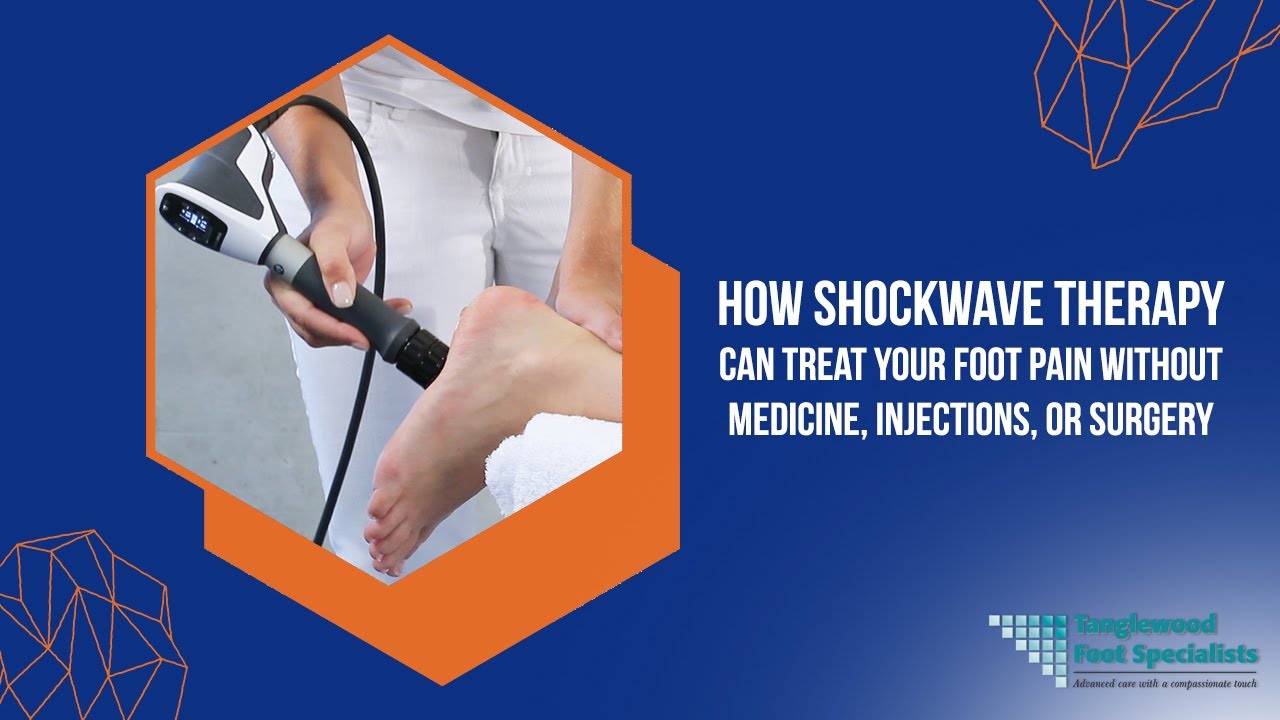
 Shockwave therapy uses acoustic pressure waves to restart a stalled healing response in damaged tissue. Think of it like aerating a lawn — by creating small channels in compacted soil, you allow water, air, and nutrients to penetrate more deeply. Shockwave does the same thing for injured tissue: it creates pathways for healing factors to reach the damage and forces the stalled construction crew back to work. Fifteen to twenty minutes in-office, no anesthesia, no downtime.
For chronic plantar fasciitis, shockwave carries an 82% success rate. Three sessions, approximately one week apart; cash price is $300 per session or $750 for the package of three. Best candidates are people who've been in pain for three months or more and want a real shot at avoiding surgery. You can find honest answers about the experience itself at is shockwave therapy painful.
PRP injections — platelet-rich plasma — take a small blood draw, spin it in a centrifuge to concentrate your own growth factors, and inject that solution precisely into the damaged tissue under ultrasound guidance. For chronic tendon conditions, 70 to 80% of people see significant improvement. Cash price is $850. Some soreness in the first 48 hours is normal; you're walking immediately.
When we combine PRP with shockwave therapy — PRP first, then three shockwave sessions beginning within a few days — the results are different in kind, not just degree. PRP provides the seeds: concentrated growth factors that signal the body to repair. Shockwave prepares the soil. Together, they create a healing environment that succeeds where either treatment alone falls short. The PRP for heel pain page goes deeper if you want the full picture. Combined success rate for chronic plantar fasciitis and Achilles tendinopathy: 85 to 95%. That's the flagship protocol for people who've failed conservative care.
Red light therapy and the Remy Class IV laser work through photobiomodulation — stimulating cellular energy production at the mitochondrial level, reducing inflammation, and accelerating tissue repair. No downtime, no discomfort, ten to twenty minutes. Red light runs $39 per session or $180 for a package of six. Remy laser for pain is $97 per session or $497 for six. Both work well as adjuncts to shockwave or PRP, and red light is a strong standalone option for mild-to-moderate chronic pain and neuroma symptom management. We also use BPC-157 peptide therapy — an oral regenerative peptide that supports connective tissue healing — particularly for people who are poor injection candidates but still need more than conservative care alone.
One note on cost: shockwave, PRP, and red light therapy are cash-pay procedures, though FSA and HSA accounts often cover them. A full regenerative protocol runs $750 to $1,600. Surgery and post-surgical rehabilitation runs 10 to 20 times that. The math isn't subtle.
Surgery: When It's Genuinely the Right Answer
Look, I know foot surgery sounds scary. But here's the truth: when it's genuinely the right answer — when we've given every other option a real chance and the pain is still controlling your life — modern foot surgery is not what it was twenty years ago. Procedures are more precise, recovery is faster, and outcomes for the right patient are excellent. And I want to be clear about that phrase: "the right patient." Only 5% of plantar fasciitis cases ever reach surgical consideration. Most people reading this will never get there.
For plantar fasciitis that doesn't respond after 9 to 12 months of comprehensive treatment, a plantar fasciotomy — partial endoscopic release — has an 85% success rate. Weeks one and two involve protected weight-bearing; by weeks three to six you're progressively returning to normal footwear; full activity by months two to three. For bunions, Lapiplasty 3D bunion correction corrects the metatarsal's rotation and elevation — not just the surface bump — which is why its recurrence rate is dramatically lower than traditional osteotomy. For Morton's neuroma, a neurectomy carries an 85% success rate for well-selected candidates. For Achilles, debridement or reconstruction is reserved for 6 or more months of failed conservative and regenerative treatment, and carries 85 to 90% success for insertional procedures.
If we reach that conversation, we make the decision together. I'll tell you exactly what the procedure involves, how much time you'll need off work, whether you can drive during recovery, and what your realistic outcome looks like. Surgery is never something I recommend lightly — and it's never a decision I make for you. You can read more about what foot surgery actually involves, or specifically about plantar fasciitis surgery, if that's where you think you are.
Not sure which step you're on? Come in for an evaluation and we'll figure it out together.
→ Request Your Appointment
What to Expect at Your First Visit With Dr. Schneider in Houston
When you come in, I'll start by watching you walk. Gait tells me more in thirty seconds than most imaging — how your foot strikes the ground, where it rolls, whether your hips and calves are contributing to the load on your heel or forefoot. Then I'll examine the foot itself: range of motion, pressure points, structural alignment, and how the foot behaves under weight versus off it. If X-rays are indicated, we take them in-office that day ($90 cash). By the end of the physical exam, I usually have a clear picture of what's driving the pain.
Then we talk. I explain what I'm finding in plain language as I go — not in a letter two weeks later. If I see something that surprises me, I'll tell you why it matters. If what I find confirms what you already suspected, I'll tell you that too. I'm not going to hand you a printout and send you home with a prescription and a referral. We're going to sit down and go through your options, your timeline, and the realistic cost at each level — so you can make an actual decision, not just follow orders.
From there, the plan depends on what I find. If it seems like footwear is a significant part of the problem, that's where we start — and I can help you understand exactly what to look for. If we see a biomechanical issue that orthotics can address, we talk about that. If you've already done the conservative work thoroughly and you're a clear candidate for regenerative treatment, we don't waste time retreading ground that's already been covered. I meet you where you are. Whether you want to start from the beginning or you've already exhausted the basics and need someone to take the next step with you, that conversation happens in the first visit. Most people leave with a clear plan and at least one thing they can do that day.
We're conveniently located near the Galleria and see people from all over the city — River Oaks, Tanglewood, the Heights, the Texas Medical Center corridor. Wherever you're coming from, Dr. Andrew Schneider is easy to reach, and we can usually get you in quickly. If you're ready to stop guessing and find out what's actually going on, request an appointment and we'll take it from there.