What Are Custom Orthotics, Exactly?
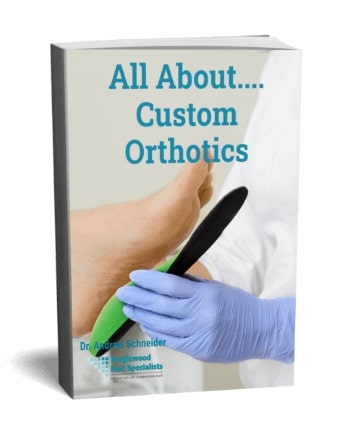
 Custom orthotics are prescription shoe inserts crafted specifically for your feet after a comprehensive biomechanical examination — a head-to-toe assessment of how your skeleton, joints, and muscles work together when you stand, walk, and move. Unlike over-the-counter insoles built for an average foot that doesn't exist, custom orthotics correct your individual foot mechanics, redistribute pressure, and go after the underlying cause of your pain — not just mask it.
Here's what most people don't realize: the orthotic itself isn't the secret. The secret is the evaluation that produces the prescription. A custom orthotic is only as good as the clinical picture it was built from. That's the gap between a device that changes your life and one that sits in a drawer after three weeks.
Think of custom orthotics like eyeglasses for your feet. While I'm wearing my glasses, I can see. When I take them off, I can't. A custom orthotic compensates for your lower extremity mechanics while you're wearing them. They don't, however, permanently reshape your foot structure — and that's the honest truth worth knowing upfront.
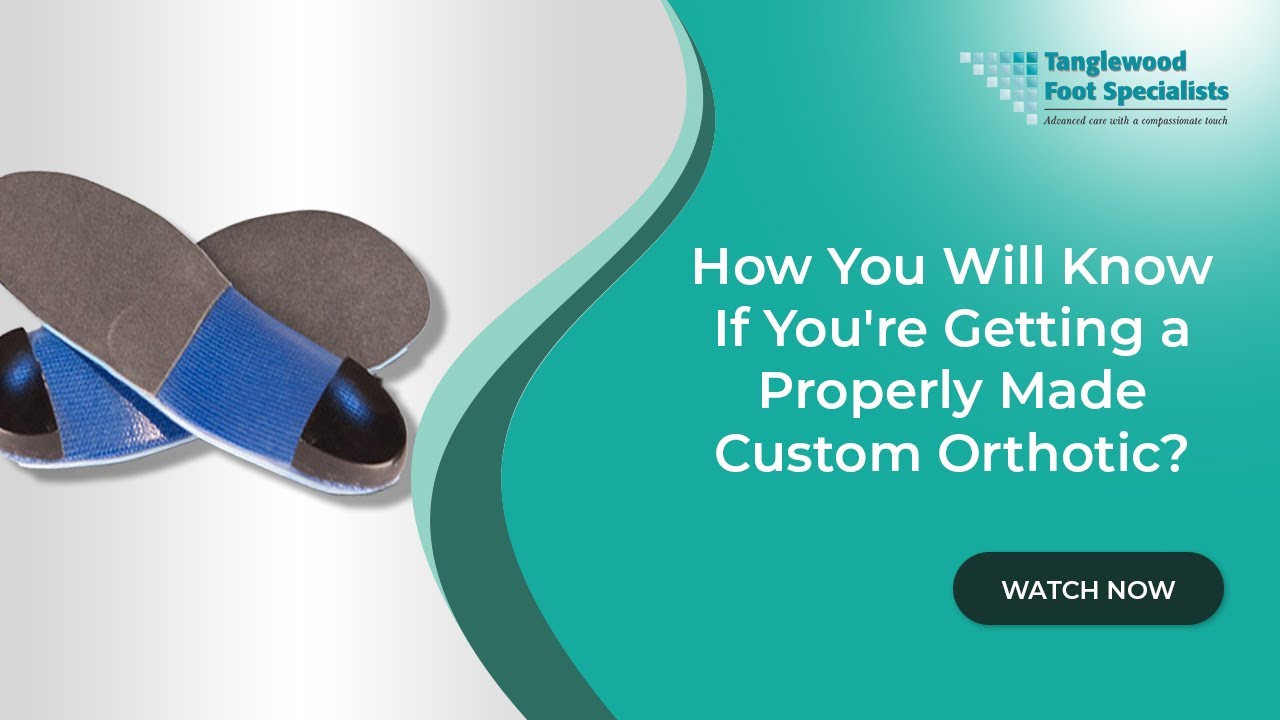
The device itself is a semi-rigid shell — firm enough to control mechanics, with a cushioning layer for comfort. That combination makes it a clinical tool, not a commodity. A well-made pair lasts two to five years. The $30 drugstore insert is typically compressed flat within a few months. When you run the numbers, the math often favors custom orthotics before you factor in the actual results.
The Conditions Custom Orthotics Actually Treat
This isn't just for arch pain. Custom orthotics treat a specific list of diagnosable conditions — and several of them cause pain nowhere near your foot.
Heel pain from plantar fasciitis is the most common thing I treat with orthotics. The device unloads the fascial insertion  — the spot where the thick band of tissue along the bottom of your foot meets your heel — and corrects the overpronation, the inward rolling of your foot with each step, that's driving the stress in the first place. Flat feet and overpronation respond well for the same reason: we stop the kinetic chain — the linked system from foot to spine — from collapsing with every step you take.
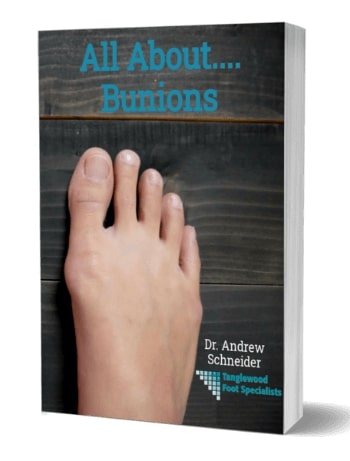
Bunion progression is one people don't always associate with orthotics, but offloading the first metatarsal head — the long bone behind your big toe — slows the structural drift meaningfully over time. For ball-of-foot pain and neuroma, we build a metatarsal pad directly into the orthotic that separates the bones compressing the nerve, which is often where that burning, electric sensation between your toes is coming from. And for chronic Achilles problems, a heel lift built into the orthotic reduces the mechanical pull on the tendon insertion and gives inflamed tissue a chance to calm down.
The further-up-the-chain conditions are where people are often most surprised. Knee pain, hip pain, and lower back pain — conditions that seem completely disconnected from your feet — frequently trace back to faulty foot mechanics. Your body works like a chain: when the bottom link is off, every link above compensates.
I've had people come in for knee problems they'd been managing for years, and orthotics were a meaningful part of getting them back to full function. Leg length discrepancy is another one. A lift distributed evenly across the whole foot is biomechanically very different from the crude heel wedges most people have tried.
If you're unsure whether your condition belongs on this list, that's exactly what I'm here to figure out.
The Truth About Drugstore Insoles (And Why They Usually Fail)
I won't judge you for trying the drugstore first. Everyone does. The problem is assuming that because the insole didn't work, orthotics don't work. Those are two very different things.
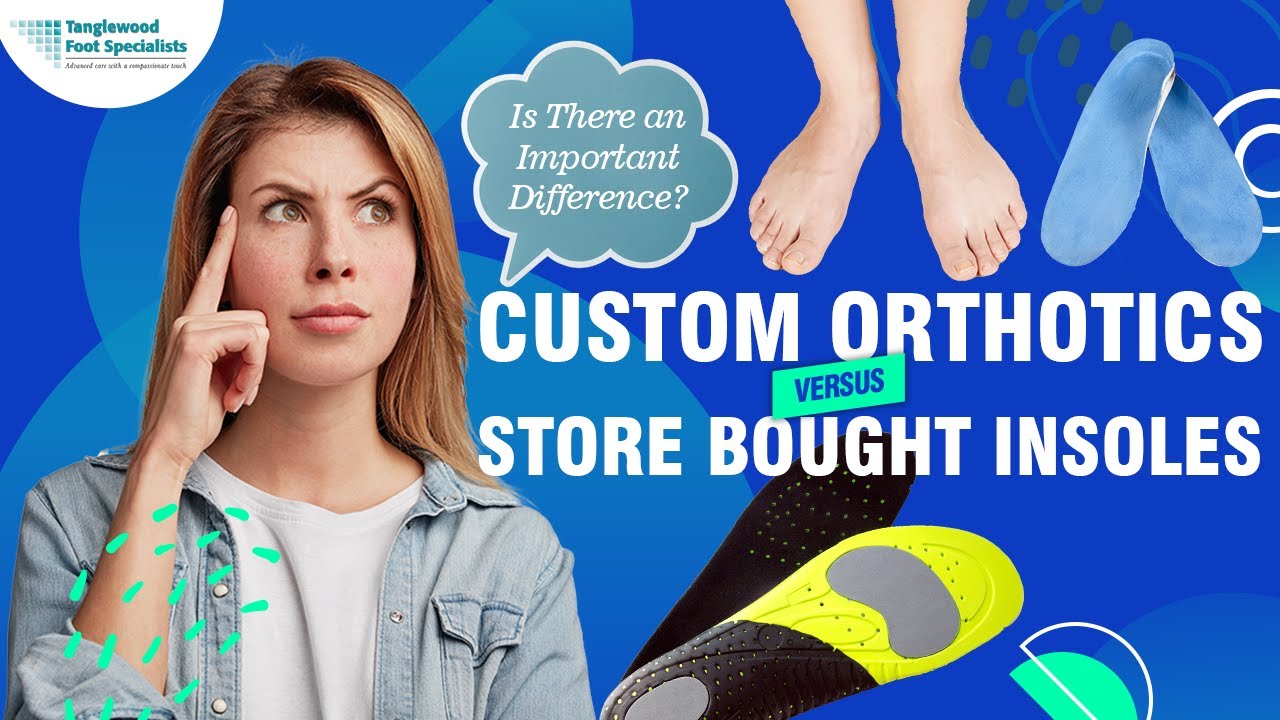
Over-the-counter insoles are like buying a suit off the rack — they're cut for nobody in particular. Custom orthotics are the tailored suit: made from your exact measurements, your specific mechanics, your diagnosed condition. The drugstore insert is built for a statistical average foot that doesn't exist in real life. If your mechanics are off, a generic arch shape isn't correcting them. It's just adding a layer between your foot and the problem.
There's an honest middle ground worth knowing about. Brands like RediThotics, Powerstep, and Superfeet are reasonable bridges while you're waiting for custom fabrication or deciding whether to pursue it. They're not what I'd reach for to resolve a structural problem — but they're not nothing, either.
What I'd steer you away from entirely is the Dr. Scholl's scanning machine at the pharmacy. What it produces is a pressure map. That's not a biomechanical prescription, and it's not the same thing at all.
The cost math also deserves a second look. Repeated OTC purchases at $30–$50 every few months often exceed the one-time cost of orthotics for plantar fasciitis lasting three to five years — and that's before counting the months you spent still in pain.
How a Houston Podiatrist Actually Prescribes Custom Orthotics
My goal is always to start with the least invasive option that has a real chance of working — and to be honest with you when it's time to move to the next level. Here's exactly how that progression looks in my practice.
Lifestyle Changes
Sometimes, the right starting point is what's already on your feet. Footwear is one of the most underestimated drivers of foot pain. I see this constantly with nurses, physicians, and staff on their feet all day at the Texas Medical Center, teachers, retail workers — anyone logging long hours on concrete or tile. Houston's hard surfaces don't forgive poor foot mechanics.
Replacing worn shoes every 300–500 miles if you're a runner, choosing firm heel counters over flat flip-flops, and adding anti-fatigue mats to work surfaces are all legitimate first interventions. Give these two to four weeks. If your pain hasn't shifted meaningfully, or if it's interfering with daily function, we move on.
At-Home Care
 The single most impactful thing most people can do at home is stretch their calves — and most people skip it entirely or do it wrong. Your calf muscles, specifically the gastrocnemius (straight-leg stretch) and the soleus (bent-knee stretch), control how much strain reaches your plantar fascia and Achilles tendon with every step. Three sets of 30-second holds, twice daily, is the protocol that actually moves the needle. Before your first morning step, pull your toes back and hold for 30 seconds — this lengthens the plantar fascia before it takes weight.
An arch roll with a frozen water bottle for five to ten minutes after long days helps as well. Houston runners training on Memorial Park's trail loops and cyclists along Buffalo Bayou are asking a lot of their feet — running-related foot injuries almost always trace back to a mechanical issue that good habits can help prevent, and these make a real difference in how much load the tissue has to absorb.
Here's the honest assessment: if you've had pain for six to eight weeks and self-care alone hasn't resolved it, it's unlikely to. The tissue needs more than management at that point — it needs intervention.
Conservative In-Office Care
Custom orthotics ($700) are the cornerstone of conservative in-office treatment for most of the conditions I described above. Research consistently shows 85–90% success for plantar fasciitis as part of a conservative protocol. You'll typically feel improvement within two to four weeks of consistent wear; full adaptation for chronic conditions takes three to six months. An additional pair runs $350 — athletic and dress is the most common combination, and orthotics that only go in one pair of shoes undercut the investment significantly.
A cortisone injection (~$120) is something I reach for as a pain management bridge, not a healing mechanism. It reduces inflammation quickly — which matters when pain is severe enough to interrupt sleep or make every step a negotiation — but it doesn't repair tissue. I limit these to two or three per site, because repeated cortisone can weaken the very structures we're trying to protect. Think of it as buying you a window to do the rehabilitative work, not as a solution on its own.
Advanced Regenerative Medicine: The Third Option
Here's what I tell people who've been doing everything right but still aren't healing: your mechanical problem is solved. Your healing problem isn't. That's where regenerative medicine comes in — and it's where the results genuinely start to change the conversation about what's possible without surgery.
Acoustic shockwave treatment ($300 per session; $750 for a three-session package) delivers focused acoustic pressure waves directly into damaged tissue. Think of it like aerating a compacted lawn — breaking up the hardened ground so water, air, and growth can restart. That's what shockwave does to chronically injured tissue: it disrupts the stalled healing response and triggers a fresh inflammatory cascade, which is actually what real repair looks like. The clinical data shows an 82% success rate for chronic plantar fasciitis. Three sessions, spaced weekly. Most people start noticing a shift after the second.
PRP therapy for chronic pain ($850) works differently. We draw a small amount of blood, spin it in a centrifuge to concentrate the growth factors, and inject that directly into the damaged tissue. I call it liquid gold for healing — your body's own repair crew delivered at full concentration exactly where it's needed. Studies show 70–80% meaningful improvement in chronic tendon cases. The results are durable in a way cortisone simply isn't, because we're restoring the tissue rather than suppressing its response.
The combined PRP and shockwave protocol (~$1,600) is where the results become genuinely remarkable. PRP provides the seeds — the healing factors your body needs. Shockwave prepares the soil — stimulating the environment so those factors can work.
The sequence matters: PRP goes first, shockwave begins within days, once weekly for three weeks. The combined approach achieves an 85–95% success rate for chronic conditions that have failed everything else. For the right person, these regenerative medicine options are genuinely practice-changing.
Red light therapy ($39 per session; $180 for six sessions) uses photobiomodulation — specific wavelengths of light that reduce inflammation and accelerate cellular repair at the tissue level. It's an excellent adjunct for ongoing management and recovery. The Remy Class IV laser ($97 per session) penetrates deeper into tissue, making it particularly useful for chronic cases where surface-level treatment hasn't been enough.
Surgery — When It's Truly Necessary
Look, I know foot surgery sounds scary. But here's the reality: 95% of the conditions custom orthotics treat never reach surgery. Conservative care and regenerative medicine get the vast majority of people where they need to be. Surgery is reserved for structural deformity that mechanics can no longer compensate — and it requires a minimum of twelve months of documented conservative and regenerative treatment, along with significant quality-of-life impact, before I'd recommend it.
Modern foot surgery when needed has come a long way. Smaller incisions, faster recovery, better outcomes than what most people imagine when they hear the word surgery. And I don't recommend it unless we've genuinely exhausted everything else. If we ever get to that conversation, you'll know exactly why we're there and what to expect.
If you've been dealing with foot, knee, or back pain and nobody has ever done a proper biomechanical evaluation, that's where I'd start. Call our Tanglewood office at 713-785-7881 or request your appointment online.
What to Expect at Your Appointment
My practice is in the Tanglewood neighborhood — close to the Galleria and easily accessible from Memorial Park, the Heights, and the surrounding Houston area. When you come in, I'll start by asking about your goals — not just your symptoms. Where do you want to be in three months? What does this pain stop you from doing? That context shapes everything that follows, and it's information I actually use.
From there, I'll do something most people don't expect: I look at your head. The biomechanical exam starts at the top — head tilt, shoulder alignment, hip height, knee tracking — and works down to your ankle position and foot structure. I check range of motion at every level: hip rotation, knee extension, ankle dorsiflexion. Tight calves are one of the most common and most overlooked drivers of foot pain I see, and I won't catch that by only looking at your foot.
Then I'll watch you walk. Not just stand — actually walk. How your heel strikes, whether your midfoot collapses, how your toe pushes off. That gait analysis is where a lot of the real clinical picture comes together. If X-rays are indicated, we take them in-office ($90), and if casting or a 3D scan is appropriate, we can often do that the same visit.
If I prescribe custom orthotics, the devices are fabricated offsite from your cast or scan — plan on about three weeks from that appointment to your fitting. Some break-in soreness is normal as your foot adapts to the corrected position. Persistent point pain isn't — that's what follow-up adjustments are for, and I want to know about it.
If you have old orthotics at home, bring them. I love a good challenge, and understanding why a previous device didn't work tells me a lot about what your prescription needs to do differently. Bring the shoes you wear most, too — I'll assess compatibility at your fitting.
Some people feel a difference within a few days. For others, especially with long-standing tissue damage, it takes weeks. Either way, I need to see you before I can tell you what your timeline looks like.
Schedule a visit with Dr. Schneider, or read about Dr. Andrew Schneider and his approach to biomechanical care.
Making Your Orthotics Last
A well-made pair of custom orthotics typically lasts two to five years — less if you're a high-mileage runner, longer if you rotate between two pairs. The signals that it's time to reassess: your symptoms returning after a period of relief, visible wear on the shell, or the top cover compressed completely flat. Day-to-day care is simple — wipe with a damp cloth, air dry, and if you're hearing squeaking, a little talcum powder between the orthotic and the shoe interior fixes it.
The second-pair question comes up often, and my honest answer is yes — most people benefit from two. Athletic and dress is the most common combination. Orthotics that only go in one pair of shoes means you're unprotected for half the day, which undercuts the investment. A second pair runs $350 and is made from the same prescription.
For children's foot health, plan on replacement every twelve to eighteen months as their feet grow. And for anyone managing diabetic foot complications, custom orthotics belong in the plan — pressure distribution is one of the most important tools we have for protecting tissue that doesn't heal easily.