What Is Heel Pain?
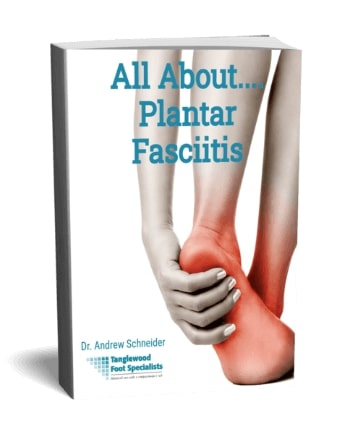
Heel pain is discomfort, stiffness, or sharp pain at or around the heel bone — the calcaneus, the largest of the 26 bones  in your foot. The most common cause is plantar fasciitis: inflammation and micro-tearing of the plantar fascia, the thick tissue band that runs along the bottom of your foot from your heel to your toes, holding your arch together like a bowstring. Other common causes include Achilles tendinopathy, heel bursitis, and Haglund's deformity. About 95% of cases resolve without surgery.
Here's what most people don't realize: "heel pain" isn't one condition. Where your pain lives tells me a great deal before I've even examined you. Pain on the bottom of your heel — especially that stabbing sensation with your first steps in the morning — is almost always plantar fasciitis.
Pain at the back of your heel, where your Achilles tendon meets the bone, points toward Achilles tendon pain, heel bursitis treatment, or Haglund's deformity — a bony enlargement that causes the Achilles to rub against the heel bone. The distinction matters, because the treatment is completely different.
That morning pain has a specific explanation, and understanding it changes how you approach treatment. During rest — overnight, or even after sitting — the plantar fascia begins to contract and tighten. When you take your first step, your body weight pulls that tightened tissue apart, tearing the partial repair your body started during sleep. You're not imagining it.
That stabbing, ice-pick sensation is real tissue being stressed beyond what it can handle. I also think about calf tightness — what I call the Puppet Strings — as a hidden driver here. When your calf muscles are tight, they pull upward on the heel with every single step, placing relentless tension on the plantar fascia attachment.
What's Actually Causing Your Heel Pain?
The most common root cause I see is plantar fasciitis, but understanding why it develops — and why it becomes chronic — is where most explanations fall short. The plantar fascia undergoes repetitive micro-tearing at its attachment to the calcaneus. In the early stages, that triggers an inflammatory response and your body tries to heal.
 But in chronic cases, the tissue isn't acutely inflamed anymore — it's degenerating. The biological repair process has stalled out. That distinction matters enormously for treatment.
Secondary causes are worth knowing about, because they're frequently missed. Insertional Achilles tendinopathy — breakdown where the Achilles attaches to the back of the heel — causes back-of-heel pain that worsens with activity and in the morning. Retrocalcaneal bursitis is inflammation of the small fluid-filled sac cushioning the Achilles against the heel bone.
Tarsal tunnel syndrome is nerve compression along the inside of the ankle that masquerades as plantar fasciitis, but comes with numbness or tingling the fascia doesn't produce on its own. And then there's heel spurs and bone spurs — which brings me to the single biggest misconception I correct every week in my practice.
The heel spur isn't causing your pain. It's a calcium deposit your body forms in response to chronic pulling at the plantar fascia attachment — a byproduct of the problem, not the villain. Many people with dramatic heel spurs on X-ray have zero discomfort; many with severe plantar fasciitis have no spur at all.
Treating the spur doesn't fix anything, because the spur isn't what's hurting you. I'll show you the imaging when you come in and explain exactly what we're looking at and why. For a deeper look at heel spurs vs plantar fasciitis and what's actually driving your symptoms, that article walks through it in detail.
Biomechanical drivers amplify everything. Overpronation — the foot rolling inward with each step — increases the load on the plantar fascia with every mile you walk. High arches create an inflexible foot structure that absorbs shock poorly and concentrates stress at the heel. And equinus — abnormal calf tightness — is the single most under-diagnosed driver of chronic heel pain I encounter.
Those Puppet Strings pulling on your heel don't announce themselves; they just grind away at the fascia silently while you stretch, ice, and wonder why morning heel pain happens every single day. Houston's environment makes all of this worse than most people expect. Concrete floors at the Texas Medical Center, tile throughout Galleria-area retail, polished floors in the Heights restaurant scene — add year-round warmth that keeps people active in flip-flops instead of supportive shoes, and you've got a city that's genuinely hard on heels.
Why Most Heel Pain Treatments Fail
I won't judge you for the cortisone shots. They work — for a while — and your doctor wasn't wrong to try them. But here's what most people don't realize: cortisone doesn't repair the tissue. It suppresses inflammation and quiets the alarm without fixing what triggered it.
Repeated injections progressively weaken the plantar fascia over time, and the underlying degeneration remains untouched. You feel better. The tissue keeps breaking down. Until one day, the shot stops working and you're back to square one — except now you've been dealing with this for 18 months instead of six weeks.
The deeper problem is biological. In chronic plantar fasciitis, the tissue isn't acutely inflamed anymore — it's degenerated. That means the standard playbook of rest, ice, and anti-inflammatories is fighting the wrong battle.
It's also why I describe these cases using the Construction Crew analogy: your body started trying to heal the injury, but the crew packed up and left the job site. The damage is real, the structure is compromised, and no amount of symptom management calls them back.
Will heel pain go away on its own? Sometimes, in early cases with true acute inflammation, yes. In chronic cases with degenerative tissue? Rarely.
The pattern I see most is: rest → stretching → cortisone shots for heel pain → repeat → "maybe you need surgery." If that sounds familiar, it's because it's the default algorithm at most Houston practices. And it skips the most effective non-surgical options entirely — options that exist precisely because they address what the standard algorithm never touches: the stalled biological healing response itself.
How I Treat Heel Pain at My Houston Podiatry Practice
The first question I ask isn't "where does it hurt?" It's "what do you need your feet to let you do?" A runner trying to get back on the Memorial Park trails, a teacher on her feet all day at a Houston ISD campus, someone who just wants to walk through a grocery store without gritting their teeth — those are different goals, and they shape every treatment decision I make.
Starting Simple: What You Can Do Right Now
Footwear is the single biggest lifestyle lever most people haven't actually pulled. Eliminating flat shoes, flip-flops, and barefoot walking on hard floors — including at home — isn't optional. I know that's not what anyone wants to hear in a Houston summer, but flat sandals on tile floors are actively undoing every other intervention you're trying. Replace them with shoes offering structured arch support and heel cushioning, worn from the moment your feet hit the floor in the morning.
For activity, swap high-impact movement like running and court sports for low-impact alternatives — cycling and swimming — during acute flares. Complete rest is usually counterproductive. Controlled movement keeps circulation to the tissue and prevents it from stiffening further.
 The calf stretching protocol matters more than most people expect, because of those Puppet Strings. Gastrocnemius and soleus stretches — held 30 seconds, three times daily — are the most consistently evidence-supported home intervention for reducing plantar fascia tension. Do them before your first step in the morning: flex the foot upward and pull your toes toward your shin while you're still in bed, hold for 10 seconds, repeat 10 times. This pre-loads the fascia before full weight-bearing and takes the edge off that stabbing first-step pain.
A frozen water bottle rolled under the arch for 10–15 minutes combines ice with gentle tissue mobilization — more effective than ice alone. Night splints, worn consistently, keep the foot in a dorsiflexed position overnight and stop the fascia from contracting during sleep. That overnight contraction is the root cause of morning pain, and it's completely preventable. For more on heel pain home treatment and what actually moves the needle versus what wastes your time, that article goes deeper.
For over-the-counter insoles: semi-rigid options like Superfeet or PowerStep provide better biomechanical support than flat cushioned insoles. But they're approximations built for an average foot that doesn't exist in real life. They help some people — they're not a solution, and they're nowhere close to what a prescription device can do.
Conservative In-Office Treatment
When home care isn't enough — and for many of you reading this, it clearly hasn't been — this is where I come in. About 70–80% of heel pain cases respond to 6–12 weeks of consistent conservative treatment combined with the lifestyle and home changes above.
 Custom orthotics (~$700) are the cornerstone of structural correction. Think of them the way you think of prescription eyeglasses. Glasses don't fix your vision — they correct the mechanical problem so your eyes can function properly. Custom orthotics don't heal the plantar fascia; they correct the structural forces that created the injury and prevent it from recurring. These are prescription devices calibrated to your specific foot: your arch height, your gait pattern, your biomechanical drivers. Not a generic shape. Most people notice meaningful improvement within 4–6 weeks; full biomechanical adaptation takes 8–12 weeks. For a full breakdown of what custom devices actually do that OTC insoles can't, see orthotics for heel pain.
Cortisone injection ($120) is a legitimate and sometimes powerful tool for acute pain control while other treatments take effect. It can provide dramatic, rapid relief, and I use it when that relief is genuinely needed — to get someone functional enough to do their stretching, comply with their orthotics, and give their body a window to start responding. What it isn't: a long-term solution. I generally don't recommend more than two to three injections at a single site.
The Remy Class IV laser ($97/session; $497 for a six-session package) uses therapeutic light energy to reduce inflammation and accelerate cellular repair. Sessions run 15–20 minutes. It's a strong adjunct for acute-to-subacute cases, and it pairs well with everything else in this section.
The Third Option: Regenerative Medicine
About 20–30% of heel pain cases don't respond to conservative care. Those are the people who get told surgery is next. I disagree — because there's a treatment level between conservative care and surgery that most Houston practices simply don't offer.
 Shockwave therapy for heel pain ($300/session; $750 three-session package) works like aerating a lawn. Compacted soil blocks water, nutrients, and oxygen from reaching the roots — aerating creates channels that let everything penetrate deeper, resulting in healthier growth. Shockwave does the same thing to damaged tissue: it delivers acoustic pressure waves that create pathways for healing factors to reach the plantar fascia, break up calcifications and scar tissue, and restart the stalled biological response. The Construction Crew, back on the job.
Sessions are 10–15 minutes. You'll feel a tapping or pulsing sensation — more intense over the tender spots, which actually confirms we're targeting the right tissue. 82% of people completing the three-session protocol report significant pain relief. I've used shockwave therapy on my own heel — I don't recommend anything I haven't personally experienced. For a full look at what the research shows, shockwave therapy plantar fasciitis results covers the clinical evidence in detail.
PRP — platelet-rich plasma — ($850) is exactly what it sounds like: a concentration of your own healing factors, drawn from a small blood sample, processed in a centrifuge, and injected precisely into the damaged tissue. I sometimes call it liquid gold for healing, because that's genuinely what it is. Unlike cortisone, which quiets the alarm, PRP for heel pain repairs the wiring — flooding the tissue with the concentrated growth factors and signaling proteins that tell your body to rebuild what's broken.
70–80% of people with chronic tendon problems see significant improvement. Results build over 2–4 weeks and continue through 3–6 months as tissue remodeling completes.
For chronic, treatment-resistant cases, I use the Seeds and Soil Protocol — combined PRP and shockwave (~$1,600 total). PRP provides the seeds: the concentrated healing factors delivered directly to the damage site. Shockwave prepares the soil: it creates the optimal biological environment for those healing factors to activate and take root.
The sequence matters — PRP injection first, then shockwave beginning within a few days, once weekly for three weeks. Combined, the success rate climbs to 85–95%. You keep walking, keep doing daily activities throughout. Avoid high-impact exercise for a few days after PRP — that's it for downtime.
For anyone comparing PRP injections for plantar fasciitis vs. other approaches, that article walks through exactly who's the best candidate. And red light therapy foot pain ($39/session; $180 for six sessions) offers low-level photobiomodulation to reduce inflammation and support tissue repair — an accessible complement to either shockwave or PRP for the right cases. For a full overview of everything in this space, see regenerative heel pain treatment.
When Surgery Makes Sense
About 95% of heel pain cases never need surgery. That number isn't reassurance — it's a clinical reality I watch play out every week in my practice.
For the small group who've genuinely exhausted both conservative and regenerative options — typically after 6–12 months of consistent treatment without adequate relief — surgery is a legitimate and effective answer. Look, I know the words "foot surgery" can feel serious. But if we've reached that point, it means we've done everything else first and we know exactly what we're dealing with.
The two procedures I use are endoscopic plantar fascia release — a camera-guided partial cut of the fascia to relieve tension at the heel attachment, with no large open incision — and gastrocnemius recession, surgical lengthening of the calf muscle when equinus is the root biomechanical driver. Both are same-day procedures.
Recovery follows a clear week-by-week timeline: protected weight-bearing in a surgical boot through week two, transitioning out of the boot by week six, physical therapy beginning during that transition, and a gradual return to full activity through months two and three. Most of my surgical patients tell me they wish they hadn't waited so long. For a full explanation of what recovery actually looks like, plantar fasciitis surgery explained covers everything.
Not sure which treatment is right for your situation? Come in and we'll figure it out together. Request Your Appointment
What to Expect at Your First Appointment
When you come in, I'll start by asking what you need your feet to let you do — not just where it hurts. That's not a throwaway question. A teacher on her feet all day needs a different plan than a weekend runner trying to get back on the Memorial Park trails, and both of them need a different plan than someone who just wants to walk through a grocery store without gritting their teeth. That answer shapes everything I do next.
After we talk goals, I'll examine your foot and watch how you walk. Gait analysis tells me things pain location alone can't — how your foot strikes, whether you're overpronating, whether your calf tightness is adding to the load on your heel. I'll test your range of motion and palpate specific points along the plantar fascia and Achilles attachment to map exactly where the damage is concentrated.
If X-ray is indicated, we do that in-office the same day. More often, I'll use diagnostic ultrasound to visualize the plantar fascia in real time — it shows tissue thickening and micro-tearing that X-ray misses entirely. You'll see the images alongside me, and I'll explain exactly what we're looking at and what it means for your treatment.
Then we'll talk through your options — all of them, including regenerative medicine, which I'll walk you through in plain language if you haven't heard of it before. I don't hand you a pamphlet and send you out the door. Many people leave their first visit with a treatment plan already started.
My practice is in the Tanglewood neighborhood, convenient to the Galleria and most Houston-area zip codes, and same-week appointments are often available. If you've been managing this on your own for months and you're ready to actually solve it, Dr. Andrew Schneider is ready to see you. Schedule your appointment and we'll figure out exactly what's going on.