What Is Plantar Fasciitis — and Why Does It Keep Coming Back?
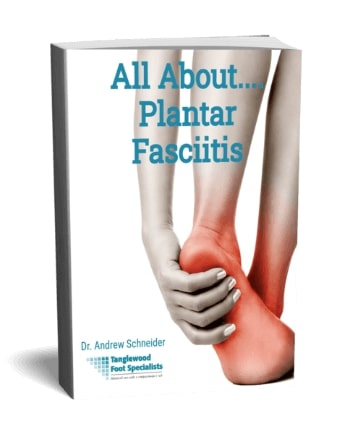
Plantar fasciitis is inflammation and micro-tearing of the plantar fascia — the thick, rubber-band-like band of  connective tissue running along the bottom of your foot from your heel bone to the base of your toes. It forms your arch, absorbs shock with every step, and handles an enormous amount of force across your lifetime. It's also the most common cause of heel pain treatment I provide, affecting more than 2 million Americans every year.
Here's what most people don't realize: plantar fasciitis isn't one injury. It is a pattern of repeated small injuries to tissue that was never fully allowed to heal. The plantar fascia has relatively poor blood supply compared to other soft tissue in your body, which means healing is slow under the best conditions. When you keep loading it — walking, standing, running — before that healing is complete, you tear apart whatever progress your body made overnight. The clinical term for that searing first-step morning pain is post-static dyskinesia: during rest, the fascia contracts and partially repairs itself in a shortened position. Your first steps pull that repair apart, which is exactly why the pain is worst right when you get out of bed and tends to ease after you have been moving a few minutes.
Think of it this way. Your body sent a repair crew to fix the microtears. The crew showed up, started the job, then stalled. The tissue looks healed from the outside but structurally it's still a work in progress. Prevention means making sure that crew actually finishes — and making sure you stop demolishing their work before they can. For a deeper look at how plantar fasciitis develops, that article walks through the full biology. But the short version is this: recurrence happens when the underlying drivers are never addressed — and that's exactly what the rest of this article is about.
The Real Reason Plantar Fasciitis Happens
Most advice you'll find online focuses on the foot. Stretch your arch. Roll a frozen water bottle. Ice your heel. And while some of that has value, it misses the bigger picture almost entirely — because plantar fasciitis doesn't actually originate in your foot. It originates up the kinetic chain.
 Think of your body like a puppet on strings. When one string gets tighter or twisted, it pulls on everything below it. Mid-back stiffness alters how your hips move. When your hips don't move properly, your calf muscles have to work harder to compensate. When your calves and Achilles tendon tightness build up, they transfer that tension directly to the plantar fascia with every single step you take. Stretch your arch all morning and it won't matter if that upstream pull is still there. This is why so many people do "everything right" and still get it back — they're treating the endpoint of the chain, not the source.
There are other contributing factors worth understanding. Excessive foot pronation — where the arch collapses inward with each step — dramatically increases tension along the fascia. High arches create the opposite problem, reducing the foot's ability to absorb shock. A sudden jump in activity load, like training for your first half marathon or switching to a job that has you on your feet eight hours a day, can overwhelm tissue that hasn't adapted. And worn-out footwear — shoes whose midsoles have compressed and lost their ability to absorb impact — multiplies the ground-force load on your plantar fascia with every step. Running-related foot injuries are especially common when mileage increases faster than tissue can adapt, and I see that pattern constantly in Houston's running community.
Houston's built environment doesn't do your plantar fascia any favors. The concrete floors of the Galleria, the hard tile at the Texas Medical Center, the downtown parking garages — these are some of the most unforgiving surfaces you can stand on for eight hours. I've had nurses, surgeons, teachers, and retail workers from every corner of this city come in with plantar fasciitis that traced directly back to their daily surface load.
One more misconception worth clearing up: heel spurs do not cause plantar fasciitis. I've had people come in convinced their spur was the villain. It almost never is. The spur is more like a scar — evidence that something upstream was pulling too hard for too long. Many people with large heel spurs have zero pain; many in severe pain have no spur at all. For a full breakdown of heel spurs vs plantar fasciitis, that article goes deep on the distinction. Treating the spur will not fix the problem. Addressing what created it will.
And if you are already noticing warning signs worth a call — first-step pain returning even mildly, arch tightness during the day — don't wait for it to become the chronic version. Either way, I need to see you before it gets there.
How a Houston Podiatrist Helps You Prevent — and Treat — Plantar Fasciitis
After treating thousands of patients in Houston with plantar fasciitis, I've learned that most people arrive at my door one of two ways: they're in the middle of it and desperate for relief, or they had it once and are terrified of going back there. Either way, my approach is the same — figure out exactly what's driving the problem in your body, and address it at every level. Not just the symptom.
A lot of my patients come in from the Medical Center, the Galleria corridor, Memorial, and the Heights — people whose jobs demand they be on their feet and whose heel pain is genuinely affecting their ability to work. I take that seriously. So let me walk you through every option I have available, in the order I typically use them.
Footwear and Activity Load
Sometimes the most powerful intervention is also the simplest. Your footwear is the first thing I look at, because dead shoes are one of the most common drivers I see — and one of the easiest to fix. You need a shoe with a structured arch support, a firm midsole that doesn't collapse under thumb pressure, and a heel drop in the 8–12mm range. If you can fold the shoe in half or press the midsole flat with your thumb, that shoe has nothing left to give your plantar fascia. Retire shoes every 300–500 miles, or every 6–9 months regardless of how the upper looks — the cushioning gives out long before the leather does.
Two pairs in active rotation matters more than most people realize. Think of a midsole like a mattress: it needs time to decompress and recover between uses. Rotating two pairs lets each one bounce back overnight. It also gives you an early warning system — if one pair suddenly feels dramatically different than the other, the softer one's midsole is more mechanically dead than its appearance suggests. For runners, I apply the 10% rule strictly: don't increase weekly mileage by more than 10% from one week to the next. For everyone else, surface awareness is the equivalent — choosing the right footwear for the surfaces you're on every day is one of the highest-return habits you can build.
At-Home Care
For some of you, targeted at-home care will be enough to turn this around — especially if you're catching it early. The  seated plantar fascia stretch before your first morning step is non-negotiable: sit on the edge of your bed, cross your foot over your knee, and pull your toes back toward your shin until you feel a strong stretch along the arch. Hold for 30 seconds, three sets, before you stand. This matters because it re-lengthens the fascia before it takes load — rather than letting your first steps tear apart the overnight repair. Do this three times daily, not just in the morning.
Add standing wall calf stretches with both a straight knee and a bent knee — those two variations target the gastrocnemius and soleus separately, and both are part of that Puppet Strings chain pulling on your heel. The stretching protocol that actually works is more specific than most guides cover, and the sequence matters.
A night splint holds your foot at 90 degrees during sleep to prevent overnight contracture — and for many people, it provides meaningful relief within 2–4 weeks of consistent use. Ice, not heat, for 10–15 minutes after activity. Heat feels good but increases blood flow to inflamed tissue, which is counterproductive. And stop rolling your foot on a frozen water bottle: the friction and pressure can worsen microtearing even when it feels like it's helping. For a full breakdown, heel pain treatment at home covers what works and what doesn't. If you're not seeing clear improvement within 4–6 weeks of consistent effort, it's time to come in.
Conservative In-Office Care
When at-home care isn't enough, I have two reliable workhorses in the office that resolve the majority of plantar fasciitis cases. Custom orthotics are the foundation of my conservative approach. Think of them like eyeglasses for your feet: while you're wearing them, the structural problem driving your fascia strain is compensated for — the force is redistributed, the arch is supported, and the fascia gets a break it couldn't get on its own. I use digital gait analysis to map exactly where force is moving through your foot with each step, which means the orthotic I make for you addresses your specific mechanics rather than a generic arch shape. Cash price is around $700, and most people notice a meaningful difference within 3–6 weeks. The link to our custom orthotics redistribute plantar pressure page has more detail on how that process works.
Cortisone injection is the other tool I reach for in acute or severe cases. A precisely placed injection delivers powerful anti-inflammatory medication directly to the heel attachment point, and 70–80% of people feel significant relief within 3–7 days. Cash price is around $120. The important caveat — and I'm upfront about this — is that cortisone suppresses inflammation but does not repair tissue. It is a bridge, not a cure. More than 2–3 injections carry a real risk of plantar fascia weakening, which can make the underlying problem worse over time. A cortisone injection for heel pain works best as a short-term measure that buys you time to address the root cause. When conservative care is followed consistently, about 70–80% of cases resolve within 3–6 months.
Regenerative Medicine: The Third Option
I used to tell people that if conservative treatment failed, surgery was the next conversation. I don't say that anymore — because regenerative medicine has changed what's possible. For people with a recurrence history, or chronic cases that conservative care couldn't resolve, this is where the real breakthroughs happen.
 Shockwave therapy is my first choice in this category. Acoustic pressure waves are delivered through a handheld device held against your heel — the treatment takes 10–15 minutes, once a week for three sessions. Think of it like aerating a lawn: the waves create tiny channels in stalled, compacted tissue, breaking up scar deposits, triggering the release of growth factors and stem cells, and restarting the failed healing response from scratch. It doesn't mask pain — it restarts the biology that got stuck. More than 82% of people who complete the full protocol report their pain is resolved. I use shockwave therapy for plantar fasciitis on my own heel pain. Cash price is $300 per session, or $750 for the three-session package.
PRP — platelet-rich plasma — takes it a step further. I draw a small amount of blood from your arm, spin it in a centrifuge to concentrate the healing platelets 5–10 times above normal levels, then inject that concentrate precisely into the damaged fascia. Those platelets release growth factors — PDGF, TGF-β, VEGF — that signal actual tissue repair rather than inflammation management. Liquid gold for healing. Platelet-rich plasma injection is especially effective for chronic cases where the failed healing response has been running for months or years. Cash price is around $850.
The protocol I reach for most often in difficult cases is what I call Seeds and Soil: PRP first (the seeds — concentrated growth factors delivered directly to damaged tissue), followed within days by shockwave (the soil preparation — activating those growth factors and creating the ideal environment for them to take hold). Neither therapy alone is as powerful as both together. The combined success rate for chronic plantar fasciitis is 85–95%, with most people noticing initial improvement in 2–4 weeks and full tissue remodeling over 3–6 months. Minimal downtime — you're walking and doing normal daily activity throughout. For a full picture of regenerative medicine options, that page breaks down exactly how each therapy works and who responds best.
I also offer adjunctive options that work well alongside a regenerative protocol. Red light therapy ($39/session, or $180 for a 6-pack) reduces cellular-level inflammation and pairs naturally with shockwave or PRP. Remy laser treatments ($97/session, or $497 for a 6-session pain package) use deeper tissue penetration for stubborn cases that haven't responded to other approaches. And BPC-157 peptide therapy is an emerging oral option that supports systemic tendon and fascial healing — a newer tool in my kit, but one I'm increasingly enthusiastic about for the right patient.
Surgery — When It's Truly Necessary
Look, I know foot surgery sounds scary. And I want you to understand something: if we ever get to that conversation, it means we've genuinely exhausted every other option first — including the regenerative therapies that work for 82–95% of people who reach that stage. Fewer than 5% of my patients ever need surgery for plantar fasciitis. But for those who do, the procedure is well-established and the outcomes are solid.
Plantar fasciotomy — sometimes called plantar fascia release — involves partially cutting the fascia at its heel attachment point to relieve the chronic tension that nothing else has been able to resolve. Recovery follows a predictable arc: the first week is non-weight-bearing in a surgical boot; protected weight-bearing begins in week two once sutures are out; progressive return to normal footwear happens over weeks three through six; and most people are back to full activity, including running, by months three or four. Long-term, 75–85% report significant and lasting pain reduction. For a complete overview of what the procedure involves, plantar fascia release surgery walks through the specifics. But again — 95% of people reading this will never need it.
Your Heel Pain Doesn't Have to Keep Coming Back
Regenerative options are available now that most people never hear about until it's too late.
Schedule an evaluation →
What Happens When You Come In
When you come in, I'll start by asking you to walk. Not because I'm looking for something dramatic — but because your gait tells me more in 30 seconds than most imaging studies. I'll watch where your foot strikes, how your arch moves, whether your hip drops on one side, and whether your heel tracks straight or rolls inward. That first walk down the hallway already tells me a lot about what's loading your plantar fascia and where the pull is coming from up the chain.
After that, I'll sit you down and go hands-on. I am going to palpate along the plantar fascia from the heel attachment point out toward the arch, feel the Achilles for tightness and any nodular changes, and test your ankle range of motion in both directions. That calf flexibility test matters — equinus, or limited upward ankle motion from a tight gastrocnemius or soleus, is one of the most consistent findings I see in plantar fasciitis cases, and I want to know exactly how much restriction you're dealing with. Dr. Andrew Schneider has spent 25 years refining this evaluation, and there is a lot of information in those few minutes of hands-on assessment.
Then we'll talk. I want to know your goals — are you a runner trying to get back to training? A teacher who needs to be on your feet six hours a day without limping by noon? Someone who just wants to walk the neighborhood without dreading the first few steps? Your answer shapes everything we do together. If digital pressure mapping is warranted — which it often is when orthotics are under consideration — I'll run you through that in the same visit. I'll order X-rays if there's any concern about a stress fracture or if a heel spur is prominently involved. Most prevention-focused visits and early recurrence cases leave with a clear 6–8 week plan that same day. Established cases take longer to fully resolve, but they respond predictably to a structured protocol — and I'll tell you honestly where I think you are and what to expect.
I won't judge you if you've been ignoring that morning heel ache for three months. A lot of people have. What matters is what we do from here.