Why Do Bunions Come Back After Surgery?
 Bunions return after surgery when the underlying cause — an unstable joint at the base of the first metatarsal bone called the first tarsometatarsal (TMT) joint — is not corrected. Traditional surgery repositions or shaves the visible bone but leaves that foundation joint mobile. Over time, the same forces that created the original bunion push the bone back out of alignment.
Here's what most people don't realize: a bunion is not just a bump. It's a three-dimensional joint deformity — the metatarsal bone drifts sideways, but it also rotates and lifts, all at the same time. In fact, 87% of bunions involve misalignment in all three planes. Traditional osteotomy procedures — the most common type of bunion surgery, where the surgeon cuts and shifts the metatarsal — typically correct one or two of those dimensions. The rotational component is almost always left untouched.
Think of your first metatarsal as a tall building. In a healthy foot, that building stands straight. But with a bunion, it isn't just leaning to one side — it's also rotating and rising off its foundation. Traditional surgery shaves off or shifts the part that's leaning out. But the foundation joint is still unstable, and given enough time and load, the building starts to lean again.
That's why the recurrence rate for traditional bunion surgery is as high as 70%. It's not a failure of technique — it's a failure of scope.
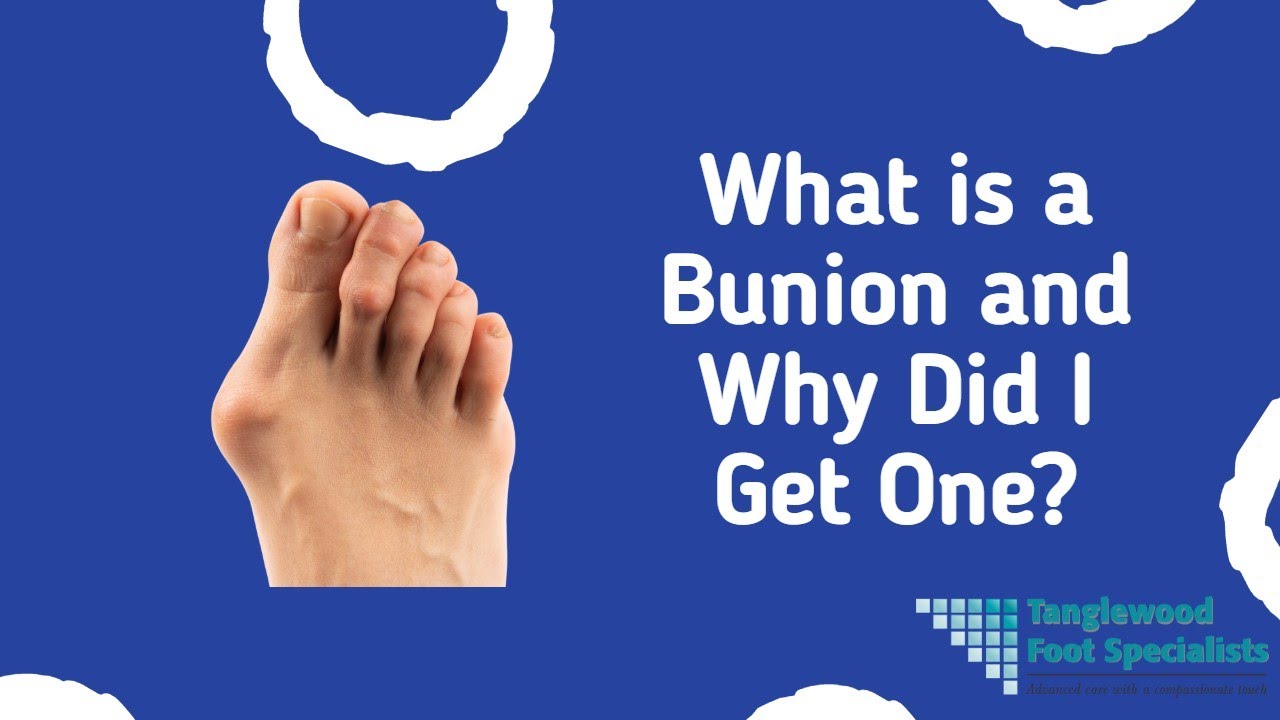
In my Tanglewood practice near the Galleria, I see people from all over the Houston area, and the story is almost always the same. The original surgery looked successful on the table. Recovery went fine. And then, months or years later, the drift started again. Understanding why that happens is the first thing I need to address before we talk about how to fix it. You can learn more about what a bunion actually is if you want the full anatomical picture before we go further.
The Truth About "Successful" Bunion Surgery
Most people who come to see me after a recurrence assume one of two things: either their surgeon made a mistake, or  they did something wrong during recovery. I want to address that directly, because neither is usually true.
Here's the thing — over 130 different surgical techniques exist for bunions, and they don't all carry the same recurrence risk. The procedures performed most commonly for decades correct the visible deformity but do not stabilize the TMT foundation joint. That's not malpractice. For a long time, that was simply the standard of care. The problem is that nobody told you pre-operatively that the approach you had is associated with a 70% recurrence rate.
That's a conversation that should have happened, and most of the time it doesn't.
Post-op instructions place heavy emphasis on footwear — and for good reason, because compressive shoes do accelerate deformity. But that emphasis creates a false impression: that shoes are the controlling variable. They're not. You can wear perfect footwear every single day and still watch a recurrence develop, because the biomechanical forces driving the deformity are still operating through that unstabilized foundation joint.
Genetics loads the gun. But procedure selection is what pulls the trigger on recurrence.
Understanding why it came back is the most important step you can take — because it means the next decision does not have to repeat the first one. The breakdown of types of bunion surgery is worth reading, and so is the honest look at why bunion surgery sometimes falls short. What comes next is recognizing whether your bunion has actually returned, or whether what you're feeling is something else entirely.
Signs Your Bunion Has Actually Returned
Not every uncomfortable sensation after bunion surgery means the deformity has come back. In the first year after surgery, some stiffness and firmness around the joint is normal healing tissue — your body is still remodeling. True recurrence involves visible angular drift of the big toe back toward the second toe, not just soft tissue fullness. Weight-bearing X-rays are the only reliable way to confirm it.
Most people with a genuine recurrence notice a gradual reappearance of the bony prominence on the medial side of the foot — the same bump that was there before surgery, slowly returning. Pain with shoe wear that had resolved after the initial procedure starts coming back. You may find yourself having trouble fitting into footwear that felt fine six months ago. And if your second toe is being pushed upward or sideways, that's a sign the big toe has drifted far enough to create hammertoe pressure — a common downstream effect I see regularly.
If you're unsure whether what you're noticing is true recurrence or normal post-surgical changes, come in and find out. The evaluation itself is straightforward. You can also read about when a bunion actually needs surgery — the same criteria apply to recurrence assessments.
🚨 Seek prompt evaluation if the bunion area becomes hot, red, and acutely swollen. This could indicate hardware irritation, infection, or nonunion at the surgical site — not simple recurrence. These require different and more urgent management. Either way, I need to see you.
How Houston Podiatrist Dr. Andrew Schneider Treats Bunion Recurrence
My approach to bunion recurrence starts with an honest evaluation — weight-bearing X-rays, a biomechanical exam, and a real conversation about your goals. I'm not anti-surgery. But I am committed to making sure that if we go back to the operating room, we fix the right problem this time. The goal is not just to get the bump back down. It's to make sure it doesn't come back again.
Lifestyle Modifications
The foundation of any recurrence plan starts with what's on your feet. Wide toe-box shoes are non-negotiable — compressive footwear actively accelerates deformity progression, and nothing else I do works well if you are squeezing your foot into a narrow shoe every day. Heels above one inch shift your body weight forward and dramatically increase pressure on the big toe joint. I won't judge you about your shoes — but I do need you to understand the trade-offs, because the choice you make every morning is either slowing this down or speeding it up.
Most people see meaningful pain reduction within two to four weeks of consistent footwear changes. Lifestyle modification alone will not reverse structural drift that has already occurred, but it's a prerequisite for everything else to work.
At-Home Care
Bunion splints worn during rest or sleep hold the toe in better alignment overnight and reduce the gradual drift that accumulates over hours of unsupported positioning. Gel or moleskin padding cushions the bump and cuts down on friction-driven inflammation. Ice applied for fifteen to twenty minutes — never directly against the skin — manages acute flares, and over-the-counter anti-inflammatories like ibuprofen or naproxen help during painful episodes.
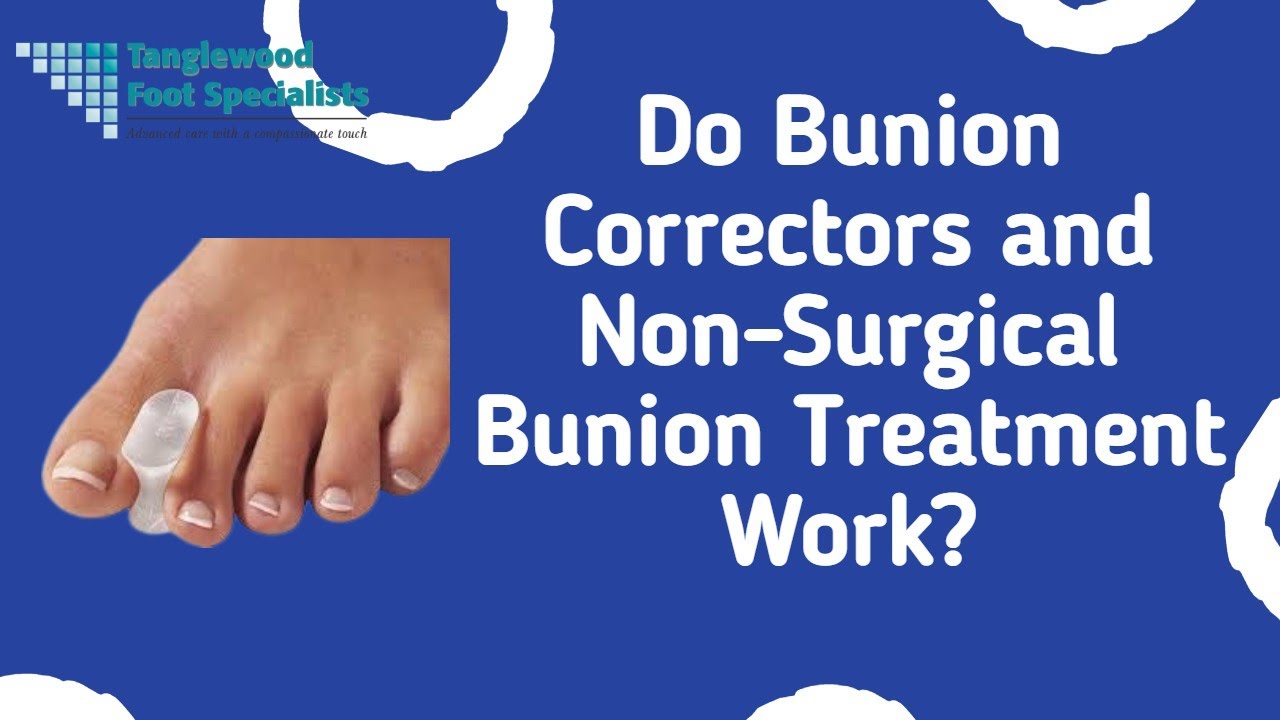
What doesn't work: toe spacers worn inside shoes get cancelled out by the compressive forces of the shoe, and generic arch inserts from a pharmacy aren't built around your specific biomechanics. At-home care manages symptoms. It does not address the root cause of why the deformity returned.
Conservative In-Office Treatment
 When home measures aren't enough, custom orthotics (~$700) are the most powerful structural management tool available short of surgery for mild-to-moderate recurrences. Think of them like eyeglasses for your feet — while you're wearing them, they compensate for the biomechanical forces working against your joint. Take them off, and those forces resume. That is not a knock on orthotics; it's just an honest description of what they do.
They're molded to your specific foot, redistribute pressure away from the drifting TMT joint, and slow the rate of deformity progression in a way no off-the-shelf insert can replicate. Most people feel meaningful pain reduction within three to six weeks. Learn more about how custom orthotics for bunion pressure work if that sounds like the right starting point.
For acute flares — the stretches of days when the joint is genuinely inflamed and every step is painful — a cortisone injection (~$120) delivers fast relief, typically within forty-eight to seventy-two hours. It's not a long-term strategy; repeated cortisone can weaken surrounding soft tissue over time. But used strategically during a bad flare, it creates a window to implement the rest of the plan without pain dominating every decision.
Physical therapy — specifically range-of-motion work for the big toe joint and intrinsic foot muscle strengthening — complements orthotics well, particularly if tightness in the calf is contributing to forefoot overload, which it often is.
Regenerative Medicine — The Third Option
There's cortisone, there's surgery — and then there's what I call the third option. Regenerative medicine targets the inflammation and soft tissue damage that makes a recurrent bunion so painful, using your body's own healing biology rather than suppressing symptoms or cutting bone.
Shockwave therapy (~$300 per session · $750 for a three-session package) has an 82% success rate for chronic foot pain. Think of it like aerating a lawn — by creating small channels in compacted, chronically inflamed tissue, shockwave allows healing factors to penetrate more deeply and restores the tissue environment that chronic inflammation has disrupted. The protocol is three sessions roughly one week apart. It won't reverse bony structural recurrence, but it dramatically reduces the pain burden of living with one. Shockwave therapy for foot pain is most powerful when combined with PRP — what I call the Seeds and Soil protocol.
 PRP, or platelet-rich plasma (~$850), is drawn from your own blood, concentrated in a centrifuge to isolate growth factors, and injected precisely into the inflamed bunion joint or surrounding tissue. I call it liquid gold for healing. Your body's own repair signals, delivered in concentrated form directly where the damage is. Seventy to eighty percent of people with chronic joint and tendon problems see significant improvement with PRP alone.
When you combine it with shockwave — PRP providing the seeds, shockwave preparing the soil — the success rate climbs to 85–95%. Most people notice initial improvement within two to four weeks, with the full benefit coming at three to six months. That's more durable than cortisone, because the mechanism is actual repair rather than temporary suppression. Explore PRP injections for chronic joint pain or the full regenerative medicine for foot pain Houston overview to understand whether you're a candidate.
Surgery — When It's the Right Answer
Look, I know going back to surgery after a bunion has already come back is a hard thing to hear. You did it once, recovered, and now you're facing it again. That frustration is completely valid. But here's what's important to understand: the reason your bunion came back almost certainly had nothing to do with you — and the right revision procedure gives you a genuine shot at a permanent correction.
The procedure I perform for recurrent bunions is Lapiplasty 3D bunion correction. Unlike the traditional osteotomy that shifted the metatarsal sideways and left the unstable foundation joint alone, Lapiplasty corrects all three dimensions of the deformity — the lean, the rotation, and the elevation — and permanently stabilizes the first TMT foundation joint with titanium fixation plates. We're not just straightening the tower again. We're fixing the foundation so it can't lean.
Recovery is considerably faster than traditional revision surgery. Most people are walking in a surgical boot within days, transition to supportive shoes around week six, and return to normal daily activities by week twelve — compared to six to eight weeks non-weight-bearing with a conventional approach. The satisfaction rate when Lapiplasty is performed correctly is over 90%.
If you want the full picture, how Lapiplasty differs from traditional bunionectomy and what to expect during bunion surgery both walk you through it in detail. Surgery is the right answer for a meaningful number of people with recurrent bunions — but it should be the right surgery, chosen for the right reasons, after the right conversation.
Ready to Stop Managing and Start Fixing?
I'll evaluate exactly where your recurrence stands and build a plan around your goals. Request Your Appointment →
What to Expect When You Come In
When you come in, I'll start by taking weight-bearing X-rays — which means we capture the images while you're standing, not lying down. That's the only way to see what's actually happening to your foot mechanics under load. Lying-down X-rays look fine on a lot of feet that are struggling the moment weight goes through them.
I'll measure two specific angles: your hallux valgus angle, which is the spread between your big toe and the first metatarsal, and your intermetatarsal angle, which is the spread between your first and second metatarsal bones. If you have films from your original surgery, bring them. Comparing then and now tells me a great deal about how much drift has occurred and how fast.
After the X-rays, I'll watch you walk. Gait analysis sounds technical, but what I'm really doing is watching how load moves through your forefoot with every step, and whether your calf tightness or arch mechanics are contributing to the forces pushing that metatarsal back out of position. Then I'll examine the bunion joint directly — palpating the bump, assessing the stability of the TMT foundation joint, and checking the surrounding soft tissue for signs of chronic inflammation. I'm building a picture of the whole foot, not just the spot that hurts.
From there, we'll have a straight conversation. I'll tell you what the X-rays show, what I found on exam, and what I think your realistic options are — starting from the least invasive end and working up only as far as your situation requires. If the angular drift is mild and the pain is manageable, we'll start with non-surgical alternatives for bunions before we talk about anything more involved. If there's significant structural recurrence with a strong inflammatory component, regenerative medicine may be the right conversation. And if the deformity is pronounced and affecting your daily life, I'll tell you that clearly.
I won't rush you into surgery. Most people who come in with a recurrent bunion leave with a conservative plan first. The worst thing you can do is wait while the deformity progresses — the sooner I see you, the more options we have. You can schedule your evaluation online anytime.
Keeping Your Correction Lasting — A Houston Perspective
After treating thousands of people with bunion recurrence in Houston, I can tell you: the ones who do best long-term treat their foot as an ongoing project, not a one-time fix. Whether we address your recurrence conservatively or surgically, the biomechanical forces that drove the original deformity don't disappear — they need to be managed.
Post-Lapiplasty, custom orthotics remain part of the long-term protocol. Not because the surgery is insufficient — it corrects all three dimensions of the deformity and stabilizes the foundation joint permanently — but because orthotics reduce the ongoing mechanical load that contributed to the problem in the first place. Think of them like eyeglasses: while you're wearing them, you're compensating for your foot's mechanics. Wide toe-box footwear becomes a permanent lifestyle choice, not a temporary recovery accommodation.
And if weight management is a factor for you, every additional pound above your ideal weight multiplies the ground-reactive forces through your forefoot with every step.
Houston's active lifestyle is real — I see runners logging miles along Buffalo Bayou, professionals on their feet all day at the Texas Medical Center, and people who spend their weekends at Memorial Park. Getting back to that life is the goal. That's exactly why I build every post-operative plan around your specific activity demands rather than a generic checklist. For anyone curious about minimally invasive bunion surgery Houston as an option within this continuum, that page walks through the distinctions in detail.
I also recommend coming in once a year after any bunion surgery. Catching a two-degree drift on X-ray is dramatically easier to manage than a fifteen-degree recurrence.